Shriya Devi Temple History & Darshan Timings: Thamaraipakkam Guide
Receive daily temple updates, divine darshan, and morning bhajans directly on WhatsApp.
Contents
- 1 Introduction & Spiritual Essence
- 2 Historical Origins & Scriptural Legend
- 3 Architectural Marvels
- 4 Darshan & Ritual Logistics
- 5 Practical Visitor Guidance
- 6 Pilgrimage Connectivity
- 7 Frequently Asked Questions (FAQ)
Introduction & Spiritual Essence
Nestled in the serene landscape of Thamaraipakkam in the Thiruvallur district stands the ancient Shriya Devi Temple, a profound beacon of divine energy. While many associate this region with the historic Sivan Koil, the Shriya Devi shrine holds a distinct spiritual magnetism, attracting devotees seeking the benevolent blessings of the Divine Mother.
Deity & Form: The primary deity is Shriya Devi, an aspect of Goddess Lakshmi, the bestower of wealth, prosperity, and spiritual abundance. Unlike fierce manifestations, Shriya Devi is worshipped here in her gentle, auspicious form. The sanctum is revered for its spiritual potency, believed to be a Swayambhu (self-manifested) idol or one established by ancient sages.
Phalaśruti (Spiritual Benefits):
- Karma Cleansing: Devotees believe that performing prayers here helps cleanse ancestral karma and remove obstacles in one\’s path.
- Prosperity & Harmony: As the Goddess of Wealth, worshipping Shriya Devi is said to invite financial stability and domestic harmony.
- Voice & Wisdom: In local tradition, she is also associated with grant wisdom and articulate speech, vital for success in life.
Historical Origins & Scriptural Legend
Chronology & Builders: Temple records and local historians trace the origins of the Shriya Devi Temple to the Pallava period (approximately 9th-10th Century CE), characterized by the early rock-cut architecture prevalent in the Thiruvallur region. While major expansions were likely patronized by later Chola and Vijayanagara rulers, the core sanctum is believed to be much older.
Scriptural Context:
According to the Brahmanda Purana, Goddess Lakshmi emerged from the cosmic ocean during the Samudra Manthan. However, the Sthala Purana (local legend) of Thamaraipakkam holds a unique narrative. Tradition holds that the divine sage Agastya performed severe penance here to receive the darshan of the Divine Mother.
📖 Related: Subramanya Swamy Temple Marungoor: History, Timings & Kumbhabhishekam Guide
Local Legend: The name Thamaraipakkam is etymologically linked to Thamara (Lotus) and Pakkam (side/region). Legend suggests that this region was once a vast forest of lotuses, where Shriya Devi appeared atop a golden lotus to bless her devotees. The temple was later constructed to enshrine this sacred spot.
Architectural Marvels
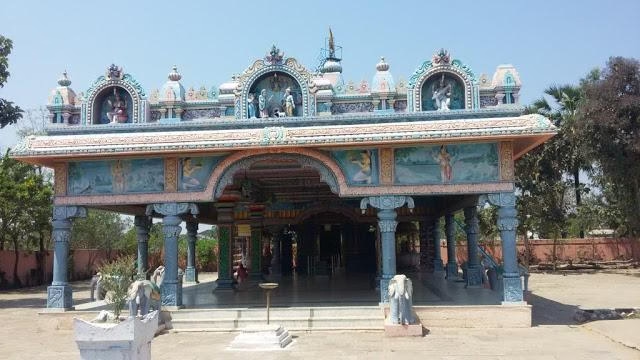
The temple is a classic example of the Dravidian style of architecture, featuring intricate stone carvings and a towering Gopuram (gateway tower).
Key Features:
- Sanctum Sanctorum (Garbhagriha): The inner shrine houses the Moolavar (primary deity) Shriya Devi in a standing posture, exuding grace and benevolence.
- Mandapas: The temple features several Mandapas (halls)—the Ardha Mandapa (half-hall) and Maha Mandapa (great hall)—adorned with pillars depicting mythological scenes from the Puranas.
- Vastu Shastra: The temple layout adheres to strict Vastu Shastra principles, aligning the sanctum with the cardinal directions to channel cosmic energy effectively.
- Artistic Details: Though modest in size compared to massive temple complexes, the sculptural details on the pillars and the outer walls reflect the finesse of Dravidian craftsmanship. The exterior walls feature niches (Koshtas) housing various deities.
Darshan & Ritual Logistics
To facilitate a smooth spiritual journey, we have compiled the daily schedule and special sevas. As per standard temple protocols in Tamil Nadu, timings may vary slightly during festival seasons.
Daily Darshan Timings
| Session | Timing | Activity |
|---|---|---|
| Morning | 6:00 AM – 12:00 PM | Opening, Abhishekam, Archana |
| Afternoon | 12:00 PM – 4:30 PM | Sanctum Rest (Deepa Aradhanai) |
| Evening | 4:30 PM – 8:30 PM | Darshan, Deeparadhana, Palliyarai Pooja |
Key Sevas & Online Booking
Devotees can participate in various rituals to enhance their spiritual experience:
- Abhishekam (Ritual Bathing): Performed for the main deity with milk, honey, and sandalwood paste. Timing: 7:00 AM.
- Archana (Flower Offering): Recitation of holy names while offering flowers. Can be done individually or for the family.
- Deepa Aradhanai (Lamp Offering): A visual treat where the deity is shown camphor and oil lamps.
📖 Related: Ayya Vaikundar Temple Anjugramam: History, Darshan Timings & Complete Guide
Online Seva Booking: While the temple is largely managed by local trustees, many Tamil Nadu temples are now integrated with the TNHRCE (Hindu Religious and Charitable Endowments Department) portal. Devotees are advised to check the \’Tamil Nadu Temples\’ official app or local notice boards for the specific online booking link for Shriya Devi Temple.
2026 Festival Calendar
Mark your calendars for these auspicious dates:
- Navaratri (Dussehra): October 2 – October 11, 2026 (Special Alankaram and evening cultural programs).
- Deepavali (Festival of Lights): October 20, 2026 (Early morning Nectar Abhishekam).
- Thai Pongal (Harvest Festival): January 14-16, 2026 (Community feeding and Rathi-Goddess Puja).
- Aadi Perukku: July 28, 2026 (River procession rituals if water bodies are nearby).
Practical Visitor Guidance
Ensuring a hassle-free visit allows you to focus entirely on devotion.
- Dress Code: Traditional attire is mandatory. Men should wear Veshti (dhoti) or formal trousers with a shirt; women should wear Saree, Salwar Kameez, or long skirts. Avoid shorts and sleeveless tops.
- Photography: Strictly prohibited inside the Garbhagriha (inner sanctum). Photography is allowed in the outer prakaram (corridors) but avoid using flash near the deity.
- Mobile Lockers: Small electronic items and mobile phones are generally discouraged. Some temples offer lockers; however, it is best to leave valuables in your vehicle.
- Accessibility: The temple has ramps for senior citizens up to the first precinct. Wheelchair access is available for the main hall, though the inner sanctum requires a few steps.
Crowd Management
- Best Hours: For a peaceful darshan, visit between 8:00 AM – 10:00 AM on weekdays or 4:00 PM – 5:00 PM.
- Weekends: Expect higher crowds on Fridays (Vratham day) and Sundays.
- Seasonal Advice:
- Summer (April – June): Thiruvallur experiences high temperatures. Carry a water bottle and a head covering.
- Monsoon (October – December): Light rainfall is expected. Wear comfortable, non-slip footwear.
Pilgrimage Connectivity
How to Reach
The Shriya Devi Temple is strategically located on the main road linking Red Hills to Periyapalayam.
- By Road: Located on the SH-5 (State Highway 5) connecting Chennai (Koyambedu) to Periyapalayam. It is approximately 35 Kms from Chennai (via Red Hills).
- By Bus: The nearest bus stop is Thamaraipakkam Sivan Koil Bus Stop, just 100 meters away. Regular MTC buses ply from Chennai Central and Thiruvallur.
- By Train: The nearest railway station is Thiruninravur (13 Kms). From there, auto-rickshaws are readily available.
- By Air: Chennai International Airport (MAA) is the nearest airport, located about 43 Kms away.
📖 Related: Pandurangan Temple, Pichandarkovil: History, Darshan Timings & Complete Guide
Nearby Sacred Sites (Circuit)
Enhance your pilgrimage by visiting these nearby temples:
- Thamaraipakkam Sivan Temple: Located right next to Shriya Devi Temple, dedicated to Lord Shiva.
- Periyapalayam Sri Periyapalayamman Temple: A renowned Kula Deivam (Family Deity) shrine located 13 Kms away.
- Sri Vedagiriswarar Temple (Thirukkalukundram): Famous for the two eagles that visit the temple daily, located approximately 25 Kms from Thamaraipakkam.
Frequently Asked Questions (FAQ)
1. Is there a VIP darshan entry available?
Generally, for small temples like Shriya Devi Temple, there is no specific VIP entry scheme. However, devotees performing premium Sevas (like Abhishekam) get priority access to the inner sanctum.
2. Can I book Seva online?
While direct booking is not always available for smaller shrines, you can inquire through the local temple trust or check the TNHRCE website for updated online services. It is recommended to call the temple contact number prior to your visit.
3. What is the history of the name Thamaraipakkam?
The name is derived from Tamil words meaning \”Lotus Village.\” Legend says the area was once filled with lotus ponds where the Goddess manifested herself.
4. Is non-vegetarian food allowed near the temple?
No. The temple premises and the immediate vicinity are strictly vegetarian and sattvic zones. Alcohol and meat are strictly prohibited.
5. How far is the temple from Chennai?
It is approximately 35 km from Red Hills, Chennai. By car, it takes about 1 hour to 1 hour 30 minutes depending on traffic.