
Contents
Introduction & Spiritual Essence
Nestled in the temple town of Sikkal, Nagapattinam district, the Singaravelan Temple stands as a monumental pillar of faith for devotees of Lord Murugan. While officially recognized as a Pancha Sabhai Sthalam (where Lord Shiva performed the cosmic dance), it holds an equally sacred status as the site where Lord Murugan received the divine Vel (spear) to vanquish the demon Soorapadman. This temple is unique in its architectural harmony, housing shrines for both Lord Shiva (as Sathya Gireeswarar) and Lord Vishnu (as Narayana Perumal) within the same complex, offering devotees a rare opportunity for Shiva-Vishnu Sangam Darshan.
Phalaśruti: Why Devotees Visit
The spiritual potency of this temple is deeply tied to the legend of the Vel. Devotees flock here specifically to seek blessings for:
- Victory over Enemies: Just as Lord Murugan prepared for battle here, devotees visit to overcome legal disputes, professional hurdles, and personal conflicts.
- Ancestral Karmic Cleansing: Rituals performed at the Parkkulam (the sacred milk pond) are believed to absolve ancestral sins, ensuring peace for departed souls.
- Removal of Negative Influences: The energy of the Singaravelan idol is believed to be exceptionally potent in dispelling fear and black magic.
Historical Origins & Scriptural Legend
The Sthala Purana of Sikkal
According to local oral traditions and temple records, the name “Sikkal” is derived from the Tamil words Sigai (girth/belt) and Nilal (shadow), but a more popular legend involves the celestial cow, Kamadenu.
Tradition holds that once, Kamadenu was cursed by Lord Shiva for consuming meat. Seeking redemption, the cow performed abhishekam to a Shiva Lingam using milk at this very spot. The milk formed a pond known as the Parkkulam (Milk Pond). Later, Sage Vashista installed a Lingam in this pond, which became the presiding deity, Sathya Gireeswarar.
The Origin of the Vel
The temple is pivotal in the Soora Samharam saga. It is said that Lord Murugan, ready to wage war against Soorapadman in Sri Lanka, camped here. Lacking his primary weapon, he received the Vel directly from his mother, Goddess Parvati, who pulled it from her Patra (vessel) or Parasu (axe). Hence, the idol here depicts the Lord holding the Vel from his mother’s hand.
Architectural Marvels
The temple is a classic example of Dravidian architecture, showcasing the grandeur of the Chola and Nayak dynasties. The structure is oriented to face the east, adhering to Vastu Shastra principles.
- The Sanctum (Garbhagriha): The presiding deity, Singaravelan (Murugan), is depicted as Shivaganga Sabhapathi, standing alongside his consorts, Valli and Deivanai. Uniquely, the Vel is shown touching the hand of Parvati, symbolizing the transfer of power.
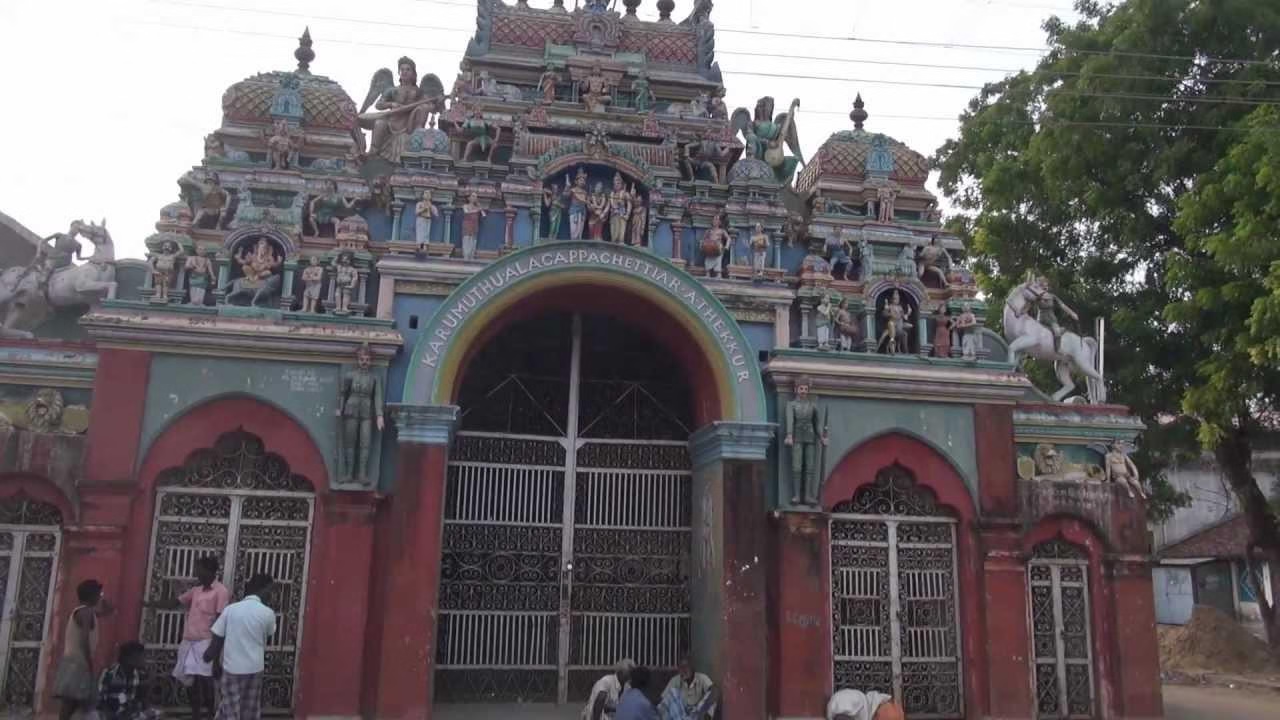
- The Rajagopuram: The towering gateway of the temple is an ornate masterpiece adorned with intricate sculptures depicting stories from the Skanda Purana.
- The Parkkulam: Located behind the main temple, this rectangular tank is the epicenter of the temple’s legend. The water here is believed to have medicinal properties.
- Shiva-Vishnu Integration: The temple complex uniquely hosts a shrine for Narayana Perumal (Vishnu) adjacent to the Shiva shrine, a rare architectural feature highlighting the syncretic nature of Tamil spirituality.
Darshan & Ritual Logistics
Visitors are encouraged to check the official temple website or contact the temple administration for the most current timings, as they may vary during festival seasons.
Daily Darshan Timings (2026 Schedule)
| Session | Timing | Activity |
|---|---|---|
| Morning | 05:30 AM – 12:00 PM | Opening, Abhishekam, Kalasandhi Pooja |
| Afternoon | 12:00 PM – 04:00 PM | Recess (Temple closes) |
| Evening | 04:00 PM – 09:00 PM | Opening, Sayarakshai Pooja, Arthajama Pooja |
| Closing | 09:00 PM | Temple closes |
Key Sevas & Booking
Devotees can book specific rituals online via the official Tamil Nadu HR&CE portal or at the temple counter.
- Vel Abhishekam: Performed with sandalwood paste and milk.
- Skanda Shashti: The most important annual festival (October/November).
- Thirukalyanam: The celestial wedding of Lord Murugan and Deivanai.
Online Seva Booking: Visit the official HR&CE website (ceo.tnhrce.org) and search for “Sikkal.”
2026 Major Festival Dates
- Thai Poosam: January 13, 2026
- Skanda Shashti: November 1, 2026 – November 7, 2026 (The Veera Marutham event is spectacular here).
- Aadi Krittikai: August 1, 2026
Practical Visitor Guidance
Code of Conduct & Facilities
- Dress Code: Traditional attire is mandatory. Men should wear dhotis or formal trousers with shirts; women should wear sarees, salwar kameez, or churidars.
- Photography: Strictly prohibited inside the sanctum sanctorum. Mobile photography is allowed in the outer praharams (corridors) but silence must be maintained.
- Mobile Lockers: Free locker facilities are available near the entrance for electronic devices and footwear.
- Accessibility: The inner sanctum has steps; wheelchair access is available for the outer areas. Annadanam (free meal) is served daily at 11:30 AM and 6:30 PM.
Crowd Management
- Best Time to Visit: Early mornings (6:00 AM – 8:00 AM) or late evenings (after 7:00 PM) on weekdays.
- Weekends: Avoid Sundays and public holidays unless attending a specific festival.
- Seasonal Advice: Nagapattinam experiences high humidity. Carry a bottle of water and a hand fan during the summer months (May-July). Monsoons (October-December) bring pleasant weather ideal for travel.
Pilgrimage Connectivity
How to Reach Sikkal
- By Air: The nearest airport is Tiruchirappalli International Airport (TRZ), approximately 160 km away (3.5-hour drive). The second nearest is Chennai (MAA), approx. 280 km.
- By Rail: The nearest railway junction is Nagapattinam (11 km). Regular trains connect Nagapattinam to Chennai Egmore and Tiruchirappalli. Sikkal also has a local railway station (Sikkal) on the Velankanni line, 2 km from the temple.
- By Road: Sikkal is located on the NH 32 (formerly NH 45), connecting Chennai to Dhanushkodi. It is well-connected by buses from Mayiladuthurai (20 km) and Nagapattinam.
Nearby Sacred Sites
Extend your pilgrimage to these nearby tirthas:
- Velankanni Basilica (12 km): The “Lourdes of the East,” a major Marian shrine attracting devotees of all faiths.
- Kuttralam (Kothandaramaswamy Temple) (25 km): Located near Thalaignayar, known for its unique water delta.
- Thirukuvalai (15 km): Home to the Naganatha Swamy Temple, dedicated to Lord Shiva as a protector against snake poison.
Frequently Asked Questions (FAQ)
1. Is there a VIP Darshan entry available?
Yes, the temple administration offers a special entry darshan ticket (usually priced at ₹50-₹100) that allows devotees to bypass the general queue. However, during peak Skanda Shashti festival days, VIP entries may be suspended to manage crowd flow.
2. What is the significance of the “Vel” held by the deity?
In Sikkal, the Vel is not just a weapon but a symbol of divine wisdom and motherly grace. It is believed that the Vel here was handed directly from Goddess Parvati to Lord Murugan. Devotees believe that prayers here ensure a swift resolution to complex problems, akin to the sharpness of the Vel.
3. Are non-Hindus allowed inside?
Generally, entry to the inner sanctum of Hindu temples is restricted to followers of Hinduism. However, the outer courtyards and the Parkkulam area are often accessible to all visitors for meditation and viewing the architecture. It is advisable to check with the temple authorities upon arrival.
4. Is the temple open 24/7?
No, the temple follows specific timings. It usually opens at 5:30 AM and closes by 9:00 PM, with a recess in the afternoon between 12:00 PM and 4:00 PM. Devotees are requested not to loiter inside the complex during the recess.
5. Where can I park my vehicle?
There is a designated parking area near the temple entrance on the main road. During weekends and festivals, parking can be crowded, so using public transportation (bus) is often recommended.
Recent Posts

ओ सांवरे तूने ही मुझको संभाला – Lyrics & Meaning
ओ सांवरे तूने ही मुझको संभाला – A Prayer to Shyam Origin & Spiritual Essence Why This Bhajan Resonates Devotees chant this when overwhelmed by life’s storms—the refrain ‘तूने ही मुझको संभाला’ is the soul’s sigh of relief: “You…

कथा ये है महाराज मेरे की – Lyrics & Meaning
कथा ये है महाराज मेरे की छत्रपति संभाजी महाराज – A Prayer to Chhatrapati Sambhaji Maharaj Origin & Spiritual Essence Why This Bhajan Resonates Devotees chant this when their spirit feels tested—its powerful refrain “महाराज मेरे” is a soul’s…

Rigveda Samhita Yathartha Anuvada (ऋग्वेद संहिता यथार्थ अनुवाद) – Complete Set with Anvayartha & Hindi/English Translation
The Rigveda is the oldest surviving scripture of humanity and the foundational text of Sanātana Dharma. For serious students, scholars, UPSC aspirants studying ancient Indian history, Sanskrit learners, and spiritual seekers, a precise and grammatically structured translation is indispensable.…

आना भी अकेला है जाना भी अकेला है – Lyrics & Meaning | BharatTemples
आना भी अकेला है जाना भी अकेला है – A Prayer to the Divine Witness Origin & Spiritual Essence Why This Bhajan Resonates Devotees turn to this bhajan in moments of deep reflection—when life’s attachments begin to ache. The…

माता शेरावाली के द्वार जो भी जाता है – Lyrics & Meaning
माता शेरावाली के द्वार जो भी जाता है – A Prayer to Maa Sherawali Origin & Spiritual Essence Why This Bhajan Resonates Devotees turn to this bhajan in times of fear or uncertainty—its promise that no one leaves Maa’s…

मार लेना सपणी उबार लेणा भवरा – Lyrics & Meaning
मार लेना सपणी उबार लेणा भवरा – A Prayer to the Divine Beloved Origin & Spiritual Essence Why This Bhajan Resonates Devotees chant this in moments of deep vulnerability—its cry of “मार लेना सपणी, उबार लेणा भवरा” is the…

हमें श्याम सुंदर भरोसा तुम्हारा – Lyrics & Meaning
हमें श्याम सुंदर भरोसा तुम्हारा – A Prayer to Shyam Sundar Origin & Spiritual Essence Why This Bhajan Resonates Devotees chant this when feeling alone—its refrain ‘de do sahara’ is the soul’s cry for divine support. Lyrics in Hindi…

Mere Satguru Ne Di Thi Davai Lyrics in Hindi & Meaning
Mere Satguru Ne Di Thi Davai: Invoking the Guru’s Liberating Wisdom This soul-stirring bhajan venerates the Satguru (True Spiritual Master) as the divine physician who dispenses the only remedy for life’s deepest sufferings. Composed by Sant Karmaveer Tufani, it…

Janm Diyo Thari Maa Dukh Dekhiyo Lyrics in Hindi & Meaning
जन्म दियो थारी माँ दुख देखियो (Maa’s Grief Upon Birthing You) This soul-stirring Chetavani Bhajan (admonitory hymn) is addressed to the Divine Mother (Maa) – a call for repentance when children forget their filial duties in the dark age…
Bhadi Sabha Mein Thane Manaun Lyrics in Hindi & Meaning
Bhadi Sabha Mein Thane Manaun: Invoking the Spear-Wielding Mother Mata Bhawani (श्री ज्वाला भवानी), the fiery manifestation of Shakti worshipped as the Protector of Dharma in Her Dhaulagarh sanctum. Origin & Spiritual Essence Composed in Rajasthani folk tradition by…