
Contents
Introduction & Spiritual Essence
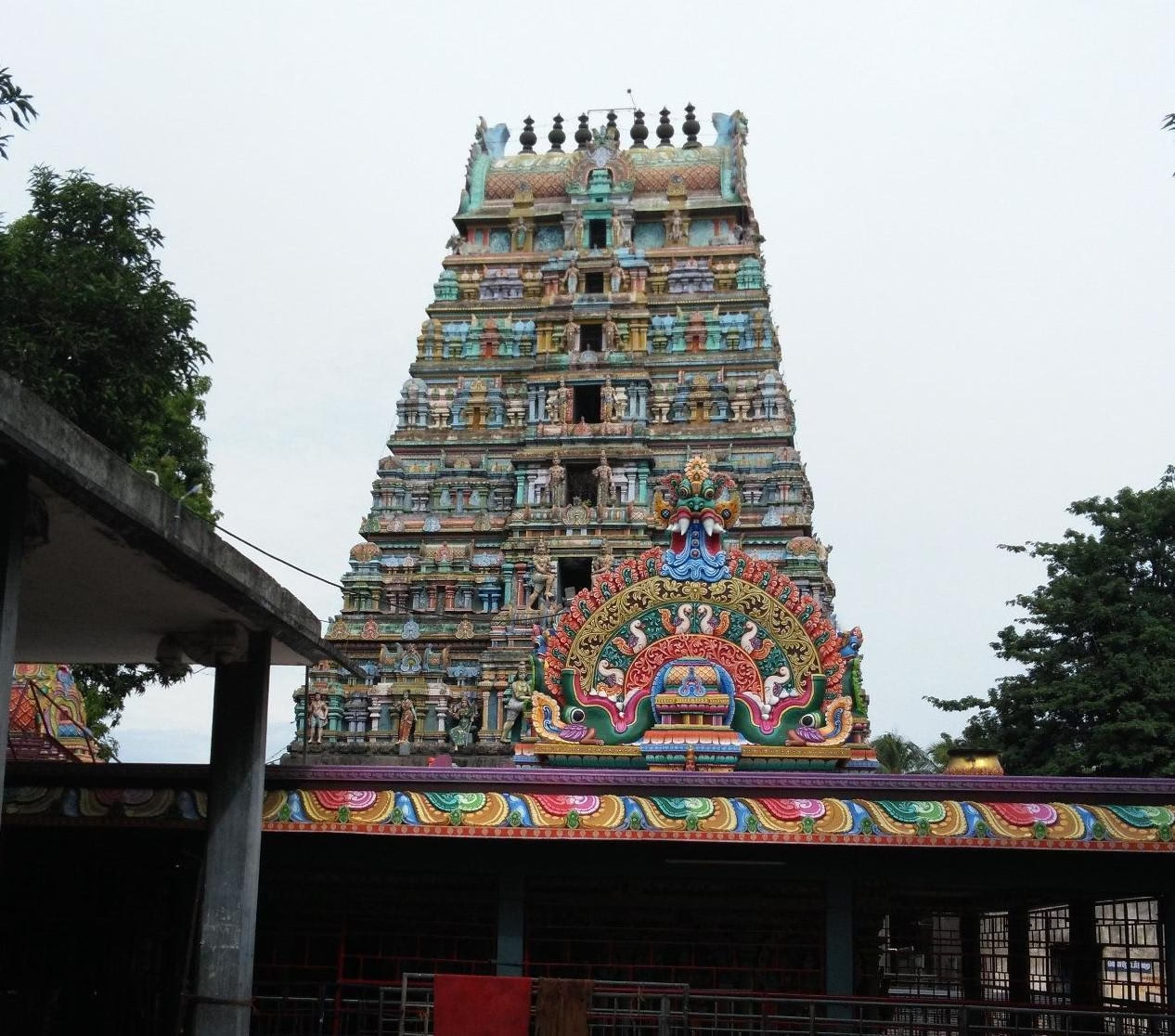
In the serene landscape of Tiruvakkarai, near Pondicherry, stands the Sri Chandramouleeswarar Temple, a sacred abode dedicated to Lord Shiva. Here, the presiding deity is revered as Chandramouleeswarar (the Lord who wears the crescent moon) and Nedungolanayaki (the consort). This ancient shrine is a sanctum of profound spiritual energy, functioning primarily as a Swayambhu Lingam (self-manifested) rather than a carved idol.
Phalaśruti: Why Devotees Visit
According to Vedic traditions, a visit to this temple is believed to cleanse ancestral karma and liberate devotees from the ill effects of planetary afflictions, particularly those related to Rahu and Ketu. It is specifically revered for pacifying Kala Sarpa Dosha (astrological affliction caused by serpentine energies), making it a vital pilgrimage site for those seeking spiritual protection and ancestral peace.
Historical Origins & Scriptural Legend
The Chola Legacy
Based on the information displayed at the temple, the structure is more than 2000 years old. It was originally constructed by the great King Adithya Chola, a monarch of the early Chola dynasty (c. 9th century CE), renowned for consolidating Chola power and promoting temple construction. The temple stands as a testament to the dynasty’s patronage of Shaivism.
The Sthala Purana: The Legend of Vakrasuran
Tradition holds that the temple is the site of a divine cosmic battle. The legend speaks of a Demon King named Vakrasuran, who was a staunch devotee of Lord Shiva. Through rigorous penance, he secured a boon of immortality from the Lord. Empowered and invincible, Vakrasuran began terrorizing the celestial gods (Devas).
The Devas sought refuge in Lord Shiva, who commanded his fierce aspect, Lord Narasimha (often associated with Lord Mahavishnu in this local lore), to vanquish the demon. During the celestial battle, as soon as Vakrasuran’s blood touched the ground, new demons formed from it. To prevent this, Lord Narasimha used his discus (Sudarshana Chakra) to sever the demon’s head before the blood could fall, thus saving the cosmos. The temple is named Tiru-vakkarai (The Holy Land of Vakrasuran) to commemorate this event.
Architectural Marvels
The temple showcases the classic Dravida style of architecture, adhering to the principles of Vastu Shastra. The structure is a masterclass in stone craftsmanship, featuring:
- The Shikhara (Tower): A towering Vimana (shrine roof) rises above the sanctum, characterized by tiered structures typical of South Indian temple architecture.
- The Mandapas: The temple features spacious pillared halls used for religious discourses and dance performances. The intricate carvings on these pillars depict scenes from Hindu mythology and the legend of Vakrasuran.
- Sculptural Excellence: The outer walls are adorned with detailed sculptures of deities and mythical creatures. The temple is protected by the Archaeological Survey of India (ASI), preserving its ancient stone inscriptions and structural integrity.
Darshan & Ritual Logistics
Planning your visit requires attention to the specific timings and ritual schedules. The temple administration has streamlined the process for devotees.
Daily Timings
| Session | Timing | Status |
|---|---|---|
| Morning Darshan | 6:00 AM – 12:00 PM | Open |
| Afternoon Break | 12:00 PM – 4:00 PM | Closed |
| Evening Darshan | 4:00 PM – 8:30 PM | Open |
Key Sevas & Online Booking
Devotees can participate in various sevas (ritual services) to enhance their spiritual experience:
- Abhishekam: Ritual bathing of the deity (usually performed in the early morning).
- Archana: Recitation of the deity’s names.
- Rudrabhishekam: A specialized Vedic ritual for planetary peace.
Booking Note: While the temple retains traditional booking at the counter, online bookings for major rituals are typically managed via the Tamil Nadu Hindu Religious and Charitable Endowments (HR&CE) portal or specific temple trust websites. Devotees are advised to check the official portal closer to their 2026 travel date.
2026 Festival Dates
- Maha Shivaratri: February 26, 2026 (Extended timings likely).
- Arudra Darshanam: January 6, 2026 (Celebrating the cosmic dance of Shiva).
- Deepavali: October 21, 2026.
- Pongal: January 14, 2026 (Special Annadhanam/Pongal offering).
Practical Visitor Guidance
To ensure a smooth and respectful visit to this ancient site, please adhere to the following guidelines:
- Dress Code: Traditional attire is mandatory. Men should wear dhotis or pants with shirts; women should wear sarees, salwar kameez, or formal modest clothing.
- Photography: Photography is strictly prohibited inside the inner sanctum (Garbhagriha). It is permitted in the outer courtyards, but flash photography should be avoided to maintain the sanctity of the environment.
- Mobile Phones & Lockers: Mobile phones are generally allowed but must be kept on silent mode. Dedicated locker facilities are available near the entrance for valuables and electronics.
- Accessibility: The temple has granite steps leading to the main entrance. While there is no ramp for wheelchairs, assistance is usually available from temple staff for elderly devotees.
Crowd Management & Seasonal Advice
The temple sees moderate crowds year-round. However, for the most peaceful darshan:
- Best Hours: Visit between 6:00 AM (opening) or 4:00 PM (re-opening) to avoid peak crowds.
- Seasonal Tips: Summers (April–June) in Tamil Nadu are hot; carry a water bottle and wear a hat. The monsoon season (October–November) offers a lush, green backdrop but requires umbrellas.
Pilgrimage Connectivity
How to Reach
The temple is located on the banks of the river Varaha. It is situated in the village of Tiruvakkarai, which is approximately 25 km from Pondicherry, Tindivanam, and Villupuram.
- By Road: From Pondicherry, take the Puducherry–Villupuram road. Upon reaching Perumbakkam village (marked by a temple arch), turn and proceed 6 km to reach the temple.
- By Rail: The nearest railway junction is Villupuram (approx. 25 km), which is well-connected to Chennai and Tiruchirappalli.
- By Air: The nearest airport is Puducherry Airport (approx. 30 km). The major international hub is Chennai International Airport (approx. 150 km).
Nearby Sacred Sites
Extend your pilgrimage circuit with these nearby destinations:
- Varadaraja Perumal Temple (Tiruvakkarai): Located within the same village, dedicated to Lord Vishnu.
- Parikkal Lord Narasimha Temple: Located 15 km away, famous for the Lord Narasimha shrine.
- Villupuram Sri Kalyana Murthar Temple: A significant temple in the district headquarters (25 km).
Frequently Asked Questions (FAQs)
Is there a VIP darshan entry?
Yes, the temple administration provides special darshan tickets for senior citizens and differently-abled devotees. VIP passes are generally not issued, but purchasing a seva ticket (like Abhishekam) grants faster access to the sanctum.
What is the significance of the stone inscriptions found here?
The temple houses numerous stone inscriptions dating back to the Chola and later Pallava periods. These inscriptions provide historical evidence of land grants, donations, and temple management details from over a millennium ago.
Are non-Hindus allowed inside?
Generally, entry is restricted to followers of Hinduism. However, it is advisable to check with the temple authorities at the entrance gate, as rules may vary for foreign tourists accompanied by local guides.
What is the best time of year to visit Tiruvakkarai?
The ideal time is between November and February when the weather is cooler and pleasant, coinciding with major festivals like Arudra Darshanam and Maha Shivaratri.
Is accommodation available near the temple?
Basic lodges are available in the village of Tiruvakkarai. For better amenities, it is recommended to stay in Pondicherry (25 km away) or Villupuram (25 km away), where numerous hotels and guest houses cater to pilgrims.
Recent Posts

ओ सांवरे तूने ही मुझको संभाला – Lyrics & Meaning
ओ सांवरे तूने ही मुझको संभाला – A Prayer to Shyam Origin & Spiritual Essence Why This Bhajan Resonates Devotees chant this when overwhelmed by life’s storms—the refrain ‘तूने ही मुझको संभाला’ is the soul’s sigh of relief: “You…

कथा ये है महाराज मेरे की – Lyrics & Meaning
कथा ये है महाराज मेरे की छत्रपति संभाजी महाराज – A Prayer to Chhatrapati Sambhaji Maharaj Origin & Spiritual Essence Why This Bhajan Resonates Devotees chant this when their spirit feels tested—its powerful refrain “महाराज मेरे” is a soul’s…

Rigveda Samhita Yathartha Anuvada (ऋग्वेद संहिता यथार्थ अनुवाद) – Complete Set with Anvayartha & Hindi/English Translation
The Rigveda is the oldest surviving scripture of humanity and the foundational text of Sanātana Dharma. For serious students, scholars, UPSC aspirants studying ancient Indian history, Sanskrit learners, and spiritual seekers, a precise and grammatically structured translation is indispensable.…

आना भी अकेला है जाना भी अकेला है – Lyrics & Meaning | BharatTemples
आना भी अकेला है जाना भी अकेला है – A Prayer to the Divine Witness Origin & Spiritual Essence Why This Bhajan Resonates Devotees turn to this bhajan in moments of deep reflection—when life’s attachments begin to ache. The…

माता शेरावाली के द्वार जो भी जाता है – Lyrics & Meaning
माता शेरावाली के द्वार जो भी जाता है – A Prayer to Maa Sherawali Origin & Spiritual Essence Why This Bhajan Resonates Devotees turn to this bhajan in times of fear or uncertainty—its promise that no one leaves Maa’s…

मार लेना सपणी उबार लेणा भवरा – Lyrics & Meaning
मार लेना सपणी उबार लेणा भवरा – A Prayer to the Divine Beloved Origin & Spiritual Essence Why This Bhajan Resonates Devotees chant this in moments of deep vulnerability—its cry of “मार लेना सपणी, उबार लेणा भवरा” is the…

हमें श्याम सुंदर भरोसा तुम्हारा – Lyrics & Meaning
हमें श्याम सुंदर भरोसा तुम्हारा – A Prayer to Shyam Sundar Origin & Spiritual Essence Why This Bhajan Resonates Devotees chant this when feeling alone—its refrain ‘de do sahara’ is the soul’s cry for divine support. Lyrics in Hindi…

Mere Satguru Ne Di Thi Davai Lyrics in Hindi & Meaning
Mere Satguru Ne Di Thi Davai: Invoking the Guru’s Liberating Wisdom This soul-stirring bhajan venerates the Satguru (True Spiritual Master) as the divine physician who dispenses the only remedy for life’s deepest sufferings. Composed by Sant Karmaveer Tufani, it…

Janm Diyo Thari Maa Dukh Dekhiyo Lyrics in Hindi & Meaning
जन्म दियो थारी माँ दुख देखियो (Maa’s Grief Upon Birthing You) This soul-stirring Chetavani Bhajan (admonitory hymn) is addressed to the Divine Mother (Maa) – a call for repentance when children forget their filial duties in the dark age…
Bhadi Sabha Mein Thane Manaun Lyrics in Hindi & Meaning
Bhadi Sabha Mein Thane Manaun: Invoking the Spear-Wielding Mother Mata Bhawani (श्री ज्वाला भवानी), the fiery manifestation of Shakti worshipped as the Protector of Dharma in Her Dhaulagarh sanctum. Origin & Spiritual Essence Composed in Rajasthani folk tradition by…