
Contents
Introduction & Spiritual Essence
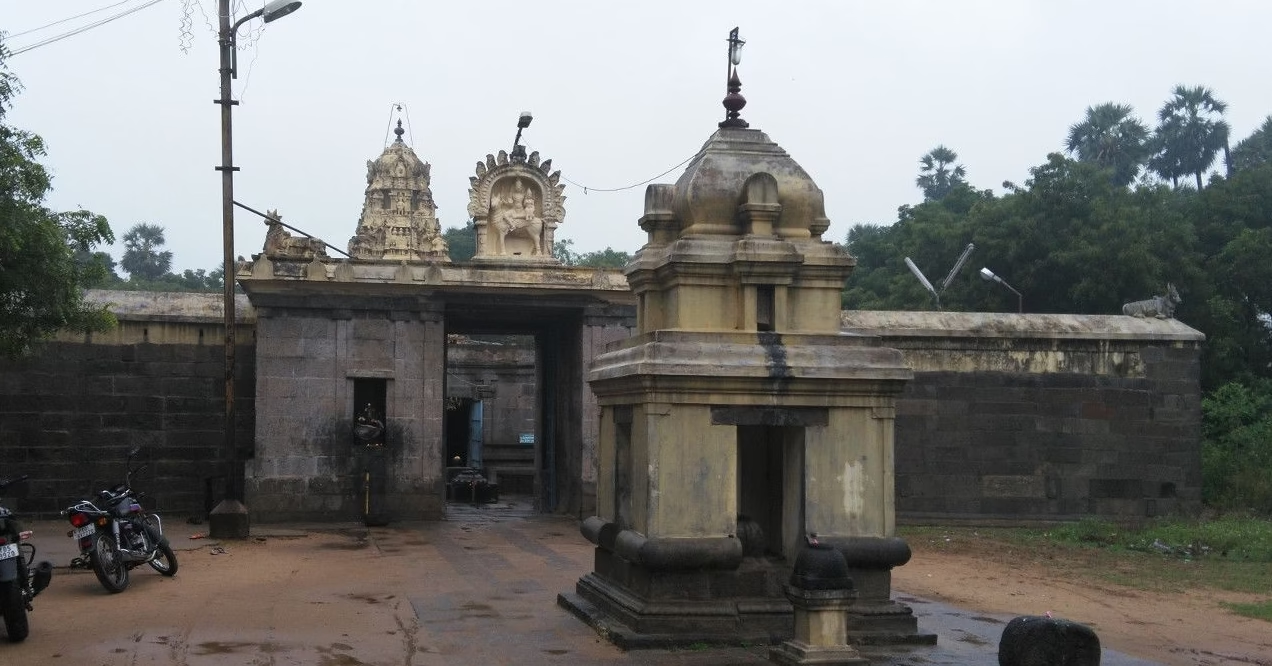
Sri Vadukeeswarar Temple is a revered Shiva shrine situated in the tranquil village of Tiruvandar Koil, approximately 22 kilometers from the city of Puducherry. Unlike the bustling urban temples, this sanctuary offers a deeply meditative atmosphere, allowing devotees to connect with the divine in peace. The presiding deity, Lord Vadukeeswarar, is a form of Lord Shiva worshipped as the Swayambhu Lingam (self-manifested).
The temple is also historically significant as Thiru Andarkoil, a name derived from its association with the Brahmanda Purana. It is considered a potent spiritual center for ancestral healing. Phalaśruti (the benefits of worship) suggests that performing rituals here helps cleanse Matru and Pitru Doshas (ancestral karmic blocks), liberating ancestors from the cycle of rebirth and bestowing peace upon the devotee’s lineage.
Historical Origins & Scriptural Legend
Scriptural Significance: This temple is glorified in the Brahmanda Purana and is traditionally believed to be the site where Lord Brahma worshipped Lord Shiva. The place was originally known as Vadukur.
Legend of Mundasuran: According to local tradition, the temple is linked to the legend of the demon Mundasuran. Through rigorous penance, Mundasuran received a boon from Lord Shiva that he could not be killed by other demons or Devas. He performed an abhishekam (sacred bathing) on the Swayambhu Lingam here using the milk of a cow named Kamadhenu. When he later misused his powers, Lord Shiva descended as a Bhairava (fierce form) and vanquished him at this spot, restoring cosmic order.
Chola Legacy: This temple is believed to have been built by the Chola King Paranthakan-I. It is constructed in a style that is similar to that of the Tanjore temple but it is much smaller in size. Over the centuries, the region became known as Thiru Andarkoil, signifying its holy status.
Architectural Marvels
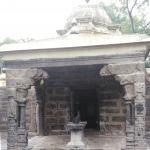
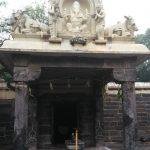
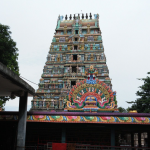
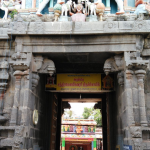
The temple is a classic example of early Dravida style architecture, heavily influenced by the grandeur of the Chola dynasty. Although smaller than the famed Brihadeeswarar Temple in Thanjavur, the structural symmetry and Vastu Shastra principles employed here are remarkable.
- The Vimana: The Shikhara (tower) above the sanctum follows the Dravida style, adorned with intricate carvings of deities and floral motifs.
- Walls and Sculptures: The temple walls feature detailed sculptures depicting scenes from the Shiva Puranas. The outer walls provide a circumambulation path (Pradakshina) that is aesthetically pleasing and spiritually grounding.
- Prakara: The spacious courtyard (Prakaram) includes the flagstaff (Dwajasthambam) and a Balipeetham (altar for offerings), arranged according to Vastu principles.
Photo Gallery
Darshan & Ritual Logistics
Devotees can participate in various sevas to enhance their spiritual experience. The temple priests are well-versed in Vedic rituals.
Daily Timings
| Session | Timing |
|---|---|
| Morning Darshan | 06:00 AM – 12:00 PM |
| Afternoon Closure | 12:00 PM – 04:30 PM |
| Evening Darshan | 04:30 PM – 08:30 PM |
Key Sevas & Online Booking
For the 2026 season, the temple committee has digitized the booking process. Devotees can book the following services:
- Abhishekam: Daily at 08:00 AM and 06:00 PM.
- Archana: Available throughout darshan hours.
- Kalyana Utsavam: (Marriage Rite for the Deity) – Monthly.
How to Book: Visit the official Puducherry Temple Board website or use the “Online Seva Booking” portal.
Practical Visitor Guidance
- Dress Code: Traditional attire is mandatory (Dhoti for men; Saree or Salwar Kameez for women). Avoid shorts and t-shirts.
- Photography: Strictly prohibited inside the sanctum sanctorum. Photography is allowed in the outer corridors with permission.
- Crowd Management: Weekends and Mondays see higher footfall. To avoid crowds, visit on Tuesdays or Fridays between 10:00 AM and 11:30 AM.
- Seasonal Advice: The region can be humid. During the peak summer months (April–June), carry a water bottle and an umbrella. The temple offers shade in the outer prakaram.
- Accessibility: The inner sanctum has a few steps. Wheelchair access is available in the outer mandapam, but the inner shrine may be difficult to access for those with mobility issues.
Pilgrimage Connectivity
How to Reach
- By Air: The nearest airport is Puducherry International Airport (PNY), roughly 30 km away.
- By Rail: Nearest railway station is Chinnababu Samudram (4 km) on the Villupuram to Puducherry railway line. Alternatively, Villupuram Junction (approx. 20 km) is a major rail hub.
- By Road: The temple is located on the Pondicherry–Villupuram route (NH 332A). It is a 22 km drive from Puducherry city center. Private taxis and local buses are easily available.
Nearby Sacred Sites
Enhance your pilgrimage by visiting these nearby attractions:
- Varadaraja Perumal Temple (Thirukkovilur): A historic Vishnu temple located about 15 km away.
- Prahaladeswarar Temple (Thirunallar): Famous for the Shani (Saturn) shrine, located within driving distance.
- Paradashwarar Temple (Thirukkazhukundram): Known for the hilltop temple and the sacred eagles.
Frequently Asked Questions (FAQ)
Is there a VIP darshan entry available?
Yes, the temple facilitates a VIP darshan facility, primarily for senior citizens, differently-abled devotees, and donors. This can be requested at the administration office upon arrival.
What is the significance of the name Vadukeeswarar?
The name translates to “The Lord of the Hoods (Vadukam).” It refers to the Serpent Adisesha, who is believed to have worshipped Shiva here.
Is mobile internet available at the temple?
Network coverage is generally good in the area, but high-speed data may be intermittent. The temple office provides a landline contact for emergencies.
Where can I park my vehicle?
A dedicated parking area is available near the entrance, free of charge for devotees. During festival days, parking may be limited, and public transport is recommended.
What is the best time to visit in 2026?
The Maha Shivaratri festival (expected in February/March 2026) is celebrated with grandeur. The annual Brahmotsavam is held in the Tamil month of Panguni (March–April).
Is there accommodation available nearby?
While the temple does not have guesthouses, several lodges and guest houses are available in the nearby towns of Villupuram and Puducherry for overnight stays.
Recent Posts

ओ सांवरे तूने ही मुझको संभाला – Lyrics & Meaning
ओ सांवरे तूने ही मुझको संभाला – A Prayer to Shyam Origin & Spiritual Essence Why This Bhajan Resonates Devotees chant this when overwhelmed by life’s storms—the refrain ‘तूने ही मुझको संभाला’ is the soul’s sigh of relief: “You…

कथा ये है महाराज मेरे की – Lyrics & Meaning
कथा ये है महाराज मेरे की छत्रपति संभाजी महाराज – A Prayer to Chhatrapati Sambhaji Maharaj Origin & Spiritual Essence Why This Bhajan Resonates Devotees chant this when their spirit feels tested—its powerful refrain “महाराज मेरे” is a soul’s…

Rigveda Samhita Yathartha Anuvada (ऋग्वेद संहिता यथार्थ अनुवाद) – Complete Set with Anvayartha & Hindi/English Translation
The Rigveda is the oldest surviving scripture of humanity and the foundational text of Sanātana Dharma. For serious students, scholars, UPSC aspirants studying ancient Indian history, Sanskrit learners, and spiritual seekers, a precise and grammatically structured translation is indispensable.…

आना भी अकेला है जाना भी अकेला है – Lyrics & Meaning | BharatTemples
आना भी अकेला है जाना भी अकेला है – A Prayer to the Divine Witness Origin & Spiritual Essence Why This Bhajan Resonates Devotees turn to this bhajan in moments of deep reflection—when life’s attachments begin to ache. The…

माता शेरावाली के द्वार जो भी जाता है – Lyrics & Meaning
माता शेरावाली के द्वार जो भी जाता है – A Prayer to Maa Sherawali Origin & Spiritual Essence Why This Bhajan Resonates Devotees turn to this bhajan in times of fear or uncertainty—its promise that no one leaves Maa’s…

मार लेना सपणी उबार लेणा भवरा – Lyrics & Meaning
मार लेना सपणी उबार लेणा भवरा – A Prayer to the Divine Beloved Origin & Spiritual Essence Why This Bhajan Resonates Devotees chant this in moments of deep vulnerability—its cry of “मार लेना सपणी, उबार लेणा भवरा” is the…

हमें श्याम सुंदर भरोसा तुम्हारा – Lyrics & Meaning
हमें श्याम सुंदर भरोसा तुम्हारा – A Prayer to Shyam Sundar Origin & Spiritual Essence Why This Bhajan Resonates Devotees chant this when feeling alone—its refrain ‘de do sahara’ is the soul’s cry for divine support. Lyrics in Hindi…

Mere Satguru Ne Di Thi Davai Lyrics in Hindi & Meaning
Mere Satguru Ne Di Thi Davai: Invoking the Guru’s Liberating Wisdom This soul-stirring bhajan venerates the Satguru (True Spiritual Master) as the divine physician who dispenses the only remedy for life’s deepest sufferings. Composed by Sant Karmaveer Tufani, it…

Janm Diyo Thari Maa Dukh Dekhiyo Lyrics in Hindi & Meaning
जन्म दियो थारी माँ दुख देखियो (Maa’s Grief Upon Birthing You) This soul-stirring Chetavani Bhajan (admonitory hymn) is addressed to the Divine Mother (Maa) – a call for repentance when children forget their filial duties in the dark age…
Bhadi Sabha Mein Thane Manaun Lyrics in Hindi & Meaning
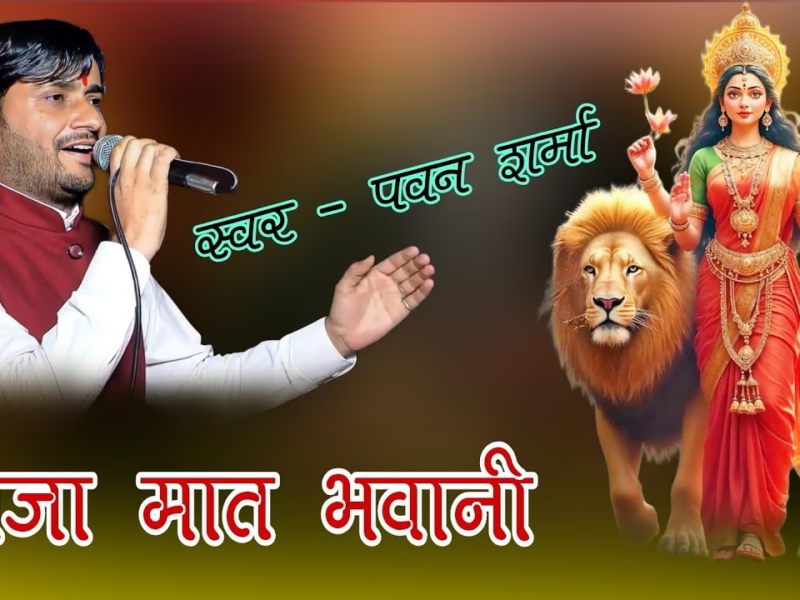
Bhadi Sabha Mein Thane Manaun: Invoking the Spear-Wielding Mother Mata Bhawani (श्री ज्वाला भवानी), the fiery manifestation of Shakti worshipped as the Protector of Dharma in Her Dhaulagarh sanctum. Origin & Spiritual Essence Composed in Rajasthani folk tradition by…