
Contents
- 1 Subramanya Swamy Temple, Marungoor, Kanyakumari: The Definitive Pilgrimage Guide (2026)
- 1.1 1. Introduction & Spiritual Essence
- 1.2 2. Historical Origins & Scriptural Legend
- 1.3 3. Architectural Marvels
- 1.4 4. Darshan & Ritual Logistics (2026 Update)
- 1.5 5. Practical Visitor Guidance
- 1.6 6. Pilgrimage Connectivity
- 1.7 7. Frequently Asked Questions (FAQs)
- 1.7.1 1. Why is this temple called Vaji Puram?
- 1.7.2 2. Is there a VIP or Special Entry Darshan?
- 1.7.3 3. What is the significance of the “Amaravathy Kulam”?
- 1.7.4 4. Can we perform first rice feeding (Annaprasanam) here?
- 1.7.5 5. Are there accommodation facilities nearby?
- 1.7.6 6. Is the temple open during Eclipse?
Subramanya Swamy Temple, Marungoor, Kanyakumari: The Definitive Pilgrimage Guide (2026)
1. Introduction & Spiritual Essence
Located in the serene village of Marungoor, approximately 12 kilometers from the Aralvaimozhi pass in Kanyakumari district, stands the ancient Subramanya Swamy Temple. Unlike the common iconography of Lord Murugan seated majestically on a peacock, this Panchabhedha (five forms) shrine reveals the unique form of Lord Murugan mounted on a horse (Vajra Aswa).
The presiding deity, known locally as Thirumalai Amararpathy Kaaththa Perumal Subramanya Swami, is a Swayambhu Moorthy (self-manifested deity). This form is particularly revered for its association with Salvation (Moksha) and the removal of ancestral karmic blocks. The temple holds the spiritual title of Vaji Puram (Horse Land), signifying the divine connection to Indra’s celestial horse, Uchchaisiravas.
Phalaśruti (Benefits): Devotees visit primarily for the salvation of departed souls and to alleviate the curse of Pitru Dosha. It is strongly believed that performing rituals here ensures the liberation of ancestors from the cycle of rebirth.
2. Historical Origins & Scriptural Legend
The Sthala Purana: Indra and the Celestial Horse
According to the Sthala Purana (local oral tradition), the divine roots of this temple trace back to the Krita Yuga. Following his purification from the curse of Sage Gauthama at the nearby Suchindram Temple, Lord Indra sought to cleanse his retinue. His white celestial horse, Uchchaisiravas, desired salvation as well.
Lord Indra worshipped Lord Shiva at Suchindram and was directed to lead his horse to Marungoor. There, the horse worshipped the self-manifested Subramanya Swamy with full devotion and attained salvation. Hence, the spot became sanctified as a Salvation Abode. Tradition holds that even today, Lord Indra performs the Artha Jaama Pooja at Suchindram and travels to Marungoor to bathe in the Amaravathy Kulam (temple tank) before offering prayers.
Scriptural & Architectural History
While exact dates of construction are scarce in recorded history, temple epigraphy suggests a legacy spanning over a millennium, with the current structure benefiting from renovations by the Pandya and Nayak dynasties who patronized Dravidian temple architecture. The temple is often referenced in Tamil devotional literature celebrating the Kanda Puranam.
3. Architectural Marvels
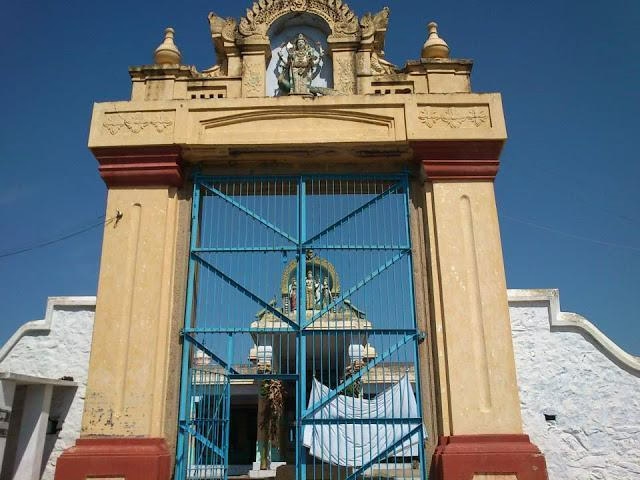
The Subramanya Swamy Temple is a textbook example of Dravidian Temple Architecture. The structure adheres to the Agama Shastra and Vastu, with the Gopuram (gateway tower) and Vimana (shrine superstructure) aligned on a north-south axis to facilitate the movement of solar energy.
- The Sanctum (Garbhagriha): The inner sanctum houses the presiding deity, Subramanya Swamy, in the unique Horse-mounted form (Aaswa Vahana). Unlike other Murugan temples, the Vel (divine spear) is held in a specific posture indicating protection of Dharma.
- Outer Structures: The temple features a spacious Mandapa (hall) with ornate pillars depicting celestial beings. The Amaravathy Kulam is a massive temple tank situated to the east of the shrine, designed to collect rainwater and provide a serene backdrop for rituals.
- Sub-Shrines: The complex includes shrines for Lord Shiva (as Sri Ekambareswarar) and Lord Vishnu (as Narayana), reflecting the rare Trinity (Trimurti) harmony within a single complex.
4. Darshan & Ritual Logistics (2026 Update)
Daily Temple Timings
Note: Timings may vary during festival days and special seasons. It is advisable to contact the temple office one day prior to your visit.
| Session | Time Slot | Description |
|---|---|---|
| Morning | 5:30 AM – 12:00 PM | Opens at 5:30 AM with Thiruvabharanam Pooja. Uchcha Kalam (peak hours) usually between 10:00 AM and 11:00 AM. |
| Evening | 4:00 PM – 8:00 PM | Reopens at 4:00 PM. Arthajama Pooja (closing ritual) concludes around 8:00 PM. |
Seva / Archana Details
Devotees can book the following sevas. While some are conducted daily, others require prior notice via the temple administration.
- Abhishekam: Performed with milk, honey, and sandalwood paste.
- Archana: Special “Amararpathy Kaaththa Perumal” archana for family welfare.
- Unjal Seva: Rocking the deity on a swing.
Online Seva Booking
As of 2026, the temple management has streamlined the booking process. While the temple maintains a traditional interface, general bookings for archana and abhishekam are managed via:
[INSERT LINK TO TAMIL NADU HR & CE DEPARTMENT PORTAL OR CURRENT MANAGEMENT URL]
2026 Major Festival Calendar
Mark your calendars for the following auspicious dates:
- Thaipusam: January 13, 2026
- Kandasashti: May 4 – May 10, 2026 (Closing on Soora Samharam)
- Thirukarthikai: November 5, 2026
- Arudra Darshanam: January 2026 (Co-occurring with monthly Brahmotsavam)
5. Practical Visitor Guidance
Code of Conduct & Rules
- Dress Code: Traditional attire is mandatory. Men should wear Veshti (dhoti) and shirt, or formal trousers with a shirt. Women are requested to wear sarees, salwar kameez, or traditional skirts. Shorts and sleeveless tops are prohibited.
- Photography: Strictly prohibited inside the Garbhagriha. Permitted in the outer praharam (corridor), but avoid flash photography during rituals.
- Electronics: Mobile phones should be kept on silent. Please deposit larger electronics in the designated lockers at the entrance counter.
- Accessibility: The temple has a tiled floor. While wheelchairs are not available inside due to the ancient steps, assistance is provided by temple volunteers.
Crowd Management Strategy
- Best Time to Visit: To avoid crowds, visit between 7:00 AM and 9:00 AM or after 6:00 PM. Tuesdays and Fridays are exceptionally busy.
- Seasonal Advice: Kanyakumari is hot year-round. In May and June, carry a water bottle and an umbrella. The southwest monsoon (October–November) is beautiful, but temple floors can be slippery.
6. Pilgrimage Connectivity
How to Reach
The temple is strategically located near the Aralvaimozhi pass, connecting the plains of Tamil Nadu to the coastal Kanyakumari district.
- By Air: The nearest international airport is Trivandrum International Airport (TRV), located roughly 100 km away (approx. 2.5 hours drive).
- By Train: The nearest railway junction is Nagercoil Junction (NCJ) (14 km). Other nearby stations include Kanyakumari and Thovalai.
- By Road: The temple is accessible via the NH-66 (formerly NH-44). It is 6 km from Suchindram and 16 km from Boothapandi. Frequent buses ply from Nagercoil and Kanyakumari to Marungoor.
Pilgrimage Circuit (Nearby Sacred Sites)
Enhance your spiritual journey by visiting these nearby temples within a 20 km radius:
- Suchindram Thanumalayan Temple: Famous for its single stone pillars and musical steps. (6 km)
- Muttom Beach & Kanyakumari Amman Temple: The southernmost tip of India, where the three oceans meet. (15 km)
- Thirparappu Waterfall & Mahadeva Temple: A scenic waterfall combined with a historic Shiva temple. (25 km)
7. Frequently Asked Questions (FAQs)
1. Why is this temple called Vaji Puram?
The term Vaji refers to a horse. According to legend, Indra’s celestial horse (Uchchaisiravas) attained salvation at this site. Consequently, the temple land is sanctified as Vaji Puram (Land of the Horse).
2. Is there a VIP or Special Entry Darshan?
Yes, the temple management offers a Seva Darshan ticket (usually priced nominally) which allows devotees to bypass the general queue during non-peak hours. Tickets can be purchased at the temple counter upon arrival.
3. What is the significance of the “Amaravathy Kulam”?
The Amaravathy Kulam is the temple tank associated with Indra. It is believed that taking a dip or performing Theertham here cleanses one of sins and prepares the devotee for a spiritual darshan of the Lord.
4. Can we perform first rice feeding (Annaprasanam) here?
Yes, this is one of the primary rituals of the temple. The practice involves cooking six varieties of rice and offering them to Lord Murugan before feeding the child. It is believed to ensure the child’s long and healthy life.
5. Are there accommodation facilities nearby?
While there are no major lodges directly in Marungoor, Nagercoil and Kanyakumari offer plenty of budget hotels and guest houses. The Tamil Nadu Tourism Development Corporation (TTDC) guest house at Kanyakumari is a recommended stay option.
6. Is the temple open during Eclipse?
Like most ancient Hindu temples in Tamil Nadu, the temple may close during Surya Grahan (Solar Eclipse) or Chandra Grahan (Lunar Eclipse) due to ritual purity requirements. Please check the local Panchangam before planning a visit during eclipse events.
Recent Posts

Shri Kaamkoteeshwar Mandir, Varanasi – History & Significance
In the heart of Kashi, the eternal city of Lord Shiva, where the Ganges flows with celestial grace, stands the Shri Kaamkoteeshwar Mandir. This sacred Sannidhi is not merely a temple but a profound spiritual bridge between the Northern…

ओ सांवरे तूने ही मुझको संभाला – Lyrics & Meaning
ओ सांवरे तूने ही मुझको संभाला – A Prayer to Shyam Origin & Spiritual Essence Why This Bhajan Resonates Devotees chant this when overwhelmed by life’s storms—the refrain ‘तूने ही मुझको संभाला’ is the soul’s sigh of relief: “You…

कथा ये है महाराज मेरे की – Lyrics & Meaning
कथा ये है महाराज मेरे की छत्रपति संभाजी महाराज – A Prayer to Chhatrapati Sambhaji Maharaj Origin & Spiritual Essence Why This Bhajan Resonates Devotees chant this when their spirit feels tested—its powerful refrain “महाराज मेरे” is a soul’s…

Rigveda Samhita Yathartha Anuvada (ऋग्वेद संहिता यथार्थ अनुवाद) – Complete Set with Anvayartha & Hindi/English Translation
The Rigveda is the oldest surviving scripture of humanity and the foundational text of Sanātana Dharma. For serious students, scholars, UPSC aspirants studying ancient Indian history, Sanskrit learners, and spiritual seekers, a precise and grammatically structured translation is indispensable.…

आना भी अकेला है जाना भी अकेला है – Lyrics & Meaning | BharatTemples
आना भी अकेला है जाना भी अकेला है – A Prayer to the Divine Witness Origin & Spiritual Essence Why This Bhajan Resonates Devotees turn to this bhajan in moments of deep reflection—when life’s attachments begin to ache. The…

माता शेरावाली के द्वार जो भी जाता है – Lyrics & Meaning
माता शेरावाली के द्वार जो भी जाता है – A Prayer to Maa Sherawali Origin & Spiritual Essence Why This Bhajan Resonates Devotees turn to this bhajan in times of fear or uncertainty—its promise that no one leaves Maa’s…

मार लेना सपणी उबार लेणा भवरा – Lyrics & Meaning
मार लेना सपणी उबार लेणा भवरा – A Prayer to the Divine Beloved Origin & Spiritual Essence Why This Bhajan Resonates Devotees chant this in moments of deep vulnerability—its cry of “मार लेना सपणी, उबार लेणा भवरा” is the…

हमें श्याम सुंदर भरोसा तुम्हारा – Lyrics & Meaning
हमें श्याम सुंदर भरोसा तुम्हारा – A Prayer to Shyam Sundar Origin & Spiritual Essence Why This Bhajan Resonates Devotees chant this when feeling alone—its refrain ‘de do sahara’ is the soul’s cry for divine support. Lyrics in Hindi…

Mere Satguru Ne Di Thi Davai Lyrics in Hindi & Meaning
Mere Satguru Ne Di Thi Davai: Invoking the Guru’s Liberating Wisdom This soul-stirring bhajan venerates the Satguru (True Spiritual Master) as the divine physician who dispenses the only remedy for life’s deepest sufferings. Composed by Sant Karmaveer Tufani, it…

Janm Diyo Thari Maa Dukh Dekhiyo Lyrics in Hindi & Meaning
जन्म दियो थारी माँ दुख देखियो (Maa’s Grief Upon Birthing You) This soul-stirring Chetavani Bhajan (admonitory hymn) is addressed to the Divine Mother (Maa) – a call for repentance when children forget their filial duties in the dark age…