

Contents
- 1 The Definitive Pilgrimage Guide: Subramanya Swamy Temple, Thinniyam
- 1.1 1. Introduction & Spiritual Essence
- 1.2 2. Historical Origins & Scriptural Legend
- 1.3 3. Architectural Marvels
- 1.4 4. Darshan & Ritual Logistics
- 1.5 5. Practical Visitor Guidance
- 1.6 6. Pilgrimage Connectivity
- 1.7 7. Frequently Asked Questions (FAQ)
- 1.8 Gallery
- 1.9 Contact Details
- 1.10 External References
The Definitive Pilgrimage Guide: Subramanya Swamy Temple, Thinniyam
Welcome to bharattemples.com, your trusted guide to India’s sacred heritage. In this comprehensive guide, we explore the spiritual and architectural splendor of the Subramanya Swamy Temple in Thinniyam, Trichy District. Whether you are a devotee seeking the blessings of Lord Murugan or a heritage enthusiast tracing the footsteps of the Cholas, this guide is designed to enhance your pilgrimage experience.
1. Introduction & Spiritual Essence
Nestled in the serene village of Thinniyam, this ancient temple is a beacon of divine energy, revered for centuries by devotees across Tamil Nadu and beyond.
The Deity: Lord Koshteeswarar & Subramanya Swamy
The temple is unique in that it houses two primary deities. The presiding deity is Lord Koshteeswarar (a form of Shiva), facing east. However, the temple is most famous for its South-facing Subramanya Swamy (Murugan). This is a rare architectural and theological configuration. Usually, Shiva faces east, and Murugan faces south. Here, Lord Murugan, with his six faces, sits majestically on a peacock, accompanied by his consorts Valli and Devayani on separate peacocks—a sight unique to this shrine.
Phalaśruti: The Benefits of Pilgrimage
Why do devotees undertake this journey? The Thinniyam temple is considered a powerful center for specific blessings:
- Removal of Navagraha Dosham: The unique installation of the Navagrahas (nine planets) facing the Sun helps nullify planetary afflictions.
- Knowledge and Wisdom: As Lord Murugan here faces south, embodying Dakshinamoorthy (the teacher), worship here blesses students and seekers with wisdom (Pranava Tatvam).
- Health and Longevity: Worshipping both Shiva and Murugan together is believed to grant a disease-free, long life.
- Family Harmony: It is the family deity (Kula Deivam) for many, making it a vital stop for ancestral rites and Kavadi offerings.
2. Historical Origins & Scriptural Legend
The history of the Subramanya Swamy Temple is deeply intertwined with the glorious Chola dynasty.
The Chola Legacy
According to temple records and local historians, the temple dates back to the Chola Period. It is traditionally believed that Kunthavai, the sister of the great king Rajaraja Chola, was instrumental in the temple’s construction.
The Sthala Purana (Local Legend)
Tradition holds a fascinating story regarding the temple’s location. Kunthavai desired to construct a temple for Lord Muruga. She transported the deities in a bullock cart. When the cart reached Thinniyam, it became stuck in the mud and refused to move. Taking this as a divine sign, Kunthavai decided to consecrate the temple at that very spot, believing Lord Murugan had chosen the land for his abode.
3. Architectural Marvels
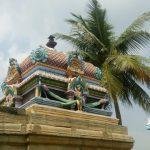
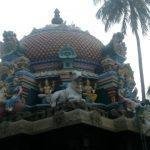
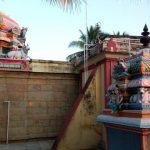
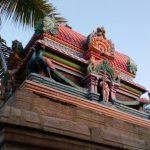
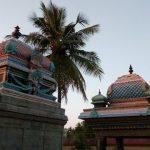
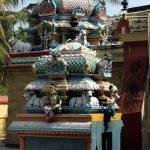
The temple showcases the grandeur of Dravidian Architecture, characterized by towering gateways and intricate stonework.
Sanctum Sanctorum & Layout
- Goshtha: The sanctum of Lord Murugan is distinct. The Lord sits with six faces on an elegant peacock, flanked by Valli and Devayani, each on their own peacock.
- Outer Prakaram (Circumambulatory Path):
- Navagraha Shrine: A unique feature of this temple. The auspicious planets (Moon, Budha, Guru, Sukra) are placed in the four cardinal directions (East, South, West, North) facing the Sun. The other four Grahas are placed in the intercardinal directions (Southeast, Southwest, Northwest, Northeast), also facing the Sun. This geometric precision is rare in Dravidian Vastu.
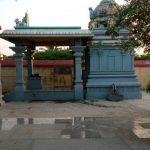
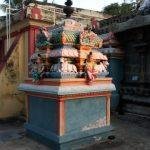
- Other Shrines: The prakaram houses shrines for Lord Ganapathi (located in the Ishanya-disha/Northeast), Idumban, Dakshinamurthy, Sivaloganathar, Oppilambal, Kasi Viswanathar, Bhairava, and Surya.
While the temple is a treasure trove of history, it has not been assigned a specific ASI (Archaeological Survey of India) Protection code or UNESCO World Heritage status, remaining a vital protected monument under local temple administration.
4. Darshan & Ritual Logistics
Planning your visit ensures a peaceful darshan. Below are the operational details for 2026.
Daily Temple Timings
| Session | Timings |
|---|---|
| Morning Darshan | 6:00 AM – 11:00 AM |
| Afternoon Closure | 11:00 AM – 4:00 PM |
| Evening Darshan | 4:00 PM – 7:30 PM |
Key Sevas & Online Booking
To perform specific rituals, devotees can book sevas in advance. While walk-ins are accepted for general darshan, specialized pujas often require prior registration.
- Abhishekam: Performed to the main deities, typically during morning hours.
- Archana: Personalized prayers (using the devotee’s birth star).
- Kavadi Offering: A significant ritual here, especially during the Thai Poosam and Panguni Uthiram festivals.
Note for 2026: Online booking facilities for major temples in Tamil Nadu are centralized through the Tamil Nadu Tourism Department portal. Please check the portal closer to your travel date for specific availability at Thinniyam.
2026 Festival Calendar
Visiting during these festivals offers a vibrant spiritual experience:
- Thai Poosam (January/February): A grand celebration honoring Lord Murugan’s birth star. Expect large crowds and special Abhishekam.
- Panguni Uthiram (March/April): Another major festival celebrating the divine marriage of Lord Murugan and Devasena. Devotees carry Kavadis in procession.
- Skanda Shashti (October/November): A six-day festival celebrating Murugan’s victory over the demon Surapadman. The sixth day (Soorasamharam) is particularly special.
- Arudra Darshan (December/January): Celebrates the cosmic dance of Lord Shiva (Nataraja), significant for the Koshteeswarar shrine.
5. Practical Visitor Guidance
To ensure a respectful and comfortable visit, please adhere to the following guidelines.
Code of Conduct & Essentials
- Dress Code: Traditional Indian attire is mandatory. Men should wear dhotis or trousers with shirts; women should wear sarees, salwar kameez, or long skirts. Avoid shorts and sleeveless tops.
- Photography: Photography is generally restricted inside the inner sanctum (Garbhagriha). It is permitted in the outer corridors and courtyards, but seek permission from temple authorities for specific uses.
- Mobiles & Lockers: The temple is a digital-silent zone. Mobile phones should be switched to silent mode. While specific locker facilities may be limited at this village temple, it is advisable to carry minimal valuables.
- Accessibility:
Crowd Management
- Best Time to Visit: Weekday mornings (Tuesday and Friday are particularly auspicious for Murugan) are less crowded than weekends.
- Seasonal Advice: Summers (April–June) in Trichy are scorching. Carry a water bottle, a towel, and an umbrella. The monsoon (October–November) offers pleasant weather for travel.
6. Pilgrimage Connectivity
Thinniyam is well-connected via road and rail, making it an accessible destination for a day trip from Trichy.
How to Reach
- By Air: The nearest airport is Trichy (Tiruchirappalli) International Airport, located approximately 38 km away.
- By Train:
- Kattur Railway Station: 7 km (closest).
- Trichy Junction: 37 km (major hub with connectivity to all major cities).
- By Road:
- The temple is located just 100 meters from the Thinniyam Bus Stop.
- From Trichy (Srirangam side), take the road towards Lalgudi/Thirukkattupalli. State Highway connectivity is excellent.
- Self-drive or hired taxis/auto-rickshaws from Lalgudi (11 km) or Trichy (33 km) are convenient options.
Nearby Sacred Sites (Pilgrimage Circuit)
Extend your spiritual journey by visiting these nearby temples:
- Uraiyur Veerattaneswarar Temple: Located about 25 km away, this temple is dedicated to Lord Shiva as Veerattaneswarar, celebrating his victory over demons.
- Thirukkattupalli (Jambukeswarar Temple): Approximately 12 km away. This is a Pancha Bhoota Stalam (representing the element of Water) and a must-visit site in Trichy district.
- Anbil Temple (Sundareswarar Temple): About 4 km from Thinniyam. A beautiful temple with rich Chola inscriptions and a serene gopuram.
7. Frequently Asked Questions (FAQ)
1. Is there a VIP darshan entry available at Thinniyam Temple?
As a village temple administered by the HR&CE department of Tamil Nadu, there is no formal VIP darshan system like in Tirupati. However, devotees offering special sevas (like Abhishekam) generally get priority access to the sanctum during the seva time.
2. Can we perform hair tonsuring (Mundan) at the temple?
Yes, hair offering is common here, especially for devotees whose family deity is Thinniyam Murugan. However, facilities are basic compared to large temple complexes. It is advisable to carry your own razor/blade and arrange for disposal respectfully.
3. Is the temple open on all days?
Generally, yes. However, temple timings might be altered during festivals or renovation works. It is recommended to call the temple mobile number provided below before planning a long-distance trip.
4. Where can I park my vehicle?
There is a dedicated open parking area near the bus stop, within walking distance of the temple entrance. It is generally free of charge but can get crowded during festivals.
In most temples, Navagrahas are seated in a single row. Here, they are geometrically arranged in eight directions surrounding the Sun, which is believed to amplify the energy of the planets and help in remedial worship for doshas.
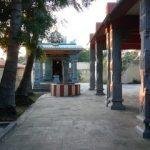
Gallery


Contact Details
For inquiries regarding timings or special pujas:
Subramanya Swamy Temple,
Thinniyam, Trichy District, Tamil Nadu.
Phone: +91 97877 96736
External References
Recent Posts

Shri Kaamkoteeshwar Mandir, Varanasi – History & Significance
In the heart of Kashi, the eternal city of Lord Shiva, where the Ganges flows with celestial grace, stands the Shri Kaamkoteeshwar Mandir. This sacred Sannidhi is not merely a temple but a profound spiritual bridge between the Northern…

ओ सांवरे तूने ही मुझको संभाला – Lyrics & Meaning
ओ सांवरे तूने ही मुझको संभाला – A Prayer to Shyam Origin & Spiritual Essence Why This Bhajan Resonates Devotees chant this when overwhelmed by life’s storms—the refrain ‘तूने ही मुझको संभाला’ is the soul’s sigh of relief: “You…

कथा ये है महाराज मेरे की – Lyrics & Meaning
कथा ये है महाराज मेरे की छत्रपति संभाजी महाराज – A Prayer to Chhatrapati Sambhaji Maharaj Origin & Spiritual Essence Why This Bhajan Resonates Devotees chant this when their spirit feels tested—its powerful refrain “महाराज मेरे” is a soul’s…

Rigveda Samhita Yathartha Anuvada (ऋग्वेद संहिता यथार्थ अनुवाद) – Complete Set with Anvayartha & Hindi/English Translation
The Rigveda is the oldest surviving scripture of humanity and the foundational text of Sanātana Dharma. For serious students, scholars, UPSC aspirants studying ancient Indian history, Sanskrit learners, and spiritual seekers, a precise and grammatically structured translation is indispensable.…

आना भी अकेला है जाना भी अकेला है – Lyrics & Meaning | BharatTemples
आना भी अकेला है जाना भी अकेला है – A Prayer to the Divine Witness Origin & Spiritual Essence Why This Bhajan Resonates Devotees turn to this bhajan in moments of deep reflection—when life’s attachments begin to ache. The…

माता शेरावाली के द्वार जो भी जाता है – Lyrics & Meaning
माता शेरावाली के द्वार जो भी जाता है – A Prayer to Maa Sherawali Origin & Spiritual Essence Why This Bhajan Resonates Devotees turn to this bhajan in times of fear or uncertainty—its promise that no one leaves Maa’s…

मार लेना सपणी उबार लेणा भवरा – Lyrics & Meaning
मार लेना सपणी उबार लेणा भवरा – A Prayer to the Divine Beloved Origin & Spiritual Essence Why This Bhajan Resonates Devotees chant this in moments of deep vulnerability—its cry of “मार लेना सपणी, उबार लेणा भवरा” is the…

हमें श्याम सुंदर भरोसा तुम्हारा – Lyrics & Meaning
हमें श्याम सुंदर भरोसा तुम्हारा – A Prayer to Shyam Sundar Origin & Spiritual Essence Why This Bhajan Resonates Devotees chant this when feeling alone—its refrain ‘de do sahara’ is the soul’s cry for divine support. Lyrics in Hindi…

Mere Satguru Ne Di Thi Davai Lyrics in Hindi & Meaning
Mere Satguru Ne Di Thi Davai: Invoking the Guru’s Liberating Wisdom This soul-stirring bhajan venerates the Satguru (True Spiritual Master) as the divine physician who dispenses the only remedy for life’s deepest sufferings. Composed by Sant Karmaveer Tufani, it…

Janm Diyo Thari Maa Dukh Dekhiyo Lyrics in Hindi & Meaning
जन्म दियो थारी माँ दुख देखियो (Maa’s Grief Upon Birthing You) This soul-stirring Chetavani Bhajan (admonitory hymn) is addressed to the Divine Mother (Maa) – a call for repentance when children forget their filial duties in the dark age…