
Contents
1. Introduction & Spiritual Essence
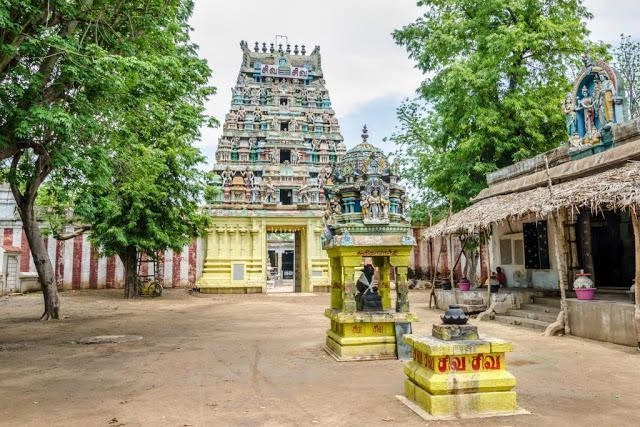
Nestled in the historic village of Pennadam (formerly Pennagadam) in the Cuddalore district, the Sudarkozhundeesar Temple, also reverently known as Pralayakaleswarar Temple, stands as a monumental 2nd Thirattai Kalam of Nadu Naadu. Dedicated to Lord Shiva, this temple is celebrated as the 34th Devaram Padal Petra Shiva Sthalam. It is a Parihara Sthalam specifically for those born under the Kettai (Jyeshta) Nakshatra.
Why Devotees Visit: Phalaśruti
The primary spiritual significance of this temple lies in its name Pralayakaleswarar—the Lord of the Time of Deluge. It is believed that during the cosmic dissolution (Pralaya), this specific location remained afloat while the rest of the world was submerged in water. Devotees visit to cleanse ancestral karma and seek relief from physical ailments, particularly hand and limb pains. The temple is also a potent site for those wishing to rectify afflictions caused by planetary positions associated with Jupiter and Saturn.
2. Historical Origins & Scriptural Legend
The Chola Connection
According to temple records and ASI (Archaeological Survey of India) inferences, the core sanctum belongs to the Early Chola period. It is one of the 78 shrines constructed by the legendary Kochenganan, a Sangam-era Chola king known for his devotion to Shiva. While the date of initial construction predates recorded history, the temple has undergone renovations in 1973 and 1981, with the last major consecration (Kumbhabhishekam) occurring on May 10, 1989.
The Legend of the Great Deluge
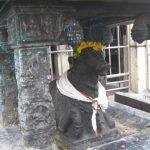
Tradition holds that during the Great Deluge (Pralaya), Lord Shiva remained here to protect the cosmic order. Nandi (the sacred bull), who traditionally faces the Lord, turned fully around to face the entrance, drinking the floodwaters to save the temple. This act of preservation granted the Lord the name Pralayakaleswarar. To this day, the Nandi statue remains unique in Pennadam—fully turned to guard the entrance rather than facing the sanctum.
The Origin of Pennadam
Legend narrates that Indra, the King of Devas, sent two maidens (Penn), a divine cow (Aa), and his elephant (Gadam) to fetch flowers for Shiva’s worship. Upon finding the Shivalinga, they all worshipped the Lord and refused to return. Thus, the village came to be known as Penn-Aa-Gadam (Pennadam).
3. Architectural Marvels
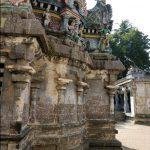
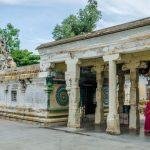
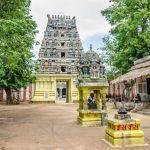
The temple showcases distinct Dravidian architectural style characteristic of the Early Chola era. The Vimana (the tower over the sanctum) is built in the form of an elephant’s back, known as Gajabrushta.
Notable Features:
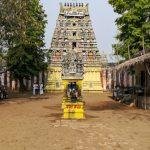
- Elevated Sanctum: The temple is built on a raised mound (Thoonganai Maadam), accessible by a flight of steps, symbolizing the ground level raised by Lord Shiva to aid devotees during floods.
- The Unique Nandi: As mentioned, the Nandi faces the entrance (away from the sanctum), a rare architectural deviation signifying protection.
- Sculptures: The temple complex houses shrines for Kalikamba Nayanar and Meikandar, the pioneers of Saiva philosophy.
4. Darshan & Ritual Logistics (2026 Update)
Based on current temple traditions, the timings are as follows. Please note: Hours may vary during festivals.
| Session | Timings |
|---|---|
| Morning Darshan | 6:00 AM – 11:00 AM |
| Afternoon Break | 11:00 AM – 5:00 PM |
| Evening Darshan | 5:00 PM – 9:00 PM |
Key Sevas & Online Booking
While specific online portals for this minor temple may be limited, devotees can contact the temple administration directly via the phone numbers listed below. The following Sevas are highly recommended:
- Abhishekam: Performed with milk, honey, and sandalwood paste.
- Archana: Special Kettai Nakshatra Archana for those born under Jyeshta.
- Vastram Offering: Traditional offering to the Lord for relief from ailments.
2026 Major Festivals
- Maha Shivaratri: February 26, 2026
- Brahmotsavam (Chithirai Month): 12-day festival starting mid-April 2026 (Dates vary by Tamil Panchangam).
- Thiruvadirai (Margazhi): December 2026.
- Pradosham: Bi-monthly rituals (13th and 28th of every month).
5. Practical Visitor Guidance
Visiting Pennadam requires preparation to ensure a serene spiritual experience.
Rules & Etiquette
- Dress Code: Traditional attire is mandatory. Men should wear dhotis or pants with shirts; women should wear sarees or salwar kameez.
- Photography: Photography is strictly prohibited inside the sanctum and the inner prakaram.
- Mobile Lockers: There are no digital lockers currently available. It is advisable to carry minimal belongings.
- Accessibility: The temple is on a raised elevation. There are steps leading to the entrance. While portable ramps are not officially listed, assistance is available from the temple custodians for elderly devotees.
Crowd Management & Seasonal Tips
Best Time to Visit: Early mornings (6:00 AM – 8:00 AM) are best to avoid crowds, especially on Mondays and Pradosham days.
Seasonal Advice: Pennadam can get extremely hot in May and June. Carry a water bottle and an umbrella. The monsoon (October–November) can make the approach roads slippery; exercise caution while driving.
6. Pilgrimage Connectivity
How to Reach
- By Road: The temple is located on the Vridhachalam to Thittakudi route (State Highway). Frequent buses are available from Vridhachalam (19 km) and Thittakudi (15 km). From Chennai, take the NH32 (formerly NH45) via Villupuram.
- By Train: Pennadam Railway Station (PDM) is the nearest, located 3 km from the temple on the Vridhachalam–Tiruchirappalli line. The major railway junction is Vridhachalam (20 km).
- By Air:
- Puducherry (PXY): ~97 km
- Tiruchirappalli (TRZ): ~106 km
- Chennai (MAA): ~257 km
Nearby Sacred Sites (Pilgrimage Circuit)
Extend your spiritual journey by visiting these nearby temples:
- Sri Kadu Hanuman Temple, Thittakudi: A powerful Hanuman temple located 15 km away.
- Thirunallar Shani Temple: Located approx. 60 km away, this is the most famous shrine for Lord Shani (Saturn).
- Thirukkovilur Veerattaneswarar Temple: An ancient Shiva temple 39 km away, revered as one of the 8 Veeratta Stalam.
7. Frequently Asked Questions (FAQ)
Is there a VIP darshan entry?
As a smaller temple complex, there is no separate VIP entry fee. However, contacting the temple administration (+91 4143 222 788) in advance for special permission during rush hours is recommended for senior citizens or those with mobility issues.
What is the significance of the Nandi facing away?
Usually, Nandi faces the Lord. However, at Sudarkozhundeesar Temple, the Nandi is turned fully around to face the entrance. This represents the mythological event where Nandi drank the floodwaters to protect the temple during the Great Deluge (Pralaya).
Is this temple a ‘Parihara Sthalam’?
Yes. It is specifically beneficial for those with Kettai (Jyeshta) Nakshatra in their horoscope. It also aids in curing hand and limb ailments.
Are there accommodation facilities available?
There are no major hotels within Pennadam. Devotees usually stay in Vridhachalam (19 km) or Thittakudi (15 km), which have better lodging and dining options.
Can I perform Abhishekam on Mondays?
Yes, Mondays are highly auspicious. However, it is advisable to bring your own Abhishekam materials (milk, vibhuti, etc.) or coordinate with the temple priests a day in advance.
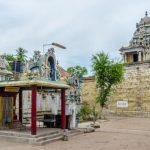
Photo Gallery



Contact Details
Sudarkozhundeesar Temple (Pralayakaleswarar Temple)
Pennadam Post,
Thittakudi Taluk,
Cuddalore District – 606 105
Phone: +91 4143 222 788
Mobile: +91 99940 88359 / 98425 64768
Recent Posts

Shri Kaamkoteeshwar Mandir, Varanasi – History & Significance
In the heart of Kashi, the eternal city of Lord Shiva, where the Ganges flows with celestial grace, stands the Shri Kaamkoteeshwar Mandir. This sacred Sannidhi is not merely a temple but a profound spiritual bridge between the Northern…

ओ सांवरे तूने ही मुझको संभाला – Lyrics & Meaning
ओ सांवरे तूने ही मुझको संभाला – A Prayer to Shyam Origin & Spiritual Essence Why This Bhajan Resonates Devotees chant this when overwhelmed by life’s storms—the refrain ‘तूने ही मुझको संभाला’ is the soul’s sigh of relief: “You…

कथा ये है महाराज मेरे की – Lyrics & Meaning
कथा ये है महाराज मेरे की छत्रपति संभाजी महाराज – A Prayer to Chhatrapati Sambhaji Maharaj Origin & Spiritual Essence Why This Bhajan Resonates Devotees chant this when their spirit feels tested—its powerful refrain “महाराज मेरे” is a soul’s…

Rigveda Samhita Yathartha Anuvada (ऋग्वेद संहिता यथार्थ अनुवाद) – Complete Set with Anvayartha & Hindi/English Translation
The Rigveda is the oldest surviving scripture of humanity and the foundational text of Sanātana Dharma. For serious students, scholars, UPSC aspirants studying ancient Indian history, Sanskrit learners, and spiritual seekers, a precise and grammatically structured translation is indispensable.…

आना भी अकेला है जाना भी अकेला है – Lyrics & Meaning | BharatTemples
आना भी अकेला है जाना भी अकेला है – A Prayer to the Divine Witness Origin & Spiritual Essence Why This Bhajan Resonates Devotees turn to this bhajan in moments of deep reflection—when life’s attachments begin to ache. The…

माता शेरावाली के द्वार जो भी जाता है – Lyrics & Meaning
माता शेरावाली के द्वार जो भी जाता है – A Prayer to Maa Sherawali Origin & Spiritual Essence Why This Bhajan Resonates Devotees turn to this bhajan in times of fear or uncertainty—its promise that no one leaves Maa’s…

मार लेना सपणी उबार लेणा भवरा – Lyrics & Meaning
मार लेना सपणी उबार लेणा भवरा – A Prayer to the Divine Beloved Origin & Spiritual Essence Why This Bhajan Resonates Devotees chant this in moments of deep vulnerability—its cry of “मार लेना सपणी, उबार लेणा भवरा” is the…

हमें श्याम सुंदर भरोसा तुम्हारा – Lyrics & Meaning
हमें श्याम सुंदर भरोसा तुम्हारा – A Prayer to Shyam Sundar Origin & Spiritual Essence Why This Bhajan Resonates Devotees chant this when feeling alone—its refrain ‘de do sahara’ is the soul’s cry for divine support. Lyrics in Hindi…

Mere Satguru Ne Di Thi Davai Lyrics in Hindi & Meaning
Mere Satguru Ne Di Thi Davai: Invoking the Guru’s Liberating Wisdom This soul-stirring bhajan venerates the Satguru (True Spiritual Master) as the divine physician who dispenses the only remedy for life’s deepest sufferings. Composed by Sant Karmaveer Tufani, it…

Janm Diyo Thari Maa Dukh Dekhiyo Lyrics in Hindi & Meaning
जन्म दियो थारी माँ दुख देखियो (Maa’s Grief Upon Birthing You) This soul-stirring Chetavani Bhajan (admonitory hymn) is addressed to the Divine Mother (Maa) – a call for repentance when children forget their filial duties in the dark age…