
Contents
The Sun Temple in Ladakh is a prominent spiritual beacon, known locally as Nyarma or the Bhaskar Devta shrine. Located near the Indus River in the Leh district, this mediaeval holy place is dedicated to the Sun God (Surya), representing light, health, and dispelling the darkness of ignorance. Unlike the massive rock-carved monasteries of Ladakh, this temple stands as a testament to the synthesis of Vedic Hindu traditions and the unique landscape of the Himalayas.
Phalaśruti (Benefits of Visit): Devotees believe that worshipping Bhaskar at this ancient site helps cleanse ancestral karma and brings clarity to the mind. The temple is particularly significant for those seeking relief from prolonged illnesses and financial obstacles, as the Sun is considered the cosmic healer in Vedic astrology.
Historical Origins & Scriptural Legend
Builders and Century: According to temple records and historical consensus, the Sun Temple was constructed in the 8th century CE by the legendary ruler King Lalitaditya Muktapida of the Karkota Dynasty. His empire stretched across Kashmir and parts of the Himalayas, and he commissioned several grand structures to honor the Sun God.
Architectural Heritage: The temple was built using hard, square granite blocks, which act as a souvenir of the architectural style of the previous era. While many structures from Lalitaditya’s reign have succumbed to time and earthquakes, the Sun Temple remains standing, preserving the legacy of the Kashmiri Pandits who once thrived in this region.
Scriptural & Local Legend: Tradition holds that the temple aligns with the rising sun, a feat of ancient astronomical engineering. While specific Vedic references are often localized in oral traditions, the temple’s construction mirrors descriptions of Surya shrines found in the Puranas. The site later saw active patronage from Buddhist monks, creating a unique syncretic history where Buddhist lamas and Hindu priests both revered the Sun God.
Architectural Marvels
Style and Layout: The temple exhibits the Nagara style of architecture, though adapted to the high-altitude terrain of Ladakh. The structure is carved from durable granite, featuring a Shikhara (towering spire) that has partially survived the ravages of time. The layout follows the Ashtamangala (eight auspicious symbols) geometry common in Vastu Shastra.
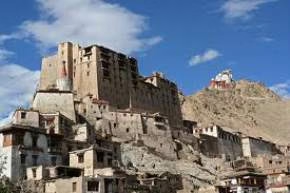
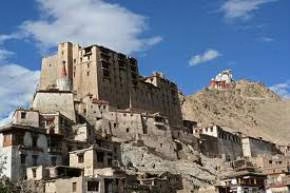
Notable Features: The most striking feature is the colonnaded courtyard. The temple was originally built with approximately 84 columns (Pillars), which were used for supporting the roof and creating a walkway for circumambulation (Parikrama). These pillars, made of stone and wood, feature carvings that show a blend of Hindu iconography and local Ladakhi art styles. The surviving sanctum (Garbhagriha) still houses the idol of Bhaskar, though the upper tiers of the temple are in ruins.
Photo Gallery
Darshan & Ritual Logistics (2026)
Managing logistics in Ladakh requires planning due to high altitude and weather conditions. Below are the standard timings and seva details.
Daily Darshan Timings
| Session | Timing | Activity |
|---|---|---|
| Morning Darshan | 07:00 AM – 12:00 PM | Mangala Aarti & Abhishekam |
| Afternoon Break | 12:00 PM – 03:00 PM | Sanctum Closure (Rest Period) |
| Evening Darshan | 03:00 PM – 06:00 PM | Sayamkala Aarti |
Key Sevas & Online Booking
Important Note: Due to the remote location of Ladakh, dedicated online portals for this specific temple may not be active. However, darshan is free and open to all. For special Abhishekam (ritual bathing of the deity) or Archana (recitation of names), arrangements are typically made directly with the temple priests present on-site.
- Surya Namaskar Seva: Performed at sunrise (requires prior permission from the caretaker).
- Deepa Darshanam: Evening lamp offering.
Festival Dates 2026
- Makar Sankranti (January): Special rituals marking the sun’s entry into Capricorn.
- Rath Saptami (February 3, 2026): The most significant festival here, celebrated as the birthday of Lord Surya.
- Chhath Puja (October/November 2026): Observed by devotees with water offerings (dates vary by lunar calendar).
Practical Visitor Guidance
Dress Code: Modest clothing is mandatory. Men and women should cover shoulders and knees. Since the temple is at a high altitude (approx. 3,500m+), wearing warm layers is advisable even inside the temple complex.
Photography & Mobiles: Photography is generally allowed in the courtyard and exterior grounds. However, photography inside the sanctum (Garbhagriha) is strictly prohibited. Mobile phones are permitted but should be kept on silent mode.
Crowd Management & Seasonality: Unlike the main Leh town attractions, this temple is relatively quieter. However, best hours to visit are early mornings (7:00 AM – 9:00 AM) to avoid tourist buses. In May and June, the sun can be intense due to high UV radiation at altitude; carry water, sunglasses, and a hat.
Pilgrimage Connectivity
How to Reach:
- Airport: Kushok Bakula Rimpochee Airport, Leh (IXL). The temple is approximately 30-40 km (1 hour drive) from the airport.
- Road Access: The temple is located near Shey village, accessible via the Leh–Manali Highway (NH 3). A taxi or rented bike is the most convenient option from Leh city.
- Challenges: The road involves mountain terrain; acclimatization in Leh for 24 hours is recommended before visiting.
Nearby Sacred Sites (Pilgrimage Circuit)
- Shey Monastery & Palace: Just 2 km away, this was the summer capital of Ladakh and houses a massive Shakyamuni Buddha statue.
- Thiksey Monastery: Located 10 km away, often called “Mini Potala” for its resemblance to the Potala Palace in Tibet.
- Stok Palace: The residence of the former royal family of Ladakh, housing a temple with rare manuscripts.
Frequently Asked Questions (FAQ)
There is no formal VIP entry system at Sun Temple as it is a heritage site managed by the Archaeological Survey of India (ASI) in coordination with local monks. Entry is general and free for all.
The ideal time is between May and September. During these months, the weather is pleasant, and roads are open. Winters (November to February) are harsh with heavy snowfall, often blocking access.
Devotees can offer prayers and circumambulate the temple. However, elaborate rituals inside the sanctum are performed by the designated priest. You may carry your own prasad (offerings like fruits or sweets), but it is respectful to consult the priest first.
As of 2026, there is no entry fee for Indian citizens. International tourists may need a Protected Area Permit (PAP) for Ladakh, which is checked at various points in Leh district. The temple entry itself is free.
For medical emergencies, contact the SNM Hospital, Leh (+91-1982-252242). For police, dial 100. As the temple is outdoors, on-site phone connectivity may be intermittent; please ensure you have postpaid connectivity (BSNL/Jio/Airtel) working in Leh before departing.
Address
Sun Temple, Nyarma
Shey, Leh District,
Ladakh, India – 194201
Contact Details
While there is no direct phone line for the temple, inquiries can be made via the Ladakh Tourism Department:
Email: tourismleh@ladakh.gov.in
Helpline: 01982-256516
Recent Posts

ओ सांवरे तूने ही मुझको संभाला – Lyrics & Meaning
ओ सांवरे तूने ही मुझको संभाला – A Prayer to Shyam Origin & Spiritual Essence Why This Bhajan Resonates Devotees chant this when overwhelmed by life’s storms—the refrain ‘तूने ही मुझको संभाला’ is the soul’s sigh of relief: “You…

कथा ये है महाराज मेरे की – Lyrics & Meaning
कथा ये है महाराज मेरे की छत्रपति संभाजी महाराज – A Prayer to Chhatrapati Sambhaji Maharaj Origin & Spiritual Essence Why This Bhajan Resonates Devotees chant this when their spirit feels tested—its powerful refrain “महाराज मेरे” is a soul’s…

Rigveda Samhita Yathartha Anuvada (ऋग्वेद संहिता यथार्थ अनुवाद) – Complete Set with Anvayartha & Hindi/English Translation
The Rigveda is the oldest surviving scripture of humanity and the foundational text of Sanātana Dharma. For serious students, scholars, UPSC aspirants studying ancient Indian history, Sanskrit learners, and spiritual seekers, a precise and grammatically structured translation is indispensable.…

आना भी अकेला है जाना भी अकेला है – Lyrics & Meaning | BharatTemples
आना भी अकेला है जाना भी अकेला है – A Prayer to the Divine Witness Origin & Spiritual Essence Why This Bhajan Resonates Devotees turn to this bhajan in moments of deep reflection—when life’s attachments begin to ache. The…

माता शेरावाली के द्वार जो भी जाता है – Lyrics & Meaning
माता शेरावाली के द्वार जो भी जाता है – A Prayer to Maa Sherawali Origin & Spiritual Essence Why This Bhajan Resonates Devotees turn to this bhajan in times of fear or uncertainty—its promise that no one leaves Maa’s…

मार लेना सपणी उबार लेणा भवरा – Lyrics & Meaning
मार लेना सपणी उबार लेणा भवरा – A Prayer to the Divine Beloved Origin & Spiritual Essence Why This Bhajan Resonates Devotees chant this in moments of deep vulnerability—its cry of “मार लेना सपणी, उबार लेणा भवरा” is the…

हमें श्याम सुंदर भरोसा तुम्हारा – Lyrics & Meaning
हमें श्याम सुंदर भरोसा तुम्हारा – A Prayer to Shyam Sundar Origin & Spiritual Essence Why This Bhajan Resonates Devotees chant this when feeling alone—its refrain ‘de do sahara’ is the soul’s cry for divine support. Lyrics in Hindi…

Mere Satguru Ne Di Thi Davai Lyrics in Hindi & Meaning
Mere Satguru Ne Di Thi Davai: Invoking the Guru’s Liberating Wisdom This soul-stirring bhajan venerates the Satguru (True Spiritual Master) as the divine physician who dispenses the only remedy for life’s deepest sufferings. Composed by Sant Karmaveer Tufani, it…

Janm Diyo Thari Maa Dukh Dekhiyo Lyrics in Hindi & Meaning
जन्म दियो थारी माँ दुख देखियो (Maa’s Grief Upon Birthing You) This soul-stirring Chetavani Bhajan (admonitory hymn) is addressed to the Divine Mother (Maa) – a call for repentance when children forget their filial duties in the dark age…
Bhadi Sabha Mein Thane Manaun Lyrics in Hindi & Meaning
Bhadi Sabha Mein Thane Manaun: Invoking the Spear-Wielding Mother Mata Bhawani (श्री ज्वाला भवानी), the fiery manifestation of Shakti worshipped as the Protector of Dharma in Her Dhaulagarh sanctum. Origin & Spiritual Essence Composed in Rajasthani folk tradition by…