
Contents
Introduction & Spiritual Essence
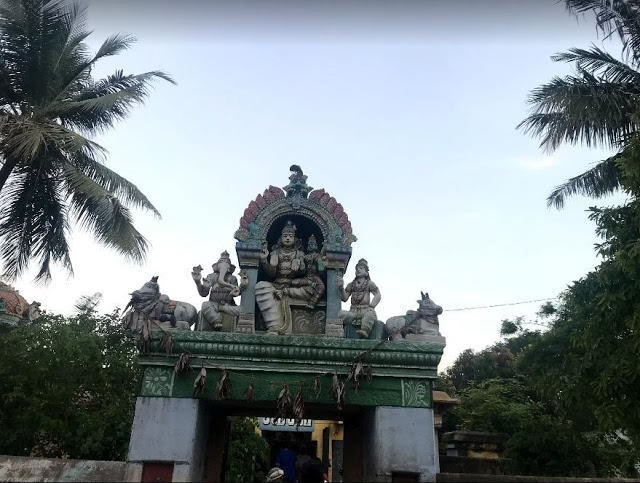
Nestled in the serene locale of Pichandarkovil in Trichy, the Sundareswarar Temple stands as a timeless bastion of Dravidian heritage and spiritual solace. This ancient shrine is dedicated to Lord Shiva, worshipped here as Sundareswarar (the Lord of Beauty) and the Mother Goddess Meenakshi. The temple is revered for its unique energy, often described as a place where the energies of the celestial and terrestrial realms converge.
Phalaśruti: The Benefits of Visiting
Devotees visit the Sundareswarar Temple seeking blessings for mental clarity and familial harmony. According to local tradition, worshipping here helps in:
- Dispelling Darkness: As Lord Shiva is the embodiment of light (Jyotirlinga), he removes the ignorance (avidya) that clouds the devotee’s mind.
- Ancestral Karma Cleansing: It is believed that prayers offered here help liberate ancestors from their karmic cycles, especially during the Mahalaya Paksha periods.
- Mental Peace: The serene environment of Pichandarkovil, away from the city center, aids in meditation and yoga.
Historical Origins & Scriptural Legend
While specific dynasty records regarding the initial construction of the Sundareswarar Temple are sparse compared to the massive fortress temples of Trichy, the architecture suggests a lineage belonging to the Chola period, with subsequent expansions during the Nayak era (16th-18th century). The temple is a testament to the region’s devotion to Lord Shiva.
The Sthala Purana (Local Legend)
Tradition holds that this holy site is part of the sacred geography where Lord Shiva performed the Ananda Tandava (Cosmic Dance of Bliss). The presiding deity, Sundareswarar, is believed to have manifested to bless the sages and devotees of this region. The name “Pichandarkovil” has deep roots in Dravidian history; “Pichandan” is an honorific epithet for Lord Shiva, representing the form that transcends duality. Legends suggest that the sage Agastya worshipped here to balance the southern energies of the earth.
Architectural Marvels
The temple exemplifies the grandeur of Dravidian architecture. Unlike the curvilinear towers of North India (Nagara style), the temple features the distinct Vimana (tower over the sanctum) and Gopurams (gateway towers) that rise in tiered levels, rich with stucco imagery.
Vastu Shastra and Layout
Adhering to Vastu Shastra, the temple is oriented on an East-West axis, allowing the morning sun to illuminate the sanctum sanctorum (Garbhagriha). The inner sanctum is octagonal, creating a resonance chamber for the primordial sound of the mantra.
Sculptural Details
The temple walls are adorned with intricate carvings depicting:
- The 64 forms of Shiva.
- Guardians of the directions (Dikpalas).
- Mythological narratives from the Shiva Purana.
Darshan & Ritual Logistics
The temple follows traditional Agamic rituals. Below is the daily schedule for darshan and pujas. Note: Timings are subject to change during festivals.
Daily Timings
| Session | Activity | Timings |
|---|---|---|
| Morning | Opening, Ushathkala Pooja | 6:00 AM |
| Morning | Kalasanthi (Midday Pooja) | 12:00 PM |
| Afternoon | Temple Closure | 12:30 PM – 4:00 PM |
| Evening | Opening, Sayarakshai | 4:00 PM |
| Night | Palliyarai Pooja (Closing) | 8:30 PM |
Key Sevas and Online Booking
Devotees can perform various sevas such as Abhishekam (ritual bathing of the deity) and Archana (recitation of names). While the temple management may offer online booking through the HR&CE (Hindu Religious and Charitable Endowments) department, it is advisable to check their official portal for real-time availability. Walk-in bookings for Archana and Deepa Aradhanai are generally available at the counter.
Festivals in 2026
Major festivals celebrated here include Arudra Darshanam and Shivratri. Specific dates for 2026 are:
- Maha Shivaratri: February 26, 2026
- Arudra Darshanam: June 23, 2026 (Corresponding to the month of Aippasi/ Margazhi)
Practical Visitor Guidance
To ensure a peaceful darshan, please adhere to the following guidelines:
Dress Code & Etiquette
Visitors are required to wear traditional attire. Men should wear dhotis or trousers with shirts, and women should wear sarees, half-sarees, or churidars. Shorts and skirts are discouraged.
Photography & Mobile Phones
Photography is strictly prohibited inside the inner sanctum. Mobile phones should be switched to silent mode. Many temples offer free lockers; however, it is advisable to carry minimal belongings.
Accessibility & Crowd Management
The temple premises are relatively compact. For the most serene experience, visit on weekdays between 10:00 AM and 11:30 AM. Avoid weekends and public holidays if possible.
- Summer (March – June): Carry a water bottle and umbrella; heat can be intense in Trichy.
- Monsoon (October – December): The temple courtyard may be slippery; wear rubber-soled footwear with grip.
Pilgrimage Connectivity
The Sundareswarar Temple is strategically located near other famous Shiva shrines, making it ideal for a Pancha Bhoota or “Five Shiva Temples” circuit.
How to Reach
- By Air: The nearest airport is Trichy International Airport (TRZ), approximately 17 km away.
- By Rail: The closest railway station is Uthamar Kovil Railway Station (400 meters). Major connectivity is available via Trichy Junction (16 km).
- By Road: The temple is located near the Trichy-Salem highway. Private taxis and auto-rickshaws are easily available from Trichy central bus stand (12 km).
Nearby Sacred Sites (The Trichy Circuit)
Extend your pilgrimage to these nearby holy sites:
- Uthamar Kovil: Located just 400 meters away, dedicated to Lord Vishnu (as Purushothama) and Lord Shiva (as yoga Hayagriva).
- Srirangam (Ranganathaswamy Temple): 5 km away, the largest functioning temple complex in the world.
- Thiruvanaikaval (Jambukeswarar Temple): 5 km away, one of the Pancha Bhoota Shivalingas representing the element of Water.
Frequently Asked Questions (FAQs)
1. Is there a VIP Darshan entry at Sundareswarar Temple?
While the temple does not have a formal VIP entry system like larger commercial shrines, special darshan is available for elderly citizens and differently-abled devotees upon request at the counter.
2. What is the significance of the name Pichandarkovil?
The name derives from “Pichandan,” an ancient Dravidian epithet for Lord Shiva. It signifies the Lord’s benevolent form that liberates devotees from the cycle of birth and death.
3. Are non-Hindus allowed inside the temple?
Following traditional customs, entry is generally restricted to those who follow the Hindu faith (Sanatana Dharma). Non-Hindus may admire the architecture from the outer corridors.
4. What is the best time to visit Trichy for a temple tour?
The ideal time is between November and February when the weather is pleasant and cool, coinciding with the Margazhi festival season.
5. Is there a facility for accommodation?
The temple trust does not have on-site guest houses. However, ample accommodation is available in Trichy city (Srirangam and Chathiram bus stand areas) ranging from budget lodges to 4-star hotels.
Photo Gallery

Contact Details
For specific inquiries regarding rituals or timings, it is recommended to contact the temple administration office during working hours.
Recent Posts

Shri Kaamkoteeshwar Mandir, Varanasi – History & Significance
In the heart of Kashi, the eternal city of Lord Shiva, where the Ganges flows with celestial grace, stands the Shri Kaamkoteeshwar Mandir. This sacred Sannidhi is not merely a temple but a profound spiritual bridge between the Northern…

ओ सांवरे तूने ही मुझको संभाला – Lyrics & Meaning
ओ सांवरे तूने ही मुझको संभाला – A Prayer to Shyam Origin & Spiritual Essence Why This Bhajan Resonates Devotees chant this when overwhelmed by life’s storms—the refrain ‘तूने ही मुझको संभाला’ is the soul’s sigh of relief: “You…

कथा ये है महाराज मेरे की – Lyrics & Meaning
कथा ये है महाराज मेरे की छत्रपति संभाजी महाराज – A Prayer to Chhatrapati Sambhaji Maharaj Origin & Spiritual Essence Why This Bhajan Resonates Devotees chant this when their spirit feels tested—its powerful refrain “महाराज मेरे” is a soul’s…

Rigveda Samhita Yathartha Anuvada (ऋग्वेद संहिता यथार्थ अनुवाद) – Complete Set with Anvayartha & Hindi/English Translation
The Rigveda is the oldest surviving scripture of humanity and the foundational text of Sanātana Dharma. For serious students, scholars, UPSC aspirants studying ancient Indian history, Sanskrit learners, and spiritual seekers, a precise and grammatically structured translation is indispensable.…

आना भी अकेला है जाना भी अकेला है – Lyrics & Meaning | BharatTemples
आना भी अकेला है जाना भी अकेला है – A Prayer to the Divine Witness Origin & Spiritual Essence Why This Bhajan Resonates Devotees turn to this bhajan in moments of deep reflection—when life’s attachments begin to ache. The…

माता शेरावाली के द्वार जो भी जाता है – Lyrics & Meaning
माता शेरावाली के द्वार जो भी जाता है – A Prayer to Maa Sherawali Origin & Spiritual Essence Why This Bhajan Resonates Devotees turn to this bhajan in times of fear or uncertainty—its promise that no one leaves Maa’s…

मार लेना सपणी उबार लेणा भवरा – Lyrics & Meaning
मार लेना सपणी उबार लेणा भवरा – A Prayer to the Divine Beloved Origin & Spiritual Essence Why This Bhajan Resonates Devotees chant this in moments of deep vulnerability—its cry of “मार लेना सपणी, उबार लेणा भवरा” is the…

हमें श्याम सुंदर भरोसा तुम्हारा – Lyrics & Meaning
हमें श्याम सुंदर भरोसा तुम्हारा – A Prayer to Shyam Sundar Origin & Spiritual Essence Why This Bhajan Resonates Devotees chant this when feeling alone—its refrain ‘de do sahara’ is the soul’s cry for divine support. Lyrics in Hindi…

Mere Satguru Ne Di Thi Davai Lyrics in Hindi & Meaning
Mere Satguru Ne Di Thi Davai: Invoking the Guru’s Liberating Wisdom This soul-stirring bhajan venerates the Satguru (True Spiritual Master) as the divine physician who dispenses the only remedy for life’s deepest sufferings. Composed by Sant Karmaveer Tufani, it…

Janm Diyo Thari Maa Dukh Dekhiyo Lyrics in Hindi & Meaning
जन्म दियो थारी माँ दुख देखियो (Maa’s Grief Upon Birthing You) This soul-stirring Chetavani Bhajan (admonitory hymn) is addressed to the Divine Mother (Maa) – a call for repentance when children forget their filial duties in the dark age…