
Contents
Introduction & Spiritual Essence: The Abode of the Goddess’s Head
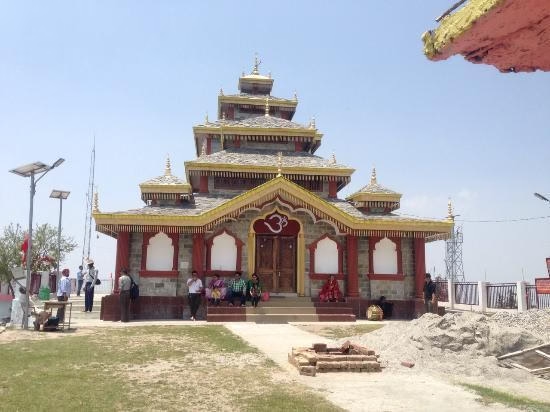
Perched at an elevation of 3,030 meters (9,976 ft) in the serene Tehri Garhwal district of Uttarakhand, the Surkanda Devi Temple stands as a beacon of divine feminine energy. Dedicated to Surkhanda Devi (an incarnation of Goddess Sati), this ancient shrine is a profound Shakti Peetha, marking the holy spot where the severed head ( Sir ) of Goddess Sati fell from the dismembered body carried by Lord Shiva.
Phalaśruti (Spiritual Benefits): Devotees undertake the pilgrimage to Surkanda Devi seeking liberation from sins and the accumulation of negative karma. It is specifically believed that offering prayers here helps in cleansing Pitru Dosha (ancestral flaws) and grants devotees the virtues of Shakti (power) and Shanti (peace). The temple’s energy is particularly potent during the annual Ganga Dusshera festival, when the valley resonates with sacred chants.
Historical Origins & Scriptural Legend
The history of Surkanda Devi is deeply rooted in the Sthala Purana (local oral traditions) and the broader Vedic narrative of Sati and Shiva. Tradition holds that after Goddess Sati immolated herself at Daksha’s Yagna, a grief-stricken Lord Shiva wandered the cosmos carrying her body. To prevent the universe from being destroyed by his Tandava (dance of destruction), Lord Vishnu dismembered the body with his Sudarshana Chakra.
As the body parts fell across the subcontinent, forming the 51 Shakti Peethas, the head of Sati fell on this very hilltop in the Himalayas. The name of the temple evolved over centuries: from Sir (Head) + Khanda (Piece) = Sirkhanda, which eventually became Surkanda. While specific historical records of the builders (dynasty/kings) are sparse due to the temple’s ancient origins and Himalayan location, the structure has been maintained and renovated by local devotees over centuries. The temple remains a pivotal spiritual site in the Tehri Garhwal region, embodying a history that transcends recorded timelines.
Architectural Marvels
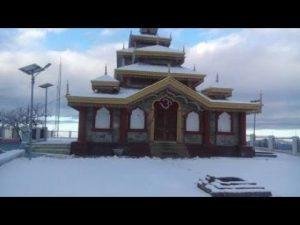
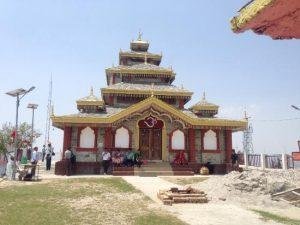
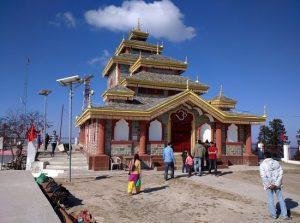
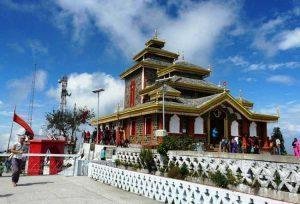
While official architectural style records are not definitively cataloged by the ASI for this specific shrine, the temple exhibits a unique Himalayan Vernacular style. Unlike the grand stone carvings of South Indian Dravida or North Indian Nagara styles found in plains, the architecture here is adapted to the harsh mountain climate and available materials.
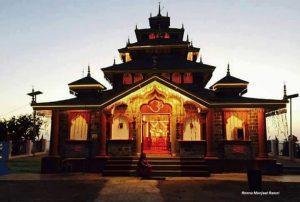
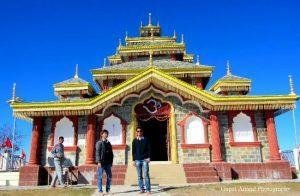
- Construction: The shrine is constructed primarily of local stone and timber, featuring a sloping slate roof typical of Uttarakhand’s Kath-Kuni style.
- Sanctum (Garbhagriha): The inner sanctum houses a swayambhu (self-manifested) idol of the Goddess, adorned with traditional cloth and jewelry.
- Surroundings: The temple is nestled amidst Rouns (Rhododendron) trees, adding a burst of crimson red to the landscape during spring.
- View: The Mandapa (hall) offers a panoramic 360-degree view of the Himalayan ranges and the Doon Valley, making it a visual treat alongside its spiritual significance.
Darshan & Ritual Logistics
Visitors are advised to check for local weather updates before visiting, as the temple is often shrouded in mist and fog. The atmosphere is serene, ideal for meditation.
Daily Darshan Timings
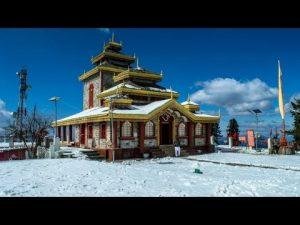
Timings are subject to change during festivals or winter months due to heavy snowfall.
| Session | Timing |
|---|---|
| Morning Darshan | 06:00 AM – 01:00 PM |
| Evening Darshan | 02:00 PM – 07:00 PM |
| Note: During the Winter season (Nov-Feb), the temple often closes earlier by 5:00 PM due to snow and low visibility. | |
Sevas & Online Booking
Unlike major commercialized shrines, Surkanda Devi operates on a more traditional basis. However, for major festivals, local administration provides guidance.
- Daily Sevas: Morning Aarti (at sunrise), Abhishekam (ritual bathing of the deity), and Archana (recitation of names) are performed daily. Devotees can participate by contacting the temple priest on arrival.
- Online Booking: Currently, there is no centralized online portal for daily Seva booking specific only to Surkanda Devi. However, for the annual Ganga Dusshera and Navratri festivals, administrative arrangements are made by the Tehri Garhwal district authorities.
- 2026 Festival Dates:
- Ganga Dusshera: May 31, 2026 (Major Annual Fair)
- Navratri (Chaitra): March 30 – April 7, 2026
- Diwali: October 21, 2026
Practical Visitor Guidance
Dress Code: As a place of worship, modest attire is strictly recommended. Men should wear trousers and shirts (avoid shorts); women are advised to wear sarees, salwar kameez, or long skirts.
Photography Rules: Photography is generally permitted in the temple complex and for the scenic views. However, flash photography is strictly prohibited inside the inner sanctum.
Mobile Lockers & Items: There are no formal electronic lockers available at the base. It is advisable to travel light. Leather items and electronic smoking devices are strictly prohibited inside the temple premises.
Crowd Management & Accessibility:
- Accessibility: The final 3 km trek from Kaddukhal is a moderate hike suitable for most fitness levels. Senior citizens can hire palkis (palanquins) or mules available at the trek base.
- Best Hours: To avoid crowds, visit between 7:00 AM and 9:00 AM or after 4:00 PM.
- Seasonal Advice: Carry a raincoat during the monsoon (July-Sept). In May and June (peak summer), carry sufficient water, though natural streams are available along the trek.
Pilgrimage Connectivity
How to Reach
The temple is accessible via the Chamba – Mussoorie Road.
- Nearest Airport: Jolly Grant Airport, Dehradun (approx. 85 km / 3-4 hours drive).
- Nearest Railway Station: Dehradun Railway Station (approx. 80 km).
- By Road (NH & State Highways): The route primarily utilizes NH 7 and State Highway 5. From Delhi, take the route via Meerut -> Roorkee -> Rishikesh -> Devprayag -> Srinagar -> Rudraprayag -> Rishikesh -> Chamba. From Chamba, take the Mussoorie road; the temple road turnoff is at Kaddukhal.
Nearby Sacred Sites (Pilgrimage Circuit)
Extend your spiritual journey by visiting these nearby sites within Tehri Garhwal:
- Mahasu Devta Temple (Hanol): Located in Ukhimath, this ancient temple is dedicated to Mahasu Devta and is a significant center of folk deity worship in the region.
- Kashmir Shiv Mandir: A beautiful temple located in the Kandakhal area, known for its serene architecture.
- Surkanda Devi Waterfall: Located near the trek route, this natural waterfall is considered sacred and a perfect spot for meditation.
Photo Gallery
Frequently Asked Questions (FAQ)
1. Is there a VIP darshan entry available?
Surkanda Devi Temple is a community-managed shrine rather than a large commercial complex. There is no formal VIP darshan ticket system. However, those with mobility issues can access the temple via mules or palkis, which facilitates a closer approach.
2. What is the significance of the name ‘Surkanda’?
The name is a corruption of Sir Khanda, meaning “Part of the Head.” It signifies the temple’s status as one of the 51 Shakti Peethas, where the head of Goddess Sati is believed to have fallen.
3. Are there accommodation facilities near the temple?
There are no hotels directly at the temple summit. Basic guesthouses and homestays are available in Dhanaulti (8 km away) and Chamba (22 km away). Devotees can also stay in the Dharamshalas available at the trek base or in the nearby villages.
4. Is the trek difficult for children and elders?
The trek is approximately 3 km from Kaddukhal with a moderate incline. It is manageable for children and regular walkers. For elders, hiring a mule is a safe and convenient option.
5. What are the emergency contact numbers?
While specific direct numbers for the temple office are often unavailable due to remote location, the District Control Room Tehri Garhwal and local police posts in Chamba/Dhanaulti can assist with emergencies.
Recent Posts

Shri Kaamkoteeshwar Mandir, Varanasi – History & Significance
In the heart of Kashi, the eternal city of Lord Shiva, where the Ganges flows with celestial grace, stands the Shri Kaamkoteeshwar Mandir. This sacred Sannidhi is not merely a temple but a profound spiritual bridge between the Northern…

ओ सांवरे तूने ही मुझको संभाला – Lyrics & Meaning
ओ सांवरे तूने ही मुझको संभाला – A Prayer to Shyam Origin & Spiritual Essence Why This Bhajan Resonates Devotees chant this when overwhelmed by life’s storms—the refrain ‘तूने ही मुझको संभाला’ is the soul’s sigh of relief: “You…

कथा ये है महाराज मेरे की – Lyrics & Meaning
कथा ये है महाराज मेरे की छत्रपति संभाजी महाराज – A Prayer to Chhatrapati Sambhaji Maharaj Origin & Spiritual Essence Why This Bhajan Resonates Devotees chant this when their spirit feels tested—its powerful refrain “महाराज मेरे” is a soul’s…

Rigveda Samhita Yathartha Anuvada (ऋग्वेद संहिता यथार्थ अनुवाद) – Complete Set with Anvayartha & Hindi/English Translation
The Rigveda is the oldest surviving scripture of humanity and the foundational text of Sanātana Dharma. For serious students, scholars, UPSC aspirants studying ancient Indian history, Sanskrit learners, and spiritual seekers, a precise and grammatically structured translation is indispensable.…

आना भी अकेला है जाना भी अकेला है – Lyrics & Meaning | BharatTemples
आना भी अकेला है जाना भी अकेला है – A Prayer to the Divine Witness Origin & Spiritual Essence Why This Bhajan Resonates Devotees turn to this bhajan in moments of deep reflection—when life’s attachments begin to ache. The…

माता शेरावाली के द्वार जो भी जाता है – Lyrics & Meaning
माता शेरावाली के द्वार जो भी जाता है – A Prayer to Maa Sherawali Origin & Spiritual Essence Why This Bhajan Resonates Devotees turn to this bhajan in times of fear or uncertainty—its promise that no one leaves Maa’s…

मार लेना सपणी उबार लेणा भवरा – Lyrics & Meaning
मार लेना सपणी उबार लेणा भवरा – A Prayer to the Divine Beloved Origin & Spiritual Essence Why This Bhajan Resonates Devotees chant this in moments of deep vulnerability—its cry of “मार लेना सपणी, उबार लेणा भवरा” is the…

हमें श्याम सुंदर भरोसा तुम्हारा – Lyrics & Meaning
हमें श्याम सुंदर भरोसा तुम्हारा – A Prayer to Shyam Sundar Origin & Spiritual Essence Why This Bhajan Resonates Devotees chant this when feeling alone—its refrain ‘de do sahara’ is the soul’s cry for divine support. Lyrics in Hindi…

Mere Satguru Ne Di Thi Davai Lyrics in Hindi & Meaning
Mere Satguru Ne Di Thi Davai: Invoking the Guru’s Liberating Wisdom This soul-stirring bhajan venerates the Satguru (True Spiritual Master) as the divine physician who dispenses the only remedy for life’s deepest sufferings. Composed by Sant Karmaveer Tufani, it…

Janm Diyo Thari Maa Dukh Dekhiyo Lyrics in Hindi & Meaning
जन्म दियो थारी माँ दुख देखियो (Maa’s Grief Upon Birthing You) This soul-stirring Chetavani Bhajan (admonitory hymn) is addressed to the Divine Mother (Maa) – a call for repentance when children forget their filial duties in the dark age…