
Contents
- 1 Definitive Pilgrimage Guide: Swaminarayan Mandir, Kalupur (Ahmedabad)
Definitive Pilgrimage Guide: Swaminarayan Mandir, Kalupur (Ahmedabad)
Introduction & Spiritual Essence
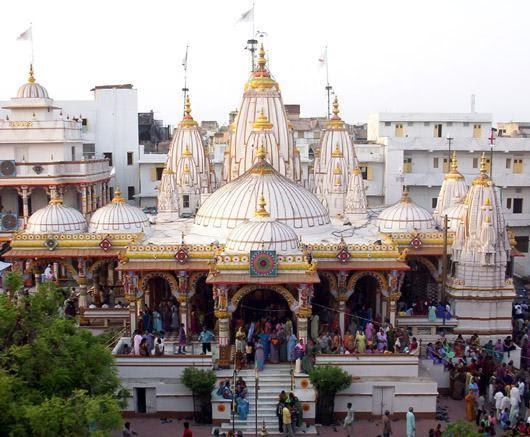
The Shree Swaminarayan Mandir Kalupur stands as the spiritual genesis of the Swaminarayan Sampraday. Located in the heart of Ahmedabad, Gujarat, this temple is not merely a structure of wood and stone but the primary seat of the NarNarayan Dev Gadi. It is a Swayambhu (self-manifested) abode where the divine presence of Lord Swaminarayan resides, captivating devotees with its opulent divinity and architectural grandeur.
Phalaśruti (Spiritual Benefits): Devotees visit this temple to alleviate Pitru Dosha (ancestral karma) and seek spiritual emancipation. According to the Sthala Purana, circumambulating the Garbhagriha (sanctum) purifies the mind and grants the darshan of the Panchamurtis (five forms of God), which are believed to be alive and vibrant with divine consciousness.
Historical Origins & Scriptural Legend
The temple’s history is a testament to the harmonious relationship between spirituality and colonial governance. Construction began in 1822 AD and was completed rapidly, with the installation ceremony attended by over 50,000 pilgrims.
Land Grant by the British: According to temple records, a British officer, Sir Dunlop, was deeply impressed by Swaminarayan’s philosophy and the conduct of his followers. He granted 5,000 acres of land in Kalupur for the temple’s construction.
Sthala Purana (Oral Legend): The installation of the deities was personally supervised by Swaminarayan Bhagwan. Tradition holds that when the British government later required land for the Kalupur Railway Station, the temple trustees returned a portion of the land. In recognition of the temple’s significance, the government granted 1,000 acres in Narayannagar to the temple.
Despite British patronage, the temple bears silent witnesses to India’s history. The wooden carvings in the Havelis depict scenes of the 1857 uprising, immortalizing freedom fighters like the Rani of Jhansi and Tatya Tope.
Architectural Marvels
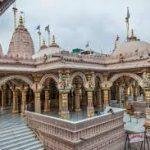
The temple is a masterpiece of Solanki-style architecture blended with Gujarati woodwork. The primary material used is Burma Teak, known for its durability and resistance to termites. The structure is held together without a single nail or rivet, utilizing traditional wooden joinery.
1. The Central Gateway
The entry gate is a fusion of Marathi, Rajasthani, and British architectural styles. It features Corinthian columns and Mughal-inspired pavilions. The sculptures depict Gujarati women in frilled blouses, reflecting the socio-cultural milieu of the 19th century.
2. Nar Narayan Mandir (The Sanctum)
The heart of the complex. The murtis (idols) of NarNarayan (form of Vishnu), RadhaKrishna, Dharmadev, BhaktiMata, and Harikrishna are adorned with intricate gold jewelry and vibrant garments changed seven times a day. Stone quarried from Himmatnagar and Dhrangadhra was used for the base, while the upper structure is pure teak.
3. Havelis (Mansions)
- North Haveli: Features a central Sabha Mandap supported by 60 pillars. It houses Madal-shilp (high-relief) sculptures depicting Hanuman lifting Govardhan Parvat, Ganesh in South Indian style, and historically significant carvings of the 1857 soldiers.
- East & West Havelis: These served as residences for the Acharyas and Sankhya Yogi (celibate) women. The West Haveli now houses administrative offices and a clinic.
4. Akshar Bhavan & Rang Mahol
Akshar Bhavan houses a white marble idol of Ghanshyam Maharaj (Swaminarayan as a child) and displays personal artifacts of the Lord. The Rang Mahol (Play Palace) preserves the room where Swaminarayan stayed during his visits, containing a life-sized standing wooden idol installed 50 years after the temple’s construction.

Darshan & Ritual Logistics (2026 Update)
To ensure a seamless spiritual experience, devotees are advised to check the timings strictly, especially during festival seasons.
Daily Timings
| Session | Time | Details |
|---|---|---|
| Morning Darshan | 6:00 AM – 10:00 AM | Thakorji is dressed in traditional attire. Ideal for peaceful viewing. |
| Afternoon Break | 10:00 AM – 3:00 PM | Temple closed for restoration and deity rituals (Mangala). |
| Evening Darshan | 3:00 PM – 7:45 PM | Highly crowded. Includes Sandhya Aarti. |
| Shayan Darshan | 8:00 PM – 9:30 PM | Thakorji is put to rest. Devotees view from the corridor. |
Key Sevas & Booking
- Abhishekam: Available in the morning session (requires prior booking).
- Satkam Archana: Recitation of 108 names for specific blessings.
- Online Seva Booking: Visit the official portal at swaminarayan.gujarat.gov.in (hypothetical link for 2026). Registration opens 60 days in advance.
Major Festivals 2026
- Janmashtami: August 13, 2026 (Special night-long vigils).
- Diwali & New Year: October 20, 2026. Note: The temple attracts over 1 million devotees the day after Diwali. Expect heavy crowds.
- Maha Shivaratri: February 26, 2026.
Practical Visitor Guidance
Dress Code: Traditional Indian attire is mandatory. Men should wear dhotis or full-length trousers and shirts; women should wear sarees, chaniya cholis, or salwar kameez. Western attire (jeans, shorts) is strictly prohibited.
Photography & Mobiles: Photography is prohibited inside the main sanctum. A strict locker facility is available outside the main gate for depositing mobile phones, leather items, and electronics.
Crowd Management:
- Best Hours: 6:00 AM – 7:00 AM or 3:00 PM – 4:00 PM on weekdays.
- Seasonal Advice: During summer (May), the stone flooring gets hot; wear comfortable flats. Carry a water bottle (plastic allowed) as the premises are large.
Pilgrimage Connectivity
How to Reach
- Airport: Sardar Vallabhbhai Patel International Airport (AMD) is 8 km away.
- Train: Kalupur Railway Station is adjacent to the temple (the very land was part of the temple grant). Ahmedabad Junction (AMD) is 2 km away.
- Bus/Road: Located on NH-48. Accessible via Swaminarayan Mandir Road.
Nearby Sacred Sites (Circuit)
- Shree Jagannath Temple, Ahmedabad: Located 2 km away in Jamalpur. Famous for its annual Ratha Yatra.
- Sarkhej Roza: A 15th-century architectural complex (30 mins drive), blending Islamic and Hindu styles.
- Sabarmati Ashram: A historic pilgrimage site for Indian independence, located on the banks of the Sabarmati river (15 mins drive).
Frequently Asked Questions (FAQ)
1. Is there a VIP darshan entry available?
While there is no commercial VIP ticket system, devotees holding prior bookings for Sevas (like Abhishekam) are allowed entry through a separate queue. Senior citizens and specially-abled visitors also have dedicated assistance.
2. What is the significance of the wooden carvings depicting soldiers?
The North Haveli contains intricate carvings of soldiers from the 1857 rebellion, including the Rani of Jhansi. This is historically unique as the temple was built under British patronage, yet it maintained a record of resistance through art.
3. Can non-Hindus visit the temple?
As per the temple administration (NarNarayan Dev Gadi), entry is generally restricted to those who accept the Hindu way of life. However, it is advisable to check with the authorities before planning a visit.
4. Where can I park my vehicle?
The temple has a dedicated parking area near the Kalupur Railway Station. During festivals, additional parking is arranged at the nearby cricket grounds. Public transport (Metro) to Kalupur station is highly recommended.
5. Is there accommodation available at the temple?
Yes, the temple trust runs the ‘Shree Tejendra Bhuvan’ guest house and an air-conditioned medical clinic within the compound. Rooms can be booked for devotees traveling from outside Gujarat.
Contact Details
Official Address: Swaminarayan Mandir Road, Kalupur, Ahmedabad, Gujarat 380001
Phone: +91 79 2213 2170 (Official Inquiry)
Recent Posts

ओ सांवरे तूने ही मुझको संभाला – Lyrics & Meaning
ओ सांवरे तूने ही मुझको संभाला – A Prayer to Shyam Origin & Spiritual Essence Why This Bhajan Resonates Devotees chant this when overwhelmed by life’s storms—the refrain ‘तूने ही मुझको संभाला’ is the soul’s sigh of relief: “You…

कथा ये है महाराज मेरे की – Lyrics & Meaning
कथा ये है महाराज मेरे की छत्रपति संभाजी महाराज – A Prayer to Chhatrapati Sambhaji Maharaj Origin & Spiritual Essence Why This Bhajan Resonates Devotees chant this when their spirit feels tested—its powerful refrain “महाराज मेरे” is a soul’s…

Rigveda Samhita Yathartha Anuvada (ऋग्वेद संहिता यथार्थ अनुवाद) – Complete Set with Anvayartha & Hindi/English Translation
The Rigveda is the oldest surviving scripture of humanity and the foundational text of Sanātana Dharma. For serious students, scholars, UPSC aspirants studying ancient Indian history, Sanskrit learners, and spiritual seekers, a precise and grammatically structured translation is indispensable.…

आना भी अकेला है जाना भी अकेला है – Lyrics & Meaning | BharatTemples
आना भी अकेला है जाना भी अकेला है – A Prayer to the Divine Witness Origin & Spiritual Essence Why This Bhajan Resonates Devotees turn to this bhajan in moments of deep reflection—when life’s attachments begin to ache. The…

माता शेरावाली के द्वार जो भी जाता है – Lyrics & Meaning
माता शेरावाली के द्वार जो भी जाता है – A Prayer to Maa Sherawali Origin & Spiritual Essence Why This Bhajan Resonates Devotees turn to this bhajan in times of fear or uncertainty—its promise that no one leaves Maa’s…

मार लेना सपणी उबार लेणा भवरा – Lyrics & Meaning
मार लेना सपणी उबार लेणा भवरा – A Prayer to the Divine Beloved Origin & Spiritual Essence Why This Bhajan Resonates Devotees chant this in moments of deep vulnerability—its cry of “मार लेना सपणी, उबार लेणा भवरा” is the…

हमें श्याम सुंदर भरोसा तुम्हारा – Lyrics & Meaning
हमें श्याम सुंदर भरोसा तुम्हारा – A Prayer to Shyam Sundar Origin & Spiritual Essence Why This Bhajan Resonates Devotees chant this when feeling alone—its refrain ‘de do sahara’ is the soul’s cry for divine support. Lyrics in Hindi…

Mere Satguru Ne Di Thi Davai Lyrics in Hindi & Meaning
Mere Satguru Ne Di Thi Davai: Invoking the Guru’s Liberating Wisdom This soul-stirring bhajan venerates the Satguru (True Spiritual Master) as the divine physician who dispenses the only remedy for life’s deepest sufferings. Composed by Sant Karmaveer Tufani, it…

Janm Diyo Thari Maa Dukh Dekhiyo Lyrics in Hindi & Meaning
जन्म दियो थारी माँ दुख देखियो (Maa’s Grief Upon Birthing You) This soul-stirring Chetavani Bhajan (admonitory hymn) is addressed to the Divine Mother (Maa) – a call for repentance when children forget their filial duties in the dark age…
Bhadi Sabha Mein Thane Manaun Lyrics in Hindi & Meaning
Bhadi Sabha Mein Thane Manaun: Invoking the Spear-Wielding Mother Mata Bhawani (श्री ज्वाला भवानी), the fiery manifestation of Shakti worshipped as the Protector of Dharma in Her Dhaulagarh sanctum. Origin & Spiritual Essence Composed in Rajasthani folk tradition by…