
Contents
Introduction & Spiritual Essence
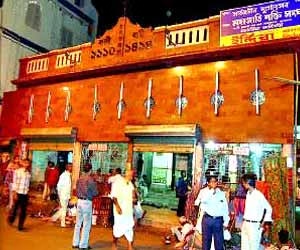
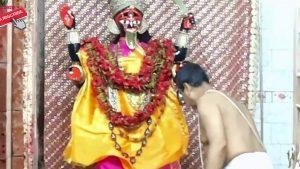
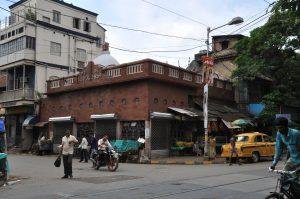
In the heart of Kolkata, amidst the bustling energy of Shyambazar, stands the Thanthania Kalibari, a sanctuary of profound spiritual potency. This revered temple is dedicated to Goddess Siddheshwari, a benevolent yet fierce manifestation of Adi Shakti Kali. Unlike elaborate metal idols, the deity here is a Swayambhu (self-manifested) clay murti, believed to be centuries old.
Phalaśruti (Spiritual Benefits): Devotees believe that the Siddheshwari Kali form specifically aids in the destruction of negative karma and the fulfillment of righteous desires. The word Siddhi refers to spiritual attainment or supernatural power, and a visit here is said to facilitate the removal of obstacles (Vighnas). Tuesdays and Saturdays are considered highly auspicious for seeking blessings.
Historical Origins & Scriptural Legend
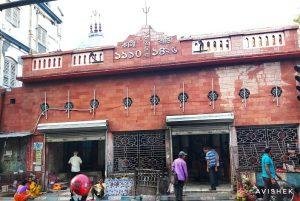
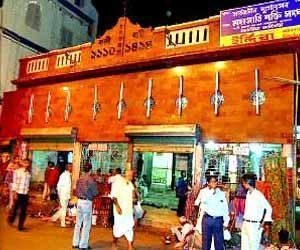
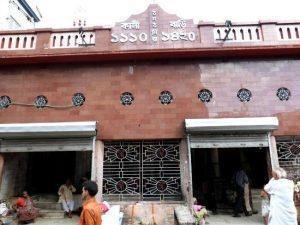
The history of Thanthania Kalibari is steeped in the cultural renaissance of 19th-century Bengal, though roots may extend deeper. The temple was established by the renowned Shankar Ghosh family. There has been some historical debate regarding the exact year: the temple structure itself bears an inscription of 1110 (Bengali Era), which corresponds to 1803 CE. This is the date most commonly accepted by the family and historians.
However, local oral tradition (Sthala Purana) suggests the spiritual origins of the idol might predate the temple structure, potentially tracing back to the early 1700s. Tradition holds that Shankar Ghosh, a wealthy merchant and devotee, discovered the idol on the banks of the Ganges. The temple serves as a living monument to the syncretism of commerce and devotion that defined colonial-era Kolkata.
Architectural Marvels
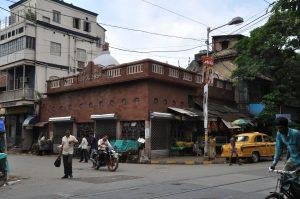
While many temples in Kolkata exhibit the terracotta style of the Bengal School, Thanthania Kalibari is unique due to its focus on the Garbhagriha (sanctum sanctorum) rather than expansive external carvings. The architecture is a functional adaptation of the Nagara style, simplified for the urban landscape.
- The Shikhara: The roof of the sanctum is curved and tiered, typical of North Indian temple spires, symbolizing the mountain Meru.
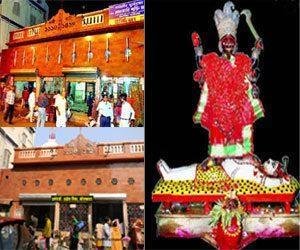
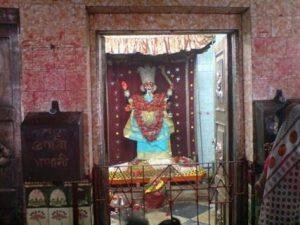
- The Idol: The central iconography is striking. Goddess Siddheshwari stands over a prostrate Shiva (Darshanamurti), with her four arms holding a sword and a severed head (symbolizing the cutting of ego), while the other two hands gesture blessings. The idol is painted annually with distinct Red and Black natural pigments.
- The Mandapa: A modest yet spacious Mandapa (hall) allows for congregation during Arati, designed to accommodate the dense crowds of Kali Puja.
Darshan & Ritual Logistics
Visiting Thanthania Kalibari requires an understanding of the daily rhythms of worship. The atmosphere shifts from the quiet contemplation of early morning to the vibrant energy of evening Arati.
Daily Timings (2026 Schedule)
| Session | Timing | Activity |
|---|---|---|
| Morning | 6:00 AM – 12:00 PM | Mangala Arati & Darshan |
| Afternoon | 12:00 PM – 4:00 PM | Closed for Deity Rest |
| Evening | 4:00 PM – 10:30 PM | Evening Arati & Darshan |
*Note: During Kali Puja and major festivals, timings may extend or vary.
Sevas and Booking
While traditional sevas are managed on-site, digital pilgrims can find information via the temple’s community networks.
- Abhishekam: Ritual bathing of the idol (usually performed on Tuesdays).
- Archana: Recitation of 108 names of Siddheshwari.
- Kumari Puja: A special ritual during the festive period.
2026 Key Festival Dates
- Kali Puja: November 1, 2026 (Sunday)
- Deepavali: November 2, 2026
- Shyama Puja: Dates vary based on lunar calendar (usually October/November).
Practical Visitor Guidance
To ensure a respectful and smooth visit, please adhere to the following guidelines:
- Dress Code: Traditional attire is recommended. Men should wear Dhoti/Kurta and women Saree/Salwar Kameez. Modest clothing is strictly enforced.
- Photography: Photography is generally discouraged inside the sanctum to preserve the sanctity of the Garbhagriha and due to crowd density.
- Crowd Management: Tuesdays and Saturdays witness the highest footfall. The best time for a peaceful darshan is between 6:00 AM – 7:30 AM on weekdays.
- Accessibility: The temple is located in a busy market area. Wheelchair access is limited due to the historic, narrow staircases. Elders are advised to visit during early morning hours.
Pilgrimage Connectivity
How to Reach
Address: Bidhan Sarani, College Street Market Area, Machuabazar, Kolkata, West Bengal 700007.
- By Metro: The nearest station is Shyambazar Metro Station (approx. 5-7 minute walk) or Girish Park.
- By Train: Sealdah Railway Station is the primary hub (approx. 4 km). Howrah Station is on the opposite bank of the Hooghly.
- By Road: The temple is situated near Binay Badal Dinesh (BBD) Bagh and is well-connected via NH 115 (formerly NH 34). Buses, yellow taxis, and ride-sharing services are readily available.
Nearby Sacred Sites
Enhance your pilgrimage by visiting these nearby spiritual centers:
- Dakshineswar Kali Temple: Located 3 km north, famous for its association with Sri Ramakrishna Paramahamsa.
- Adi Shakti Peeth Nakhoda Masjid Area: Though a mosque, the area historically overlaps with the ancient Kali Ghat region.
- Bow Bazar Shiva Temple: A historic Shiva temple located a short distance south.
Frequently Asked Questions (FAQ)
1. Is there a VIP or special entry ticket available?
No, Thanthania Kalibari does not typically issue VIP tickets. Darshan is free and open to all. However, during Kali Puja, special passes may be issued by the police for crowd control, which can be obtained from the local station.
2. Can I offer my own Prasad?
While devotees may bring flowers and fruits, offering homemade Prasad inside the sanctum is generally not permitted. The temple trust provides specific Prasad items (like luchi and sweets) which can be purchased at the counter.
3. Is there parking available?
Street parking is extremely difficult due to the congested market area. It is advisable to use public transport or use paid parking lots near Shyambazar or College Street.
4. Why is the idol changed every year?
The deity is a clay idol (Matsya Kalka). To maintain spiritual purity and replace the natural erosion of clay, the idol is rebuilt and painted annually. This symbolizes the cyclical nature of creation and destruction.
5. Is the temple open on Sundays?
Yes, the temple remains open seven days a week. However, it is closed for a few hours in the afternoon (12 PM – 4 PM) for cleaning and deity rest.
Recent Posts

ओ सांवरे तूने ही मुझको संभाला – Lyrics & Meaning
ओ सांवरे तूने ही मुझको संभाला – A Prayer to Shyam Origin & Spiritual Essence Why This Bhajan Resonates Devotees chant this when overwhelmed by life’s storms—the refrain ‘तूने ही मुझको संभाला’ is the soul’s sigh of relief: “You…

कथा ये है महाराज मेरे की – Lyrics & Meaning
कथा ये है महाराज मेरे की छत्रपति संभाजी महाराज – A Prayer to Chhatrapati Sambhaji Maharaj Origin & Spiritual Essence Why This Bhajan Resonates Devotees chant this when their spirit feels tested—its powerful refrain “महाराज मेरे” is a soul’s…

Rigveda Samhita Yathartha Anuvada (ऋग्वेद संहिता यथार्थ अनुवाद) – Complete Set with Anvayartha & Hindi/English Translation
The Rigveda is the oldest surviving scripture of humanity and the foundational text of Sanātana Dharma. For serious students, scholars, UPSC aspirants studying ancient Indian history, Sanskrit learners, and spiritual seekers, a precise and grammatically structured translation is indispensable.…

आना भी अकेला है जाना भी अकेला है – Lyrics & Meaning | BharatTemples
आना भी अकेला है जाना भी अकेला है – A Prayer to the Divine Witness Origin & Spiritual Essence Why This Bhajan Resonates Devotees turn to this bhajan in moments of deep reflection—when life’s attachments begin to ache. The…

माता शेरावाली के द्वार जो भी जाता है – Lyrics & Meaning
माता शेरावाली के द्वार जो भी जाता है – A Prayer to Maa Sherawali Origin & Spiritual Essence Why This Bhajan Resonates Devotees turn to this bhajan in times of fear or uncertainty—its promise that no one leaves Maa’s…

मार लेना सपणी उबार लेणा भवरा – Lyrics & Meaning
मार लेना सपणी उबार लेणा भवरा – A Prayer to the Divine Beloved Origin & Spiritual Essence Why This Bhajan Resonates Devotees chant this in moments of deep vulnerability—its cry of “मार लेना सपणी, उबार लेणा भवरा” is the…

हमें श्याम सुंदर भरोसा तुम्हारा – Lyrics & Meaning
हमें श्याम सुंदर भरोसा तुम्हारा – A Prayer to Shyam Sundar Origin & Spiritual Essence Why This Bhajan Resonates Devotees chant this when feeling alone—its refrain ‘de do sahara’ is the soul’s cry for divine support. Lyrics in Hindi…

Mere Satguru Ne Di Thi Davai Lyrics in Hindi & Meaning
Mere Satguru Ne Di Thi Davai: Invoking the Guru’s Liberating Wisdom This soul-stirring bhajan venerates the Satguru (True Spiritual Master) as the divine physician who dispenses the only remedy for life’s deepest sufferings. Composed by Sant Karmaveer Tufani, it…

Janm Diyo Thari Maa Dukh Dekhiyo Lyrics in Hindi & Meaning
जन्म दियो थारी माँ दुख देखियो (Maa’s Grief Upon Birthing You) This soul-stirring Chetavani Bhajan (admonitory hymn) is addressed to the Divine Mother (Maa) – a call for repentance when children forget their filial duties in the dark age…
Bhadi Sabha Mein Thane Manaun Lyrics in Hindi & Meaning
Bhadi Sabha Mein Thane Manaun: Invoking the Spear-Wielding Mother Mata Bhawani (श्री ज्वाला भवानी), the fiery manifestation of Shakti worshipped as the Protector of Dharma in Her Dhaulagarh sanctum. Origin & Spiritual Essence Composed in Rajasthani folk tradition by…