
Contents
- 1 The Definitive Pilgrimage Guide: Theertheeswarar Temple, Thiruvallur
The Definitive Pilgrimage Guide: Theertheeswarar Temple, Thiruvallur
1. Introduction & Spiritual Essence
Hidden in the spiritual landscape of Thiruvallur, the Theertheeswarar Temple stands as a serene beacon of Shaivism. While often overshadowed by its grand neighbor, the Veera Raghava Perumal Temple, this shrine holds a unique vibrational frequency dedicated to Lord Shiva and the divine feminine energy.
The Deity and Form
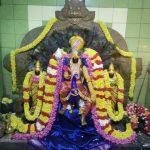
The primary deity here is Theertheeswarar (a form of Lord Shiva), and the consort is Tripurasundari (a form of Goddess Parvati). Unlike many temples where the presiding deities face different directions, here, both Theertheeswarar and Tripurasundari face East, symbolizing the unity of Shiva and Shakti. The Shiva Lingam is a Swayambhu (self-manifested) idol, increasing its sanctity manifold.
Phalaśruti: The Benefits of Darshan
Devotees flock to this temple for specific spiritual benefits mentioned in oral traditions:
- Ancestral Karma: Rituals performed here are believed to alleviate Pitru Dosha (ancestral defects), granting peace to departed souls.
- Healing Waters: The temple tank adjacent to the sanctum is said to possess medicinal properties, aiding in physical ailments.
- Divine Union: Worshipping the co-facial deities is believed to harmonize marital relationships and remove obstacles in one’s path.
2. Historical Origins & Scriptural Legend
While the exact inscription date remains elusive in public records, the architectural motifs suggest a legacy rooted in the Pallava and Chola periods, with significant renovations during the Vijayanagara era.
The Legend of Tripurasundari
According to temple records and local folklore, the Goddess here is worshipped as Tripurasundari, representing the beauty of the three worlds (Heaven, Earth, and Netherworld). Tradition holds that Sage Agastya meditated here to witness the divine union of Shiva and Parvati. The theertham (sacred water) associated with this temple is said to have been created by Shiva to quench the thirst of the sage.
The temple derives its name from Theertham (holy water) and Ishwarar (God), signifying the Lord of Sacred Waters.
3. Architectural Marvels
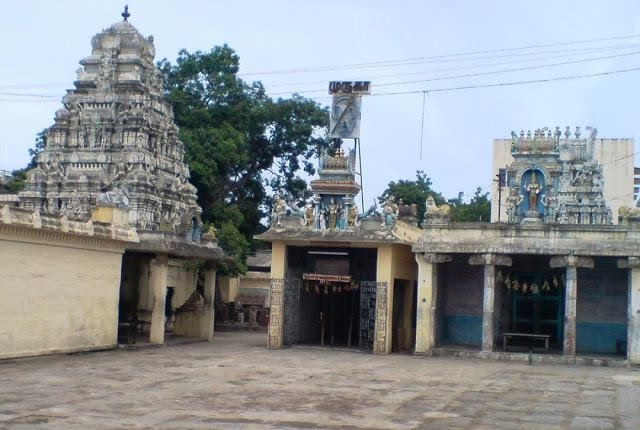
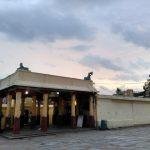
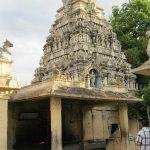
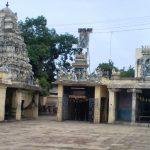
The temple is a masterpiece of Dravidian architecture. Though moderate in size compared to massive temple complexes, it adheres to the sacred Vastu Shastra principles with precision.
Structural Highlights
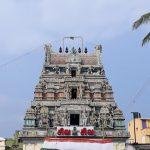
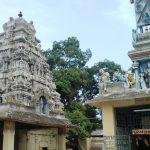
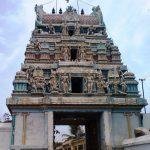
- Rajagopuram: A three-tiered gateway tower welcomes devotees, facing east.
- Sanctum Layout: The temple features a single Prakara (enclosure). The flag staff (Dhwaja Stambha), Bali Peetha, and Nandi idol are perfectly aligned facing the sanctum.
- Koshta Images: The inner walls of the sanctum house intricate carvings of Ganesha, Dakshina Murti, Vishnu, Brahma, and Durga in the niches.
- Chandikeswarar Shrine: Located in its customary position, dedicated to the devout attendant of Shiva.
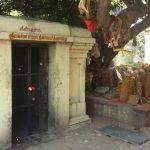
The temple complex also houses shrines for Palani Andavan, Subramanya with his consorts, Navagraha, and Ayyappa. Unique to this temple are idols of Surya (Sun God), Bhadra, Bhairava, and Ramalinga Adigalar. Below a sacred tree, devotees can find Naga statues (serpent deities), a key site for Naga Dosha remedies.
4. Darshan & Ritual Logistics
Planning your visit requires attention to daily rituals and festivals. The temple is managed by a permanent trustee and is not under the HR&CE department, ensuring the preservation of traditional practices.
Daily Timings
| Period | Timing |
|---|---|
| Morning | 07:00 AM – 12:00 PM |
| Evening | 05:00 PM – 08:00 PM |
*Note: Timings may vary during festivals. It is advisable to call ahead.
Key Sevas & Online Booking
Key rituals include the Morning Abhishekam and Archana. While specific online portals for this private temple are not centralized, bookings for general darshan and offerings can often be coordinated through the temple trustee office or third-party temple service platforms. For 2026, devotees are encouraged to book specific Archana tickets in advance during major festivals.
Major Festivals in 2026
- Arudra Darshanam: Celebrating the cosmic dance of Shiva (Date: December 2026 – TBD based on Tamil Calendar).
- Navaratri: Dedicated to Goddess Tripurasundari (Oct 2026).
- Pradosham: Bi-monthly ritual dedicated to Lord Shiva.
5. Practical Visitor Guidance
Rules & Etiquette
- Dress Code: Traditional attire is mandatory. Men should wear dhotis or formal trousers with shirts; women should wear sarees or salwar kameez.
- Photography: Strictly prohibited inside the sanctum sanctorum. Photography in the outer prakara may be allowed, but seek permission from the trustee.
- Mobiles: Use of mobile phones inside the shrine is discouraged. Lockers are not available on-site; please leave valuables in your vehicle.
- Accessibility: The temple has a flat floor approach, making it relatively accessible for senior citizens, though the inner sanctum steps require assistance.
Crowd Management
Best Hours: The optimal time for a peaceful darshan is between 7:00 AM and 8:00 AM on weekdays.
Seasonal Advice: During the summer months of April–May, temperatures in Thiruvallur can exceed 35°C. Carry a reusable water bottle and a head cover. Monsoon (Nov–Dec) brings cooler weather but occasional showers; an umbrella is recommended.
6. Pilgrimage Connectivity
Theertheeswarar Temple is strategically located near the bustling town of Thiruvallur, making it highly accessible.
How to Reach
- By Road: The temple is located just 600 meters from Theradi Bus Stop and 850 meters from Tiruvallur Bus Stand. It sits adjacent to the Veera Raghava Perumal Temple on the Chennai-Tirupati highway (NH 205).
- By Train: Tiruvallur Railway Station is the nearest railhead (approx. 4 km). It connects to Chennai Central and Arakkonam junction.
- By Air: The nearest airport is Chennai International Airport (MAA), approximately 46 km away.
Nearby Sacred Sites (Circuit)
Enhance your pilgrimage by visiting these nearby temples:
- Veera Raghava Perumal Temple: Located right next door; a Divya Desam famous for its massive temple tank.
- Thirumazhisai (Kumarapalayam): Known for the Jalakanteswarar Temple (approx. 15 km).
- Sriperumbudur: The birthplace of Ramanujacharya (approx. 21 km).
7. Frequently Asked Questions (FAQ)
1. Is there a VIP darshan entry available?
As a private temple managed by trustees, there is no formal government-regulated VIP entry. However, devotees can contact the trustee office in advance for special access during rush hours or for large groups.
2. Is there an entry fee?
General darshan is free for all devotees. Special sevas like Abhishekam or Archana require a nominal fee, which varies based on the offering type.
3. Can we perform rituals for deceased ancestors?
Yes. This temple is particularly renowned for Shraddha and Tharpanam rituals. The proximity to the temple tank makes it ideal for these ceremonies.
4. Is the temple open on weekends?
Yes, the temple remains open all days of the week. However, weekends and festivals see a higher influx of visitors from Chennai.
5. What makes the Tripurasundari shrine here unique?
Unlike most temples where the Goddess shrine is located to the left or right of the main deity, here both Theertheeswarar and Tripurasundari shrines are positioned facing east, sharing the same axis of energy.
Recent Posts

ओ सांवरे तूने ही मुझको संभाला – Lyrics & Meaning
ओ सांवरे तूने ही मुझको संभाला – A Prayer to Shyam Origin & Spiritual Essence Why This Bhajan Resonates Devotees chant this when overwhelmed by life’s storms—the refrain ‘तूने ही मुझको संभाला’ is the soul’s sigh of relief: “You…

कथा ये है महाराज मेरे की – Lyrics & Meaning
कथा ये है महाराज मेरे की छत्रपति संभाजी महाराज – A Prayer to Chhatrapati Sambhaji Maharaj Origin & Spiritual Essence Why This Bhajan Resonates Devotees chant this when their spirit feels tested—its powerful refrain “महाराज मेरे” is a soul’s…

Rigveda Samhita Yathartha Anuvada (ऋग्वेद संहिता यथार्थ अनुवाद) – Complete Set with Anvayartha & Hindi/English Translation
The Rigveda is the oldest surviving scripture of humanity and the foundational text of Sanātana Dharma. For serious students, scholars, UPSC aspirants studying ancient Indian history, Sanskrit learners, and spiritual seekers, a precise and grammatically structured translation is indispensable.…

आना भी अकेला है जाना भी अकेला है – Lyrics & Meaning | BharatTemples
आना भी अकेला है जाना भी अकेला है – A Prayer to the Divine Witness Origin & Spiritual Essence Why This Bhajan Resonates Devotees turn to this bhajan in moments of deep reflection—when life’s attachments begin to ache. The…

माता शेरावाली के द्वार जो भी जाता है – Lyrics & Meaning
माता शेरावाली के द्वार जो भी जाता है – A Prayer to Maa Sherawali Origin & Spiritual Essence Why This Bhajan Resonates Devotees turn to this bhajan in times of fear or uncertainty—its promise that no one leaves Maa’s…

मार लेना सपणी उबार लेणा भवरा – Lyrics & Meaning
मार लेना सपणी उबार लेणा भवरा – A Prayer to the Divine Beloved Origin & Spiritual Essence Why This Bhajan Resonates Devotees chant this in moments of deep vulnerability—its cry of “मार लेना सपणी, उबार लेणा भवरा” is the…

हमें श्याम सुंदर भरोसा तुम्हारा – Lyrics & Meaning
हमें श्याम सुंदर भरोसा तुम्हारा – A Prayer to Shyam Sundar Origin & Spiritual Essence Why This Bhajan Resonates Devotees chant this when feeling alone—its refrain ‘de do sahara’ is the soul’s cry for divine support. Lyrics in Hindi…

Mere Satguru Ne Di Thi Davai Lyrics in Hindi & Meaning
Mere Satguru Ne Di Thi Davai: Invoking the Guru’s Liberating Wisdom This soul-stirring bhajan venerates the Satguru (True Spiritual Master) as the divine physician who dispenses the only remedy for life’s deepest sufferings. Composed by Sant Karmaveer Tufani, it…

Janm Diyo Thari Maa Dukh Dekhiyo Lyrics in Hindi & Meaning
जन्म दियो थारी माँ दुख देखियो (Maa’s Grief Upon Birthing You) This soul-stirring Chetavani Bhajan (admonitory hymn) is addressed to the Divine Mother (Maa) – a call for repentance when children forget their filial duties in the dark age…
Bhadi Sabha Mein Thane Manaun Lyrics in Hindi & Meaning
Bhadi Sabha Mein Thane Manaun: Invoking the Spear-Wielding Mother Mata Bhawani (श्री ज्वाला भवानी), the fiery manifestation of Shakti worshipped as the Protector of Dharma in Her Dhaulagarh sanctum. Origin & Spiritual Essence Composed in Rajasthani folk tradition by…