

Contents
- 1 Thikkuruchi Mahadevar Temple: A Definitive Pilgrimage Guide
Thikkuruchi Mahadevar Temple: A Definitive Pilgrimage Guide
Authored by the Lead Heritage Architect & SEO Strategist, bharattemples.com
In the tranquil village of Thikkuruchi, along the sacred banks of the Thamiraparani River in Kanyakumari, stands a timeless witness to devotion—the Thikkuruchi Mahadevar Temple. This ancient shrine is not merely a structure of stone but a vibrant spiritual energy center, renowned as the second stop in the holy Shivalaya Ottam. For devotees seeking the grace of Lord Shiva, this guide provides the architectural, historical, and practical knowledge required for a profound darshan experience.
1. Introduction & Spiritual Essence
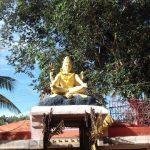
The Thikkuruchi Mahadevar Temple is dedicated to Lord Shiva, worshipped here in his Manikkavannar form (Sanskrit: Manikyavarna), representing the radiant hue of the diamond. The Goddess, known as Visalakshi, shares the sanctum.
Phalaśruti: The Benefits of Darshan
Why do pilgrims flock to this riverbank sanctuary? Tradition holds that this is a place where Sage Vyagrapathar (Narada Muni in some interpretations) performed intense penance. The primary spiritual significance lies in:
- Ancestral Liberation: Performing rituals here is believed to cleanse Pitru Dosha (ancestral karmic debts).
- Shivalaya Ottam: As the second of the twelve Shiva temples in the legendary run, completing this circuit is said to grant the merit equivalent to visiting all major Shiva shrines in Tamil Nadu.
- Mediative Energy: The deity is revered as a Swayambhu (self-manifested) form in deep meditation, offering mental peace and clarity to the devotee.
2. Historical Origins & Scriptural Legend
The Marthanda Varma Connection
While the exact construction date predates recorded history, temple records and archaeological evidence point to significant renovations during the reign of the legendary Travancore King, Marthanda Varma. The temple follows the traditional Dravidian style, likely expanded during the 17th or 18th century, utilizing locally quarried granite.
The Legend of the Nandi
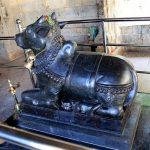
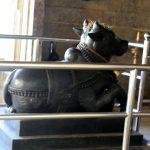
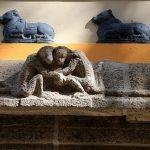
A unique aspect of Thikkuruchi is the history of Lord Shiva’s vehicle, Nandi. For centuries, the sanctum lacked a Nandi statue, a rarity in Shiva temples. Devotees believed the floor itself represented the divine bull. Recently, a traditional Nandi statue was installed, completing the liturgical symmetry while preserving the ancient sanctity of the space.
The Riverbank Miracle
Tradition holds that the temple was established to appease the river goddess Thamiraparani. The east-facing sanctum symbolizes the sun’s first rays touching the deity, granting energy to the devotees. The temple is said to be a potent intersection of natural elements—water (river) and earth (hilltop)—creating a unique Vastu energy field.
3. Architectural Marvels
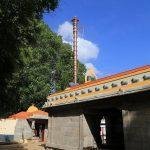
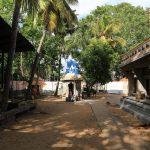
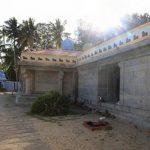
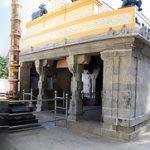
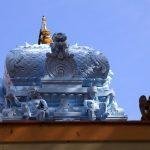
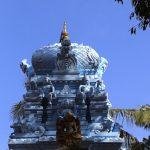
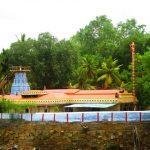
The Thikkuruchi Mahadevar Temple is a textbook example of Dravidian Temple Architecture adapted to a riverine geography.
Structural Elements
- The Sanctum (Garbhagriha): Unlike the sprawling complexes of Brihadeeswarar, this temple features a compact, square sanctum, emphasizing intimacy in worship.
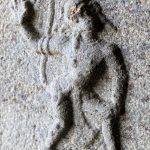
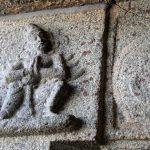
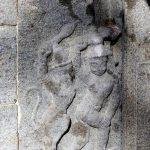
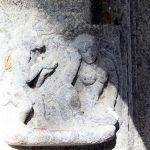
- Pillars and Carvings: The Mandapa (hall) features intricately carved granite pillars. While not as ornate as the later Nayak period temples, the carvings depict motifs from Shaivism and regional folklore.
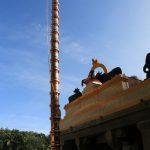
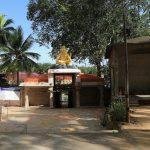
- Missing Kodimaram: Notably, unlike most Tamil Nadu temples, this shrine historically did not possess a Kodimaram (flagpost). This architectural rarity is attributed to local geography and early construction constraints.
Adjacent shrines house Lord Vinayaka (Ganesha) and Nagas (serpent deities), essential for a balanced Vastu layout. The temple does not hold official ASI or UNESCO status, preserving its authentic, local village charm.
4. Darshan & Ritual Logistics
Daily Timings
The temple follows a specific rhythm dictated by Vedic rituals.
| Session | Timing | Description |
|---|---|---|
| Morning | 05:00 AM – 11:00 AM | Includes the Abhishekam and first Nivedyam. |
| Evening | 05:00 PM – 08:00 PM | Deepa Aradhana and temple closing rituals. |
Key Sevas and Online Booking
While traditional bookings are accepted at the counter, the temple trust has introduced online services for major festivals.
- Abhishekam: Performed with milk, honey, and sandalwood paste. Best time: Morning 9:00 AM.
- Archana: Recitation of thesahasranamam for the specific deity.
- Special Truce: During Shivalaya Ottam, special tokens are distributed for darshan.
Note on 2026 Festivals:
- Maha Shivaratri: February 26, 2026 (Expect extended hours and massive crowds).
- Thiruvadirai (Arudra Darshan): January 6, 2026.
- Shivalaya Ottam: March 3, 2026 (Morning).



5. Practical Visitor Guidance
Code of Conduct & Dress Code
- Attire: Strict adherence to traditional dress is required. Men should wear Dhotis (veshti) or formal trousers with shirts; women are advised to wear Sarees, Salwar Kameez, or full-length skirts.
- Electronics: Photography is generally permitted in the outer precincts but strictly prohibited inside the sanctum sanctorum. Mobile lockers are available near the entrance for a nominal fee.
- Accessibility: The temple is accessible via stone steps. A ramp is available for senior citizens, though the inner sanctum requires foot travel.
Crowd Management Strategy
Thikkuruchi sees peak footfall during Shivaratri and the Shivalaya Ottam.
- Best Time: Weekday mornings (8 AM – 9 AM) offer the shortest queues.
- Seasonal Advice: Kanyakumari experiences heavy southwest monsoon (June–August). Visitors are advised to carry compact umbrellas and wear waterproof footwear. In May, temperatures can be high; carry ample water.
6. Pilgrimage Connectivity
How to Reach
The temple is strategically located on the National Highway corridor connecting Tamil Nadu and Kerala.
- By Road: Located 3 km from Marthandam and 5 km from Thiruvattaru. It is accessible via NH 66 (formerly NH 47). Buses frequently ply from Nagercoil and Kuzhithurai.
- By Rail: The nearest railway junction is Kuzhithurai (6 km). Trains from Trivandrum and Nagercoil halt here.
- By Air: Trivandrum International Airport (TRV) is the nearest airport (approx. 47 km).
Circuit Pilgrimage
To maximize spiritual merit, pilgrims should not visit Thikkuruchi in isolation. It is a vital link in the circuit:
- Nagaraja Temple (Nagercoil): 27 km away.
- Kumarakovil Temple: 20 km away (dedicated to Lord Murugan).
- Udayagiri Temple (Kanyakumari): 50 km away.
7. Frequently Asked Questions (FAQ)
1. Is there a VIP darshan entry available?
Unlike major corporate-run temples, Thikkuruchi follows a traditional democratic approach. While there is no commercial VIP ticket, elderly devotees (above 70) and those with physical disabilities are escorted by temple staff for quicker access during non-peak hours.
2. What is the significance of the Shivalaya Ottam?
The Shivalaya Ottam is a ceremonial run undertaken on the night of Shivaratri. It involves visiting twelve specific Shiva temples in the Kanyakumari district. Thikkuruchi is the second stop. It is believed that participating in this run burns off bad karma.
3. Are food facilities available?
The temple has a small Anna Dhana (free food) hall that serves lunch to devotees between 11:00 AM and 2:00 PM. However, dining is limited to simple Tamil meals. For better restaurants, visitors can head to Marthandam (3 km).
4. What is the history of the Nandi statue here?
For a significant period, this temple did not have a Nandi statue, which is unique for a Shiva temple. It was installed only recently, following the age-old design patterns consistent with the temple’s era.
5. Is parking available?
Yes, a small parking area is available near the temple entrance. However, during festivals, vehicles are diverted to parking grounds in the village, and shuttle services are provided.
Recent Posts

ओ सांवरे तूने ही मुझको संभाला – Lyrics & Meaning
ओ सांवरे तूने ही मुझको संभाला – A Prayer to Shyam Origin & Spiritual Essence Why This Bhajan Resonates Devotees chant this when overwhelmed by life’s storms—the refrain ‘तूने ही मुझको संभाला’ is the soul’s sigh of relief: “You…

कथा ये है महाराज मेरे की – Lyrics & Meaning
कथा ये है महाराज मेरे की छत्रपति संभाजी महाराज – A Prayer to Chhatrapati Sambhaji Maharaj Origin & Spiritual Essence Why This Bhajan Resonates Devotees chant this when their spirit feels tested—its powerful refrain “महाराज मेरे” is a soul’s…

Rigveda Samhita Yathartha Anuvada (ऋग्वेद संहिता यथार्थ अनुवाद) – Complete Set with Anvayartha & Hindi/English Translation
The Rigveda is the oldest surviving scripture of humanity and the foundational text of Sanātana Dharma. For serious students, scholars, UPSC aspirants studying ancient Indian history, Sanskrit learners, and spiritual seekers, a precise and grammatically structured translation is indispensable.…

आना भी अकेला है जाना भी अकेला है – Lyrics & Meaning | BharatTemples
आना भी अकेला है जाना भी अकेला है – A Prayer to the Divine Witness Origin & Spiritual Essence Why This Bhajan Resonates Devotees turn to this bhajan in moments of deep reflection—when life’s attachments begin to ache. The…

माता शेरावाली के द्वार जो भी जाता है – Lyrics & Meaning
माता शेरावाली के द्वार जो भी जाता है – A Prayer to Maa Sherawali Origin & Spiritual Essence Why This Bhajan Resonates Devotees turn to this bhajan in times of fear or uncertainty—its promise that no one leaves Maa’s…

मार लेना सपणी उबार लेणा भवरा – Lyrics & Meaning
मार लेना सपणी उबार लेणा भवरा – A Prayer to the Divine Beloved Origin & Spiritual Essence Why This Bhajan Resonates Devotees chant this in moments of deep vulnerability—its cry of “मार लेना सपणी, उबार लेणा भवरा” is the…

हमें श्याम सुंदर भरोसा तुम्हारा – Lyrics & Meaning
हमें श्याम सुंदर भरोसा तुम्हारा – A Prayer to Shyam Sundar Origin & Spiritual Essence Why This Bhajan Resonates Devotees chant this when feeling alone—its refrain ‘de do sahara’ is the soul’s cry for divine support. Lyrics in Hindi…

Mere Satguru Ne Di Thi Davai Lyrics in Hindi & Meaning
Mere Satguru Ne Di Thi Davai: Invoking the Guru’s Liberating Wisdom This soul-stirring bhajan venerates the Satguru (True Spiritual Master) as the divine physician who dispenses the only remedy for life’s deepest sufferings. Composed by Sant Karmaveer Tufani, it…

Janm Diyo Thari Maa Dukh Dekhiyo Lyrics in Hindi & Meaning
जन्म दियो थारी माँ दुख देखियो (Maa’s Grief Upon Birthing You) This soul-stirring Chetavani Bhajan (admonitory hymn) is addressed to the Divine Mother (Maa) – a call for repentance when children forget their filial duties in the dark age…
Bhadi Sabha Mein Thane Manaun Lyrics in Hindi & Meaning
Bhadi Sabha Mein Thane Manaun: Invoking the Spear-Wielding Mother Mata Bhawani (श्री ज्वाला भवानी), the fiery manifestation of Shakti worshipped as the Protector of Dharma in Her Dhaulagarh sanctum. Origin & Spiritual Essence Composed in Rajasthani folk tradition by…