
Contents
Introduction & Spiritual Essence
Nestled in the coastal town of Devipattinam in Ramanathapuram district, the Thilakeshwarar Temple stands as a silent sentinel of ancient faith and architectural grandeur. Dedicated to Lord Shiva, this temple is a revered spiritual destination where the divine energy of the supreme destroyer meets the tranquil vibrations of the sea.
Primary Deity: The presiding deity here is Thilakeshwarar (Lord Shiva), revered in his form as the one who wears til (sesame) seeds or one who is effulgent. The Mother Goddess is worshipped here as Soundaryanayaki.
Phalaśruti (Spiritual Benefits): The temple is particularly significant for devotees seeking relief from planetary afflictions. Those born under the Kumbam Rasi (Aquarius) and individuals facing problems related to Shani (Saturn) or other malefic planetary positions find immense solace here. Rituals performed by Lord Rama himself are believed to have sanctified the grounds, offering devotees a path to cleanse ancestral karma and acquire inner peace.
Historical Origins & Scriptural Legend
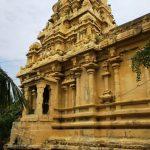
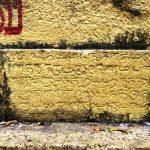
Antiquity and Builders: According to temple records and ASI indications, the Thilakeshwarar Temple is estimated to be over 1,000 years old. It is believed to have been built during the illustrious Chola dynasty, later receiving patronage from the Ramanathapuram Samasthanam. The walls of the temple house inscriptions in ancient Tamil script, offering a glimpse into the region’s socio-religious history.
The Ramayana Connection (Sthala Purana):
Tradition holds that this region is deeply intertwined with the Ramayana. Before embarking on his journey to Lanka to rescue Sita, Lord Rama prayed to Goddess Durga in Devipattinam for victory and a safe passage across the ocean. It is said that Goddess Durga calmed the turbulent seas, allowing the Vanara Sena to construct the bridge.
Furthermore, while worshipping the Goddess, Lord Rama also installed nine vertical stones representing the Nava Grahas (nine planets) to ward off any unforeseen obstacles during his voyage. These stones are still visible in the calm waters near the coast. Legend also states that on his return journey to Ayodhya, Lord Rama worshipped Lord Shiva (Thilakeshwarar) with “El” (a variety of millet), making this a site of immense Hindu pilgrimage significance.
Architectural Marvels
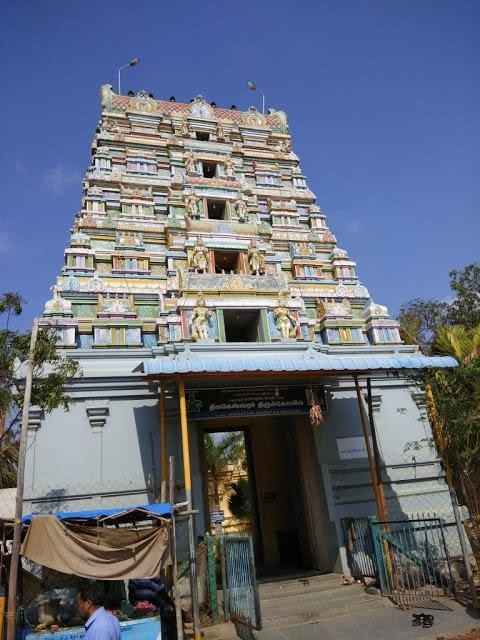
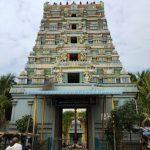
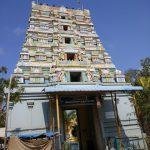
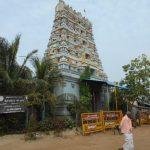
The temple exemplifies the classic Dravidian style of architecture, characterized by its towering gateway and intricate sculptural details.
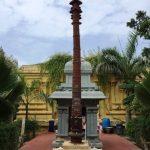
- Entry and Structure: The temple faces east and is accessed through a majestic 5-tier Rajagopuram (main gateway). Immediately inside, one finds the Palipeedam (platform for offerings), Dwajasthambam (flagpole), and the sacred Nandhi (bull statue) facing the sanctum.
- Sanctum Layout: The complex consists of the Sanctum (Garbhagriha), the Arthamandapam (transitional hall), and a Mahamandapam (great hall).
- Idols and Carvings: The outer walls of the sanctum house the Koshta Idols (niche idols), including Dhakshinamoorthy, Lingothbavar (Lord Shiva emerging from the pillar), and a powerful Durgai. The Mother Goddess, Soundaryanayaki, is situated in the Mahamandapam facing south in a standing posture.
- Surrounding Shrines: The outer prakaram (circumambulation path) houses shrines for Nagars, Sandikeswarar, Vinayagar, and Murugan. The Theertham (sacred tank) is known as Sivaganga Theertham, and the Sthala Vriksham (sacred tree) is the Vilwa tree.
Darshan & Ritual Logistics
To ensure a seamless spiritual experience, devotees should plan their visit according to the daily schedule. The temple follows traditional timings.
| Session | Timings |
|---|---|
| Morning Darshan | 07:30 AM – 12:00 PM |
| Evening Darshan | 05:00 PM – 08:00 PM |
Key Sevas and Offerings
Devotees can participate in various rituals to please the deities. While specific online booking portals vary by local administration, many Tamil Nadu temples now utilize the TEMPL.org or local temple trust websites for reservations.
- Abhishekam: Ritual bathing of the Shiva Lingam with milk, honey, sandalwood paste, and holy water. (Recommended for planetary peace).
- Archana: Chanting of hymns and mantras dedicated to Thilakeshwarar and Soundaryanayaki.
- Maha Shivaratri: The primary festival celebrated with great fervor, likely falling in February/March 2026. Special night-long vigils and rituals are conducted.
Practical Visitor Guidance
Preparation ensures a focused and respectful visit.
- Dress Code: Traditional attire is mandatory. Men should wear dhotis or trousers with shirts; women should wear sarees, salwar kameez, or skirts. Avoid shorts and sleeveless tops.
- Photography & Electronics: Photography inside the sanctum is strictly prohibited. Most temples in this region provide mobile lockers for storage before entering the inner shrine.
- Crowd Management: The temple is generally less crowded on weekdays. However, during Maha Shivaratri or Pradosham, expect significant crowds. The best time for a peaceful darshan is during the first hour of opening (7:30 AM).
- Seasonal Advice: Devipattinam is a coastal town. Summers (April–June) are hot and humid; carry a water bottle and an umbrella. Monsoon (October–December) brings cool breezes but occasional rains.
Pilgrimage Connectivity
How to Reach:
- By Air: The nearest airport is Madurai International Airport, approximately 134 km away.
- By Rail: The closest railway junction is Ramanathapuram Railway Station, located just 15 km from the temple.
- By Road: Devipattinam is well-connected by bus. It is 15 km from Ramanathapuram and 67 km from the famous Rameswaram temple town. Buses from Ramanathapuram to Devakottai pass through Devipattinam.
Nearby Sacred Sites
Enhance your pilgrimage by visiting these nearby spiritual centers:
- Navabashanam Temple: Located just 700 meters from Thilakeshwarar Temple. This unique temple is dedicated to the nine planets (Navagrahas).
- Ramanathaswamy Temple (Rameswaram): One of the 12 Jyotirlingas and a Char Dham site, located approximately 70 km away.
- Thirupullani (Dharbasayanam): Famous for the Adhi Jaganatha Perumal Temple, located about 25 km away.
Frequently Asked Questions (FAQ)
Is there a VIP darshan entry available?
While the temple administration prioritizes senior citizens and differently-abled devotees, specific VIP entry protocols are subject to the current guidelines of the Hindu Religious and Charitable Endowments (HR&CE) Department of Tamil Nadu. It is advisable to check with the temple executive officer upon arrival.
Devipattinam is famous for the Nava Graha shrines. The Thilakeshwarar Temple complements this by aiding in pacifying malefic planetary influences (Graha Dosham). Worshipping here is believed to remove obstacles caused by the position of Saturn (Shani) and Rahu/Ketu.
Are there accommodation facilities nearby?
There are limited lodges and choultries in Devipattinam itself. However, for better amenities, pilgrims prefer staying in Ramanathapuram (15 km) or Rameswaram (67 km), which offer a wide range of hotels and guesthouses.
Is the temple open for 24 hours?
No, the temple follows fixed timings (Morning: 07:30 AM – 12:00 PM; Evening: 05:00 PM – 08:00 PM). Devotees are encouraged to plan their visit within these hours.
Can we perform Rudra Abhishekam?
Yes, Rudra Abhishekam is a highly revered ritual here. It is recommended to book this special Seva in advance, especially during festival seasons like Maha Shivaratri or monthly Pradosham days.
Photo Gallery

Contact Details
Address: Thilakeshwarar Temple, Devipattinam, Ramanathapuram District, Tamil Nadu.
Note: For specific queries, contact the local temple office or the Ramanathapuram HR&CE division.
Recent Posts

Shri Kaamkoteeshwar Mandir, Varanasi – History & Significance
In the heart of Kashi, the eternal city of Lord Shiva, where the Ganges flows with celestial grace, stands the Shri Kaamkoteeshwar Mandir. This sacred Sannidhi is not merely a temple but a profound spiritual bridge between the Northern…

ओ सांवरे तूने ही मुझको संभाला – Lyrics & Meaning
ओ सांवरे तूने ही मुझको संभाला – A Prayer to Shyam Origin & Spiritual Essence Why This Bhajan Resonates Devotees chant this when overwhelmed by life’s storms—the refrain ‘तूने ही मुझको संभाला’ is the soul’s sigh of relief: “You…

कथा ये है महाराज मेरे की – Lyrics & Meaning
कथा ये है महाराज मेरे की छत्रपति संभाजी महाराज – A Prayer to Chhatrapati Sambhaji Maharaj Origin & Spiritual Essence Why This Bhajan Resonates Devotees chant this when their spirit feels tested—its powerful refrain “महाराज मेरे” is a soul’s…

Rigveda Samhita Yathartha Anuvada (ऋग्वेद संहिता यथार्थ अनुवाद) – Complete Set with Anvayartha & Hindi/English Translation
The Rigveda is the oldest surviving scripture of humanity and the foundational text of Sanātana Dharma. For serious students, scholars, UPSC aspirants studying ancient Indian history, Sanskrit learners, and spiritual seekers, a precise and grammatically structured translation is indispensable.…

आना भी अकेला है जाना भी अकेला है – Lyrics & Meaning | BharatTemples
आना भी अकेला है जाना भी अकेला है – A Prayer to the Divine Witness Origin & Spiritual Essence Why This Bhajan Resonates Devotees turn to this bhajan in moments of deep reflection—when life’s attachments begin to ache. The…

माता शेरावाली के द्वार जो भी जाता है – Lyrics & Meaning
माता शेरावाली के द्वार जो भी जाता है – A Prayer to Maa Sherawali Origin & Spiritual Essence Why This Bhajan Resonates Devotees turn to this bhajan in times of fear or uncertainty—its promise that no one leaves Maa’s…

मार लेना सपणी उबार लेणा भवरा – Lyrics & Meaning
मार लेना सपणी उबार लेणा भवरा – A Prayer to the Divine Beloved Origin & Spiritual Essence Why This Bhajan Resonates Devotees chant this in moments of deep vulnerability—its cry of “मार लेना सपणी, उबार लेणा भवरा” is the…

हमें श्याम सुंदर भरोसा तुम्हारा – Lyrics & Meaning
हमें श्याम सुंदर भरोसा तुम्हारा – A Prayer to Shyam Sundar Origin & Spiritual Essence Why This Bhajan Resonates Devotees chant this when feeling alone—its refrain ‘de do sahara’ is the soul’s cry for divine support. Lyrics in Hindi…

Mere Satguru Ne Di Thi Davai Lyrics in Hindi & Meaning
Mere Satguru Ne Di Thi Davai: Invoking the Guru’s Liberating Wisdom This soul-stirring bhajan venerates the Satguru (True Spiritual Master) as the divine physician who dispenses the only remedy for life’s deepest sufferings. Composed by Sant Karmaveer Tufani, it…

Janm Diyo Thari Maa Dukh Dekhiyo Lyrics in Hindi & Meaning
जन्म दियो थारी माँ दुख देखियो (Maa’s Grief Upon Birthing You) This soul-stirring Chetavani Bhajan (admonitory hymn) is addressed to the Divine Mother (Maa) – a call for repentance when children forget their filial duties in the dark age…