
Contents
- 1 The Pallava Legacy: A Definitive Pilgrimage Guide to Thiruthaleeshwarar Temple, Aranvoyal
- 1.1 1. Introduction & Spiritual Essence
- 1.2 2. Historical Origins & Scriptural Legend
- 1.3 3. Architectural Marvels
- 1.4 4. Darshan & Ritual Logistics (2026 Update)
- 1.5 5. Practical Visitor Guidance
- 1.6 6. Pilgrimage Connectivity
- 1.7 7. Frequently Asked Questions (FAQ)
- 1.7.1 1. What is the historical significance of the Thiruthaleeshwarar Temple?
- 1.7.2 2. Is there a VIP darshan entry available?
- 1.7.3 3. How do I perform Seva for Naga Dosha online?
- 1.7.4 4. Are there accommodation facilities at the temple?
- 1.7.5 5. What is the significance of Maragadambikai?
- 1.7.6 6. Can we perform the marriage ceremony (Thirukalyanam) here?
- 1.8 Photo Gallery
The Pallava Legacy: A Definitive Pilgrimage Guide to Thiruthaleeshwarar Temple, Aranvoyal
As the Lead Heritage Architect and SEO Strategist for BharatTemples.com, I welcome you to a sacred journey into the heart of ancient Dravidian heritage. Nestled in the serene village of Aranvoyal, Thiruvallur, the Thiruthaleeshwarar Temple stands not merely as a stone structure, but as a living testament to the devotion of the Pallava era. This guide is engineered for the modern pilgrim of 2026, blending ancient scriptural wisdom with practical logistics for a spiritually fulfilling darshan.
1. Introduction & Spiritual Essence
The Thiruthaleeshwarar Temple is dedicated to Lord Shiva, worshipped here as Thiruthaleeshwarar (the Lord of the Sacred Ground). The consort deity is Maragadambikai (Mother Emerald), named so for her emerald-like radiance.
Phalaśruti (Spiritual Benefits):
Unlike many generic Shiva shrines, this temple holds a specific and potent reputation among devotees. According to temple records and local lore, this is a powerful site for the relief of Naga Doshas (afflictions related to the serpent lineage). It is particularly believed that:
- Devotees seeking relief from ancestral karma and planetary afflictions find solace here.
- The emerald form of the Goddess Maragadambikai is known to grant prosperity and health.
- Performing abhishekam here is believed to cleanse obstacles in one’s spiritual and material path.
2. Historical Origins & Scriptural Legend
Archaeological Timeline:
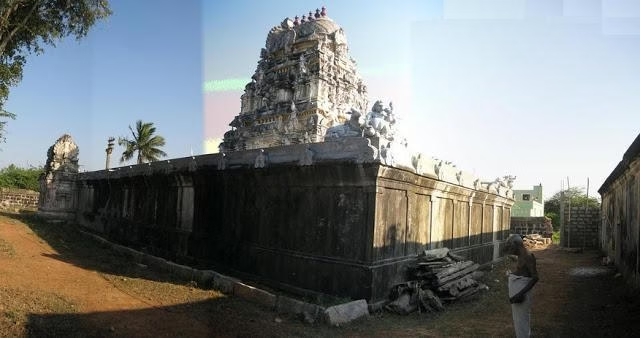
The temple dates back to the Pallava period, constructed approximately 1,200 years ago by the renowned Pallava Ruler Nandhivarman II (c. 731–796 CE). It stands as a monumental example of the architectural transition that eventually paved the way for the great Chola constructions.
Chola Influence & Inscriptions:
While the foundations are Pallava, the temple saw significant renovation during the Chola period, specifically under the patronage of Aditya Chola (871–907 CE). Visitors can observe inscriptions on the temple walls detailing land grants and ritual specifics from this era.
Local Legend (Sthala Purana):
Tradition holds that the name “Aranvoyal” (often derived from Aran meaning refuge and Voyal meaning land) signifies a sanctuary for divine protection. It is believed that the sage Parashara worshipped Lord Shiva here to atone for the curse of the great serpent Vasuki, establishing the site’s reputation for curing Naga Doshas.
3. Architectural Marvels
The temple exhibits a unique blend of Pallava structural elements and later Dravidian additions.
Sanctum & Style:
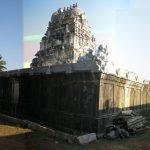
The main sanctum (Garbhagriha) is built according to the Gajabrushta (elephant-back) roof style, characteristic of early Dravidian architecture. The temple is south-facing, dominated by a newly constructed 5-tiered Rajagopuram that rises majestically over the surrounding 14-acre landscape.
Layout & Sculptures:
- Pillared Mandapas: The temple complex is lined with pillars featuring intricate carvings of celestial deities and mythical beasts.
- Niche Idols: The walls of the sanctum house Subsidiary Deities (Parivara Devatas) including Ganapati, Dakshina Murti, Vishnu, Brahma, and Durga.
- The Tank: A sprawling temple tank occupies approximately 7 acres of the property, utilized for ritual purification and festivals.
- Bhoga Murti: A unique shrine houses Lord Vishnu in a reclining posture with Goddess Lakshmi on his lap, known as Bhoga Murti (representing cosmic rest).
4. Darshan & Ritual Logistics (2026 Update)
To ensure a smooth pilgrimage experience, we have compiled the standard timings. Please note that timings may extend during festival days.
Daily Temple Timings
| Session | Timing |
|---|---|
| Morning Darshan | 06:00 AM – 12:00 PM |
| Midday Closure | 12:00 PM – 04:00 PM |
| Evening Darshan | 04:00 PM – 08:00 PM |
Key Sevas & Online Booking
While many rituals are performed in person, special Sevas (offerings) can often be arranged. For the Thiruthaleeshwarar Temple, devotees are advised to visit the HRCE (Hindu Religious and Charitable Endowments) department portal or inquire at the temple counter for the following:
- Abhishekam: Performed with milk, honey, and sandalwood paste.
- Archana: Personalized chanting of Lord’s names.
- Thirukalyana Utsavam: The celestial wedding ceremony of the deity.
Note for 2026 Pilgrims: While physical bookings are available, check the official Tamil Nadu HRCE website for “Online Seva Booking” integration, which is being rolled out to all major historic temples.
Major Festivals in 2026
- Pradosham: Monthly event (13th and 28th of every month). The most significant day for Shiva devotees.
- Maha Shivaratri: February 26, 2026. Expect night-long vigils and special decorations.
- Aadi Perukku: August 10, 2026. Celebrated near the temple tank (Jyeshtha Ganga Snanam).
- Karthigai Deepam: November 12, 2026. Lighting of the sacred lamp.
5. Practical Visitor Guidance
Preserving the sanctity of the temple while ensuring visitor comfort is our priority.
Rules & Etiquette
- Dress Code: Traditional attire is mandatory. Men should wear dhotis or trousers with shirts; women should wear sarees, churidars, or long skirts.
- Photography: Photography is permitted in the outer prakaram (corridors) but strictly prohibited inside the sanctum sanctorum.
- Mobile Lockers: Due to the ancient nature of the structure, large bags may not be allowed inside. It is advisable to carry minimal valuables. Check with the ticket counter for cloakroom facilities.
Crowd Management & Seasonal Advice
- Best Time to Visit: Early mornings (6:00 AM – 7:30 AM) offer the most serene darshan.
- Seasonal Tip: The Tamil Nadu heat in May and June can be intense. The temple grounds are open, but carry a reusable water bottle and an umbrella.
- Accessibility: The temple is accessible by wheelchair via the main southern entrance, though the sanctum requires assistance due to traditional steps.
6. Pilgrimage Connectivity
Located in the Thiruvallur district, the temple is well-connected to Chennai and its suburbs.
How to Reach
By Road:
- The temple is situated on the Chennai – Thiruvallur High Road.
- Route from Chennai: Take NH48 towards Poonamallee, continue to Tirumazhisai, and proceed towards Aranvoyal. Look for the Kingfisher Distilleries landmark. Take the narrow road opposite the distilleries; after 1.5 km, take a left turn at the split, and another left after 150 meters.
- Bus Services: Chennai MTC Buses 566A, 501, 501X, 597, 153A, 153B, and 153T stop at Aranvoyal Bus Stand. From there, it is a short walk or auto ride.
By Rail:
- Nearest Station: Putlur Railway Station (5 km) or Tiruvallur Railway Station (7 km).
By Air:
- Nearest Airport: Chennai International Airport (MAA) – approximately 39 km (45-60 mins drive).
Nearby Sacred Sites
Enhance your pilgrimage by visiting these nearby temples:
- Tiruvallur Veeraraghava Swamy Temple: A major Divya Desam dedicated to Lord Vishnu (located 11 km away).
- Putlur Venugopala Swamy Temple: Known for its unique Lord Krishna idol (located 5 km away).
- Kanchipuram Kamakshi Amman Temple: One of the Shakti Peethams (located approx. 45 km away).
7. Frequently Asked Questions (FAQ)
1. What is the historical significance of the Thiruthaleeshwarar Temple?
The temple was built by the Pallava Ruler Nandhivarman II nearly 1,200 years ago. It serves as a foundational example of Dravidian architecture and contains inscriptions from the Aditya Chola period, marking a blend of Pallava and Chola heritage.
2. Is there a VIP darshan entry available?
While the temple does not have a formal “VIP” ticket system like massive modern shrines, devotees can book Special Darshan tickets at the temple counter (usually a nominal fee) which allows for a closer and less crowded view of the deity, particularly during non-peak hours.
3. How do I perform Seva for Naga Dosha online?
For specific rituals like Naga Pratishta or Pradosham Pooja, visit the Tamil Nadu HRCE Department official website. Select “Thiruthaleeshwarar Temple” under Thiruvallur District. For complex remedies, it is often recommended to consult the temple priest (Archaka) in person upon arrival to ensure the rituals are performed correctly according to Vedic standards.
4. Are there accommodation facilities at the temple?
The temple is a day-visit destination. Accommodation is not available on-site. However, numerous lodges and guest houses are available in Tiruvallur town (11 km) and Poonamallee (15 km). For a spiritual retreat, Kanchipuram (30 km) offers a wide range of Chennai-adjacent lodging options.
5. What is the significance of Maragadambikai?
The Goddess is named after the Maragadam (Emerald). She is considered an aspect of Goddess Parvati, representing health and wealth. It is believed that praying to her alongside Lord Thiruthaleeshwarar brings familial harmony and removes poverty.
6. Can we perform the marriage ceremony (Thirukalyanam) here?
Yes, the temple complex has a dedicated space for conducting small-scale marriages and thread ceremonies. It is highly auspicious as it is believed to be blessed by the divine couple. Prior permission from the temple executive officer is required.
Disclaimer: Temple timings, seva details, and festival dates are subject to change based on the Tamil calendar and local temple administration decisions. Please verify with the official HRCE office before planning your travel.
Photo Gallery








Recent Posts

ओ सांवरे तूने ही मुझको संभाला – Lyrics & Meaning
ओ सांवरे तूने ही मुझको संभाला – A Prayer to Shyam Origin & Spiritual Essence Why This Bhajan Resonates Devotees chant this when overwhelmed by life’s storms—the refrain ‘तूने ही मुझको संभाला’ is the soul’s sigh of relief: “You…

कथा ये है महाराज मेरे की – Lyrics & Meaning
कथा ये है महाराज मेरे की छत्रपति संभाजी महाराज – A Prayer to Chhatrapati Sambhaji Maharaj Origin & Spiritual Essence Why This Bhajan Resonates Devotees chant this when their spirit feels tested—its powerful refrain “महाराज मेरे” is a soul’s…

Rigveda Samhita Yathartha Anuvada (ऋग्वेद संहिता यथार्थ अनुवाद) – Complete Set with Anvayartha & Hindi/English Translation
The Rigveda is the oldest surviving scripture of humanity and the foundational text of Sanātana Dharma. For serious students, scholars, UPSC aspirants studying ancient Indian history, Sanskrit learners, and spiritual seekers, a precise and grammatically structured translation is indispensable.…

आना भी अकेला है जाना भी अकेला है – Lyrics & Meaning | BharatTemples
आना भी अकेला है जाना भी अकेला है – A Prayer to the Divine Witness Origin & Spiritual Essence Why This Bhajan Resonates Devotees turn to this bhajan in moments of deep reflection—when life’s attachments begin to ache. The…

माता शेरावाली के द्वार जो भी जाता है – Lyrics & Meaning
माता शेरावाली के द्वार जो भी जाता है – A Prayer to Maa Sherawali Origin & Spiritual Essence Why This Bhajan Resonates Devotees turn to this bhajan in times of fear or uncertainty—its promise that no one leaves Maa’s…

मार लेना सपणी उबार लेणा भवरा – Lyrics & Meaning
मार लेना सपणी उबार लेणा भवरा – A Prayer to the Divine Beloved Origin & Spiritual Essence Why This Bhajan Resonates Devotees chant this in moments of deep vulnerability—its cry of “मार लेना सपणी, उबार लेणा भवरा” is the…

हमें श्याम सुंदर भरोसा तुम्हारा – Lyrics & Meaning
हमें श्याम सुंदर भरोसा तुम्हारा – A Prayer to Shyam Sundar Origin & Spiritual Essence Why This Bhajan Resonates Devotees chant this when feeling alone—its refrain ‘de do sahara’ is the soul’s cry for divine support. Lyrics in Hindi…

Mere Satguru Ne Di Thi Davai Lyrics in Hindi & Meaning
Mere Satguru Ne Di Thi Davai: Invoking the Guru’s Liberating Wisdom This soul-stirring bhajan venerates the Satguru (True Spiritual Master) as the divine physician who dispenses the only remedy for life’s deepest sufferings. Composed by Sant Karmaveer Tufani, it…

Janm Diyo Thari Maa Dukh Dekhiyo Lyrics in Hindi & Meaning
जन्म दियो थारी माँ दुख देखियो (Maa’s Grief Upon Birthing You) This soul-stirring Chetavani Bhajan (admonitory hymn) is addressed to the Divine Mother (Maa) – a call for repentance when children forget their filial duties in the dark age…
Bhadi Sabha Mein Thane Manaun Lyrics in Hindi & Meaning
Bhadi Sabha Mein Thane Manaun: Invoking the Spear-Wielding Mother Mata Bhawani (श्री ज्वाला भवानी), the fiery manifestation of Shakti worshipped as the Protector of Dharma in Her Dhaulagarh sanctum. Origin & Spiritual Essence Composed in Rajasthani folk tradition by…