
Contents
- 1 Introduction & Spiritual Essence: The Trikutalaya of the Kakatiyas
- 2 Historical Origins & Scriptural Legend
- 3 Architectural Marvels: Star-Shaped Geometry
- 4 Darshan & Ritual Logistics
- 5 Practical Visitor Guidance
- 6 Pilgrimage Connectivity
- 6.1 Nearby Sacred Sites (Pilgrimage Circuit)
- 6.2 Photo Gallery
- 6.3 Frequently Asked Questions (FAQ)
- 6.4 1. Is there a VIP or Special Darshan entry available?
- 6.5 2. What is the entry fee for the temple?
- 6.6 3. How much time is required for a complete tour?
- 6.7 4. Are non-Hindus allowed inside the temple?
- 6.8 5. Is there a cloakroom facility available?
- 7 Contact Details
Introduction & Spiritual Essence: The Trikutalaya of the Kakatiyas
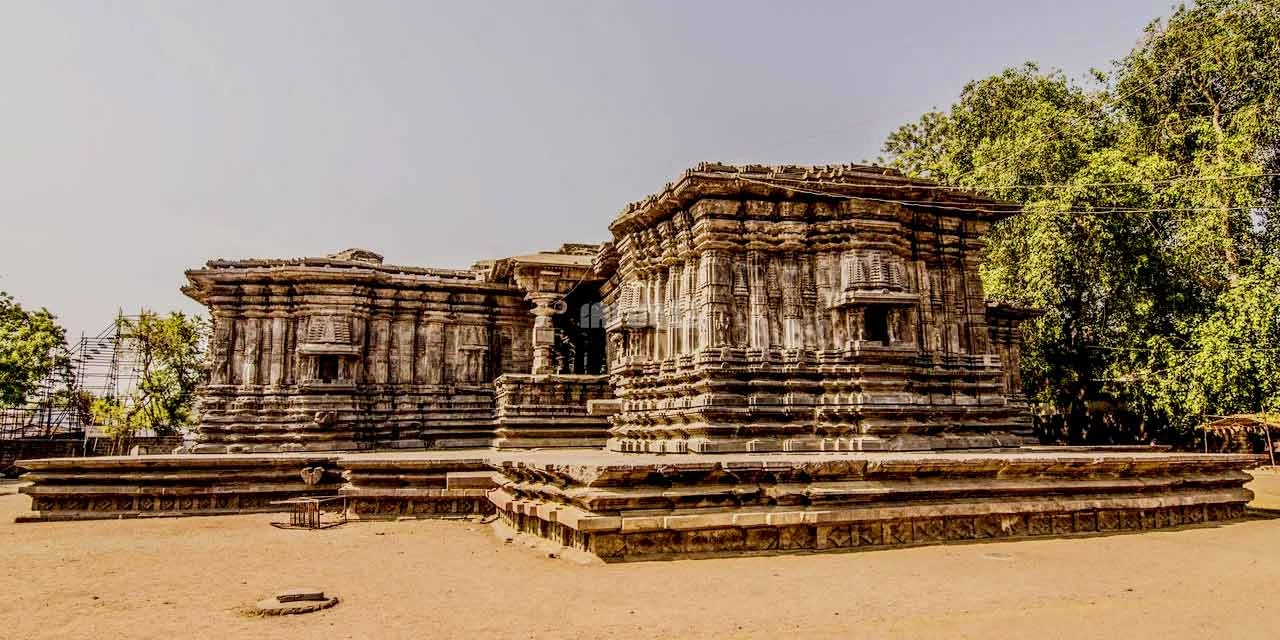
The Thousand Pillar Temple, locally revered as Veyisthambala Gudi, stands as a spiritual beacon in the heart of Hanamakonda, Telangana. Dedicated to the holy trinity of Lord Shiva (Rudreshwara), Lord Vishnu, and Lord Surya (Sun God), this temple is a classic example of a Trikutalaya (three shrines enclosed within a single mandapa).
Phalaśruti (Spiritual Benefits):
Devotees visit this temple to seek blessings for health, prosperity, and liberation from the cycle of rebirth. According to temple lore, offering prayers here, particularly to Lord Shiva in the form of Rudreshwara, helps cleanse past sins (Paap) and balances planetary afflictions (Navagraha Doshas). Worshipping the Sun God here is believed to enhance vitality and leadership qualities, while seeking Vishnu’s grace ensures protection and righteousness (Dharma).
Historical Origins & Scriptural Legend
Builders and Era:
The temple was constructed in 1163 CE by the great Kakatiya ruler Rudra Deva (Rudradeva). It was named Sri Rudreswara Swamy Temple after him. The Kakatiya dynasty, known for its patronage of arts and architecture, used this temple as a benchmark for future constructions in the region.
Scriptural & Local Legend:
While the temple honors the Trinity, it is primarily associated with Shiva. Tradition holds that Rudra Deva built the temple to express his devotion to Shiva, overcoming the challenges of constructing a massive structure on loose soil using the innovative “sandbox technique.” This method involved digging deep pits, filling them with lime, mortar, and rubble, and then building the foundation on top—a feat of engineering preserved by the Archaeological Survey of India (ASI).
Historically, the temple faced desecration during the invasions of the Tughlaq dynasty. However, it was restored and maintained by the Nizams of Hyderabad, specifically Mir Osman Ali Khan, who donated significant funds for its preservation. Today, it stands on the UNESCO Tentative List of World Heritage Sites, celebrated alongside the Warangal Fort and the Ramappa Temple.
Architectural Marvels: Star-Shaped Geometry
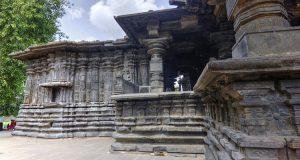
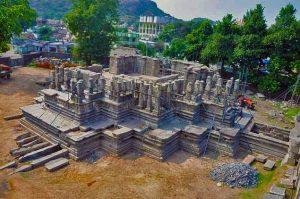
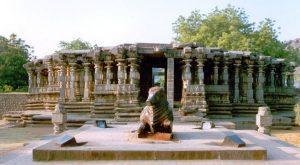
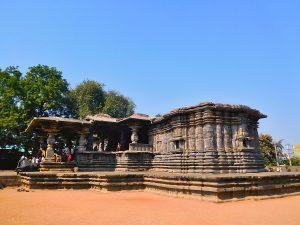
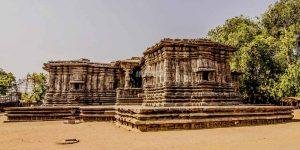
The Thousand Pillar Temple is a masterpiece of Kakatiya architecture, heavily influenced by the Chalukya style. The structure is built on a star-shaped platform (Stara), a distinctive feature that allows for circumambulation (Pradakshina) without hindrance.
Key Architectural Features:
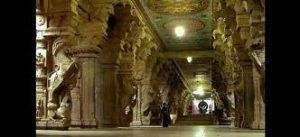
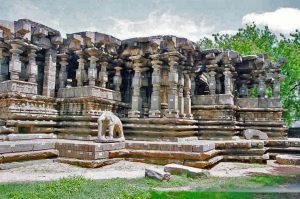
– The Pillars: Though the total count varies, the hall contains intricately carved pillars depicting mythological scenes. The pillars are monolithic and feature exquisite polish that rivals modern craftsmanship.
– Perforated Screens: The temple boasts stone jalis (latticed screens) that allow light and air to filter in while maintaining privacy—an element later adopted in Mughal architecture.
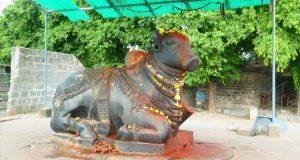
– The Nandi: A massive monolithic Nandi (bull), carved from dolerite rock, sits in the mandapa facing the sanctum. Its shiny surface is a testament to the advanced lathe-turned polishing techniques of the era.
– Sculptures: Rock-cut elephants and detailed icons of deities adorn the exterior and interior walls.
| Date built: | – |
|---|---|
| Deity: | Shiva, Vishnu, Surya |
| Architectural style: | Kakatiya, Chalukya, Kadamba architecture |
| Major festivals | – |
| Locale: | Hanamakonda, India Warangal |
| District:: | Hanamakonda |
| Address: | Warangal-Hyderabad Rd, Brahmanawada, Hanamkonda, Telangana 506011 |
| Phone | – |
Darshan & Ritual Logistics
The temple operates under the administration of the Telangana Endowments Department. Below are the tentative timings for 2026. Devotees are advised to check local announcements for festival-specific changes.
Daily Darshan Timings (2026 Schedule)
| Session | Timing | Activity |
|---|---|---|
| Morning | 05:00 AM – 12:00 PM | Suprabhatam, Abhishekam, General Darshan |
| Afternoon | 12:00 PM – 04:00 PM | Temple Cleaning / Rest (Maha Nivedana) |
| Evening | 04:00 PM – 08:00 PM | Darshan, Archana, Aarti |
Key Sevas & Online Booking
- Abhishekam: Performed with water, milk, and honey. Best time: 7:00 AM – 9:00 AM.
- Archana: Recitation of names. Available throughout the day.
- Rudra Homam: Special Vedic ritual for removing obstacles.
Online Booking: While the temple administration manages bookings, visitors can often utilize the TS Online portal or the official Telangana Endowments website (likely telanganatemples.in) for 2026 registrations. Look for “Hanamakonda Thousand Pillar Temple” under the list of monuments.
2026 Major Festival Dates
Plan your visit around these auspicious days for special decorations and Abhishekams:
- Maha Shivaratri: February 26, 2026 (Phalguna Krishna Chaturdashi)
- Ugadi (Telugu New Year): March 28, 2026
- Karthika Deepam: November 5, 2026
- Sri Rudra Deva Jayanti: October 15, 2026 (Kakatiya Festival)
Practical Visitor Guidance
Dress Code: Modest attire is mandatory. Men should wear dhotis or full-length trousers and shirts; women should wear sarees, salwar kameez, or long skirts.
Photography Rules: Photography is permitted in the outer mandapas and courtyards. However, photography is strictly prohibited inside the sanctum sanctorum (Garbhagriha).
Mobile Lockers: Free mobile storage facilities are available near the entrance due to security protocols. Large bags and cameras may require paid storage.
Accessibility: The temple complex is generally flat, but ancient steps exist. Wheelchair access is limited to the outer courtyard; assistance from ASI staff is available upon request.
Crowd Management:
– Best Hours: Weekday mornings (7 AM – 9 AM) or late evenings (after 6 PM).
– Seasonal Advice: Summers (April–June) in Hanamakonda are hot; carry water bottles and umbrellas. Winters (November–February) are ideal for visits.
Pilgrimage Connectivity
How to Reach:
- Airways: The nearest airport is Rajiv Gandhi International Airport (HYD) in Hyderabad, approximately 150 km away (3-hour drive).
- Railways: Warangal Railway Station (WL) is the nearest railhead, 12 km from the temple. Major trains like the Telangana Express and Godavari Express connect Warangal to Hyderabad and Delhi.
- Roadways: Located on the Warangal-Hyderabad Highway (NH 163). APSRTC runs frequent buses from Hyderabad (MGBS) and Karimnagar.
Nearby Sacred Sites (Pilgrimage Circuit)
Extend your spiritual journey to these nearby destinations:
- Warangal Fort (4 km): Famous for its four ornate stone gateways (Kirti Stambhas).
- Ramappa Temple (70 km): A UNESCO World Heritage Site known for its floating bricks and intricate sculptures.
- Pakhal Lake (50 km): A serene man-made lake surrounded by forests, offering a natural retreat.
Photo Gallery
Frequently Asked Questions (FAQ)
1. Is there a VIP or Special Darshan entry available?
Currently, the Thousand Pillar Temple does not have an online booking system for VIP darshans like Tirupati. However, senior citizens and differently-abled visitors can request priority entry from the temple security at the entrance.
2. What is the entry fee for the temple?
Entry to the Thousand Pillar Temple is free for all devotees. However, a nominal fee (approx. INR 20) may be charged for still photography, and a higher fee for video cameras, as the site is protected by the ASI.
3. How much time is required for a complete tour?
A thorough visit, including darshan and walking through the architecture of the mandapas and museum, typically takes 1 to 1.5 hours.
4. Are non-Hindus allowed inside the temple?
While the Thousand Pillar Temple is a historical monument managed by the ASI, entry into the inner sanctum is generally restricted to Hindus. However, the outer halls and the architecture are accessible to all visitors.
5. Is there a cloakroom facility available?
Yes, free cloakroom facilities are available near the security check post at the main entrance. You can deposit mobile phones, wallets, and leather items here.
Contact Details
For official inquiries or queries regarding the historical structure:
Official Address:
Thousand Pillar Temple Office,
Warangal-Hyderabad Road, Brahmanawada,
Hanamkonda, Telangana 506011.
Recent Developments & Renovations
The temple underwent a massive renovation in 2004 by the Government of India. ASI experts employed the sandbox technique again to stabilize the foundation. As of 2026, the surrounding park and lighting have been modernized to enhance the visitor experience while preserving the sanctity of the structure.
Recent Posts

Shri Kaamkoteeshwar Mandir, Varanasi – History & Significance
In the heart of Kashi, the eternal city of Lord Shiva, where the Ganges flows with celestial grace, stands the Shri Kaamkoteeshwar Mandir. This sacred Sannidhi is not merely a temple but a profound spiritual bridge between the Northern…

ओ सांवरे तूने ही मुझको संभाला – Lyrics & Meaning
ओ सांवरे तूने ही मुझको संभाला – A Prayer to Shyam Origin & Spiritual Essence Why This Bhajan Resonates Devotees chant this when overwhelmed by life’s storms—the refrain ‘तूने ही मुझको संभाला’ is the soul’s sigh of relief: “You…

कथा ये है महाराज मेरे की – Lyrics & Meaning
कथा ये है महाराज मेरे की छत्रपति संभाजी महाराज – A Prayer to Chhatrapati Sambhaji Maharaj Origin & Spiritual Essence Why This Bhajan Resonates Devotees chant this when their spirit feels tested—its powerful refrain “महाराज मेरे” is a soul’s…

Rigveda Samhita Yathartha Anuvada (ऋग्वेद संहिता यथार्थ अनुवाद) – Complete Set with Anvayartha & Hindi/English Translation
The Rigveda is the oldest surviving scripture of humanity and the foundational text of Sanātana Dharma. For serious students, scholars, UPSC aspirants studying ancient Indian history, Sanskrit learners, and spiritual seekers, a precise and grammatically structured translation is indispensable.…

आना भी अकेला है जाना भी अकेला है – Lyrics & Meaning | BharatTemples
आना भी अकेला है जाना भी अकेला है – A Prayer to the Divine Witness Origin & Spiritual Essence Why This Bhajan Resonates Devotees turn to this bhajan in moments of deep reflection—when life’s attachments begin to ache. The…

माता शेरावाली के द्वार जो भी जाता है – Lyrics & Meaning
माता शेरावाली के द्वार जो भी जाता है – A Prayer to Maa Sherawali Origin & Spiritual Essence Why This Bhajan Resonates Devotees turn to this bhajan in times of fear or uncertainty—its promise that no one leaves Maa’s…

मार लेना सपणी उबार लेणा भवरा – Lyrics & Meaning
मार लेना सपणी उबार लेणा भवरा – A Prayer to the Divine Beloved Origin & Spiritual Essence Why This Bhajan Resonates Devotees chant this in moments of deep vulnerability—its cry of “मार लेना सपणी, उबार लेणा भवरा” is the…

हमें श्याम सुंदर भरोसा तुम्हारा – Lyrics & Meaning
हमें श्याम सुंदर भरोसा तुम्हारा – A Prayer to Shyam Sundar Origin & Spiritual Essence Why This Bhajan Resonates Devotees chant this when feeling alone—its refrain ‘de do sahara’ is the soul’s cry for divine support. Lyrics in Hindi…

Mere Satguru Ne Di Thi Davai Lyrics in Hindi & Meaning
Mere Satguru Ne Di Thi Davai: Invoking the Guru’s Liberating Wisdom This soul-stirring bhajan venerates the Satguru (True Spiritual Master) as the divine physician who dispenses the only remedy for life’s deepest sufferings. Composed by Sant Karmaveer Tufani, it…

Janm Diyo Thari Maa Dukh Dekhiyo Lyrics in Hindi & Meaning
जन्म दियो थारी माँ दुख देखियो (Maa’s Grief Upon Birthing You) This soul-stirring Chetavani Bhajan (admonitory hymn) is addressed to the Divine Mother (Maa) – a call for repentance when children forget their filial duties in the dark age…