Trivikrama Temple Varanasi: History, Darshan Timings & Complete Guide
Receive daily temple updates, divine darshan, and morning bhajans directly on WhatsApp.
Contents
- 1 Introduction & Spiritual Essence
- 2 Historical Origins & Scriptural Legend
- 3 Architectural Marvels
- 4 Darshan & Ritual Logistics
- 5 Practical Visitor Guidance
- 6 Pilgrimage Connectivity
- 7 Frequently Asked Questions (FAQ)
- 8 Photo Gallery
- 9 Legend / Local stories
- 10 How to Reach
- 11 Contact Details
Introduction & Spiritual Essence
Nestled in the spiritual labyrinth of Kashi (Varanasi), the Trivikrama Temple stands as a profound testament to the glory of Lord Vishnu. Located specifically in the Trilochan region of the old city, this sacred shrine venerates Lord Vishnu in his form as Trivikrama—the Cosmic Dwarf incarnation who spanned the universe in three steps.
For the devotee, visiting this temple is not merely a ritual but a spiritual cleansing. According to ancient traditions, worshipping the Trivikrama form of Vishnu bestows immense Lakshmi (wealth and prosperity) while simultaneously cleansing the sins of one’s ancestors. It is believed that a sincere darshan here removes the burdens of karma, allowing the soul to progress toward moksha (liberation).
Why Do Devotees Visit?
- Phalaśruti (Spiritual Benefit): It is said that devotees are blessed with wealth (Lakshmi) and spiritual purification.
- Ancestral Karmic Cleansing: Offering prayers here is believed to bring peace to departed ancestors.
Historical Origins & Scriptural Legend
While specific inscriptions regarding the founding dynasty of the Trivikrama Temple are largely obscured by the mists of time, its presence is deeply embedded in the Sthala Purana of Varanasi. The temple predates many modern structures, reflecting the architectural lineage of the medieval period in Kashi.
📖 Related: Sarnath Temple History and Darshan Timings: Complete Guide
The Legend of Vamana and Bali
According to the Padma Purana, this temple commemorates the Vamana avatar (incarnation). The legend holds that Lord Vishnu, in the form of a dwarf Brahmin named Vamana, approached the demon king Bali (Mahabali) and asked for three paces of land. When Bali granted the request, Lord Vamana expanded his form to the cosmic size of Trivikrama, covering the earth and heavens with two steps. The third step was placed on Bali’s head, humbling his ego, yet granting him immortality. In Varanasi, specifically at this shrine, the Lord is worshipped not just as a savior but as the master of the three worlds.
Architectural Marvels
The Trivikrama Temple exhibits the classic characteristics of traditional North Indian (Nagara) temple architecture, adapted to the spatial constraints of Varanasi’s dense urban fabric.
Style and Layout
Unlike sprawling complexes, Varanasi temples are often vertical and vertical. The sanctum sanctorum (Garbhagriha) is relatively small but resonates with intense spiritual energy. The exterior typically features tiered projections, often referred to as Bhumija style shikharas (spires), though specific historical renovations have simplified the external ornamentation.
Sculptural Details
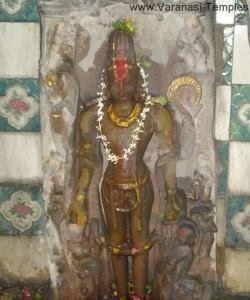
The temple houses an ancient idol of Lord Trivikrama. Tradition holds that above the main idol, inscriptions identifying the deity as Brihaspati (Jupiter, the guru of gods) have been noted, blending Vaishnava and Jyotisha (astrological) symbolism, a common feature in Kashi.
Towards the north of Trilochan, Lord Vishnu is present in the form of Trivikrama. Devotees worshipping this Lord will be blessed with Lakshmi and their sins will be cleansed away. By Lakshmi, readers may infer wealth and prosperity.
Darshan & Ritual Logistics
To ensure a seamless spiritual experience, devotees should observe the following timings and ritual schedules. Please note that temple timings in Varanasi can vary slightly during major festivals.
Daily Darshan Timings
| Time Slot | Activity |
|---|---|
| Morning: 05:00 AM – 11:00 AM | Morning Abhishekam & Darshan |
| Afternoon: 11:00 AM – 04:00 PM | Temple Rest (Seva not performed) |
| Evening: 04:00 PM – 09:00 PM | Evening Aarti & Darshan |
📖 Related: Pichandil Vinayak Temple Varanasi: History, Darshan Timings & Guide
Key Sevas & Online Booking
Devotees can book specific rituals in advance. While on-site booking is available, online seva booking for the Varanasi temple circuit is often managed via the Kashi Vishwanath Temple administration.
- Abhishekam: Ritual bathing of the deity (Best time: Morning).
- Archana: Recitation of the deity’s names (Can be performed daily).
- Sanjya Aarti: The evening lamp offering.
2026 Festival Schedule
- Janmashtami: August 14, 2026
- Deepavali: November 1, 2026 (Special Maha Abhishekam)
- Vaikuntha Ekadashi: December 11, 2026
Practical Visitor Guidance
The Trivikrama Temple is located in the heart of Varanasi, which presents unique logistical challenges.
Rules & Etiquette
- Dress Code: Traditional attire is preferred. Men should wear dhoti or pants (no shorts), and women should wear saree or salwar kameez.
- Photography: Strictly prohibited inside the sanctum sanctorum.
- Mobiles/Lockers: Carry minimal baggage. There are no formal locker facilities, so it is advisable to leave valuables at your hotel.
Crowd Management
The temple is extremely crowded during Pradosh Kaal (evening twilight). To experience a peaceful darshan, visit between 8:00 AM and 10:00 AM. During the summer months (May-June), the lanes can be very hot; carry a water bottle and a head covering.
Pilgrimage Connectivity
How to Reach
The temple is located in the Trilochan area, near A-2/80.
- By Auto/Rickshaw: Take an auto to Birla Hospital or Machhodari. From there, the lanes are narrow, and you must walk or take a cycle rickshaw for the final stretch.
- By Boat: Boats can take you to Trilochan Ghat. From the Ghat, climb the steps, and the temple is accessible within walking distance.
- Nearest Railway/Station: Varanasi Junction (approx. 5 km).
- Nearest Airport: Lal Bahadur Shastri International Airport (approx. 25 km).
Nearby Sacred Sites
- Trilochan Temple: Just steps away, giving the area its name.
- Manikarnika Ghat: A short boat ride away, the holiest cremation ground in Kashi.
- Kashi Vishwanath Temple: Approximately 2 km by walking through the lanes.
Frequently Asked Questions (FAQ)
1. What is the primary deity of this temple?
The primary deity is Lord Vishnu worshipped as Trivikrama, the cosmic dwarker who took three steps to cover the universe.
📖 Related: Mahabal Narsimha Temple Varanasi: History, Darshan Timings & Guide
2. Is there a VIP or special entry for darshan?
Due to the temple’s compact size and location in the narrow lanes, there is no formal VIP entry system like larger commercial temples. Darshan is on a first-come, first-served basis, but seva bookings allow prioritized access.
3. How far is the temple from Kashi Vishwanath?
It is approximately 2 kilometers away, but due to the narrow old city lanes, it is recommended to walk (20-30 minutes) or take a cycle rickshaw.
4. What are the exact contact details?
Specific contact numbers for this small shrine are not publicly standardized. It is best to visit the local priest at the temple or contact the central Kashi Vishwanath Temple trust for general inquiries.
5. Is the temple accessible for senior citizens?
While the ground level is accessible, the surrounding areas have uneven steps and narrow lanes. Senior citizens are advised to use a wheelchair or assistance to the nearest drop-off point (Birla Hospital area).
Photo Gallery
| Date built: | – |
|---|---|
| Deity: | Trivikrama Temple |
| Architectural style: | Hindu Temple architecture |
| Major festivals | – |
| Locale: | Varanasi |
| District:: | Varanasi |
| Address: | – |
| Phone | – |
Legend / Local stories
As mentioned in the spiritual essence section, the local folklore of Varanasi links this temple to the liberation from the cycle of rebirth. The unique presence of the Trivikrama form here is said to be particularly potent for those seeking to overcome ego, represented by the placing of the Lord’s foot on the head of the demon king.
How to Reach
Trivikrama is located at A-2/80, Trilochaneshwar Temple. Above the idol, it has been mentioned as Brihaspati. The temple is approachable from Birla Hospital after Machhodari up to which place, people can travel in Auto or Cycle Rickshaw. Alternatively, they can have a boat ride up to Trilochan Ghat and climb the stairs.
Contact Details
Official Address: Trilochan, Varanasi, Uttar Pradesh