
Contents
- 1 Introduction & Spiritual Essence: The abode of the Tiger Goddess
- 2 Historical Origins & Scriptural Legend
- 3 Architectural Marvels: Hilltop Sanctity
- 4 Darshan & Ritual Logistics (2026 Guide)
- 5 Practical Visitor Guidance
- 6 Pilgrimage Connectivity
- 7 Frequently Asked Questions (FAQ)
- 7.1 1. Is there a VIP darshan entry available?
- 7.2 2. Are there accommodation facilities available near the temple?
- 7.3 3. What is the history of the steps leading to the temple?
- 7.4 4. Is the temple accessible for wheelchair users?
- 7.5 5. What is the significance of the “Lotta” (vessel) in the local legend?
- 8 Photo Gallery
- 9 How to Reach:
- 10 Contact Details
Introduction & Spiritual Essence: The abode of the Tiger Goddess
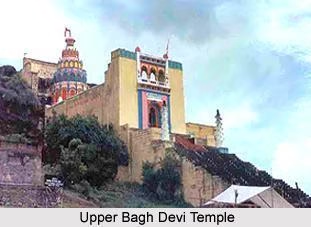
Perched atop the lush hills of Kulada, approximately 8 km from Bhanjanagar in Ganjam district, stands the Upper Bagh Devi Temple. This ancient shrine is one of the most revered spiritual destinations in Odisha, drawing devotees seeking the blessings of the fierce yet benevolent form of Goddess Durga, known here as Bagh Devi (the Tiger Goddess).
The Primary Deity: The temple houses a Swayambhu (self-manifested) idol of Goddess Bagh Devi, depicted with a tiger face, symbolizing power and protection. The sanctum also houses shrines for Lord Jagannath, Mausimaa, and Ratneswar Mahadev within the complex.
Phalaśruti (Spiritual Benefits):
Devotees believe that visiting Upper Bagh Devi brings profound spiritual merit. Specifically:
- Removal of Obstacles: The Goddess is known as Vighnaharta (remover of obstacles).
- Ancestral Peace: Performing rituals here is believed to cleanse ancestral karma and bring peace to departed souls.
- Protection: As the guardian of the region, she protects devotees from evil influences and grants courage to face life’s challenges.
Historical Origins & Scriptural Legend
While the exact date of construction is not recorded in stone inscriptions, local folklore traces the temple’s origin to the era of the great poet Kavi Samrat Upendra Bhanja. The temple is deeply intertwined with regional folklore known as the “Legend of the Three Sisters.”
The Legend of the Three Sisters
According to Sthala Purana (local oral tradition), there were three sisters: Bada Raula (the eldest), Upper Bagh Devi, and Bagh Devi (the youngest). A dispute arose among them over a coconut, leading them to decide to partition the region.
They threw three Lottas (traditional drinking vessels) in different directions. The vessel of Bada Raula stuck where her temple stands today; the vessel of Upper Bagh Devi fixed itself on this hilltop; and the third vessel fell into a pond. Tradition holds that the poet Upendra Bhanja received a divine directive in a dream to construct temples at these locations. While temples for Bada Raula and Upper Bagh Devi were built, the shrine for the youngest sister (where the vessel fell into the water) was never constructed, adding a mystical allure to the site.
Architectural Marvels: Hilltop Sanctity
The architecture of Upper Bagh Devi Temple is a rustic blend of traditional Odishan style and nature-centric design, typical of hilltop shrines.
- Access: The temple is accessed by climbing approximately 285 stone steps. The ascent offers panoramic views of the surrounding Ganjam landscape.
- Layout: At the foot of the hill lies another shrine dedicated to Goddess Bagh Devi, often referred to as the “Younger Sister” temple, which is significantly older and considered the original abode before the hilltop expansion.
- Sculpture: The sanctum houses the idol of the Goddess, facing east. While the temple structure is relatively modest compared to royal grandeur, the spiritual energy of the site is palpable.
- Proximity to Nature: The temple is situated amidst dense forest, enhancing its attribute as a Vanadurga (Forest Goddess).
Darshan & Ritual Logistics (2026 Guide)
Planning your visit requires attention to specific timings and seasonal festivals. The temple follows the traditional Odia calendar for rituals.
Daily Temple Timings
Below is the standard schedule for Darshan and Aarti. Please note that timings may vary slightly during festivals.
| Session | Timing | Activity |
|---|---|---|
| Morning | 06:00 AM – 12:00 PM | Mangala Alati, Abhishekam, Darshan |
| Afternoon | 12:00 PM – 04:00 PM | Temple Closed (Rest period) |
| Evening | 04:00 PM – 08:00 PM | Sandhya Alati, Darshan |
Key Sevas and Online Booking
Devotees can perform various Sevas (offerings). While physical booking is available at the temple office, the Government of Odisha has digitized many temple services.
- Abhishekam: Ritual bathing of the deity (usually performed in the morning).
- Archana: Recitation of 108 names of the Goddess.
- Deeparadhana: Offering of lamps.
Booking: Visit the official Odisha Temple Administration Council (OTAC) portal or the Madhyam app to book Sevas in advance for 2026. Search for “Upper Bagh Devi Temple, Bhanjanagar.”
Major Festivals in 2026
1. Chandana Yatra (Sankranti): Celebrated on the first day of every solar month (especially significant in April and July).
2. Thakurani Yatra: This is the most grandeur festival, celebrated every three years. The next major cycle will be vibrant with processions and cultural performances.
3. Ratha Yatra (Car Festival): Held during the month of Ashadha (June/July), similar to the Puri Ratha Yatra but on a local scale.
4. Durga Puja & Kali Puja: Celebrated with great fervor in October/November.
Practical Visitor Guidance
To ensure a smooth Darshan experience, please adhere to the following guidelines:
- Dress Code: Traditional attire is recommended. Men should wear Dhoti or Pants with a shirt; Women should wear Saree or Salwar Kameez. Avoid shorts and sleeveless tops.
- Footwear: Shoes must be removed at the base of the hill or designated parking areas. There is a shoe keeping facility available (nominal fee).
- Photography: Photography is generally permitted in the temple courtyard but is strictly prohibited inside the inner sanctum (Garbhagriha).
- Mobile Phones: Electronic devices are allowed, but please maintain silence. Some temples offer lockers; it is advisable to travel light.
- Crowd Management:
- Best Hours: Early morning (6:00 AM – 8:00 AM) or late evening (6:00 PM – 7:30 PM) to avoid crowds.
- Seasonal Advice: Carry water bottles during summer (April–June). The steps can be slippery during the monsoon (July–September); wear rubber-soled footwear.
Pilgrimage Connectivity
How to Reach Upper Bagh Devi Temple
The temple is well-connected by road, rail, and air.
- By Air: The nearest airport is Biju Patnaik International Airport, Bhubaneswar, approximately 150 km away (3.5 hours drive).
- By Rail: The nearest major railway station is Berhampur (BAM), about 88 km from the temple. From Berhampur, you can hire a taxi or take a bus to Bhanjanagar.
- By Road:
- From Bhanjanagar: 8 km (20 mins) via local roads.
- From Chhatrapur: 102 km.
- From Bhubaneswar: 140 km via NH16 (formerly NH5).
Nearby Sacred Sites
Extend your pilgrimage to these nearby attractions in Ganjam:
- Bagh Devi Temple (Base): Located at the foot of the hill, this is the smaller shrine dedicated to the youngest of the three sisters.
- Jagannath Temple (Kulada): A short distance away, dedicated to Lord Jagannath.
- Ratneswar Mahadev Temple: A shrine for Lord Shiva located in the vicinity, ideal for a complete spiritual circuit.
- Taratarini Temple: Located about 40 km away near Purushottampur, this is a major Shakti Pitha and a must-visit for devotees.
Frequently Asked Questions (FAQ)
1. Is there a VIP darshan entry available?
Currently, there is no separate VIP entry gate. Darshan is based on queue systems. However, senior citizens and differently-abled devotees are given priority assistance by temple volunteers.
2. Are there accommodation facilities available near the temple?
Basic guest houses are available in Bhanjanagar town (8 km away). For better amenities, Berhampur (88 km away) offers a wide range of hotels and Odisha Tourism properties. The temple trust sometimes provides resting sheds for pilgrims during festivals.
3. What is the history of the steps leading to the temple?
The 285 steps were constructed over time to facilitate pilgrim access to the hilltop shrine. While the original history of the steps is not documented, they are maintained by the local trust and the district administration to ensure safe passage for devotees.
4. Is the temple accessible for wheelchair users?
Due to the steep hill and numerous steps, the temple is currently not fully wheelchair accessible. However, the temple at the base of the hill (Bagh Devi Temple) is accessible.
5. What is the significance of the “Lotta” (vessel) in the local legend?
In Odia culture, the Lotta is a sacred vessel used for water. In the legend, the direction and final resting place of the vessel thrown by the Goddess sisters determined the location of their permanent abodes (temples), symbolizing divine will and destiny.
Photo Gallery

How to Reach:
GPS Coordinates: 19.5000° N, 84.7833° E (Approximate center of Bhanjanagar area)
Contact Details
Official Address:
Upper Bagh Devi Temple,
Kulada, Bhanjanagar,
Ganjam District, Odisha – 761126
Contact: For specific inquiries, please contact the Block Development Office (BDO) in Bhanjanagar or the District Collector’s Office, Ganjam. (Note: Direct temple phone numbers are often unlisted; local tourist information centers can provide current contacts).
Recent Posts

ओ सांवरे तूने ही मुझको संभाला – Lyrics & Meaning
ओ सांवरे तूने ही मुझको संभाला – A Prayer to Shyam Origin & Spiritual Essence Why This Bhajan Resonates Devotees chant this when overwhelmed by life’s storms—the refrain ‘तूने ही मुझको संभाला’ is the soul’s sigh of relief: “You…

कथा ये है महाराज मेरे की – Lyrics & Meaning
कथा ये है महाराज मेरे की छत्रपति संभाजी महाराज – A Prayer to Chhatrapati Sambhaji Maharaj Origin & Spiritual Essence Why This Bhajan Resonates Devotees chant this when their spirit feels tested—its powerful refrain “महाराज मेरे” is a soul’s…

Rigveda Samhita Yathartha Anuvada (ऋग्वेद संहिता यथार्थ अनुवाद) – Complete Set with Anvayartha & Hindi/English Translation
The Rigveda is the oldest surviving scripture of humanity and the foundational text of Sanātana Dharma. For serious students, scholars, UPSC aspirants studying ancient Indian history, Sanskrit learners, and spiritual seekers, a precise and grammatically structured translation is indispensable.…

आना भी अकेला है जाना भी अकेला है – Lyrics & Meaning | BharatTemples
आना भी अकेला है जाना भी अकेला है – A Prayer to the Divine Witness Origin & Spiritual Essence Why This Bhajan Resonates Devotees turn to this bhajan in moments of deep reflection—when life’s attachments begin to ache. The…

माता शेरावाली के द्वार जो भी जाता है – Lyrics & Meaning
माता शेरावाली के द्वार जो भी जाता है – A Prayer to Maa Sherawali Origin & Spiritual Essence Why This Bhajan Resonates Devotees turn to this bhajan in times of fear or uncertainty—its promise that no one leaves Maa’s…

मार लेना सपणी उबार लेणा भवरा – Lyrics & Meaning
मार लेना सपणी उबार लेणा भवरा – A Prayer to the Divine Beloved Origin & Spiritual Essence Why This Bhajan Resonates Devotees chant this in moments of deep vulnerability—its cry of “मार लेना सपणी, उबार लेणा भवरा” is the…

हमें श्याम सुंदर भरोसा तुम्हारा – Lyrics & Meaning
हमें श्याम सुंदर भरोसा तुम्हारा – A Prayer to Shyam Sundar Origin & Spiritual Essence Why This Bhajan Resonates Devotees chant this when feeling alone—its refrain ‘de do sahara’ is the soul’s cry for divine support. Lyrics in Hindi…

Mere Satguru Ne Di Thi Davai Lyrics in Hindi & Meaning
Mere Satguru Ne Di Thi Davai: Invoking the Guru’s Liberating Wisdom This soul-stirring bhajan venerates the Satguru (True Spiritual Master) as the divine physician who dispenses the only remedy for life’s deepest sufferings. Composed by Sant Karmaveer Tufani, it…

Janm Diyo Thari Maa Dukh Dekhiyo Lyrics in Hindi & Meaning
जन्म दियो थारी माँ दुख देखियो (Maa’s Grief Upon Birthing You) This soul-stirring Chetavani Bhajan (admonitory hymn) is addressed to the Divine Mother (Maa) – a call for repentance when children forget their filial duties in the dark age…
Bhadi Sabha Mein Thane Manaun Lyrics in Hindi & Meaning
Bhadi Sabha Mein Thane Manaun: Invoking the Spear-Wielding Mother Mata Bhawani (श्री ज्वाला भवानी), the fiery manifestation of Shakti worshipped as the Protector of Dharma in Her Dhaulagarh sanctum. Origin & Spiritual Essence Composed in Rajasthani folk tradition by…