
Contents
Introduction & Spiritual Essence
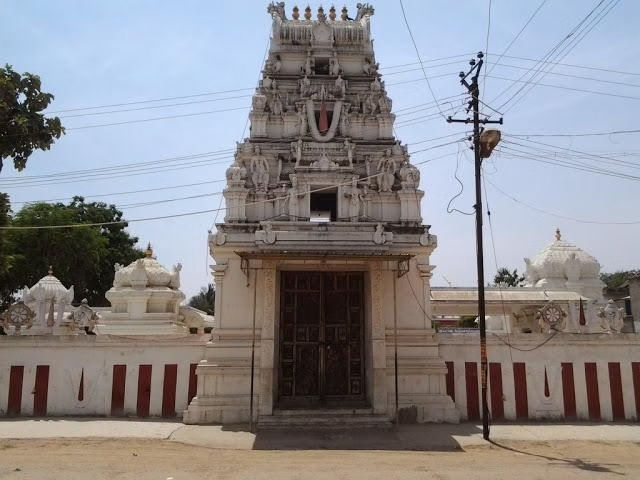
In the serene village of Perambakkam, near Thakkolam in the Thiruvallur district of Tamil Nadu, lies the ancient and spiritually potent Vaikunda Perumal Temple. This sacred shrine is dedicated to Lord Vishnu, worshipped here in the form of Vaikunda Perumal (Sri Maha Vishnu). The temple is a significant stop for devotees seeking the blessings of Lord Vishnu, often referred to as the ‘Preserver’ within the Hindu Trinity (Trimurti).
The Divine Form and Mother Goddess
The Presiding Deity, Vaikunda Perumal, is a self-manifested (Swayambhu) idol. The temple also houses a shrine for the consort, Kamalavalli Thayar (Goddess Lakshmi). According to local scriptures, the temple was originally constructed to ward off evil influences and bestow the grace of Lord Vishnu upon the region, known historically as ‘Tondaimandalam’.
Phalaśruti: The Benefits of Visiting
Devotees visit this temple to remove obstacles in life and cleanse ancestral karma. It is believed that performing prayers here helps in:
- Removal of Doshas: Specifically regarding planetary afflictions in one’s horoscope.
- Prosperity: Seeking the grace of Kamalavalli Thayar ensures wealth and family harmony.
- Salvation (Moksha): As the name “Vaikunda” suggests, it is believed to be a gateway to the celestial abode of Lord Vishnu.
Historical Origins & Scriptural Legend
While the exact date of construction is not explicitly etched on stone, the architectural style suggests a significant historical lineage, likely dating back to the Later Chola or Early Vijayanagara
Local Legends and Sthala Purana
Tradition holds that the temple was built to protect the village from drought and famine. The presiding deity is considered a powerful protector of the devotees. The temple premises also house shrines for Kodanda Rama (Rama with the bow), Bhakta Anjaneyar (Hanuman), Andal, and Garudazhwar. It is said that the temple underwent renovations during the Vijayanagara era, as evidenced by the pillars and inscriptions common to that dynasty.
Architectural Marvels
The temple follows the traditional Dravidian style of architecture. While it is a smaller shrine compared to the massive Srirangam temple, it embodies the essential elements of Vaishnava temple construction.
Vastu Shastra and Layout
The temple is oriented according to Vastu principles, facing East. The Garbhagriha (Sanctum Sanctorum) houses the main deity, while the Ardha Mandapa serves as the hall for prayers. The temple is noted for its tranquil atmosphere, surrounded by lush greenery, which adds to the meditative environment.
Notable Sculptures and Shrines
Around the inner prakaram (corridor), devotees can find:
- Kodanda Rama Shrine: Depicting Lord Rama holding the bow, accompanied by Sita and Lakshmana.
- Anjaneyar Shrine: A powerful depiction of Hanuman, known for removing negative energies.
- Chakrathazhwar & Vikanasar: Lesser-known but essential figures in the Vaishnava tradition.
Darshan & Ritual Logistics (2026 Guide)
To assist pilgrims planning their visit in 2026, we have compiled the daily schedule and key ritual information.
Daily Temple Timings
| Session | Timings | Activity |
|---|---|---|
| Morning | 6:00 AM – 12:00 PM | Morning Pooja / Abhishekam |
| Afternoon | 12:00 PM – 4:00 PM | Temple Closed |
| Evening | 4:00 PM – 8:00 PM | Evening Dhoopam / Darshan |
Key Sevas and Offerings
Devotees can participate in various sevas to enhance their spiritual experience:
- Abhishekam: Performed to the main deity with milk, honey, and sandalwood paste.
- Archana: Chanting of hymns in the name of the devotee.
- Thiru Kalyana Utsavam: The celestial wedding ceremony of Vaikunda Perumal and Kamalavalli Thayar.
Online Seva Booking (2026)
While direct online booking for smaller temples in Tamil Nadu is often managed through the HR & CE Department (Hindu Religious and Charitable Endowments) portal, it is advisable to contact the temple priest or local administrators directly for specific seva bookings. For the year 2026, major festival dates are expected to align with traditional Tamil Panchangam:
- Panguni Uthiram: March – April 2026 (Celebrated with grand processions).
- Brahmotsavam: Specific dates to be announced by the temple trust (usually held in the Tamil month of Panguni).
- Vaikuntha Ekadashi: December 2026 (A major festival dedicated to Lord Vishnu).
Practical Visitor Guidance
Ensuring a hassle-free darshan experience requires preparation, especially during festival seasons.
Code of Conduct and Dress Code
The temple maintains a strict dress code to uphold the sanctity of the shrine. Men are required to wear dhotis or pants with shirts (no vests), while women are requested to wear sarees, salwars, or traditional attire. Western attire such as shorts and t-shirts is strictly prohibited.
Photography and Mobile Phones
Photography is generally restricted inside the sanctum sanctorum. Devotees are advised to switch their mobile phones to silent mode to maintain a peaceful atmosphere.
Best Time to Visit
- Weekdays: Mornings (6:00 AM – 8:00 AM) are ideal to avoid crowds.
- Weekends: Expect higher footfall; plan visits after the morning rush.
- Seasonal Advice: During the summer months (April–June), carry water bottles and an umbrella as the queue lines may be exposed to the sun. Winters (November–January) offer the most pleasant weather for pilgrimage.
Pilgrimage Connectivity
Perambakkam is well-connected by road and rail, making it accessible from Chennai and surrounding districts.
How to Reach
- By Air: Chennai International Airport (MAA) is approximately 54 Kms away.
- By Rail: The nearest major railway junction is Kadambathur (9 Kms). Another nearby station is Manavur (8 Kms). From these stations, share autos and local buses are available.
- By Road:
- From Chennai: Take NH 48 or the Chennai-Bangalore highway via Poonamallee and Thiruvalangadu.
- Direct bus services are available from Koyambedu (Bus No. 591A) and T. Nagar (Bus No. 591).
- Distance from Thiruvallur: 18 Kms.
- Distance from Arakkonam: 26 Kms.
Nearby Sacred Sites (Pilgrimage Circuit)
Extend your spiritual journey by visiting these nearby temples:
- Thiruvalangadu Vadaranyeswarar Temple: Located 13 km away, this is a famous Shiva temple housing the “Kolar Gold” adornments (Rathinasabha).
- Kadambathur Temple: Dedicated to Adhi Kesava Perumal, located just 9 km away.
- Thakkolam Temple: An ancient Vishnu temple (13 km away) significant for its historical inscriptions.
Frequently Asked Questions (FAQ)
1. Is there a VIP Darshan entry at Vaikunda Perumal Temple?
As a local temple managed by the Tamil Nadu HR&CE department, there is no formal VIP ticket system like in large pilgrimage centers. However, devotees seeking special access for elderly family members can speak to the temple executive officer or the head priest (Koil Raman) prior to the darshan.
2. Are non-Hindus allowed inside the temple?
Generally, entry is restricted to followers of Hinduism to maintain the sanctity of the temple. However, non-Hindus may view the outer architecture and the surrounding village landscape.
3. Is there accommodation available at the temple?
The temple does not have an in-house guest house. Devotees usually stay in nearby towns like Thiruvallur or Arakkonam, where both budget lodges and star hotels are available.
4. What is the significance of the name “Vaikunda”?
Vaikunda refers to the celestial abode of Lord Vishnu, also known as Vishnu’s paradise. Worshipping the “Vaikunda Perumal” form is believed to help the devotee attain liberation from the cycle of birth and death.
5. Can I book a specific Seva on short notice?
For daily sevas like Archana, tickets can usually be purchased directly at the temple counter. For special homams or Abhishekams, it is advisable to contact the temple office 2-3 days in advance.
Photo Gallery
Contact Details
Official Address:
Vaikunda Perumal Temple,
Perambakkam, Thakkolam Taluk,
Thiruvallur District, Tamil Nadu – 631202.
Recent Posts

ओ सांवरे तूने ही मुझको संभाला – Lyrics & Meaning
ओ सांवरे तूने ही मुझको संभाला – A Prayer to Shyam Origin & Spiritual Essence Why This Bhajan Resonates Devotees chant this when overwhelmed by life’s storms—the refrain ‘तूने ही मुझको संभाला’ is the soul’s sigh of relief: “You…

कथा ये है महाराज मेरे की – Lyrics & Meaning
कथा ये है महाराज मेरे की छत्रपति संभाजी महाराज – A Prayer to Chhatrapati Sambhaji Maharaj Origin & Spiritual Essence Why This Bhajan Resonates Devotees chant this when their spirit feels tested—its powerful refrain “महाराज मेरे” is a soul’s…

Rigveda Samhita Yathartha Anuvada (ऋग्वेद संहिता यथार्थ अनुवाद) – Complete Set with Anvayartha & Hindi/English Translation
The Rigveda is the oldest surviving scripture of humanity and the foundational text of Sanātana Dharma. For serious students, scholars, UPSC aspirants studying ancient Indian history, Sanskrit learners, and spiritual seekers, a precise and grammatically structured translation is indispensable.…

आना भी अकेला है जाना भी अकेला है – Lyrics & Meaning | BharatTemples
आना भी अकेला है जाना भी अकेला है – A Prayer to the Divine Witness Origin & Spiritual Essence Why This Bhajan Resonates Devotees turn to this bhajan in moments of deep reflection—when life’s attachments begin to ache. The…

माता शेरावाली के द्वार जो भी जाता है – Lyrics & Meaning
माता शेरावाली के द्वार जो भी जाता है – A Prayer to Maa Sherawali Origin & Spiritual Essence Why This Bhajan Resonates Devotees turn to this bhajan in times of fear or uncertainty—its promise that no one leaves Maa’s…

मार लेना सपणी उबार लेणा भवरा – Lyrics & Meaning
मार लेना सपणी उबार लेणा भवरा – A Prayer to the Divine Beloved Origin & Spiritual Essence Why This Bhajan Resonates Devotees chant this in moments of deep vulnerability—its cry of “मार लेना सपणी, उबार लेणा भवरा” is the…

हमें श्याम सुंदर भरोसा तुम्हारा – Lyrics & Meaning
हमें श्याम सुंदर भरोसा तुम्हारा – A Prayer to Shyam Sundar Origin & Spiritual Essence Why This Bhajan Resonates Devotees chant this when feeling alone—its refrain ‘de do sahara’ is the soul’s cry for divine support. Lyrics in Hindi…

Mere Satguru Ne Di Thi Davai Lyrics in Hindi & Meaning
Mere Satguru Ne Di Thi Davai: Invoking the Guru’s Liberating Wisdom This soul-stirring bhajan venerates the Satguru (True Spiritual Master) as the divine physician who dispenses the only remedy for life’s deepest sufferings. Composed by Sant Karmaveer Tufani, it…

Janm Diyo Thari Maa Dukh Dekhiyo Lyrics in Hindi & Meaning
जन्म दियो थारी माँ दुख देखियो (Maa’s Grief Upon Birthing You) This soul-stirring Chetavani Bhajan (admonitory hymn) is addressed to the Divine Mother (Maa) – a call for repentance when children forget their filial duties in the dark age…
Bhadi Sabha Mein Thane Manaun Lyrics in Hindi & Meaning
Bhadi Sabha Mein Thane Manaun: Invoking the Spear-Wielding Mother Mata Bhawani (श्री ज्वाला भवानी), the fiery manifestation of Shakti worshipped as the Protector of Dharma in Her Dhaulagarh sanctum. Origin & Spiritual Essence Composed in Rajasthani folk tradition by…