

Contents
- 1 Vallakottai Subramaniaswamy Temple: A Definitive Pilgrimage Guide
Vallakottai Subramaniaswamy Temple: A Definitive Pilgrimage Guide
Nestled in the serene village of Vallakottai, approximately 30 kilometers from Chennai, stands the magnificent Arulmigu Subramaniaswamy Thirukoil. Often referred to as the Vallakottai Murugan Temple, this ancient shrine is a beacon of Dravidian spiritual heritage. For devotees seeking the blessings of Lord Murugan (Kartikeya), this temple offers a unique blend of architectural grandeur and profound legend.
Introduction & Spiritual Essence
The presiding deity here is Vallakottai Subramaniaswamy, revered as Swayambhu (self-manifested). Unlike many temples, the idol of Lord Murugan is depicted standing majestically with his consorts, Valli and Deivayanai, on either side. This is a rare Utsava Murti (processional idol) that remains permanently installed in the sanctum.
Phalaśruti: The Fruits of Visitation
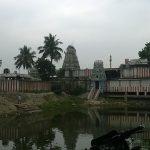
According to temple records and oral tradition, a holy dip in the temple tank, Vajra Theertham, is considered highly purifying. Devotees believe that chanting the mantra ‘Aum Saravanabhava’ while bathing here washes away ancestral karma and current afflictions. It is particularly renowned for:
- Removal of Obstacles: Lord Murugan is the commander of the divine forces; worshipping him here removes delays in marriage and career progression.
- Cleansing Ancestral Karma: Performing rites for ancestors (Pitra Dosha Nivarana) is believed to be potent here due to the powerful energy of the Shiva Lingam nearby.
- Blessings of Wealth: As the name Vallakottai suggests (Valla = To conquer), devotees seek victory over financial debts.
Historical Origins & Scriptural Legend
Age & Lineage: While the precise dynastic builder is not recorded in stone inscriptions, the Vallakottai Subramaniaswamy Temple is estimated to be over 1,200 years old. The structural integrity and the Dravidian style suggest contributions during the Vijayanagara or Chola periods. Today, the temple is maintained by the Hindu Religious and Endowment Board of the Government of Tamil Nadu.
The Sthala Purana (Local Legends)
The spiritual significance of Vallakottai is woven into several Puranic legends:
1. The Slaying of Demon Vallan:
Tradition holds that a powerful demon named Vallan tormented the Devas (celestial deities). Seeking refuge, they appealed to Lord Murugan. At this very location, Murugan engaged in a fierce battle and vanquished the demon, establishing the site as Vallan-Kottai (The Fort of Vallan).
2. Indra’s Worship (The Vajra Theertham):
It is said that Indra, the King of Devas, was advised by his guru, Brihaspati, to worship Lord Murugan at this abode. Indra pierced the earth with his divine weapon, the Vajrayudha, to create a tank for the abhishekam. This holy water source became the Vajra Theertham, which remains the temple tank today.
3. Bhagiratha’s Redemption:
The legend of King Bhagiratha (who later brought the Ganges to earth) is also linked here. After disrespecting Sage Narada, Bhagiratha lost his kingdom to a demon named Goran. Guided by Sage Durvasa, he worshipped Lord Murugan at Vallakottai to regain his sovereignty.
4. Arunagirinathar’s Vision:
The 15th-century poet-saint Arunagirinathar sang seven hymns in his magnum opus, Thirupugazh, praising this deity. He referred to the temple by various names such as Kotainakar and Kottai. The saint claimed to have been instructed by Lord Murugan in a dream to visit this shrine on his journey from Thiruporur to Thiruthani.
Architectural Marvels
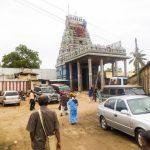
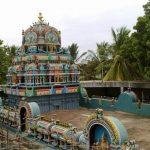
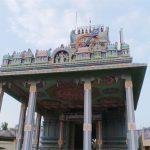
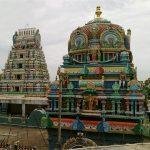
The temple is a classic example of Dravidian Architecture, characterized by its towering gateways (Gopurams) and enclosed prakarams (courtyards).
The Sanctum and Idol
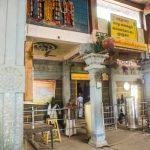
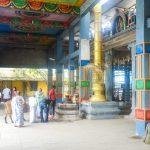
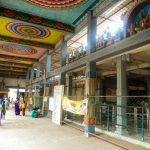
The most striking feature is the seven-foot-tall idol of Lord Subramaniyar, believed to be the tallest Lord Murugan statue in India. The deity stands in a niche with his consorts, carved from a single stone. The sanctum is accessed through a pillared hall (Mandapa) containing intricate sculptures of deities and mythical creatures.
Presence of Varadharaja Perumal
Before entering the main shrine of Murugan, devotees will find a separate Sri Varadharaja Perumal Sannadhi on the banks of the Vajra Theertham. This signifies the harmonious coexistence of Shaivism and Vaishnavism in South Indian temple culture.
Divine Artistry
The temple walls and pillars are adorned with:
- Sculptures of Ashta Dikpalakas: The guardians of the eight directions.
- Flowing Frescoes: Depicting the life of Arunagirinathar and the slaying of demons.
- The Golden Vel: On Thursdays, the deity is adorned with a diamond-studded Vel (spear), a testament to the temple’s rich collection of jewels.
Note: As per the directives, the photo gallery shortcode is preserved below:

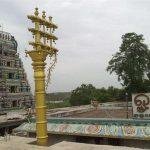
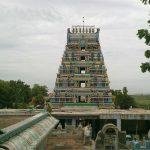
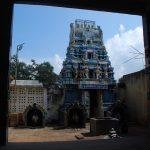
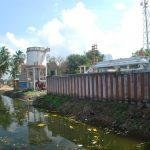
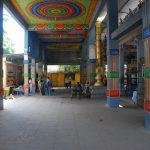
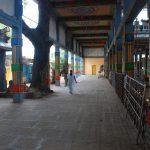
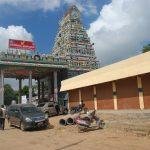
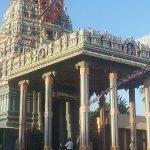
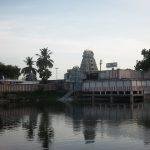
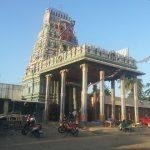
Darshan & Ritual Logistics
The temple follows the standard Agamic rituals. Priests perform the Pooja five times a day. Abhishekam is a central ritual here, with the Vibhuti Abhishekam (bathing the deity in sacred ash) being a major highlight, similar to the Palani temple.
Daily Timings (Darshan Hours)
Current Year Reference: 2026
| Session | Timing |
|---|---|
| Morning | 06:30 AM – 01:00 PM |
| Evening | 04:00 PM – 08:30 PM |
| Thursday Special | 06:00 AM – 08:30 PM (Continuous) |
*Note: On festival days and Sundays, the temple remains open continuously without a noon break.
Key Sevas & Online Booking
Devotees can book specific Sevas (services) either by visiting the temple office or via the official Tamil Nadu HR&CE portal.
- Vibhuti Abhishekam: Performed daily. Devotees believe this grants protection from evil.
- Thirukalyana Urchavam: A ritual wedding of the deity, highly auspicious for those seeking marital harmony.
- Diamond Vel Decoration: Exclusive to Thursdays.
- Skanda Shashti: The most significant annual festival (November 2026).
How to Book: Visit the official Tamil Nadu HR&CE website or call the temple administration.
2026 Festival Calendar
Mark your calendars for these major celebrations:
- Thai Poosam: January (Pausha Shukla Paksha)
- Adi Kiruthikai: July (Highly revered for Murugan)
- Skanda Shashti: October/November (6-day festival)
- Panguni Uttiram: March (The celestial wedding of Murugan)
- Temple Car Festival (Brahmotsavam): April
Practical Visitor Guidance
Dress Code & Etiquette
- Traditional attire is mandatory. Men should wear Veshti (dhoti) or formal trousers with shirts; women should wear sarees or salwar kameez.
- Western casual wear (shorts, t-shirts) is generally discouraged inside the sanctum.
Photography & Mobiles
- Photography is strictly prohibited inside the main sanctum and the inner prakaram.
- Mobile phones should be silenced. Lockers are available near the entrance for storage.
Crowd Management & Seasonal Advice
- Best Time to Visit: 7:00 AM to 9:00 AM (Morning) or 5:00 PM to 6:00 PM (Evening) on weekdays.
- Summer (May – June): Kanchipuram district can be hot. Carry a water bottle and an umbrella. The temple is open from 6:30 AM, so an early visit is recommended.
- Monsoon (October – November): pleasant for travel, though heavy rains may delay traffic on the GST Road.
Accessibility
The temple complex is relatively compact. Wheelchair access is limited to the outer mandapas; the inner sanctum involves steps. Senior citizens can request assistance from the temple volunteers.
Pilgrimage Connectivity
How to Reach Vallakottai
By Road:
- From Chennai: Take NH 48 (Chennai-Bangalore Highway) towards Chengalpattu. Drive past Sriperumpudur to reach Vallakottai (approx. 30-35 km from Tambaram).
- Bus Services: Frequent buses operate from Tambaram New Bus Terminus (Route 55L, 55A, 583). All buses heading to Singaperumal Koil or Kanchipuram via Oragadam stop here.
By Rail:
- Nearest Station: Kanchipuram (24 km), Chengalpattu (18 km), or Tambaram (25 km). From these stations, local autos/taxis are available to Vallakottai.
By Air:
- Nearest Airport: Chennai International Airport (MAA) – approximately 35 km away.
Nearby Sacred Sites
Extend your pilgrimage to these nearby temples:
- Sriperumpudur Ramanatheswarar Temple: Located about 10 km away, dedicated to Lord Shiva.
- Singaperumal Koil: Famous for the Narasimha (Lion-man) avatar of Vishnu, roughly 20 km away.
- Kanchipuram Kamakshi Amman Temple: One of the Shakti Peethams, located 25 km from Vallakottai.
Frequently Asked Questions (FAQs)
Is there a VIP darshan entry available?
The temple management does not have a formal VIP entry system. However, special entry tickets (Rs. 50) are available for faster darshan during peak hours and festival days.
Can I perform an Abhishekam for my family?
Yes, devotees can perform Abhishekam (Vibhuti or milk). It is recommended to book this at the temple office at least one day in advance for the morning slot. Online booking is available via the HR&CE portal.
Is there accommodation available at the temple?
The temple does not have a guest house within the complex. However, several private lodges and guest houses are available in Sriperumpudur (10 km) and Kanchipuram (25 km).
What is the significance of Thursday in this temple?
Thursday is considered highly auspicious for Lord Murugan. The idol is adorned with a Diamond Vel, and a special Abhishekam is performed. It is believed that offering prayers on Thursday helps in overcoming financial hurdles.
Are non-Hindus allowed inside?
Like most Hindu temples in India, entry is generally restricted to followers of Hinduism and those of Indian origin. Please check with the administration for the latest guidelines.
Contact Details
Arulmigu Subramaniaswamy Thirukoil
Vallakottai, Thirupanthur
Kanchipuram – 602105
Phone: +91 – 44 – 27197112 / 2717 2225
Mobile: +91 – 8012418532 / 8012418631
Recent Posts

ओ सांवरे तूने ही मुझको संभाला – Lyrics & Meaning
ओ सांवरे तूने ही मुझको संभाला – A Prayer to Shyam Origin & Spiritual Essence Why This Bhajan Resonates Devotees chant this when overwhelmed by life’s storms—the refrain ‘तूने ही मुझको संभाला’ is the soul’s sigh of relief: “You…

कथा ये है महाराज मेरे की – Lyrics & Meaning
कथा ये है महाराज मेरे की छत्रपति संभाजी महाराज – A Prayer to Chhatrapati Sambhaji Maharaj Origin & Spiritual Essence Why This Bhajan Resonates Devotees chant this when their spirit feels tested—its powerful refrain “महाराज मेरे” is a soul’s…

Rigveda Samhita Yathartha Anuvada (ऋग्वेद संहिता यथार्थ अनुवाद) – Complete Set with Anvayartha & Hindi/English Translation
The Rigveda is the oldest surviving scripture of humanity and the foundational text of Sanātana Dharma. For serious students, scholars, UPSC aspirants studying ancient Indian history, Sanskrit learners, and spiritual seekers, a precise and grammatically structured translation is indispensable.…

आना भी अकेला है जाना भी अकेला है – Lyrics & Meaning | BharatTemples
आना भी अकेला है जाना भी अकेला है – A Prayer to the Divine Witness Origin & Spiritual Essence Why This Bhajan Resonates Devotees turn to this bhajan in moments of deep reflection—when life’s attachments begin to ache. The…

माता शेरावाली के द्वार जो भी जाता है – Lyrics & Meaning
माता शेरावाली के द्वार जो भी जाता है – A Prayer to Maa Sherawali Origin & Spiritual Essence Why This Bhajan Resonates Devotees turn to this bhajan in times of fear or uncertainty—its promise that no one leaves Maa’s…

मार लेना सपणी उबार लेणा भवरा – Lyrics & Meaning
मार लेना सपणी उबार लेणा भवरा – A Prayer to the Divine Beloved Origin & Spiritual Essence Why This Bhajan Resonates Devotees chant this in moments of deep vulnerability—its cry of “मार लेना सपणी, उबार लेणा भवरा” is the…

हमें श्याम सुंदर भरोसा तुम्हारा – Lyrics & Meaning
हमें श्याम सुंदर भरोसा तुम्हारा – A Prayer to Shyam Sundar Origin & Spiritual Essence Why This Bhajan Resonates Devotees chant this when feeling alone—its refrain ‘de do sahara’ is the soul’s cry for divine support. Lyrics in Hindi…

Mere Satguru Ne Di Thi Davai Lyrics in Hindi & Meaning
Mere Satguru Ne Di Thi Davai: Invoking the Guru’s Liberating Wisdom This soul-stirring bhajan venerates the Satguru (True Spiritual Master) as the divine physician who dispenses the only remedy for life’s deepest sufferings. Composed by Sant Karmaveer Tufani, it…

Janm Diyo Thari Maa Dukh Dekhiyo Lyrics in Hindi & Meaning
जन्म दियो थारी माँ दुख देखियो (Maa’s Grief Upon Birthing You) This soul-stirring Chetavani Bhajan (admonitory hymn) is addressed to the Divine Mother (Maa) – a call for repentance when children forget their filial duties in the dark age…
Bhadi Sabha Mein Thane Manaun Lyrics in Hindi & Meaning
Bhadi Sabha Mein Thane Manaun: Invoking the Spear-Wielding Mother Mata Bhawani (श्री ज्वाला भवानी), the fiery manifestation of Shakti worshipped as the Protector of Dharma in Her Dhaulagarh sanctum. Origin & Spiritual Essence Composed in Rajasthani folk tradition by…