
Contents
Introduction & Spiritual Essence
Nestled amidst the lush, verdant forests near Swamiyar Madam in Kanyakumari, the Vana Sastha & Vana Durga Temple at Ithiyapuram Kaavu stands as a testament to ancient spiritual energy and natural sanctity. This is not merely a brick-and-mortar structure; it is a living ecosystem of faith where the divine manifests in primal forms.
Deities and Forms:
The primary deity here is Vana Sastha (Lord Ayyappa in his forest form), worshipped as a Swayambhu (self-manifested) idol. He is accompanied by Vana Durga (the Goddess of the wilderness), who is believed to be in a state of deep penance. Other significant presiding deities include Bala Ganapati, Nagaraja (King of Serpents), Naga Yakshi, and Naga Kanni. The temple complex is unique because Bala Ganapati is believed to be regaining his original form day by day, adding to the mystical aura of the shrine.
Phalaśruti (Spiritual Benefits): Devotees flock to this sacred grove to seek blessings for protection from planetary afflictions (specifically Rahu and Ketu) and to offer prayers for ancestral peace. It is widely believed that offering prayers here helps in cleansing ancestral karma and removing obstacles in one’s path to progress. The temple is particularly renowned for fulfilling the wishes of childless couples and providing protection against snake bites and unseen forces.
Historical Origins & Scriptural Legend
The history of the Ithiyapuram Kaavu temple is deeply intertwined with the royal legacy of Travancore and the mysteries of the natural world.
The Marthanda Varma Connection:
According to local oral tradition (Sthala Purana), the Travancore King Marthanda Varma (18th century) once fled through these dense forests to escape his enemies. Exhausted and seeking refuge, he meditated near this grove. In a divine vision, the Lord and Goddess appeared to him, promising safety. After ascending the throne and securing his kingdom, the King returned to the spot and presented a copper record of legal documents as a gift to the temple. These documents were traditionally displayed during festivals until they were lost to time during a period of neglect.
The Swayambhu Origin:
Tradition holds that Goddess Vana Durga traveled from the dense forests of Pechiparai specifically to protect Vana Sastha and his retinue of serpent troops. To this day, the surrounding forest is considered the abode of these divine beings. The temple fell into disrepair for many years before being revitalized by the local community, who restored the regular worship protocols.
Architectural Marvels
The temple exemplifies the classic Dravidian style of architecture, characterized by its simplicity and integration with the surrounding forest environment.
- The Sanctum (Garbhagriha): The inner shrine houses the Swayambhu idols, radiating a raw, untouched spiritual vibe distinct from polished stone statues.
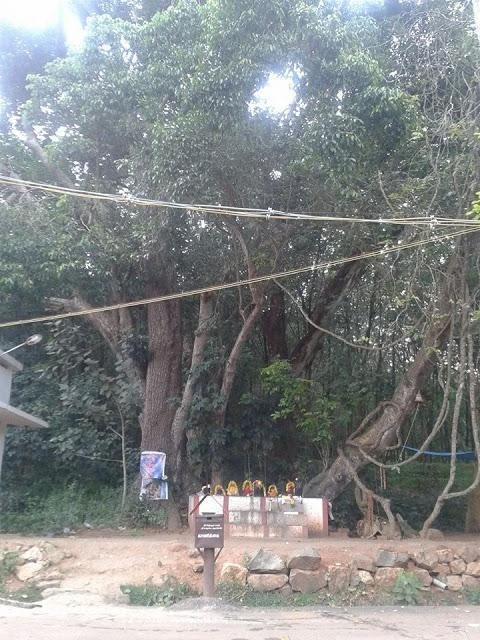
- Natural Surroundings: The architecture does not fight the landscape; it embraces it. The temple is encircled by gigantic, ancient trees that create a natural canopy, filtering sunlight into a mystical ambiance.
- Serpent Symbolism: While not a carved mandapa in the traditional sense, the forest behind the temple serves as the sanctum for the Nagaraja. Devotees report sightings of golden-colored snakes and cobras in the immediate vicinity, adding a layer of living heritage to the structural design.
While the temple does not carry an ASI/UNESCO tag, its value lies in its status as a protected heritage grove (Kaavu), preserving the ancient ecology of the Kanyakumari district.
Darshan & Ritual Logistics
The rituals here follow the ancient Agama traditions, focusing on Nithya Pooja (daily worship) and special offerings during full moons.
Daily Timings
As temple timings are subject to seasonal changes and local regulations, devotees are advised to contact the temple administration for the most current schedule.
| Session | Timing (Tentative) |
|---|---|
| Morning Darshan | 06:00 AM – 12:00 PM |
| Evening Darshan | 05:00 PM – 08:00 PM |
| *Note: The temple remains closed during the afternoon hours. | |
Key Sevas and Offerings
- Sandhya Pooja: Performed every evening without fail.
- Abhishekam: Special ritual bathing for Vana Sastha and Vana Durga.
- Naga Pooja: Offering prayers to the Serpent deities (Nagaraja, Naga Yakshi).
- Online Seva Booking: Currently, this heritage temple operates primarily through local temple committees. For specific seva bookings or annual special arrangements, devotees should contact the temple trust directly (phone numbers are often updated at the entrance).
2026 Festival Calendar (Major Events)
- Panguni Uthram: A grand five-day festival celebrated with high devotion. In 2026, this falls in late March/early April. This is the most significant event at the temple.
- Karthigai Mandala Pooja: A 41-day ritual period during the Tamil month of Karthigai (November–December 2026).
- Pournami Pooja (Full Moon): Highly auspicious. Tradition holds that devotees may witness Nagar (serpent) darshan without fail on these days.
- Aayilya Pooja: Dedicated to Snake deities, celebrated every month.
Practical Visitor Guidance
Visiting Ithiyapuram Kaavu requires respect for the sanctity of the forest grove.
- Dress Code: Traditional attire is mandatory. Men should wear dhotis or trousers with shirts; women should wear sarees or salwar kameez.
- Photography: Strictly prohibited inside the sanctum sanctorum. Photography of the forest area behind the temple is also discouraged as it is the abode of snakes.
- Accessibility: The temple is accessible via the Swamiyar Madam – Verkilambi road. The path is motorable but narrow. There are no complex stairs, making it accessible for elders.
- Crowd Management: Weekends and Full Moon days see moderate crowds. The best time to visit for a peaceful Darshan is weekday mornings.
- Seasonal Advice: Kanyakumari can be humid. Carry water during the summer months (April–June). During monsoons, be cautious of slippery paths within the grove.
Pilgrimage Connectivity
The temple is strategically located along one of India’s major coastal corridors.
How to Reach
- By Road: The temple is situated on the National Highway NH-47 (Kanyakumari to Thiruvananthapuram). It is located near the Kovikal Bridge on the Swamiyar Madam – Verkilambi road. It is approximately 42 km from Kanyakumari and 52 km from Thiruvananthapuram.
- By Rail: The nearest railway stations are Kuzhithurai and Eraniel.
- By Air: The nearest airport is Trivandrum International Airport (TRV), located approximately 55–60 km away.
Nearby Sacred Sites (Pilgrimage Circuit)
To enrich your spiritual journey, consider visiting these nearby destinations:
- Thirparappu Waterfalls: Located 15 km away, known for its Shiva temple and cascading waters.
- Padmanabhapuram Palace: A historic wooden palace and administrative center of the Travancore kings (11 km away).
- Kumararesan Temple (Suchindram): Famous for the Hanuman statue and musical pillars (approx 18 km).


Frequently Asked Questions (FAQ)
1. Is there a VIP Darshan or special entry system?
As this is a heritage forest temple, there is no formal VIP entry system like in large commercial temples. Darshan is granted on a first-come, first-served basis, ensuring a serene experience for all devotees.
2. Are there accommodation facilities near the temple?
There are limited lodges in the surrounding towns of Marthandam and Kuzhithurai. For a more comfortable stay with modern amenities, it is recommended to book accommodation in Nagercoil or Kanyakumari, which are about 20–40 km away.
3. Can we perform milk Abhishekam for the deities?
Yes, Abhishekam is a popular ritual here. Devotees are advised to carry milk or purchase it from the stalls near the temple entrance. The schedule for Abhishekam is usually fixed for the morning hours.
4. Is it safe to visit the forest area behind the temple?
While the temple deity is Vana Sastha, and the snakes are considered divine protectors, visitors are strictly advised not to venture into the forest area behind the shrine. It is the natural habitat of snakes and is marked as a protected zone for devotees’ safety.
5. What is the significance of seeing a snake during Darshan?
Witnessing a snake (Nagar) at this temple, especially on Pournami (Full Moon) days, is considered a highly auspicious sign of the deity’s blessing and the presence of Nagaraja in the vicinity.
Contact Details
Vana Sastha & Vana Durga Temple Trust
Ithiyapuram Kaavu, Swamiyar Madam Post
Kanyakumari District, Tamil Nadu
Note: Specific phone numbers for the administration are occasionally updated by local bodies. Please contact the local temple office or the Kanyakumari Tourism Desk for the latest contact information.
Recent Posts

ओ सांवरे तूने ही मुझको संभाला – Lyrics & Meaning
ओ सांवरे तूने ही मुझको संभाला – A Prayer to Shyam Origin & Spiritual Essence Why This Bhajan Resonates Devotees chant this when overwhelmed by life’s storms—the refrain ‘तूने ही मुझको संभाला’ is the soul’s sigh of relief: “You…

कथा ये है महाराज मेरे की – Lyrics & Meaning
कथा ये है महाराज मेरे की छत्रपति संभाजी महाराज – A Prayer to Chhatrapati Sambhaji Maharaj Origin & Spiritual Essence Why This Bhajan Resonates Devotees chant this when their spirit feels tested—its powerful refrain “महाराज मेरे” is a soul’s…

Rigveda Samhita Yathartha Anuvada (ऋग्वेद संहिता यथार्थ अनुवाद) – Complete Set with Anvayartha & Hindi/English Translation
The Rigveda is the oldest surviving scripture of humanity and the foundational text of Sanātana Dharma. For serious students, scholars, UPSC aspirants studying ancient Indian history, Sanskrit learners, and spiritual seekers, a precise and grammatically structured translation is indispensable.…

आना भी अकेला है जाना भी अकेला है – Lyrics & Meaning | BharatTemples
आना भी अकेला है जाना भी अकेला है – A Prayer to the Divine Witness Origin & Spiritual Essence Why This Bhajan Resonates Devotees turn to this bhajan in moments of deep reflection—when life’s attachments begin to ache. The…

माता शेरावाली के द्वार जो भी जाता है – Lyrics & Meaning
माता शेरावाली के द्वार जो भी जाता है – A Prayer to Maa Sherawali Origin & Spiritual Essence Why This Bhajan Resonates Devotees turn to this bhajan in times of fear or uncertainty—its promise that no one leaves Maa’s…

मार लेना सपणी उबार लेणा भवरा – Lyrics & Meaning
मार लेना सपणी उबार लेणा भवरा – A Prayer to the Divine Beloved Origin & Spiritual Essence Why This Bhajan Resonates Devotees chant this in moments of deep vulnerability—its cry of “मार लेना सपणी, उबार लेणा भवरा” is the…

हमें श्याम सुंदर भरोसा तुम्हारा – Lyrics & Meaning
हमें श्याम सुंदर भरोसा तुम्हारा – A Prayer to Shyam Sundar Origin & Spiritual Essence Why This Bhajan Resonates Devotees chant this when feeling alone—its refrain ‘de do sahara’ is the soul’s cry for divine support. Lyrics in Hindi…

Mere Satguru Ne Di Thi Davai Lyrics in Hindi & Meaning
Mere Satguru Ne Di Thi Davai: Invoking the Guru’s Liberating Wisdom This soul-stirring bhajan venerates the Satguru (True Spiritual Master) as the divine physician who dispenses the only remedy for life’s deepest sufferings. Composed by Sant Karmaveer Tufani, it…

Janm Diyo Thari Maa Dukh Dekhiyo Lyrics in Hindi & Meaning
जन्म दियो थारी माँ दुख देखियो (Maa’s Grief Upon Birthing You) This soul-stirring Chetavani Bhajan (admonitory hymn) is addressed to the Divine Mother (Maa) – a call for repentance when children forget their filial duties in the dark age…

Bhadi Sabha Mein Thane Manaun Lyrics in Hindi & Meaning
Bhadi Sabha Mein Thane Manaun: Invoking the Spear-Wielding Mother Mata Bhawani (श्री ज्वाला भवानी), the fiery manifestation of Shakti worshipped as the Protector of Dharma in Her Dhaulagarh sanctum. Origin & Spiritual Essence Composed in Rajasthani folk tradition by…