
Contents
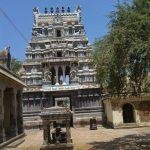
Vedaranyeswarar Temple, Vedaranyam, Nagapattinam
| Date built: | – |
|---|---|
| Deity: | Vedaranyeswarar |
| Architectural style: | Dravidian architecture |
| Major festivals | – |
| Locale: | Vedaranyam |
| District:: | Nagapattinam |
| Address: | Sri Thiru Marai Kadar Temple,Vedaranyam, Nagapattinam District |
| Phone | +91- 4369 -250 238 |
The temple has six daily rituals at various times from 5:30 a.m. to 8 p.m., and three yearly festivals on its calendar. The annual Brahmotsavam (prime festival) is attended by thousands of devotees from far and near. The temple is maintained and administered by the Hindu Religious and Endowment Board of the Government of Tamilnadu. The place Thirumarai Kadu / Vedaranyam is about 45 Kms from Nagapattinam. This is One of 275 Siva Devara Sthalam. The temple is One of Saptha Vidanga Sthalam.
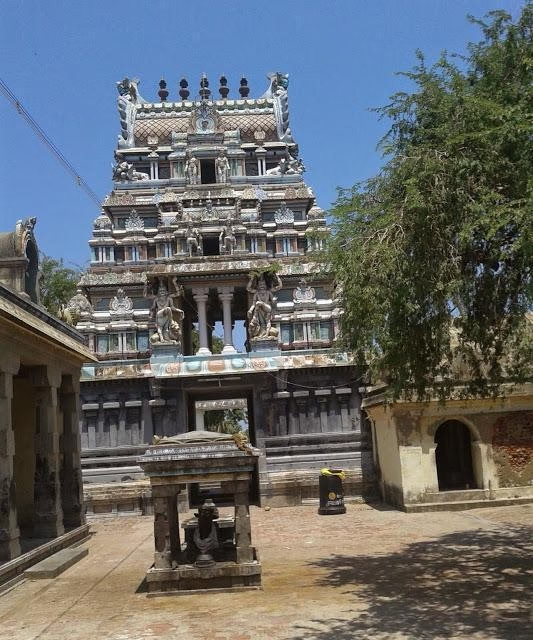
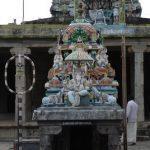
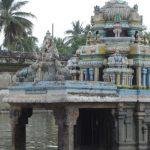
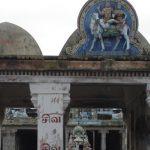
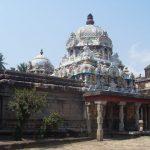
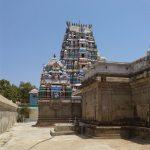
The main Raja Gopuram of Vedaranyam temple is of five tiers and two Prakaram. Main Deity is Swayambu Lingam known as Vedaranyeswarar and his consort known as Veda Nayaki Amman / Veena Vadha Vidushani. The temple is one of 64 Sakthi Peetam known as Sundari Peetam. Thiyagarajar here is known as Bhuvani Vidangar. The dance of Thiyagesar here in this temple is known as Hamsa Nadanam. Sthala Vriksham is Vanni Maram and Punnai Maram. Teertham is Manikarnigai and Veda Teertham.
Temple Opening Time
The temple is open from 6.00 a.m. to 11.00 a.m. and from 5.00 p.m. to 8.30 p.m.
Festivals
29 day Masi Magam Bhrammotsavam in May-June with the event of the opening of the closed doors of the temple in the past, when Lord goes to sea on the Magam star day and the procession of 63 + 10 celebrated Nayanars, procession of Lord in Kailash Vahana; 10 day Aadi Pooram in July-August, a festival dedicated to Mother Ambica; Vinayaka Chathurthi in August-September; Skanda Sashti in October-November are the festivals celebrated in the temple. There will be huge devotee crowd on Pradosha days – 13th day of New Moon or Full Moon days. Special pujas are performed in the temple for Lord and Ambica on Deepavali, Makara Sankranti, Tamil and English New Year days.
Prayers
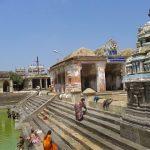
It is the staunch faith of the people that hardships any nature caused due to sins committed, adverse serpent aspects, evil spells would vanish if the devotee surrenders to Lord in the temple. A bath in the Manikarnigai spring blesses with the benefit of bathing in holy rivers as Ganga, Yamuna, Narmada, Sindh and Cauvery. Even sins of high severity as Brahmmahathi caused by murder will disappear. The worship also brings them the benefit of doing charity, performing yoga and penance for a long period.
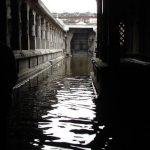
The sea at the eastern side of the temple is known as Aadhi Sethu. Bathing in this sea once is considered equal to 100 baths in the sea in Rameswaram.
Thousands bathe in the Kodiakarai Aadhi Sethu and Vedaranyam sea on Thai New Moon day in January-February, Aadi New Moon day in July-August, Mahalaya New Moon day in September-October and finally at Mani Karnika and worship Lord and Mother in their wedding form seeking child boon, education and wisdom, prosperity and healthy life.
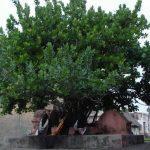
They are blessed with happy mental peace, employment opportunities promotions in jobs and progress in professions. Devotees place cradles in temple tree for child boon. Those aspiring for marriage offer Wedding Garlands to Lord and Mother. They perform necessary remedial pujas for various adversities they face. Devotees offers vastras and abishekam with sandal paste, cosmetic and turmeric powders, oil, milk, curd, rose water, green coconut, sacred ash, panchamirtha to the Lord and Mother. Many organize feeding-Annadhana. They also offer nivedhana to Lord and Mother and distribute to visitors. Many contribute for the renovation of the temple.
Architecture
Legend / Local stories
Thirumaraikadu:
The town Vedaranyam is named after Vedaranyeswarar, the presiding deity of the Vedaranyeswarar Temple, a temple dedicated to Shiva. The place was earlier known as “Thirumaraikadu”, meaning the place where Vedas, oldest scriptures of Hinduism, originated. The 7th century Saiva canonical work Tevaram by Appar and Tirugnanasambandar mentions the place as “Thirumaraikadu”.
Etymology:
As per Hindu legend, the Vedas worshipped Shiva in this place, giving the name “Vedaranyam” to the place.
Rama worshipped Shiva here:
According to another Hindu legend, Rama, the seventh avatar of god Vishnu, is believed to have visited Vedaranyam to absolve himself from sins committed in the war against the demon king Ravana. The footprints of Rama are preserved in a place called Ramar Padam near Vedaranyam.
Vedas locked the Main Entrance of the Temple after worshipping Lord:
On their journey to various Shiva temples spread over the state, celebrated Saivite Saints Tirugnana Sambandar and Tirunavukkarasar (Appar) came to Thiru Marai Kadu Temple. They sung Pathigams-set of 10 verses- at each temple in praise of Lord Shiva. They were shocked to see that the main entrance of this temple was closed. They also saw devotees entering the temple through a side entrance. They enquired with the priests how this happened. They were told that the Vedas worshipped Lord Shiva here and returned after closing the door.
Hearing that Vedas, the holy scriptures of land themselves worshipped the Lord here, Gnanasambandar requested Tirunavukkarasar – Appar to sing a hymn on Lord to open the doors. Appar, tears flowing from his eyes sang ten verses beginning with line “Pannin Ner Moshiyal” and begged Lord to open the doors of the temple. Excited by the graceful response of the Lord, both entered the temple through the main entrance and worshipped Lord. While coming out, Appar wished Gnanasambandar to sing a hymn so that doors could be opened and closed for the worship of the devotees as in all temples.
Child saint Sambandar sang a Pathigam – 10 verses – beginning with the line “Chathuram Marai” closing the door. Since then, main doors of temple began to function in usual manner as in other temples.
Agasthiyar had darshan of divine marriage:
Agasthiyar had darshan of Siva and Parvathy marriage in this place.
Rat rebirth as Mavali Chakravarthy:
A rat climbed on the lamp, to drink the ghee in it. The light was becoming dim. The rat tried to taste the ghee, in this act the string which was in the lamp got disturbed, and it started glowing bright. By this act which happened without the knowledge of the rat, in his next birth it was Mavali Chakravarthy.
Birthplace of Paranjothi Adigal:
This place Thirumarai Kadu is birth place of Paranjothi Adigal who is the composer of Thiru Vilaiyadal Puranam (Siva Leela).
People worshipped Shiva here:
Sage Agasthiyar, Gowthamar, Vishwamitra, Vashista, and Lord Brahma are reported to have worshipped Lord Shiva at this thalam. Great emperors Manu, Mandhadha, Dasaratha, Lord Rama, Pandavas, and Mahabali were blessed by Lord.
Vedas worshipping Shiva in the form of Trees:
The “Four Vedas” which worshiped Lord Siva here, left the place when the kali yugam started and they are worshipping Lord Siva in the form of trees and Vriksham. The place is called as “Vedaranyam.”
Photo Gallery
How to Reach:
This Paadal Petra Sthalam temple is located at Vedaranyam, a seashore town. It is situated at about 45 Kms from Nagapattinam, 35 kms from Thiruthuraipoondi, 63 kms from Thiruvarur & 100 kms from Kumbakonam. Convenient bus facilities are Available to Vedaranyam from Thanjavur, Nagapattinam and Tiru Thurai Poondi. Other Paadal Petra Shivasthalams in the vicinity are Agathiyampalli, 3 Kms from here and Kodiakarai, 12 Kms from here.
Although bus services are available to reach Vedaranyam, it is better to go by car if one has to visit the nearby places like Agathiyampalli, Ramar Patham, Kodiakarai, Pushpavanam and Naluvedapathi. Nearest Railway Station is located at Vedaranyam and Nearest Airport is located at Trichy (135 Kms).
Contact Details
Sri Thiru Marai Kadar Temple,
Vedaranyam, Nagapattinam District
Phone: +91- 4369 -250 238
Recent Posts

Mere Satguru Ne Di Thi Davai Lyrics in Hindi & Meaning
Mere Satguru Ne Di Thi Davai: Invoking the Guru’s Liberating Wisdom This soul-stirring bhajan venerates the Satguru (True Spiritual Master) as the divine physician who dispenses the only remedy for life’s deepest sufferings. Composed by Sant Karmaveer Tufani, it…

Janm Diyo Thari Maa Dukh Dekhiyo Lyrics in Hindi & Meaning
जन्म दियो थारी माँ दुख देखियो (Maa’s Grief Upon Birthing You) This soul-stirring Chetavani Bhajan (admonitory hymn) is addressed to the Divine Mother (Maa) – a call for repentance when children forget their filial duties in the dark age…
Bhadi Sabha Mein Thane Manaun Lyrics in Hindi & Meaning
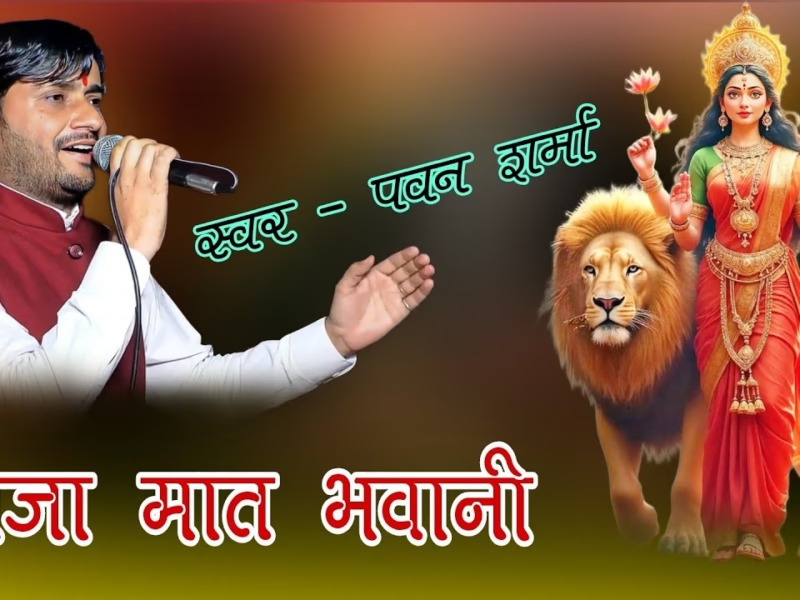
Bhadi Sabha Mein Thane Manaun: Invoking the Spear-Wielding Mother Mata Bhawani (श्री ज्वाला भवानी), the fiery manifestation of Shakti worshipped as the Protector of Dharma in Her Dhaulagarh sanctum. Origin & Spiritual Essence Composed in Rajasthani folk tradition by…
श्याम सुन्दरवा छोटे छोटे कनुवा Lyrics & Meaning
श्याम सुन्दरवा छोटे छोटे कनुवा (Shyam Sundarva Chhote Chhote Kanuva) is a heartfelt invocation to Lord Krishna in his most enchanting form—Shyam Sundar (the dark, beautiful one). This bhajan is a plea for the divine child Kanha to grace…
Maat Meri Chintapurni Lyrics in Hindi & Meaning
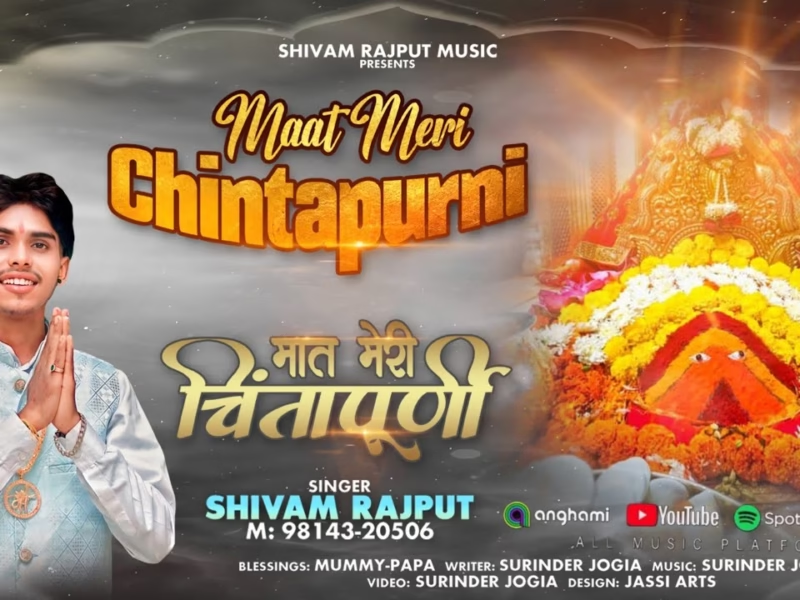
Maat Meri Chintapurni is a heartfelt devotional prayer dedicated to Maa Chintapurni, a form of the Divine Mother. She is revered as the remover of worries and the granter of wishes, especially venerated in the Himalayan region of Himachal…
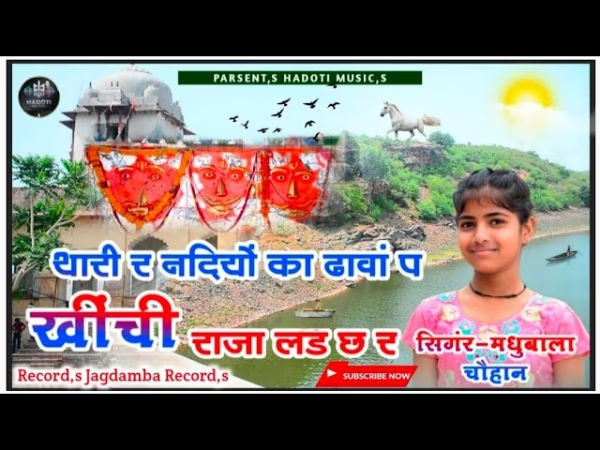
थारी रे नदियां का ढावा पे खीची राजा Lyrics & Meaning
खीची राजा का अद्भुत युद्ध: एक शौर्य गाथा यह भजन एक पौराणिक या ऐतिहासिक शूरवीर राजा की वीरता का वर्णन करता है, जो प्रायः गुजराती लोक संस्कृति में लोककथाओं का हिस्सा है। इसकी रचना दुर्गेश कटारा ने की है…
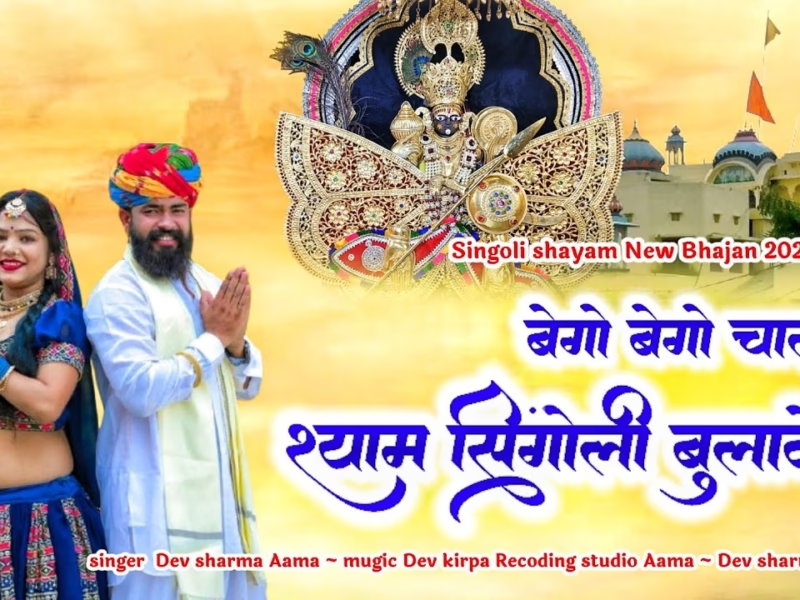
बेगो बेगो चाल श्याम सिंगोली बुलावे रे Lyrics in Hindi & Meaning
Bhajan Title & Deity This bhajan, बेगो बेगो चाल श्याम सिंगोली बुलावे रे, is dedicated to Lord Shyam, a revered form of Lord Krishna. Origin & Spiritual Essence The composer of this bhajan is not specified, but it is…
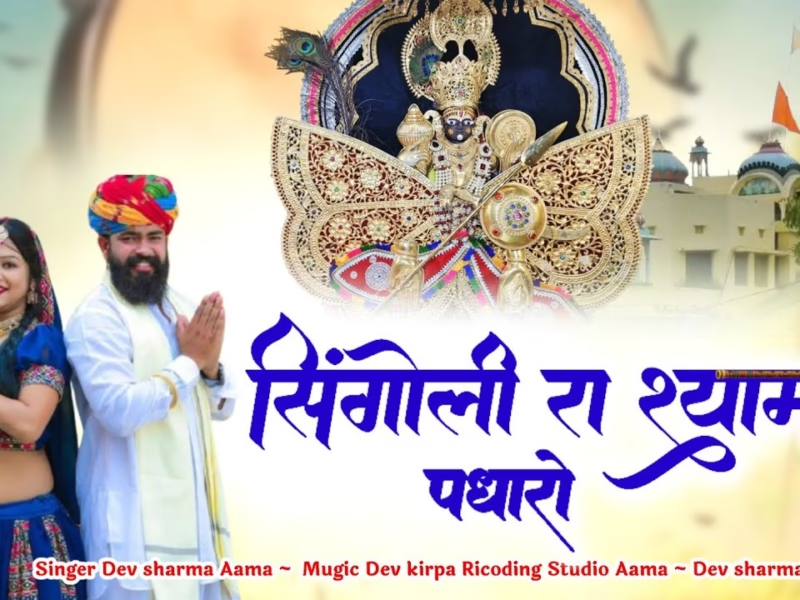
सिंगोली रा श्याम पधारो Lyrics in Hindi & Meaning
सिंगोली रा श्याम पधारो Bhajan & Deity This sacred bhajan, सिंगोली रा श्याम पधारो, is dedicated to Lord Shyam, a revered deity in the Hindu tradition. The composer of this bhajan is Dev Sharma Aama. Origin & Spiritual Significance…

हंसकर पार्वती शिव जी ने वचन सुनावती जी Lyrics in Hindi & Meaning
हंसकर पार्वती शिव जी ने वचन सुनावती जी – A Devotional Bhajan Origin & Spiritual Significance This beautiful bhajan, हंसकर पार्वती शिव जी ने वचन सुनावती जी, is a heartfelt devotion to Lord Shiva and Goddess Parvati, embodying the…
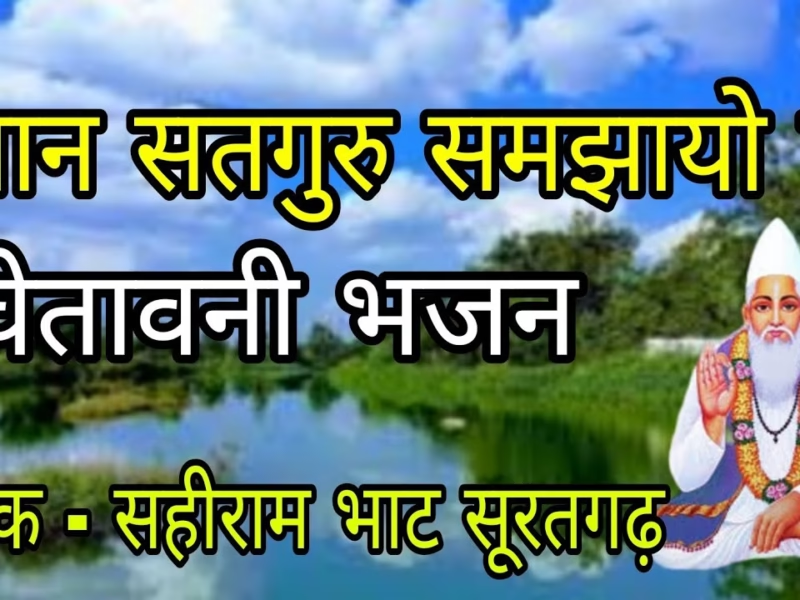
ज्ञान सतगुरु समझायो ए Lyrics in Hindi & Meaning
This bhajan, ज्ञान सतगुरु समझायो ए, is dedicated to the revered deity, Shyam, and is a testament to the transformative power of spiritual guidance. The composer of this bhajan is unknown, but it is deeply rooted in the Rajasthani…