
Contents
- 1 Introduction & Spiritual Essence of Veer Madhav Temple, Varanasi
- 2 Historical Origins & Scriptural Legend
- 3 Architectural Marvels
- 4 Darshan & Ritual Logistics
- 5 Practical Visitor Guidance
- 6 Pilgrimage Connectivity
- 7 Frequently Asked Questions (FAQs)
- 7.1 1. Is there a VIP Darshan entry at Veer Madhav Temple?
- 7.2 2. What is the significance of the “Window Darshan” mentioned in history?
- 7.3 3. How do I book online seva for Veer Madhav?
- 7.4 4. Is the temple accessible for senior citizens?
- 7.5 5. What is the best time to visit Varanasi for temple tours?
Introduction & Spiritual Essence of Veer Madhav Temple, Varanasi
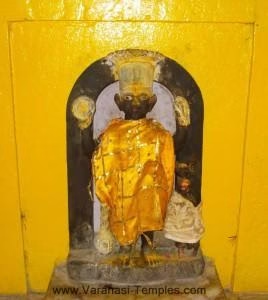
Nestled within the ancient, winding lanes of Kashi (Varanasi), the Veer Madhav Temple stands as a profound testament to the protective and benevolent energies of Lord Vishnu. As a pivotal spiritual site in the Varanasi temple circuit, this shrine is revered not only for its architectural beauty but for its potent association with Abhaya (protection) and spiritual liberation. The primary deity here is Veer Madhav, a manifestation of Lord Vishnu.
Unlike the common depiction of Vishnu, the Veer Madhav form symbolizes the “Heroic Lord” or the protector of the universe. Devotees believe that worshipping Lord Veer Madhav alleviates fear—specifically the fear of death and the wrath of Lord Yama (the deity of death). This temple is a sanctuary for those seeking mental peace, protection from negative energies, and the cleansing of ancestral karma.
Phalaśruti: The Benefits of Darshan
According to scriptural texts like the Kashi Khand of the Skanda Purana, the spiritual benefits of visiting Veer Madhav Temple are immense. Tradition holds that:
- Freedom from Fear: Devotees who observe a fast and perform Pooja of Veer Madhav are believed to be free from the wrath of Lord Yama, ensuring a peaceful transition of soul.
- Ancestral Liberation: It is believed that offering prayers here helps ancestors attain liberation (Moksha), relieving the devotee from ancestral karmic debts.
- Health & Prosperity: Regular darshan is said to remove obstacles from one’s path, paving the way for prosperity and physical well-being.
Historical Origins & Scriptural Legend
The history of the Veer Madhav Temple is inextricably linked to the sacred geography of Varanasi. While specific architectural records regarding the original builders or dynastic patronage are often elusive in the oral histories of Kashi, the temple’s foundation is rooted deeply in ancient scriptures.
Scriptural Legend: The Kashi Khand Connection
The primary source of the temple’s legend is the Kashi Khand, a chapter within the Skanda Purana. According to ancient tradition, Varanasi is the land of liberated souls, and every corner is associated with a specific form of the divine.
The narrative in Kashi Khand succinctly describes the presence of Lord Vishnu in the form of Veer Madhav. The legend suggests that Veer Madhav was established to protect the sanctity of Kashi and its devotees. While the physical structure has undergone numerous renovations over the centuries—a common occurrence in the ancient city due to the cyclical nature of Hindu temple maintenance—the spiritual energy of the Swayambhu (self-manifested) energy remains the focal point.
Historical evidence suggests that the current architectural layout reflects the Maratha and Mughal fusion styles prevalent in Varanasi’s older quarters, with intricate carvings that date back several centuries, although the exact construction date remains a subject of local folklore rather than documented history.
Architectural Marvels
The architecture of the Veer Madhav Temple is a harmonious blend of North Indian Nagara style and the distinctive temple architecture of Varanasi. The structure is designed to facilitate the flow of spiritual energy (Prana), adhering to the principles of Vastu Shastra.
- The Shikhara (Spire): The temple features a tiered Shikhara that rises gracefully towards the sky, symbolizing the spiritual ascent of the devotee. Unlike the towering spires of southern temples, the Nagara style here is more curvilinear and ornate.
- Mandapas (Halls): The Garbhagriha (sanctum sanctorum) is accessible through a pillared hall. The pillars are carved with motifs of Dwarapalas (gatekeepers) and floral patterns common in Indian stone artistry.
- Sculptures: The sanctum houses the deity of Veer Madhav, often depicted with four arms holding the Conch, Discus, Lotus, and Mace. The idol is carved from black stone, a common feature in Kashi Vishwanath’s influence, absorbing and retaining high vibrational energy.
- Sanctum Orientation: The inner sanctum is designed to allow natural light to illuminate the deity’s face during specific times of the day, enhancing the darshan experience.
While the temple may not have an ASI or UNESCO designation like larger forts, it is a protected heritage site under the Varanasi district administration.
Darshan & Ritual Logistics
Visiting Veer Madhav Temple requires an appreciation for the local rituals and timings. Below is the daily schedule for darshan and specific sevas.
Daily Timings
| Darshan Type | Timings | Notes |
|---|---|---|
| Morning Darshan | 05:30 AM – 12:00 PM | Best time for peaceful darshan |
| Afternoon Break | 12:00 PM – 3:30 PM | Sanctum cleaning and rest |
| Evening Darshan | 4:00 PM – 9:30 PM | Includes Aarti and Prasad distribution |
Key Sevas and Online Booking
Devotees can participate in specific rituals to enhance their spiritual journey. As per 2026 standards, most sevas in Varanasi now support digital registration via the official Varanasi Temple portals.
- Abhishekam (Ritual Bathing): Performed with milk, honey, and ghee. Recommended for health and purification. Timing: 6:00 AM – 7:00 AM.
- Archana (Namakaran): Chanting of 108 names of Lord Vishnu. Timing: Throughout the day.
- Annadanam: Offering meals to devotees. Timing: 12:30 PM daily.
How to Book: To book an online seva, visit the official Varanasi municipal temple website or specific devotional platforms like ePuja. Search for “Veer Madhav Temple Seva” and select the date.
Major Festivals in 2026
- Maha Shivaratri (Feb 26, 2026): While dedicated to Shiva, the temple sees increased footfall as part of the Kashi Yatra.
- Ram Navami (Apr 6, 2026): A grand celebration for Lord Vishnu (Ram avatar); special Maha Aarti is held.
- Janmashtami (Aug 14, 2026): Midnight celebrations marking the birth of Lord Krishna.
- Naraka Chaturdashi (Oct 18, 2026): Pre-Diwali festivities dedicated to the eradication of sins.
Practical Visitor Guidance
Varanasi is a city of deep traditions. To ensure a respectful and hassle-free visit to Veer Madhav Temple, please adhere to the following guidelines:
- Dress Code: Traditional Indian attire is highly recommended. Men should wear dhotis or long trousers and shirts; women should wear sarees or full-length dresses. Avoid shorts and tank tops.
- Photography: Photography is strictly prohibited inside the sanctum sanctorum. However, you may take pictures of the exterior architecture.
- Electronics: Mobile phones are allowed but must be switched to silent mode. A locker facility is available near the entrance for valuables.
- Accessibility: The temple is located in the old city (Chowk area). The lanes are narrow and unpaved, making it difficult for wheelchairs. It is advisable to hire a local porter (palki bearer) for elderly visitors.
- Crowd Management:
- Best Time: Visit between 7:00 AM and 10:00 AM for the least crowds.
- Seasonal Advice: Summers (April-June) can be intensely hot; carry a water bottle and a head covering. Winters (Dec-Feb) are pleasant but require layers for morning visits.
Pilgrimage Connectivity
Reaching Veer Madhav Temple involves navigating the historic lanes of Varanasi. Here is a guide to help you plan your journey.
How to Reach
- By Air: The nearest airport is Varanasi Lal Bahadur Shastri International Airport (VNS), approximately 25 km from the temple. Taxis and app-based cabs are available.
- By Rail: Varanasi Junction (BSB) is the main railway station, roughly 6 km away. Kashi Vishwanath Express is the most convenient train for pilgrims.
- By Road: The temple is located in the Chowk area. Vehicles are not permitted in the deep old city. Travelers must park at parking lots near Godaulia or Maidagin and proceed on foot or by e-rickshaw.
Nearby Sacred Sites (Pilgrimage Circuit)
To maximize your spiritual experience, visit these nearby temples located within walking distance:
- Kashi Vishwanath Temple (New): The epicenter of Kashi, just 1 km away.
- Sankat Mochan Hanuman Temple: Located approx 3 km away on the banks of the Assi Ghat.
- Atma Veereshwar Temple: Often mentioned in the same breath as Veer Madhav, located in the same lane (Ck.7/158).
Frequently Asked Questions (FAQs)
1. Is there a VIP Darshan entry at Veer Madhav Temple?
While the temple does not have a formal “VIP ticket” system like some major south Indian temples, visiting early in the morning (before 6:30 AM) offers a quicker darshan. For specific VIP arrangements, you may contact the Varanasi Temple Administration office.
2. What is the significance of the “Window Darshan” mentioned in history?
Historically, the temple structure or neighboring houses made the main idol visible only through a window or a narrow opening. This unique architectural feature allowed devotees to have darshan even when the sanctum was locked. Today, the entrance is open, but the legacy of the “Window Darshan” remains a part of the temple’s oral history.
3. How do I book online seva for Veer Madhav?
Online seva booking can be done via the official Varanasi District Development Authority portal. Look for the list of registered temples under the Kashi Vishwanath corridor projects or search for the specific “Veer Madhav Temple” listing. Payment can be made via UPI, credit/debit cards, or net banking.
4. Is the temple accessible for senior citizens?
Yes, but with some effort. The lanes of Chowk are uneven. We recommend hiring a battery-operated rickshaw to the closest point and then using a portable wheelchair (if available) or assistance to walk the remaining 100-200 meters.
5. What is the best time to visit Varanasi for temple tours?
The best weather for temple walking is from October to March. July to September (monsoon) can be difficult due to rain and flooding in low-lying ghat areas, while May and June are extremely hot.
Disclaimer: Timings and festival dates are subject to change based on the Hindu lunar calendar. Please verify with the temple office before your visit.
Recent Posts

ओ सांवरे तूने ही मुझको संभाला – Lyrics & Meaning
ओ सांवरे तूने ही मुझको संभाला – A Prayer to Shyam Origin & Spiritual Essence Why This Bhajan Resonates Devotees chant this when overwhelmed by life’s storms—the refrain ‘तूने ही मुझको संभाला’ is the soul’s sigh of relief: “You…

कथा ये है महाराज मेरे की – Lyrics & Meaning
कथा ये है महाराज मेरे की छत्रपति संभाजी महाराज – A Prayer to Chhatrapati Sambhaji Maharaj Origin & Spiritual Essence Why This Bhajan Resonates Devotees chant this when their spirit feels tested—its powerful refrain “महाराज मेरे” is a soul’s…

Rigveda Samhita Yathartha Anuvada (ऋग्वेद संहिता यथार्थ अनुवाद) – Complete Set with Anvayartha & Hindi/English Translation
The Rigveda is the oldest surviving scripture of humanity and the foundational text of Sanātana Dharma. For serious students, scholars, UPSC aspirants studying ancient Indian history, Sanskrit learners, and spiritual seekers, a precise and grammatically structured translation is indispensable.…

आना भी अकेला है जाना भी अकेला है – Lyrics & Meaning | BharatTemples
आना भी अकेला है जाना भी अकेला है – A Prayer to the Divine Witness Origin & Spiritual Essence Why This Bhajan Resonates Devotees turn to this bhajan in moments of deep reflection—when life’s attachments begin to ache. The…

माता शेरावाली के द्वार जो भी जाता है – Lyrics & Meaning
माता शेरावाली के द्वार जो भी जाता है – A Prayer to Maa Sherawali Origin & Spiritual Essence Why This Bhajan Resonates Devotees turn to this bhajan in times of fear or uncertainty—its promise that no one leaves Maa’s…

मार लेना सपणी उबार लेणा भवरा – Lyrics & Meaning
मार लेना सपणी उबार लेणा भवरा – A Prayer to the Divine Beloved Origin & Spiritual Essence Why This Bhajan Resonates Devotees chant this in moments of deep vulnerability—its cry of “मार लेना सपणी, उबार लेणा भवरा” is the…

हमें श्याम सुंदर भरोसा तुम्हारा – Lyrics & Meaning
हमें श्याम सुंदर भरोसा तुम्हारा – A Prayer to Shyam Sundar Origin & Spiritual Essence Why This Bhajan Resonates Devotees chant this when feeling alone—its refrain ‘de do sahara’ is the soul’s cry for divine support. Lyrics in Hindi…

Mere Satguru Ne Di Thi Davai Lyrics in Hindi & Meaning
Mere Satguru Ne Di Thi Davai: Invoking the Guru’s Liberating Wisdom This soul-stirring bhajan venerates the Satguru (True Spiritual Master) as the divine physician who dispenses the only remedy for life’s deepest sufferings. Composed by Sant Karmaveer Tufani, it…

Janm Diyo Thari Maa Dukh Dekhiyo Lyrics in Hindi & Meaning
जन्म दियो थारी माँ दुख देखियो (Maa’s Grief Upon Birthing You) This soul-stirring Chetavani Bhajan (admonitory hymn) is addressed to the Divine Mother (Maa) – a call for repentance when children forget their filial duties in the dark age…
Bhadi Sabha Mein Thane Manaun Lyrics in Hindi & Meaning
Bhadi Sabha Mein Thane Manaun: Invoking the Spear-Wielding Mother Mata Bhawani (श्री ज्वाला भवानी), the fiery manifestation of Shakti worshipped as the Protector of Dharma in Her Dhaulagarh sanctum. Origin & Spiritual Essence Composed in Rajasthani folk tradition by…