
Contents
- 1 Introduction & Spiritual Essence
- 2 Historical Origins & Scriptural Legend
- 3 Architectural Marvels
- 4 Darshan & Ritual Logistics (2026 Guide)
- 5 Practical Visitor Guidance
- 6 Pilgrimage Connectivity
- 6.1 How to Reach
- 6.2 Nearby Sacred Sites
- 6.3 Frequently Asked Questions (FAQs)
- 6.4 Is there a VIP darshan entry at Veera Raghava Swami Temple?
- 6.5 What is the significance of offering Salt and Pepper?
- 6.6 Are there accommodation facilities near the temple?
- 6.7 Can I perform Tharpanam (ancestral rites) here?
- 6.8 Is non-vegetarian food allowed inside?
Introduction & Spiritual Essence
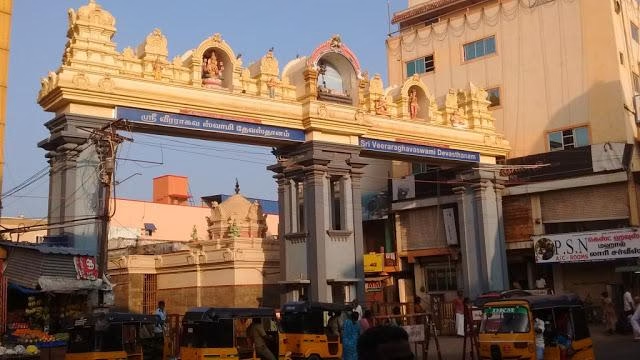
Nestled in the peaceful town of Thiruvallur, approximately 52 km from Chennai, the Veera Raghava Swami Temple stands as a beacon of healing and divine grace. Dedicated to Lord Vishnu, known here as Veera Raghava Swami (Vaidya Veeraraghava Perumal), this is the 63rd Divya Desam among the 108 abodes of Vishnu in Tamil Nadu. The presiding deity is in a reclining posture facing south, with Adisesha (the serpent king) forming a canopy over his head.
Phalaśruti (Spiritual Benefits): This temple is revered as the ultimate destination for healing. According to temple lore and the Sthala Puranam, Lord Vishnu promised the sage Salihotra that devotees taking a holy dip in the temple tank, Hrith-Tapasini, and having darshan of the Lord would be relieved of all physical ailments and mental worries. It is particularly potent for removing ancestral karma (Thila Tarpanam) and granting progeny to childless couples.
Historical Origins & Scriptural Legend
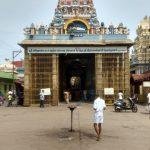
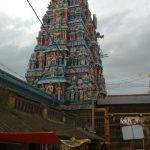
While the exact date of construction is lost in antiquity, the temple follows the Vadakalai sect of Vaishnavism and adheres to the Pancharathra Agama. The structure, characterized by a five-tiered Rajagopuram, bears the architectural imprints of the medieval Pallava and Chola dynasties, with later additions by the Vijayanagara rulers who encouraged temple architecture.
The Legend of Salihotra and the Name “Thiruevvul”
Tradition holds that the great sage Salihotra performed a severe penance here for one year without food or water. On the completion of his penance, he prepared a simple offering of rice flour. Lord Vishnu appeared before him in the guise of a destitute old Brahmin. When the Brahmin asked for a place to recline, he inquired, “Evval?” (Where can I lie down?). The sage replied, “Ivval” (Here, in this hermitage). Pleased by the sage’s hospitality, the Lord manifested in his true form as Veera Raghava Swami. Thus, the place came to be known as Thiruevvul (The Holy Place of ‘Here’).
Other Scriptural References
- The Healer God: It is believed Lord Vishnu taught Brahma the Vedas here and cured Lord Shiva of the Brahmahatti Dosham (a curse associated with killing a Brahmin) after Daksha’s sacrifice, which is why a shrine for Lord Shiva exists on the banks of the temple tank.
- Vijayakoti Vimaanam: The Lord is also believed to have vanquished the demons Madhu and Kaitabha here, earning the name Vijayakoti.
Architectural Marvels
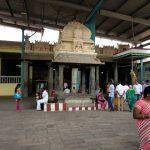
The Veera Raghava Swami Temple is a masterpiece of Dravidian architecture. The complex is enclosed by a granite wall housing all the shrines.
Sanctum & Mandapas
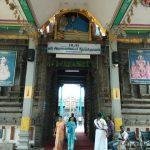
The central shrine houses Veera Raghava Swami reclining on the serpent Adisesha. Opposite to the sanctum is the Asthika Mandapam (Hall of the Rishis), which contains the idols of the 12 Alvars (Vaishnava saints) and Rishi Salihotra. The Moolavar (main deity) is carved from a single stone.
The Sacred Tank (Pushkarani)
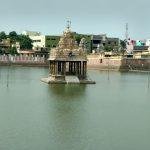
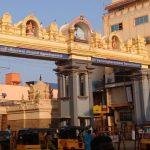
Located to the west of the temple is the Hrith-Tapasini (or Hrutatapanasini) tank. It is considered more sacred than the Ganges due to the boon granted by the Lord. The Rajagopuram (gateway tower) is a five-storied structure marking the grand entrance to this holy complex.
Darshan & Ritual Logistics (2026 Guide)
The temple follows the standard Vishnu temple liturgy, performed four times daily. The priests, belonging to the Brahmin sub-caste, conduct rituals in the Nalayira Divya Prabhandham.
Daily Timings
| Session | Timing | Activity |
|---|---|---|
| Morning | 05:00 AM – 06:00 AM | Temple Opening / Vishwaroopam |
| 06:30 AM – 09:00 AM | Kalasanthi Pooja / Sevarthi Darshan | |
| Midday | 12:00 PM – 04:00 PM | Temple Closure (Recess) |
| Evening | 04:00 PM – 06:30 PM | Sayarakshai / Sevarthi Darshan |
| 06:30 PM – 08:30 PM | Rituals / Ardha Jamam | |
| Night | 08:30 PM – 09:00 PM | Bedtime Seva (Palliyarai) |
Key Sevas & Online Booking
While many rituals are performed at the temple counter, online booking for specific archanas is available through the Tamil Nadu HR&CE portal (ceo.tnhrce.org). Key Sevas include:
- Abhishekam: Performed to the processional deity (Utsavar).
- Archana: Special prayers offering salt and pepper (for ailments) and jaggery (for removing blemishes).
- Papli Tupatti: Offering a 9-yard silk saree to the Goddess (available at the temple office for approx. ₹300).
2026 Festival Calendar
Devotees are urged to plan visits around these major events. Note: Dates are calculated based on the Tamil Panchangam; exact dates may vary slightly depending on the lunar calendar.
- Thai Brahmotsavam: January 13 – January 23, 2026 (10-day festival, culminating in the float festival on the last day).
- Chithirai Brahmotsavam: April 12 – April 22, 2026 (Includes processions on various mounts).
- Amavasya Days: Devotees flock on every New Moon day. Key dates in 2026 include January 29 (Mauni Amavasya), February 27, and March 29 (ideally visited for 3 or 6 consecutive months).
- Vaikunta Ekadasi: December 2026 (Specific date TBA).
Practical Visitor Guidance
Code of Conduct & Facilities
- Dress Code: Traditional attire is mandatory. Men: Dhoti or Pants with Shirt. Women: Saree, Salwar Kameez, or Long Skirt/Top.
- Photography: Strictly prohibited inside the sanctum sanctorum. Permitted in the outer courtyards and mandapas.
- Mobile/Baggage: Leather items are restricted near the inner sanctum. Lockers are available near the entrance (usually free or nominal charge).
- Accessibility: The temple has steps at the entrance. Wheelchair access is possible via a ramp near the northern side, though the inner sanctum remains challenging for wheelchairs due to traditional architecture.
Crowd Management
- Best Time to Visit: Weekday mornings (7:00 AM – 9:00 AM) offer the calmest darshan.
- Amavasya Days: Expect significant crowds (10,000+ devotees). The temple usually extends hours (until late night) on these days.
- Seasonal Advice: In May and June (summer), temperatures in Thiruvallur can exceed 38°C. Carry water and an umbrella. The temple tank provides cooling breezes in the evenings.
Pilgrimage Connectivity
How to Reach
Thiruvallur is well-connected via Chennai and sits on the primary route to Tirupati.
- By Air: Chennai International Airport (MAA) is the nearest airport, approx. 45 km away. Taxis and airport buses are available.
- By Train: The closest railhead is Tiruvallur Railway Station (located on the Chennai-Arakkonam suburban line). It is about 3 km from the temple. Auto-rickshaws are readily available.
- By Road: Located on NH 75 (Chennai-Tirupati Highway). Buses frequently ply from Chennai’s CMBT (Koyambedu) and Tirupati.
Nearby Sacred Sites
Enhance your pilgrimage by visiting these nearby Divya Desams:
- Tiruvalangadu (20 km): Home to the Arulmigu Vadaranyeswarar Temple (Shiva) and Sri Vaidyanatha Swamy (Vishnu).
- Tirumazhisai (22 km): Known for the Sri Jalakandeswarar Temple and the shrine of Bhakta Prahlada.
- Tiruporur (30 km): Famous for the Murugan temple with its unique Chola-Vijayanagara architecture.
Frequently Asked Questions (FAQs)
Is there a VIP darshan entry at Veera Raghava Swami Temple?
Yes, the temple administration offers a “Special Darshan” ticket for a nominal fee (typically ₹20 – ₹50) which allows devotees to bypass the general queue during peak hours. VIP passes can be obtained from the RACT office or the central office in Chennai.
What is the significance of offering Salt and Pepper?
Unlike other temples, salt and pepper are significant offerings here. It is believed that dissolving these in the Bali Peetam (sacrificial platform) or offering them to the Lord cures physical diseases and restores health to the devotee.
Are there accommodation facilities near the temple?
Basic guest houses and choultries are available at affordable rates managed by the Temple Trust. For luxury options, travelers usually stay in Chennai or at the TTDC (Tamil Nadu Tourism Development Corporation) hotel in nearby Tirupati.
Can I perform Tharpanam (ancestral rites) here?
While the temple is primarily a Vishnu shrine, the tank is considered highly potent for cleansing sins. However, specific Thila Tarpanam rituals are often performed at the nearby Tiruvalangadu. It is recommended to consult the temple priest for exact rituals.
Is non-vegetarian food allowed inside?
Strictly No. The temple premises and the immediate vicinity (Tiruvallur town) are strictly vegetarian zones. Alcohol and meat are prohibited.
Contact Details:
Veera Raghava Swami Temple, Tiruvallur – 602 001, Thiruvallur District.
Phone: +91 44 2766 0378 | Mobile: +91 97894 19330
Recent Posts

ओ सांवरे तूने ही मुझको संभाला – Lyrics & Meaning
ओ सांवरे तूने ही मुझको संभाला – A Prayer to Shyam Origin & Spiritual Essence Why This Bhajan Resonates Devotees chant this when overwhelmed by life’s storms—the refrain ‘तूने ही मुझको संभाला’ is the soul’s sigh of relief: “You…

कथा ये है महाराज मेरे की – Lyrics & Meaning
कथा ये है महाराज मेरे की छत्रपति संभाजी महाराज – A Prayer to Chhatrapati Sambhaji Maharaj Origin & Spiritual Essence Why This Bhajan Resonates Devotees chant this when their spirit feels tested—its powerful refrain “महाराज मेरे” is a soul’s…

Rigveda Samhita Yathartha Anuvada (ऋग्वेद संहिता यथार्थ अनुवाद) – Complete Set with Anvayartha & Hindi/English Translation
The Rigveda is the oldest surviving scripture of humanity and the foundational text of Sanātana Dharma. For serious students, scholars, UPSC aspirants studying ancient Indian history, Sanskrit learners, and spiritual seekers, a precise and grammatically structured translation is indispensable.…

आना भी अकेला है जाना भी अकेला है – Lyrics & Meaning | BharatTemples
आना भी अकेला है जाना भी अकेला है – A Prayer to the Divine Witness Origin & Spiritual Essence Why This Bhajan Resonates Devotees turn to this bhajan in moments of deep reflection—when life’s attachments begin to ache. The…

माता शेरावाली के द्वार जो भी जाता है – Lyrics & Meaning
माता शेरावाली के द्वार जो भी जाता है – A Prayer to Maa Sherawali Origin & Spiritual Essence Why This Bhajan Resonates Devotees turn to this bhajan in times of fear or uncertainty—its promise that no one leaves Maa’s…

मार लेना सपणी उबार लेणा भवरा – Lyrics & Meaning
मार लेना सपणी उबार लेणा भवरा – A Prayer to the Divine Beloved Origin & Spiritual Essence Why This Bhajan Resonates Devotees chant this in moments of deep vulnerability—its cry of “मार लेना सपणी, उबार लेणा भवरा” is the…

हमें श्याम सुंदर भरोसा तुम्हारा – Lyrics & Meaning
हमें श्याम सुंदर भरोसा तुम्हारा – A Prayer to Shyam Sundar Origin & Spiritual Essence Why This Bhajan Resonates Devotees chant this when feeling alone—its refrain ‘de do sahara’ is the soul’s cry for divine support. Lyrics in Hindi…

Mere Satguru Ne Di Thi Davai Lyrics in Hindi & Meaning
Mere Satguru Ne Di Thi Davai: Invoking the Guru’s Liberating Wisdom This soul-stirring bhajan venerates the Satguru (True Spiritual Master) as the divine physician who dispenses the only remedy for life’s deepest sufferings. Composed by Sant Karmaveer Tufani, it…

Janm Diyo Thari Maa Dukh Dekhiyo Lyrics in Hindi & Meaning
जन्म दियो थारी माँ दुख देखियो (Maa’s Grief Upon Birthing You) This soul-stirring Chetavani Bhajan (admonitory hymn) is addressed to the Divine Mother (Maa) – a call for repentance when children forget their filial duties in the dark age…

Bhadi Sabha Mein Thane Manaun Lyrics in Hindi & Meaning
Bhadi Sabha Mein Thane Manaun: Invoking the Spear-Wielding Mother Mata Bhawani (श्री ज्वाला भवानी), the fiery manifestation of Shakti worshipped as the Protector of Dharma in Her Dhaulagarh sanctum. Origin & Spiritual Essence Composed in Rajasthani folk tradition by…