
Contents
Introduction & Spiritual Essence
Nestled in the sacred lanes of Til Bhandeshwar, the Vibhandeshwar Temple stands as a testament to the eternal spiritual energy of Kashi (Varanasi). Dedicated to Lord Shiva, this ancient shrine is one of the most revered Shiva Lings mentioned in the Kashi Khand of the Skanda Purana.
Phalaśruti: The Spiritual Benefits
According to ancient texts, the Vibhandeshwar Ling is not merely a stone but a potent source of liberation. The Kashi Khand, Chapter 97 explicitly mentions that devotees who offer prayers here derive all the spiritual fruits equivalent to staying in Kashi for a lifetime.
- Moksha (Liberation): It is believed that worshipping Vibhandeshwar cleanses the soul of sins and paves the path to ultimate salvation.
- Ancestral Karma: Rituals performed here are said to bring peace to ancestors, alleviating Pitru Dosha (ancestral afflictions).
- Vibhandeshwar Sthala: The specific energy of this location aids in overcoming mental stagnation and spiritual blockages.
Historical Origins & Scriptural Legend
While the exact date of construction remains elusive in historical records, the temple’s existence is anchored firmly in Vedic literature.
Scriptural References
The primary scriptural authority for this temple is the Skanda Purana (Kashi Khand). It enumerates various Shiv Lings around Kashi, highlighting Vibhandeshwar as a primary deity capable of granting Sakshat Darshan (direct audience).
Local Legend: The Til Bhandeshwar Connection
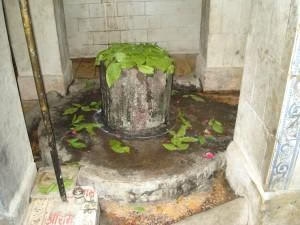
Tradition holds a fascinating local story regarding the temple’s physical existence. The site houses two primary Lings: the underground Vibhandeshwar and the massive, visible Til Bhandeshwar (B-17/42, Til Bhandeshwar).
Local folklore suggests that the Til Bhandeshwar Ling is not static; it grows in size by the volume of one Til (sesame seed) every year. This miraculous growth signifies the ever-expanding consciousness of the divine in Kashi.
Architectural Marvels
The Vibhandeshwar Temple exemplifies the Nagara style of temple architecture, adapted to the spatial constraints of the old city of Varanasi.
Vastu Shastra and Layout
Unlike grand palatial temples, the shrine is an intimate Garbhagriha (sanctum sanctorum) situated below ground level, a unique Vastu feature that symbolizes grounding and connection to the earth element.
- The Shikhara: The tower above the sanctum is relatively modest but carved with traditional Kalasha motifs and Amarakalas (immortality discs).
- Sculptures: Though weathered by time, the temple walls feature niches housing carvings of various manifestations of Shiva and Parvati.
- Stone Work: The flooring and walls utilize the classic Chunar sandstone found throughout Varanasi, ensuring thermal conductivity remains cool during summers.
Darshan & Ritual Logistics
Planning your visit requires an understanding of the daily rituals and seasonal festivals. The temple follows the traditional Vedic schedule.
Daily Timings
| Session | Timing | Description |
|---|---|---|
| Morning Darshan | 05:00 AM – 12:00 PM | Best time for Mangala Aarti and peaceful Abhishekam. |
| Afternoon Closure | 12:00 PM – 3:00 PM | Sanctum cleaning and priest rest period. |
| Evening Darshan | 03:00 PM – 9:00 PM | Includes Sandhya Aarti (sunset) and Shayan Aarti (night). |
Key Sevas & Booking
While many rituals are conducted on-site, specific Sevas can be arranged through the temple administration:
- Abhishekam: Ritual bathing of the Ling with milk, honey, and water.
- Rudrabhishek: A comprehensive Vedic ceremony for purification (requires prior notice).
- Archana: Personalized chanting of Shiva mantras.
Online Booking: For specific Sevas, devotees are advised to check the official Varanasi temple trust portals (where applicable) or consult local Pandits for arrangements.
2026 Festival Dates
Assuming the current year is 2026, mark these dates for special Aartis:
- Maha Shivaratri: February 26, 2026 (Special night-long vigil).
- Pradosh Vrat: 1st and 16th of every month (bi-monthly).
- Month of Shravan: July 14 – August 23, 2026 (Peak attendance; Rudrabhishek performed daily).
Practical Visitor Guidance
Visiting Til Bhandeshwar requires preparation due to the ancient nature of the city’s infrastructure.
Etiquette & Rules
- Dress Code: Traditional attire is recommended (Kurta-Pajama/Dhoti for men, Saree/Salwar Kameez for women).
- Photography: Strictly prohibited inside the sanctum. Exterior photography may be allowed at the priest’s discretion.
- Electronics: Mobile phones should be kept on silent. Leather items are generally discouraged inside the shrine.
- Footwear: There are designated shoe stands (often paid service of ₹10-20) outside the temple. Please do not leave footwear unattended.
Crowd Management & Seasons
- Best Hours: 6:00 AM – 8:00 AM offers the most serene experience. Evenings after 6:00 PM are crowded but spiritually charged.
- Summer (May-June): Varanasi can exceed 40°C. Carry a water bottle and cover your head while walking in the lanes.
- Monsoon (July-Sept): The area can be slippery; wear sturdy, non-slippery footwear.
Pilgrimage Connectivity
How to Reach
The temple is located in the heart of the old city. Access is best via cycle rickshaw or by walking.
- Nearest Railway Station: Varanasi Junction (approx. 4 km). Take an auto-rickshaw to Til Bhandeshwar (approx. 20-30 mins).
- Nearest Airport: Lal Bahadur Shastri International Airport (approx. 25 km).
- By Road: Accessible via NH-19 (GT Road). From the Varanasi bypass, take the road toward Godaulia -> Dashashwamedh Ghat area -> Assi Ghat -> Til Bhandeshwar.
- Auto/Bus: Public transport stops at Dashashwamedh Ghat. From there, it is a 15-minute cycle rickshaw ride to the temple.
Nearby Sacred Sites
Enhance your pilgrimage by visiting these nearby shrines:
- Shri Kashi Vishwanath Temple (Jyotirlinga): Approximately 3 km away. The primary center of Kashi.
- Sankat Mochan Hanuman Temple: Famous for relieving devotees from troubles. Located 2.5 km away.
- Tulsi Manas Temple: Built at the site where Tulsidas wrote the Ramcharitmanas (approx. 3 km).
Nearest Tirthas (Ghats)
After seeking blessings at Vibhandeshwar, visit:
- Assi Ghat: The confluence of the Ganga and Assi rivers (1 km walk).
- Manikarnika Ghat: The primary cremation ground of Kashi (representing final liberation).
Map & Location
Frequently Asked Questions (FAQ)
1. Is there a VIP darshan entry at Vibhandeshwar Temple?
Unlike major commercialized temples, Vibhandeshwar Temple maintains a traditional setup. There is no formal VIP entry system. However, visiting early in the morning (5:00 AM – 6:00 AM) provides a crowd-free darshan experience similar to a VIP pass.
2. Can I perform Rudrabhishek at this temple?
Yes, Rudrabhishek is performed here, especially during the month of Shravan and on Mondays. It is advisable to contact the local priest in person one day prior to arrange the materials and timings.
3. What is the significance of the Til Bhandeshwar Ling?
The Til Bhandeshwar Ling is the visible counterpart to the underground Vibhandeshwar Ling. It is associated with the legend of growth (increasing by the size of a sesame seed annually) and represents the continuous expansion of consciousness.
4. Is the temple accessible for senior citizens?
While the main sanctum is accessible, the approach through the narrow lanes of Til Bhandeshwar can be challenging for wheelchairs. Cycle rickshaws can take visitors very close to the temple entrance.
5. What is the best time to visit Varanasi for this pilgrimage?
October to March (Winter) offers the most comfortable weather for exploring Varanasi. However, for the specific devotional atmosphere of Shiva temples, the month of Shravan (July-August) offers the highest spiritual energy, albeit with heavy crowds and heat.
Recent Posts

ओ सांवरे तूने ही मुझको संभाला – Lyrics & Meaning
ओ सांवरे तूने ही मुझको संभाला – A Prayer to Shyam Origin & Spiritual Essence Why This Bhajan Resonates Devotees chant this when overwhelmed by life’s storms—the refrain ‘तूने ही मुझको संभाला’ is the soul’s sigh of relief: “You…

कथा ये है महाराज मेरे की – Lyrics & Meaning
कथा ये है महाराज मेरे की छत्रपति संभाजी महाराज – A Prayer to Chhatrapati Sambhaji Maharaj Origin & Spiritual Essence Why This Bhajan Resonates Devotees chant this when their spirit feels tested—its powerful refrain “महाराज मेरे” is a soul’s…

Rigveda Samhita Yathartha Anuvada (ऋग्वेद संहिता यथार्थ अनुवाद) – Complete Set with Anvayartha & Hindi/English Translation
The Rigveda is the oldest surviving scripture of humanity and the foundational text of Sanātana Dharma. For serious students, scholars, UPSC aspirants studying ancient Indian history, Sanskrit learners, and spiritual seekers, a precise and grammatically structured translation is indispensable.…

आना भी अकेला है जाना भी अकेला है – Lyrics & Meaning | BharatTemples
आना भी अकेला है जाना भी अकेला है – A Prayer to the Divine Witness Origin & Spiritual Essence Why This Bhajan Resonates Devotees turn to this bhajan in moments of deep reflection—when life’s attachments begin to ache. The…

माता शेरावाली के द्वार जो भी जाता है – Lyrics & Meaning
माता शेरावाली के द्वार जो भी जाता है – A Prayer to Maa Sherawali Origin & Spiritual Essence Why This Bhajan Resonates Devotees turn to this bhajan in times of fear or uncertainty—its promise that no one leaves Maa’s…

मार लेना सपणी उबार लेणा भवरा – Lyrics & Meaning
मार लेना सपणी उबार लेणा भवरा – A Prayer to the Divine Beloved Origin & Spiritual Essence Why This Bhajan Resonates Devotees chant this in moments of deep vulnerability—its cry of “मार लेना सपणी, उबार लेणा भवरा” is the…

हमें श्याम सुंदर भरोसा तुम्हारा – Lyrics & Meaning
हमें श्याम सुंदर भरोसा तुम्हारा – A Prayer to Shyam Sundar Origin & Spiritual Essence Why This Bhajan Resonates Devotees chant this when feeling alone—its refrain ‘de do sahara’ is the soul’s cry for divine support. Lyrics in Hindi…

Mere Satguru Ne Di Thi Davai Lyrics in Hindi & Meaning
Mere Satguru Ne Di Thi Davai: Invoking the Guru’s Liberating Wisdom This soul-stirring bhajan venerates the Satguru (True Spiritual Master) as the divine physician who dispenses the only remedy for life’s deepest sufferings. Composed by Sant Karmaveer Tufani, it…

Janm Diyo Thari Maa Dukh Dekhiyo Lyrics in Hindi & Meaning
जन्म दियो थारी माँ दुख देखियो (Maa’s Grief Upon Birthing You) This soul-stirring Chetavani Bhajan (admonitory hymn) is addressed to the Divine Mother (Maa) – a call for repentance when children forget their filial duties in the dark age…
Bhadi Sabha Mein Thane Manaun Lyrics in Hindi & Meaning
Bhadi Sabha Mein Thane Manaun: Invoking the Spear-Wielding Mother Mata Bhawani (श्री ज्वाला भवानी), the fiery manifestation of Shakti worshipped as the Protector of Dharma in Her Dhaulagarh sanctum. Origin & Spiritual Essence Composed in Rajasthani folk tradition by…