
Contents
Definitive Pilgrimage Guide: Vimaleshwar Temple, Varanasi
Introduction & Spiritual Essence
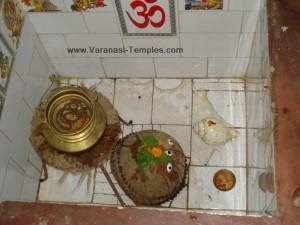
Nestled along the sacred ghats of the Ganges, the Vimaleshwar Temple (also known locally as Neelkant Mahadeo) stands as a testament to the ancient spiritual tapestry of Kashi. Dedicated to Lord Shiva in his form as Vimaleshwar (The Pure Lord), this shrine is a beacon for devotees seeking spiritual purification and divine grace. Unlike the grand, sprawling temple complexes, Vimaleshwar offers an intimate, deeply personal connection with the divine.
The primary deity here is a Shiva Lingam, representing the formless and all-pervading reality of Lord Shiva. It is believed that the Lingam exists here in a Swayambhu (self-manifested) or highly ancient form, channeling the potent energy of the Kashi Kshetra.
Phalaśruti: The Spiritual Benefits
According to the Kashi Khand (Skanda Purana), worshipping Vimaleshwar carries immense spiritual merit. The Phalaśruti (scriptural promise of benefits) states that devotees who offer sincere prayers at this Lingam are granted Siddhi—spiritual perfection and divine powers.
Furthermore, this shrine is associated with the removal of ancestral karma. It is traditionally believed that performing Rudra Abhishekam here helps cleanse the lineage of past sins, ensuring peace for forefathers. In modern context, devotees find that worship here fosters inner courage, helping them meet life’s challenges with a pure mind and elevated spirit.
Historical Origins & Scriptural Legend
The Kashi Khand Connection
The existence of Vimaleshwar is deeply rooted in the Kashi Khand of the Skanda Purana. Chapter 69 of this ancient text narrates the legends of the Rudra Vasam (the abode of Rudra).
Tradition holds that Lord Shiva, in his form as Krithi Vaseshwar, sat alongside Goddess Uma Devi. During this time, his vehicle, Nandi, offered prayers and proclaimed that there are 68 sacred places of worship dedicated to Lord Shiva within the holy city of Kashi.
The Legend of the Installation
It is believed that Nandi, the devoted bull, brought various idols and Shiva Lingams from different realms and installed them in Kashi to augment the city’s spiritual power. The Vimaleshwar Lingam is one of these sacred installations, positioned in the vicinity of another powerful shrine, Swarleeneshwar.
Historically, specific records of the masons or dynasties that erected the current structure are sparse, as is common with many ancient Kashi shrines that have been reconstructed over centuries. However, the spiritual continuity remains unbroken, with the current shrine maintaining the sanctity of the ancient site.
Architectural Marvels
The architecture of Vimaleshwar Temple is a classic example of the Kashi Naagari style, adapted to the narrow bylanes and riverfront topography of Varanasi. While it may not possess the towering Shikhara (spire) of a large North Indian (Nagara style) temple, it embodies the aesthetic purity of a Grha (house) of the deity.
- The Sanctum (Garbhagriha): The inner sanctum is compact, designed to bring the devotee face-to-face with the Lingam. The dim, atmospheric lighting enhances the meditative quality of the space.
- Stone Carvings: The exterior walls and pillars feature intricate stone carvings depicting various forms of Shiva and floral motifs, typical of the region’s craftsmanship.
- Vastu Shastra: The temple aligns with Vastu principles, facing east to welcome the rising sun and the divine energies of the Ganges flowing nearby.
- ASIR Status: While specific ASI (Archaeological Survey of India) ratings vary for smaller shrines, the temple is part of the protected heritage fabric of the Varanasi Heritage Circle.
Darshan & Ritual Logistics
Visiting Vimaleshwar Temple is a journey into the devotional rhythm of Varanasi. Below are the general timings and rituals for devotees planning a visit in 2026.
Daily Temple Timings
| Session | Timing | Activity |
|---|---|---|
| Morning | 5:00 AM – 12:00 PM | Mangala Darshan & Abhishekam |
| Afternoon | 12:00 PM – 4:00 PM | Temple Closed (Rest Period) |
| Evening | 4:00 PM – 9:00 PM | Sandhya Aarti & Shayan Darshan |
Key Sevas & Online Booking
While many smaller shrines in Varanasi manage rituals on-site, the Varanasi Devaya Trust (or local management committee) facilitates certain Sevas. For 2026, devotees can typically book the following:
- Rudra Abhishekam: Performed on Mondays and during the month of Shravan. Booking via the official Varanasi temple portal or the site management.
- Maha Rudra Archana: A powerful Vedic recitation for blessings.
- Ratatri Puja: Nightly worship for those seeking prolonged darshan.
2026 Major Festival Dates
- Maha Shivaratri: February 26, 2026 (Special night-long darshan).
- First Somvar (Monday) of Shravan: July 13, 2026.
- Deepavali (Diwali): October 21, 2026.
- Kartik Purnima: November 5, 2026.
Practical Visitor Guidance
To ensure a respectful and smooth visit to Vimaleshwar Temple, please adhere to the following guidelines:
Etiquette & Rules
- Dress Code: Traditional Indian attire is recommended. Men should wear dhoti/kurta, and women sarees/salwar kameez. Modest clothing is strictly required.
- Photography: Photography is generally prohibited inside the inner sanctum (Garbhagriha). Please seek permission for external shots.
- Mobile Phones: Silence your phone. While there may not be formal locker facilities at this smaller shrine, it is courteous to keep phones away during darshan.
- Offerings: Flowers, Bilva leaves, and milk are common offerings. Plastic items should be avoided.
Crowd Management & Best Time to Visit
Varanasi is a bustling city. For a peaceful darshan at Vimaleshwar:
- Best Hours: 5:00 AM – 7:00 AM (Mangala Aarti time) offers the most serene experience.
- Seasonal Advice: Summers (April–June) in Varanasi are hot; carry a water bottle and a towel. Winters (November–February) are pleasant but foggy.
- Accessibility: The temple is located near Prahlad Ghat. The approach involves navigating narrow, winding stairs. It is not wheelchair accessible. Wear comfortable walking shoes.
Pilgrimage Connectivity
Vimaleshwar Temple is located at A.10/47, Naya Mahadeo, Prahlad Ghat, Varanasi.
How to Reach
- By Air: Lal Bahadur Shastri International Airport (LBS) is approx. 25 km away. Taxis and e-rickshaws are available.
- By Rail: Varanasi Junction (BSB) is the nearest major railway station (approx. 6 km).
- By Road: The temple is located off the main Varanasi Ghats road. Local devotees suggest taking a rickshaw to Prahlad Ghat Chauraha (cross-road). From there, a short walk through the local market leads to the temple.
Nearby Sacred Sites (Pilgrimage Circuit)
- Kashi Vishwanath Temple: The primary Jyotirlinga, located about 15 minutes by boat or rickshaw from Prahlad Ghat.
- Swarleeneshwar Temple: Located in the immediate vicinity, often visited together with Vimaleshwar as per Kashi Khand legends.
- Panch Ganga Ghat: Just a short walk south, where five streams of the Ganga are believed to converge.
Frequently Asked Questions (FAQ)
1. Is there a VIP darshan entry available at Vimaleshwar Temple?
As a smaller, ancient shrine, Vimaleshwar Temple does not have a formal VIP entry system like large commercial temples. Darshan is generally open to all devotees equally, promoting a unified devotional experience.
2. Can I perform Rudra Abhishekam myself?
While personal worship is allowed, elaborate rituals like Abhishekam are typically performed by the resident Pandits. However, you can bring milk and offerings, and the Pandit may assist in offering them to the deity on your behalf.
3. Is the temple open during the monsoon season?
Yes, the temple remains open year-round. However, during heavy monsoons (July-August), the steps near Prahlad Ghat can become slippery. Exercise caution while walking.
4. What is the significance of the name ‘Neelkant Mahadeo’?
‘Neelkant’ refers to Lord Shiva with a blue throat, a result of him consuming the poison (Halahala) during the churning of the ocean (Samudra Manthan). Devotees associate the Vimaleshwar Lingam with this protective aspect of Shiva.
5. Are there accommodation options nearby?
Yes, the Varanasi Ghats area is filled with Dharamshalas and guest houses. For a spiritual stay, one can look for accommodation near Dashashwamedh Ghat or Godaulia, which are a short distance from Prahlad Ghat.
Recent Posts

ओ सांवरे तूने ही मुझको संभाला – Lyrics & Meaning
ओ सांवरे तूने ही मुझको संभाला – A Prayer to Shyam Origin & Spiritual Essence Why This Bhajan Resonates Devotees chant this when overwhelmed by life’s storms—the refrain ‘तूने ही मुझको संभाला’ is the soul’s sigh of relief: “You…

कथा ये है महाराज मेरे की – Lyrics & Meaning
कथा ये है महाराज मेरे की छत्रपति संभाजी महाराज – A Prayer to Chhatrapati Sambhaji Maharaj Origin & Spiritual Essence Why This Bhajan Resonates Devotees chant this when their spirit feels tested—its powerful refrain “महाराज मेरे” is a soul’s…

Rigveda Samhita Yathartha Anuvada (ऋग्वेद संहिता यथार्थ अनुवाद) – Complete Set with Anvayartha & Hindi/English Translation
The Rigveda is the oldest surviving scripture of humanity and the foundational text of Sanātana Dharma. For serious students, scholars, UPSC aspirants studying ancient Indian history, Sanskrit learners, and spiritual seekers, a precise and grammatically structured translation is indispensable.…

आना भी अकेला है जाना भी अकेला है – Lyrics & Meaning | BharatTemples
आना भी अकेला है जाना भी अकेला है – A Prayer to the Divine Witness Origin & Spiritual Essence Why This Bhajan Resonates Devotees turn to this bhajan in moments of deep reflection—when life’s attachments begin to ache. The…

माता शेरावाली के द्वार जो भी जाता है – Lyrics & Meaning
माता शेरावाली के द्वार जो भी जाता है – A Prayer to Maa Sherawali Origin & Spiritual Essence Why This Bhajan Resonates Devotees turn to this bhajan in times of fear or uncertainty—its promise that no one leaves Maa’s…

मार लेना सपणी उबार लेणा भवरा – Lyrics & Meaning
मार लेना सपणी उबार लेणा भवरा – A Prayer to the Divine Beloved Origin & Spiritual Essence Why This Bhajan Resonates Devotees chant this in moments of deep vulnerability—its cry of “मार लेना सपणी, उबार लेणा भवरा” is the…

हमें श्याम सुंदर भरोसा तुम्हारा – Lyrics & Meaning
हमें श्याम सुंदर भरोसा तुम्हारा – A Prayer to Shyam Sundar Origin & Spiritual Essence Why This Bhajan Resonates Devotees chant this when feeling alone—its refrain ‘de do sahara’ is the soul’s cry for divine support. Lyrics in Hindi…

Mere Satguru Ne Di Thi Davai Lyrics in Hindi & Meaning
Mere Satguru Ne Di Thi Davai: Invoking the Guru’s Liberating Wisdom This soul-stirring bhajan venerates the Satguru (True Spiritual Master) as the divine physician who dispenses the only remedy for life’s deepest sufferings. Composed by Sant Karmaveer Tufani, it…

Janm Diyo Thari Maa Dukh Dekhiyo Lyrics in Hindi & Meaning
जन्म दियो थारी माँ दुख देखियो (Maa’s Grief Upon Birthing You) This soul-stirring Chetavani Bhajan (admonitory hymn) is addressed to the Divine Mother (Maa) – a call for repentance when children forget their filial duties in the dark age…
Bhadi Sabha Mein Thane Manaun Lyrics in Hindi & Meaning
Bhadi Sabha Mein Thane Manaun: Invoking the Spear-Wielding Mother Mata Bhawani (श्री ज्वाला भवानी), the fiery manifestation of Shakti worshipped as the Protector of Dharma in Her Dhaulagarh sanctum. Origin & Spiritual Essence Composed in Rajasthani folk tradition by…