
Contents
Introduction & Spiritual Essence of Vindhya Devi Temple
The Vindhya Devi Temple in Varanasi (Kashi) stands as a profound testament to the power of the Divine Mother. Known specifically as Vindhya Vasini, she is a revered form of Goddess Durga. Located near the famed Sankata Devi Temple, this shrine draws devotees seeking spiritual liberation and the removal of life’s obstacles.
The Divine Form & Phalaśruti
According to sacred texts, specifically the Kashi Khand of the Skanda Purana, Vindhya Devi is one of the powerful manifestations of Shakti residing in Kashi. The term “Vindhya” refers to the mountain range, and “Vasini” means the dweller. She is the protector of the central land of India and a granter of Siddhi (spiritual and material accomplishments).
Phalaśruti (The Benefits of Worship):
It is believed that worshipping Vindhya Devi brings immense merit. Devotees visit this temple to:
- Attain Siddhi: To gain success in worldly endeavors and spiritual pursuits.
- Remove Obstacles: To clear hurdles in life paths, similar to Lord Ganesha’s blessings.
- Cleansing Ancestral Karma: Performing rituals here is said to pacify malefic planetary influences and cleanse ancestral lineage curses.
Historical Origins & Scriptural Legend
The history of Vindhya Devi Temple is deeply intertwined with the ancient texts of Sanatan Dharma rather than a specific dynastic record. While exact construction dates are often unrecorded for ancient Kashi shrines, the spiritual lineage is ancient.
Scriptural References
The primary authority for this temple is the Kashi Khand, Chapter 70. This chapter details the various Devis (Goddesses) residing in Kashi, each with immense power. Tradition holds that Vindhya Devi appeared here to protect the sacred geography of Kashi.
Local Legends
According to temple records and local folklore, the idol of Vindhya Devi is believed to be self-manifested (Swayambhu). The temple’s location is significant; it is situated just adjacent to the Sankata Devi Temple (the Goddess of Calamities), creating a powerful spiritual junction where fear (Sankata) is transformed into accomplishment (Vindhya).
Architectural Marvels
The Vindhya Devi Temple showcases a distinct Dravidian architectural style, a rare and beautiful feature in the predominantly North Indian Nagara-style city of Varanasi. This architectural choice highlights the pan-Indian influence of Devi worship.
Key Architectural Features
Visitors can observe the classic Dravidian elements, characterized by:
- Stepped Pyramidal Shikhara: Unlike the curvilinear towers of North India, the temple tower rises in a stepped, tapering fashion.
- Mandapa: A spacious hall where devotees gather for prayers, supported by ornate pillars.
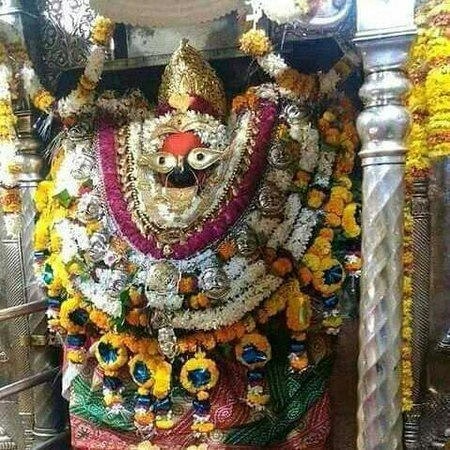
- Sanctum Sanctorum: The inner shrine houses the idol of Vindhya Vasini, usually depicted with multiple arms holding weapons, symbolizing her power.
While the temple is not a UNESCO site, it is a protected heritage structure under local authorities, preserving the intricate carvings that adorn its exterior.
Darshan & Ritual Logistics (2026 Guide)
To ensure a seamless spiritual experience, here are the updated timings and ritual information for the year 2026. Note that temple timings may vary slightly during festivals.
Daily Timings
| Session | Timing | Activity |
|---|---|---|
| Morning | 05:00 AM – 12:00 PM | Mangala Aarti, Shringar Darshan |
| Afternoon | 12:00 PM – 04:00 PM | Rest Period / Temple Cleaning |
| Evening | 04:00 PM – 09:00 PM | Bhog Aarti, Sandhya Aarti |
Key Sevas & Online Booking
Devotees can book various Sevas (ritual services) to offer at the temple. As of 2026, bookings are managed via the Varanasi Temple Trust portal.
- Abhishekam: Ritual bathing of the deity (usually performed in the morning). Materials include milk, honey, and sandalwood paste.
- Archana: Personalized chanting of hymns (e.g., Durga Saptashati) performed by temple priests.
- Special Aarti: Participation in the evening Sandhya Aarti.
How to Book: Visit the official Kashi Vishwanath Temple Trust website or the dedicated Varanasi Devi section. Booking slots for 2026 open 60 days in advance.
Festivals in 2026
- Navratri (Spring): March 30 – April 7 (Shardiya Navratri will be observed in September/October). This is the most significant festival here; the temple is adorned with flowers and special Yagnas are performed.
- Maha Ashtami: Specific Vedic rituals are conducted throughout the night.
- Diwali: The temple is illuminated with thousands of earthen lamps (diyas).
Practical Visitor Guidance
Visiting Varanasi requires preparation to ensure a comfortable and respectful pilgrimage.
Etiquette & Rules
- Dress Code: Traditional attire is recommended (Saree, Salwar Kameez, or Dhoti/Kurta for men). Modest clothing covers shoulders and knees.
- Photography: Strictly prohibited inside the sanctum sanctorum. Photography of the outer architecture is generally permitted, but always check with security guards.
- Mobile & Lockers: Electronic devices are discouraged inside the inner shrine. Small lockers are available near the entrance for valuables.
- Accessibility: The temple is located in the narrow lanes of Varanasi. The path is not vehicle-friendly; walking is required. Suggest comfortable footwear that can be easily removed.
Crowd Management & Seasonal Advice
- Best Hours: For a peaceful Darshan, visit between 8:00 AM and 10:00 AM or after 7:00 PM (excluding Aarti times).
- Summer (May-June): Varanasi gets extremely hot. Carry a water bottle, umbrella, and electrolytes. The temple is cooler inside the stone structure.
- Monsoon (July-Sept): The ghats flood, and lanes can be slippery. Wear rubber-soled sandals with good grip.
Pilgrimage Connectivity
How to Reach Vindhya Devi Temple
The temple is located in the Chowk area of Varanasi (Ck.2/33), near Sankata Devi Temple.
- By Air: Lal Bahadur Shastri International Airport (LBS) is approximately 25 km away. Taxis and the Varanasi Metro are available.
- By Rail: Varanasi Junction (BSB) is the main railway station, roughly 5-6 km from Chowk. Buses and e-rickshaws can take you to the Sankata Devi intersection.
- By Road: From the main Chowk area, the temple is a short walk through historic lanes. Cycle rickshaws are available from the gateway to the temple entrance.
Nearby Sacred Sites
A pilgrimage circuit including these sites is highly recommended:
- Sankata Devi Temple: Located immediately adjacent to Vindhya Devi. It is the abode of the Goddess who removes calamities.
- Maa Durga Temple (Monkey Temple): Located 1 km away (Bhelupura), famous for its vibrant red idols and peaceful courtyard.
- Kashi Vishwanath Temple: The primary Jyotirlinga of Shiva, located approximately 1.5 km away (a 20-minute walk through the market).
Frequently Asked Questions (FAQ)
1. Is there a VIP or Special Darshan entry?
No, Vindhya Devi Temple generally does not have a separate VIP entry like major state-managed temples. Darshan is first-come, first-served. However, booking a specific Archana often allows for a closer and more organized viewing of the deity.
2. What is the history of the Vindhya Devi idol?
The idol is traditionally believed to be a Swayambhu (self-manifested) form of the Goddess. Its history is rooted in the Kashi Khand scriptures, which describe her as a eternal protector of Kashi.
3. Is the temple wheelchair accessible?
Given the antique structure and the narrow, crowded lanes of Varanasi (Chowk area), wheelchair access is extremely difficult. The entrance requires climbing a few steep steps.
4. Can we offer our own Prasad?
Generally, commercial or outside food items are not allowed inside the temple. It is best to purchase Prasad (offering) from the authorized stalls outside the temple premises to offer to the deity.
5. Are there accommodation facilities near the temple?
Yes, the Varanasi area offers numerous Dharamshalas and hotels. For a spiritual stay, the Kashi Vishwanath Temple Trust guest houses are recommended, though they require advance booking.
Photo Gallery

Contact Details
Temple Trust Office (Varanasi)
Address: Near Sankata Devi Temple, Chowk, Varanasi, Uttar Pradesh 221001
Contact (Tentative): +91-XXXXXXXXXX (Check local listings upon arrival)
Recent Posts

ओ सांवरे तूने ही मुझको संभाला – Lyrics & Meaning
ओ सांवरे तूने ही मुझको संभाला – A Prayer to Shyam Origin & Spiritual Essence Why This Bhajan Resonates Devotees chant this when overwhelmed by life’s storms—the refrain ‘तूने ही मुझको संभाला’ is the soul’s sigh of relief: “You…

कथा ये है महाराज मेरे की – Lyrics & Meaning
कथा ये है महाराज मेरे की छत्रपति संभाजी महाराज – A Prayer to Chhatrapati Sambhaji Maharaj Origin & Spiritual Essence Why This Bhajan Resonates Devotees chant this when their spirit feels tested—its powerful refrain “महाराज मेरे” is a soul’s…

Rigveda Samhita Yathartha Anuvada (ऋग्वेद संहिता यथार्थ अनुवाद) – Complete Set with Anvayartha & Hindi/English Translation
The Rigveda is the oldest surviving scripture of humanity and the foundational text of Sanātana Dharma. For serious students, scholars, UPSC aspirants studying ancient Indian history, Sanskrit learners, and spiritual seekers, a precise and grammatically structured translation is indispensable.…

आना भी अकेला है जाना भी अकेला है – Lyrics & Meaning | BharatTemples
आना भी अकेला है जाना भी अकेला है – A Prayer to the Divine Witness Origin & Spiritual Essence Why This Bhajan Resonates Devotees turn to this bhajan in moments of deep reflection—when life’s attachments begin to ache. The…

माता शेरावाली के द्वार जो भी जाता है – Lyrics & Meaning
माता शेरावाली के द्वार जो भी जाता है – A Prayer to Maa Sherawali Origin & Spiritual Essence Why This Bhajan Resonates Devotees turn to this bhajan in times of fear or uncertainty—its promise that no one leaves Maa’s…

मार लेना सपणी उबार लेणा भवरा – Lyrics & Meaning
मार लेना सपणी उबार लेणा भवरा – A Prayer to the Divine Beloved Origin & Spiritual Essence Why This Bhajan Resonates Devotees chant this in moments of deep vulnerability—its cry of “मार लेना सपणी, उबार लेणा भवरा” is the…

हमें श्याम सुंदर भरोसा तुम्हारा – Lyrics & Meaning
हमें श्याम सुंदर भरोसा तुम्हारा – A Prayer to Shyam Sundar Origin & Spiritual Essence Why This Bhajan Resonates Devotees chant this when feeling alone—its refrain ‘de do sahara’ is the soul’s cry for divine support. Lyrics in Hindi…

Mere Satguru Ne Di Thi Davai Lyrics in Hindi & Meaning
Mere Satguru Ne Di Thi Davai: Invoking the Guru’s Liberating Wisdom This soul-stirring bhajan venerates the Satguru (True Spiritual Master) as the divine physician who dispenses the only remedy for life’s deepest sufferings. Composed by Sant Karmaveer Tufani, it…

Janm Diyo Thari Maa Dukh Dekhiyo Lyrics in Hindi & Meaning
जन्म दियो थारी माँ दुख देखियो (Maa’s Grief Upon Birthing You) This soul-stirring Chetavani Bhajan (admonitory hymn) is addressed to the Divine Mother (Maa) – a call for repentance when children forget their filial duties in the dark age…
Bhadi Sabha Mein Thane Manaun Lyrics in Hindi & Meaning
Bhadi Sabha Mein Thane Manaun: Invoking the Spear-Wielding Mother Mata Bhawani (श्री ज्वाला भवानी), the fiery manifestation of Shakti worshipped as the Protector of Dharma in Her Dhaulagarh sanctum. Origin & Spiritual Essence Composed in Rajasthani folk tradition by…