
Contents
- 1 Introduction & Spiritual Essence: The Eternal Linga of Varanasi
- 2 Historical Origins & Scriptural Legend
- 3 Architectural Marvels
- 4 Darshan & Ritual Logistics
- 5 Practical Visitor Guidance
- 6 Pilgrimage Connectivity
- 7 Frequently Asked Questions (FAQ)
- 7.1 1. Is there a VIP or Special Entry darshan at Vridha Kaleshwar?
- 7.2 2. What is the significance of the Kalodak Well mentioned in the guide?
- 7.3 3. Can I perform my own Shiva Linga Abhishekam?
- 7.4 4. What is the best way to navigate the narrow lanes of Daranagar?
- 7.5 5. Is there a dress code for visiting?
- 8 Legend / Local stories
- 9 Photo Gallery
- 10 How to Reach:
- 11 Contact Details
Introduction & Spiritual Essence: The Eternal Linga of Varanasi
In the heart of the ancient city of Varanasi, where the cosmic cycle of time flows freely, stands the Vridha Kaleshwar Temple. This sacred shrine is not merely a structure of stone but a pulsating center of spiritual energy, deeply rooted in the Kashi Khand of the Skanda Purana. The primary deity, Vridha Kaleshwar, is a manifestation of Lord Shiva (Mahadev) in the form of a Self-manifested (Swayambhu) Linga.
The very name carries profound significance. “Vridha” translates to old or elder, referring to the ancient sage Vridha Kal, a devotee whose devotion was so potent that the divine manifested here. Unlike other shrines, this temple is believed to be built by the hands of Lord Shiva himself, a testament to the intense devotion of his follower.
Phalaśruti: The Divine Benefits of Visiting
According to the sacred texts of Kashi Khand, Chapter 24, performing Pooja and Archana at Vridha Kaleshwar brings absolute happiness and liberation from diseases and poverty. It is a powerful site for cleansing ancestral karma and resolving chronic health issues. Adjacent to the temple lies the ancient Kalodak Well, the waters of which are considered a potent cure for all ailments, carrying the blessings of the ancient sage. Devotees believe that visiting this temple removes the “Kala” (fear of death) and grants “Kaleshwar” (the Lord of time/transition), ensuring a life of peace and prosperity.
Historical Origins & Scriptural Legend
The history of Vridha Kaleshwar is a tapestry woven from scriptural grandeur and local folklore. It is one of the most revered sites mentioned in the Brahma Vaivart Puran and the Ling Puran.
The Legend of Vridha Kal
According to Kashi Khand, in a previous birth, a staunch devotee named Siva Sharma resided in Madurai. After his demise in Haridwar, he reached Vaikunth. Due to his accumulated punya karma, he was reborn in Kashi as Vridha Kal. Here, he worshipped a Linga with unwavering devotion. It is believed that Lord Mahadev himself constructed the temple around the Linga to honor the sage. A key teaching from this legend is humility: one should not brag about good deeds, for the divine authority recognizes and rewards them in due course.
Evolution of the Shrine
Tradition holds that the original temple was located in a locality called Daranagar. Over time, as the original structure faced extinction, a new temple was built nearby and named Kaleshwar. Later, the temple was re-established at the original spot in Daranagar to honor the specific lineage of the sage. To distinguish between the two, the original site is revered as “Vridha Kaleshwar” (The Ancient Kaleshwar).
Architectural Marvels
The temple showcases a distinct Dravidian architectural style, characterized by its pyramidal roofs and ornate carvings, which is a unique feature among the typically Nagara-style temples of North India. This Dravidian influence highlights the cultural synthesis that has occurred in Varanasi over centuries.
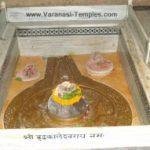
The sanctum sanctorum houses the Swayambhu Linga, which is the focal point of devotion. The structure is modest yet powerful, featuring intricate stone carvings that depict various forms of Lord Shiva and scenes from Puranic lore. The temple complex is part of a larger cluster of shrines in the Vridha Kal area, creating a dense spiritual atmosphere. While the temple is not listed under ASI or UNESCO, it is protected and maintained by the Shri Kashi Vishwanath Temple Trust, preserving its ancient integrity.
| Date built: | – |
|---|---|
| Deity: | Vridha Kaleshwar |
| Architectural style: | Dravidian architecture |
| Major festivals | – |
| Locale: | Varanasi |
| District:: | Varanasi |
| Address: | – |
| Phone | – |
Darshan & Ritual Logistics
The spiritual practices at Vridha Kaleshwar are aligned with the ancient Vedic traditions. Darshan is generally open to all, but specific Sevas (rituals) require prior booking, which can be done online through the Kashi Vishwanath Trust portal.
Daily Timings
The temple follows the standard temple timings of Varanasi, allowing devotees to visit during the auspicious morning hours and the serene evening hours.
| Session | Timing | Description |
|---|---|---|
| Morning Darshan | 5:00 AM – 1:00 PM | Includes Mangala Aarti and general darshan. |
| Evening Darshan | 4:00 PM – 10:30 PM | Includes Sandhya Aarti and Shringar. |
Key Sevas & Online Booking
- Abhishekam: Ritual bathing of the Linga with milk, honey, and Ganga Jal. Timing: 6:00 AM.
- Rudra Abhishek: A detailed Vedic ritual for prosperity. Timing: 7:00 AM – 9:00 AM.
- Archana: Recitation of 108 names of Lord Shiva. Timing: Throughout the day.
Booking: Visit the official Shri Kashi Vishwanath Temple Trust website (up.gov.in) to book these services 24 hours in advance.
Festivals 2026
While Mahashivratri is the grandest celebration here, the temple hosts significant events on:
- Pradosh Vrat: Monthly occurrence (e.g., March 6, 2026 and March 20, 2026)—highly auspicious for Shiva devotees.
- Shravan Maas (July-August 2026): Mondays during this month see special Rudra Abhishekam.
- Shivratri: February 16, 2026. The temple remains open 24 hours.
Practical Visitor Guidance
To ensure a smooth spiritual experience, adhering to local customs is essential.
- Dress Code: Traditional Indian attire is recommended (Kurta-Pajama for men, Saree/Salwar for women). Avoid shorts and sleeveless tops.
- Photography: Strictly prohibited inside the sanctum sanctorum. Photography in the outer courtyard is generally permitted, but respect the privacy of worshippers.
- Mobile Lockers: Due to security protocols in Varanasi, mobile phones and electronic devices are restricted. Use the designated mobile lockers available at the entrance or deposit them at your hotel.
- Crowd Management:
- Best Hours: Early morning (5:00 AM – 7:00 AM) or late evening (8:00 PM onwards).
- Seasonal Advice: Varanasi can be humid in summer (May-June). Carry a reusable water bottle and a handkerchief. Monsoon (July-August) requires an umbrella.
Pilgrimage Connectivity
The Vridha Kaleshwar Temple is deeply integrated into the spiritual fabric of Varanasi.
How to Reach
Address: K-52/39, Vridha Kal Area, near Mrityunjeshwar Temple, Daranagar, Varanasi, Uttar Pradesh 221001.
- By Air: Lal Bahadur Shastri International Airport (LBS) is approximately 25 km away. Taxis and auto-rickshaws are readily available.
- By Rail: Varanasi Junction (BSB) is about 7 km from the temple. Cycle rickshaws or auto-rickshaws are the best way to navigate the narrow lanes.
- By Road: The temple is accessible via the Varanasi-Ghazipur Highway (NH 19). From the main road, take an auto-rickshaw to Bishweshwarganj (a large wholesale market), from where the temple is a short walk.
Nearby Sacred Sites
Make the most of your pilgrimage by visiting these nearby shrines:
- Mrityunjeshwar Temple: Located just adjacent to Vridha Kaleshwar, dedicated to the conqueror of death.
- Durga Temple (Durga Kund): About 2 km away, a vibrant red temple dedicated to Goddess Durga.
- Sankat Mochan Hanuman Temple: Approximately 3 km away, famous for the liberation from troubles.
Frequently Asked Questions (FAQ)
1. Is there a VIP or Special Entry darshan at Vridha Kaleshwar?
As part of the Shri Kashi Vishwanath Temple Trust, the Vridha Kaleshwar Temple follows a standard darshan system. However, a priority entry pass can be purchased online for ₹300, which allows access to a separate queue, reducing wait times significantly.
2. What is the significance of the Kalodak Well mentioned in the guide?
The Kalodak Well is located near the temple and is believed to contain healing waters. According to local legend, the water cures diseases and purifies the soul. Many devotees collect this water as Teertham (holy water) after their darshan.
3. Can I perform my own Shiva Linga Abhishekam?
Yes, personal Abhishekam is allowed. You can bring offerings like milk, curd, honey, ghee, and Ganga Jal. Alternatively, these items can be purchased from the authorized counters inside the temple premises.
The lanes leading to the temple are narrow and often crowded. It is advisable to walk from the main road (Bishweshwarganj) or use a cycle rickshaw. Auto-rickshaws cannot penetrate deep into the market area.
5. Is there a dress code for visiting?
While there is no strict enforcement, it is culturally appropriate to wear modest, traditional clothing. Removing footwear before entering the temple premises is mandatory.
There was an original temple in a locality called Daranagar which became extinct and another temple was built in a different locality and was named Kaleshwar. Subsequently, a temple was re-built at the original spot (Daranagar) and to distinguish between the two, the temple in original place is called Vridha Kaleshwar.
According to Kashi Khand, a person performing pooja and archana at Vridha Kaleshwar is granted all his wishes, he remains absolutely happy and is free from all sorts of diseases and poverty. Nearby is Kalodak Well, the water from which, will be a cure for all diseases.
Vridha Kaleshwar also finds mention in Brahma Vaivart Puran and Ling Puran.
Legend / Local stories
Photo Gallery
How to Reach:
Vridha Kaleshwar temple is located at K-52/39, Vridha Kal area, in the premises of Mrityunjeshwar. The temple is approachable from a famous locality called Bishweshwarganj, which is a great mandi (market place) and travelling to the temple in cycle rickshaw or auto-rickshaw is convenient
Contact Details
Official Address
Recent Posts

ओ सांवरे तूने ही मुझको संभाला – Lyrics & Meaning
ओ सांवरे तूने ही मुझको संभाला – A Prayer to Shyam Origin & Spiritual Essence Why This Bhajan Resonates Devotees chant this when overwhelmed by life’s storms—the refrain ‘तूने ही मुझको संभाला’ is the soul’s sigh of relief: “You…

कथा ये है महाराज मेरे की – Lyrics & Meaning
कथा ये है महाराज मेरे की छत्रपति संभाजी महाराज – A Prayer to Chhatrapati Sambhaji Maharaj Origin & Spiritual Essence Why This Bhajan Resonates Devotees chant this when their spirit feels tested—its powerful refrain “महाराज मेरे” is a soul’s…

Rigveda Samhita Yathartha Anuvada (ऋग्वेद संहिता यथार्थ अनुवाद) – Complete Set with Anvayartha & Hindi/English Translation
The Rigveda is the oldest surviving scripture of humanity and the foundational text of Sanātana Dharma. For serious students, scholars, UPSC aspirants studying ancient Indian history, Sanskrit learners, and spiritual seekers, a precise and grammatically structured translation is indispensable.…

आना भी अकेला है जाना भी अकेला है – Lyrics & Meaning | BharatTemples
आना भी अकेला है जाना भी अकेला है – A Prayer to the Divine Witness Origin & Spiritual Essence Why This Bhajan Resonates Devotees turn to this bhajan in moments of deep reflection—when life’s attachments begin to ache. The…

माता शेरावाली के द्वार जो भी जाता है – Lyrics & Meaning
माता शेरावाली के द्वार जो भी जाता है – A Prayer to Maa Sherawali Origin & Spiritual Essence Why This Bhajan Resonates Devotees turn to this bhajan in times of fear or uncertainty—its promise that no one leaves Maa’s…

मार लेना सपणी उबार लेणा भवरा – Lyrics & Meaning
मार लेना सपणी उबार लेणा भवरा – A Prayer to the Divine Beloved Origin & Spiritual Essence Why This Bhajan Resonates Devotees chant this in moments of deep vulnerability—its cry of “मार लेना सपणी, उबार लेणा भवरा” is the…

हमें श्याम सुंदर भरोसा तुम्हारा – Lyrics & Meaning
हमें श्याम सुंदर भरोसा तुम्हारा – A Prayer to Shyam Sundar Origin & Spiritual Essence Why This Bhajan Resonates Devotees chant this when feeling alone—its refrain ‘de do sahara’ is the soul’s cry for divine support. Lyrics in Hindi…

Mere Satguru Ne Di Thi Davai Lyrics in Hindi & Meaning
Mere Satguru Ne Di Thi Davai: Invoking the Guru’s Liberating Wisdom This soul-stirring bhajan venerates the Satguru (True Spiritual Master) as the divine physician who dispenses the only remedy for life’s deepest sufferings. Composed by Sant Karmaveer Tufani, it…

Janm Diyo Thari Maa Dukh Dekhiyo Lyrics in Hindi & Meaning
जन्म दियो थारी माँ दुख देखियो (Maa’s Grief Upon Birthing You) This soul-stirring Chetavani Bhajan (admonitory hymn) is addressed to the Divine Mother (Maa) – a call for repentance when children forget their filial duties in the dark age…
Bhadi Sabha Mein Thane Manaun Lyrics in Hindi & Meaning
Bhadi Sabha Mein Thane Manaun: Invoking the Spear-Wielding Mother Mata Bhawani (श्री ज्वाला भवानी), the fiery manifestation of Shakti worshipped as the Protector of Dharma in Her Dhaulagarh sanctum. Origin & Spiritual Essence Composed in Rajasthani folk tradition by…