
Contents
- 1 Yagneswarar Temple, Thiruvarur: A Definitive Pilgrimage Guide
Yagneswarar Temple, Thiruvarur: A Definitive Pilgrimage Guide
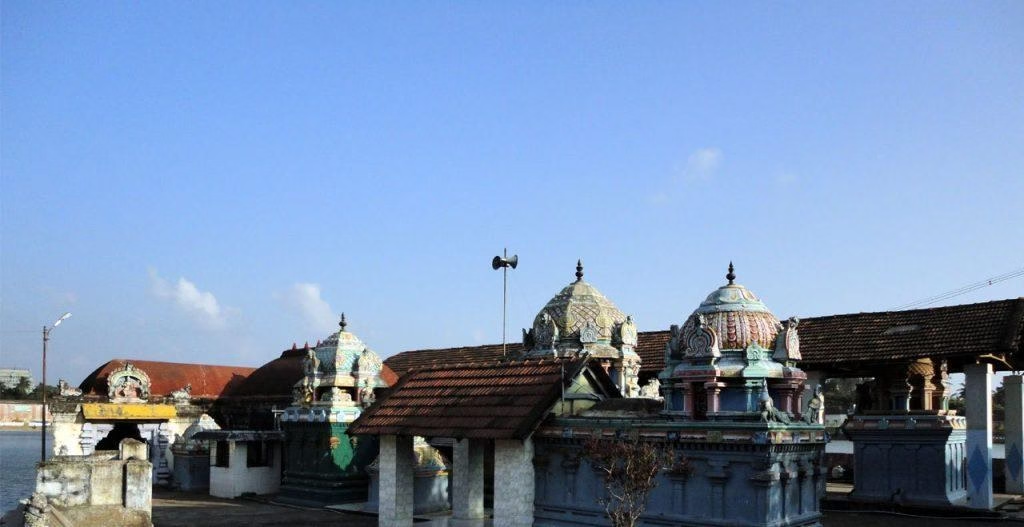
Welcome to the sacred banks of the Kamalalayam Temple Tank. As the Lead Heritage Architect at BharatTemples.com, I invite you to explore the architectural and spiritual splendor of the Yagneswarar Temple. Located in the holy town of Thiruvarur, Tamil Nadu, this ancient shrine is a jewel within the complex of the famed Thyagaraja Swamy Temple. It stands as a testament to the Dravidian architectural genius and houses a rare arrangement of planetary deities that draws devotees from across the globe.
1. Introduction & Spiritual Essence
The Yagneswarar Temple is dedicated to Lord Shiva, worshipped here in the form of a Swayambhu Lingam (self-manifested). The presiding deity is known as Yagneswarar (The Lord of Sacrifices), while the consort, Goddess Parvati, is revered as Uthravediambal (Ammai Udaya Nayaki).
Phalaśruti: Why Visit?
Devotees visit this temple seeking relief from Graha Doshas (planetary afflictions). The temple is renowned for its ability to neutralize negative karma and grant peace of mind. Specifically, performing prayers here is believed to:
- Alleviate Navagraha Doshas: Especially those caused by Rahu and Ketu.
- Cleansing Ancestral Karma: Performing rituals here is believed to aid the liberation of ancestors’ souls.
- Marital Harmony: Couples visit to seek blessings for a stable married life.
2. Historical Origins & Scriptural Legend
While the exact construction date remains undocumented in the original source material, the architecture suggests a period spanning the Chola Dynasty (10th–14th Century CE). The temple was likely expanded during the Nayak period, evident in the vibrant stucco work found on the Gopurams.
The Legend of the Rishis
According to local tradition and the Stala Purana, the great Rishis (sages) gathered in this region to perform a massive Yagna (fire ritual) dedicated to Lord Shiva. Due to the immense spiritual energy generated, the ground became sacred. Lord Shiva, pleased by the devotion, manifested here as the Yagneswarar Lingam to grant Moksha (liberation) to the sages.
Another legend holds that the river Cauvery (in her form as the canal network surrounding Thiruvarur) formed a lotus shape at this spot, prompting the construction of the temple to honor the Lord as the center of this spiritual geometry.
3. Architectural Marvels
The temple exemplifies the classical Dravidian style of architecture. It is east-facing, allowing the first rays of the sun to illuminate the sanctum.
- The Sanctum (Garbhagriha): The primary shrine houses the Yagneswarar Lingam. The walls of the sanctum feature intricate stone carvings depicting scenes from Shiva Purana.
- The Mandapas: The temple features pillared Mandapas (halls) typical of Chola architecture, used for processions during festivals.
- The Navagraha Shrine: The highlight of the temple. The Navagraha (nine planets) are arranged in a single linear row (unlike the typical circular arrangement found in many other temples). This unique alignment is said to maximize the flow of planetary energies.
- The Temple Tank: Located on the banks of the massive Kamalalayam tank (belonging to the main Thyagaraja temple), the setting provides a serene ambiance with reflections of the temple tower.
4. Darshan & Ritual Logistics (2026 Guide)
Visitors are encouraged to check the official temple trust website or local listings for real-time updates before travel.
Daily Timings
| Session | Timing |
|---|---|
| Morning Darshan | 6:00 AM – 12:00 PM |
| Afternoon Closure | 12:00 PM – 4:00 PM |
| Evening Darshan | 4:00 PM – 8:30 PM |
Key Sevas and Poojas
- Abhishekam: Performed to the Navagraha shrines and the main deity. Best time: Early morning (7:00 AM).
- Archana: Recitation of 108 names of Lord Shiva and the specific Planetary Deity.
- Rahu-Ketu Pooja: Highly recommended for those facing Kala Sarpa Dosha.
Online Seva Booking
While specific online portals for this minor shrine may be integrated with the main Thiruvarur Thyagaraja Temple trust, devotees can typically book through:
- The Hindu Religious and Charitable Endowments (HR&CE) Department, Tamil Nadu website.
- Third-party authorized platforms (e.g., MakeMyTrip, Yatra) for specific festival offerings.
2026 Major Festival Dates
- Pradosham: Monthly (13th and 28th of every month). Next notable date: January 13, 2026.
- Shivaratri: February 26, 2026. Special all-night darshan is conducted.
- Argala (Margazhi Festival): Dec 2025 – Jan 2026. The temple is decorated with traditional Kolams.
- Navaratri: September 22 – October 1, 2026. Special decorations for the Navagraha shrine.
5. Practical Visitor Guidance
Dress Code & Etiquette
As with most Tamil Nadu Shiva temples, modest attire is mandatory. Men should wear Veshti (dhoti) or formal trousers/shirt. Women should wear saree, salwar kameez, or long skirts. Avoid shorts and sleeveless tops.
Photography & Mobiles
- Photography: Strictly prohibited inside the Sanctum Sanctorum.
- Lockers: A cloakroom is available near the entrance (usually managed by the temple executive) to store footwear and luggage. Mobile phones are allowed inside but should be kept silent.
Crowd Management & Best Hours
- Best Time for Darshan: Weekday mornings (7 AM – 9 AM) are the least crowded.
- Avoid: Saturday evenings and Pradosham days, as local crowds swell significantly.
- Seasonal Advice: During summer (April–June), the heat can be intense. Carry a water bottle and an umbrella. The temple floor can be hot; wear comfortable sandals that are easy to remove.
Accessibility
The temple is located on flat terrain near the tank. It is accessible for wheelchairs on the outer corridors, though the sanctum requires a small step up. Volunteers are usually available to assist elderly devotees.
6. Pilgrimage Connectivity
How to Reach
Address: Opposite Western Gopuram, Kamalalayam Tank, Thiruvarur, Tamil Nadu 610001.
- By Air: The nearest airport is Trichy International Airport (TRZ), approximately 115 km away (2.5 hours drive).
- By Rail: Thiruvarur Junction is a major railhead well-connected to Chennai, Trichy, and Coimbatore. The temple is 3 km from the station (auto-rickshaw ride: 15 mins).
- By Road: Thiruvarur is located on the NH 83 (connecting Trichy to Nagapattinam). Frequent buses run from Chennai, Madurai, and Tanjore.
Nearby Sacred Sites (Pilgrimage Circuit)
Thiruvarur is a temple town. After visiting Yagneswarar Temple, pilgrims should explore:
- Thyagaraja Swamy Temple: One of the largest temple complexes in Tamil Nadu, dedicated to Lord Somaskandar (Shiva).
- Kamalalayam Temple Tank: The largest temple tank in Tamil Nadu, used for the famous Ther Thiruvizha (Chariot Festival).
- Mariamman Temple (South Street): Famous for healing rituals involving Mattu (brinjal) offerings.
7. Frequently Asked Questions (FAQ)
Is there a VIP darshan entry available?
Yes, the temple trusts often offer a “Special Entry” or “VIP Darshan” pass, which can be obtained from the executive officer’s counter at the temple for a nominal fee. This allows you to skip the general queue during peak hours.
Arranging the Navagrahas in a single line (as seen here) symbolizes the linear progression of time and karma. It is believed that standing in front of this specific arrangement aligns the devotee’s planetary positions favorably.
Are non-Hindus allowed inside?
Generally, entry is restricted to those who practice Sanatana Dharma. However, foreign nationals interested in architecture may be allowed entry upon request at the temple office, provided they respect the rituals.
Where can I stay in Thiruvarur?
There are several guest houses (Choultries) run by the HR&CE department near the temple. Private hotels and lodges are also available on Trichy Road and Sannathi Street, ranging from budget to mid-range.
Common offerings include Adai (lentil dumplings) for Rahu-Ketu, and Thil (sesame) offerings for Saturn (Shani). Devotees can purchase these at the temple counter or bring them from home.
Photo Gallery


Location & Map
Map Coordinates: 10.7673° N, 79.6374° E
Recent Posts

ओ सांवरे तूने ही मुझको संभाला – Lyrics & Meaning
ओ सांवरे तूने ही मुझको संभाला – A Prayer to Shyam Origin & Spiritual Essence Why This Bhajan Resonates Devotees chant this when overwhelmed by life’s storms—the refrain ‘तूने ही मुझको संभाला’ is the soul’s sigh of relief: “You…

कथा ये है महाराज मेरे की – Lyrics & Meaning
कथा ये है महाराज मेरे की छत्रपति संभाजी महाराज – A Prayer to Chhatrapati Sambhaji Maharaj Origin & Spiritual Essence Why This Bhajan Resonates Devotees chant this when their spirit feels tested—its powerful refrain “महाराज मेरे” is a soul’s…

Rigveda Samhita Yathartha Anuvada (ऋग्वेद संहिता यथार्थ अनुवाद) – Complete Set with Anvayartha & Hindi/English Translation
The Rigveda is the oldest surviving scripture of humanity and the foundational text of Sanātana Dharma. For serious students, scholars, UPSC aspirants studying ancient Indian history, Sanskrit learners, and spiritual seekers, a precise and grammatically structured translation is indispensable.…

आना भी अकेला है जाना भी अकेला है – Lyrics & Meaning | BharatTemples
आना भी अकेला है जाना भी अकेला है – A Prayer to the Divine Witness Origin & Spiritual Essence Why This Bhajan Resonates Devotees turn to this bhajan in moments of deep reflection—when life’s attachments begin to ache. The…

माता शेरावाली के द्वार जो भी जाता है – Lyrics & Meaning
माता शेरावाली के द्वार जो भी जाता है – A Prayer to Maa Sherawali Origin & Spiritual Essence Why This Bhajan Resonates Devotees turn to this bhajan in times of fear or uncertainty—its promise that no one leaves Maa’s…

मार लेना सपणी उबार लेणा भवरा – Lyrics & Meaning
मार लेना सपणी उबार लेणा भवरा – A Prayer to the Divine Beloved Origin & Spiritual Essence Why This Bhajan Resonates Devotees chant this in moments of deep vulnerability—its cry of “मार लेना सपणी, उबार लेणा भवरा” is the…

हमें श्याम सुंदर भरोसा तुम्हारा – Lyrics & Meaning
हमें श्याम सुंदर भरोसा तुम्हारा – A Prayer to Shyam Sundar Origin & Spiritual Essence Why This Bhajan Resonates Devotees chant this when feeling alone—its refrain ‘de do sahara’ is the soul’s cry for divine support. Lyrics in Hindi…

Mere Satguru Ne Di Thi Davai Lyrics in Hindi & Meaning
Mere Satguru Ne Di Thi Davai: Invoking the Guru’s Liberating Wisdom This soul-stirring bhajan venerates the Satguru (True Spiritual Master) as the divine physician who dispenses the only remedy for life’s deepest sufferings. Composed by Sant Karmaveer Tufani, it…

Janm Diyo Thari Maa Dukh Dekhiyo Lyrics in Hindi & Meaning
जन्म दियो थारी माँ दुख देखियो (Maa’s Grief Upon Birthing You) This soul-stirring Chetavani Bhajan (admonitory hymn) is addressed to the Divine Mother (Maa) – a call for repentance when children forget their filial duties in the dark age…
Bhadi Sabha Mein Thane Manaun Lyrics in Hindi & Meaning
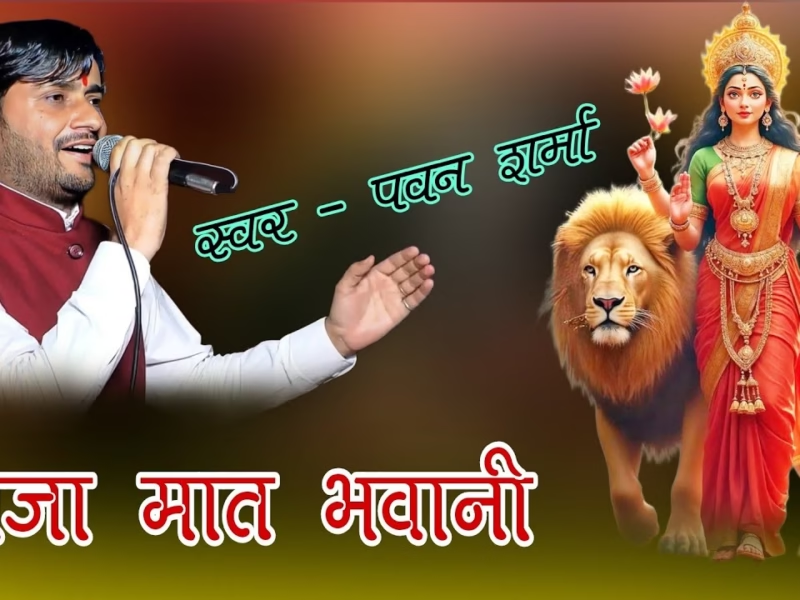
Bhadi Sabha Mein Thane Manaun: Invoking the Spear-Wielding Mother Mata Bhawani (श्री ज्वाला भवानी), the fiery manifestation of Shakti worshipped as the Protector of Dharma in Her Dhaulagarh sanctum. Origin & Spiritual Essence Composed in Rajasthani folk tradition by…