

Contents
- 1 Yogeeswarar Temple, Putheri: A Definitive Pilgrimage Guide
- 1.1 1. Introduction & Spiritual Essence
- 1.2 2. Historical Origins & Scriptural Legend
- 1.3 3. Architectural Marvels
- 1.4 4. Darshan & Ritual Logistics
- 1.5 5. Practical Visitor Guidance
- 1.6 6. Pilgrimage Connectivity
- 1.7 7. Frequently Asked Questions (FAQ)
- 1.8 Photo Gallery
- 1.9 How to Reach:
- 1.10 Contact Details
Yogeeswarar Temple, Putheri: A Definitive Pilgrimage Guide
Yogeeswarar Temple, Putheri, Nagercoil, Kanyakumari
| Date built: | – |
|---|---|
| Deity: | Yogeeswarar |
| Architectural style: | Dravidian architecture |
| Major festivals | – |
| Locale: | Putheri, Nagercoil |
| District:: | Kanyakumari |
| Address: | Yogeeswarar Temple,Putheri, Nagercoil,Kanyakumari District |
| Phone | + 91 4652 275 230 |
1. Introduction & Spiritual Essence
Nestled in the serene village of Putheri, just outside the bustling town of Nagercoil, the Yogeeswarar Temple stands as a testament to faith that transcends physical form. Unlike conventional temples adorned with towering gopurams, this shrine is defined by its profound spiritual simplicity and unique origin story.
Primary Deity & Form:
The temple is dedicated to Lord Shiva, revered here as Yogeeswarar (The Lord of Yogis). The Murti (idol) is a Swayambhu (self-manifested) form. Interestingly, the primary shrine does not feature a traditional stone lingam but rather a distinct form emerging from the northern wall of the sanctum.
Phalaśruti (Spiritual Benefits): Devotees visit this temple seeking blessings for fertility and the removal of Pitru Dosha (ancestral afflictions). According to local faith, the sand from the temple walls, offered as Prasadam, is believed to bless childless couples with progeny. The temple is also highly regarded for attaining spiritual wisdom (Jnana) and salvation (Samadhi), resonating with the deity’s name as the Lord of Yogis.
2. Historical Origins & Scriptural Legend
The history of the Yogeeswarar Temple is a blend of documented heritage and vibrant oral tradition.
The Sthala Purana (Local Legend)
Tradition holds that in ancient times, Sastha (Lord Ayyappa) resided at this location under a Poolathi tree, guarding the village as a guardian deity. Locals worshipped him as Poola Udaya Kandan Sastha. Over time, a Yogi (saint) arrived at the spot, worshipped the deity, and entered Samadhi (salvation) on the site. Miraculously, an ant-hill (Puttru) formed over his tomb.
Devotees began worshipping the ant-hill, eventually erecting a tall wall around it. As the devotees meditated, they perceived a powerful Shiva aspect radiating from the wall. Consequently, the deity was named Yogeeswarar. The village derived its name from the ant-hill (Puttru → Puttrur → Putheri).
Archaeological Age
While specific dynastic records are scarce, temple records and local historians estimate the structure to be approximately 500 years old. The architectural style aligns with the typical Dravidian temple structures prevalent in the Kanyakumari region during the 16th and 17th centuries.
3. Architectural Marvels
The Yogeeswarar Temple is an architectural outlier that challenges the standard definitions of Dravidian temple architecture.
Unique Structural Layout
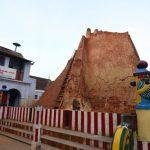
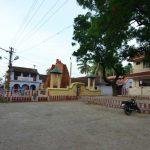
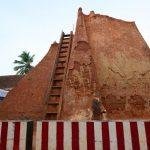
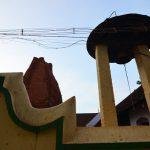
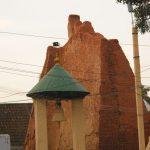
Standard features of a Hindu temple, such as the Rajagopuram (towering entrance) and Dwajasthambam (flag post), are conspicuously absent here. The temple complex covers an area of about one acre and is defined by a massive 22-foot tall wall surrounding the sanctum.
The Iconography
- The Northern Wall: The focal point of the temple is the northern wall itself. The stucco work atop this wall depicts the figure of a Yogi in a reclining posture, representing the saint who attained Samadhi here.
- Shrines: Besides Yogeeswarar, the complex houses shrines for Nayinar, Poola Udaya Kandan Sastha, and Bhoothathan (associated with Lord Ayyappa).
- Sastha Shrine: In a separate shrine, the deity is unique—it is represented as a Peeta (seat) with the idol positioned behind it, distinct from the standing or seated forms seen elsewhere.
4. Darshan & Ritual Logistics
Visitors are advised to plan their Darshan (viewing of the deity) around the specific opening hours. Unlike larger temples, this shrine has limited open hours for the sanctum but allows for worship from the exterior during other times.
Daily Timings
| Session | Timing |
|---|---|
| Morning Darshan | 6:30 AM – 7:30 AM |
| Evening Darshan | 6:30 PM – 8:30 PM |
Note: During non-opening hours, devotees can view the deity from outside the sanctum.
Key Sevas & Offerings
- Vazhipadu (Offerings): Rice (Arisi) is the primary offering to Lord Yogeeswarar.
- Mambal Prasadam: On special occasions, a unique offering called Mambal—prepared from raw mango milk, raw rice, and sugar—is presented to the deity.
- Bhajanai: Regular devotional singing (Bhajanai) is held every Saturday in the Vazhipadu hall.
Online Seva Booking
Currently, the Yogeeswarar Temple in Putheri operates largely through traditional in-person bookings at the temple counter. For specific Vazhipadu or Abhishekam bookings, visitors are encouraged to contact the temple administration directly at + 91 4652 275 230 prior to visiting.
2026 Festival Calendar
Mark your calendars for these auspicious dates in 2026:
- Chithirai New Year (Tamil): April 14, 2026
- Yogeeswara Guru Pooja: Dates vary by Tamil calendar (check with temple).
- Vaikasi Visagam: May 28, 2026 (Major festival with special Abhishekam and Mambal offering).
- Panguni Uthiram: March 21, 2026 (Includes the Kan Thirappu—Opening of Eyes—ceremony and horse procession).
5. Practical Visitor Guidance
Dress Code & Etiquette
Modesty is strictly enforced. Men should wear Dhoti or trousers with a shirt; women should wear Saree, Salwar Kameez, or other traditional attire. Avoid shorts and sleeveless tops.
Photography & Mobiles
Photography inside the sanctum is strictly prohibited. Visitors are advised to switch off mobile phones during Darshan. There are no formal mobile lockers available, so it is best to travel light.
Accessibility
The temple floor is level. However, as it is an older structure without modern ramp installations, wheelchair access might be limited to the outer praharam (circumambulation path). The presence of a 22-foot wall suggests a climb may be required for full external views, but the main shrine is accessible.
Crowd Management
- Best Time to Visit: Weekday mornings (6:30 AM) are the quietest.
- Seasonal Advice: Kanyakumari can be humid. In May and June, carry water. The evening Darshan is pleasant due to the coastal breeze.
6. Pilgrimage Connectivity
How to Reach Yogeeswarar Temple
The temple is strategically located for pilgrims exploring the Kanyakumari district.
- By Air: The nearest airport is Trivandrum International Airport (TRV), located approximately 77 km away (approx. 1.5 hours by road via NH66).
- By Rail: The nearest railway station is Nagercoil Junction, approximately 5 km from the temple (a 15-minute drive).
- By Road: The temple is located in Putheri village, accessible via the Kanyakumari – Nagercoil Highway. It is just 7 km from Nagercoil town and 25 km from Kanyakumari.
Nearby Sacred Sites
Extend your pilgrimage with these nearby attractions:
- Nagercoil Nellaiappar Temple: A grand temple dedicated to Lord Shiva in Nagercoil (approx. 6 km).
- Kumarakovil Temple: A hilltop temple dedicated to Lord Murugan, known for its beauty and serenity (approx. 15 km).
- Kanyakumari Bhagavathy Amman Temple: The southernmost shrine of the Goddess at the confluence of three oceans (approx. 25 km).
7. Frequently Asked Questions (FAQ)
Is there a VIP darshan entry?
Due to the small scale of the temple and limited crowd, there is no formal VIP ticket system. Darshan is generally swift and accessible to all devotees.
What is the significance of the sand (Prasad) here?
The sand from the temple walls is considered highly sacred. It is believed that consuming a small amount of this sand with water can bless devotees with children. This belief leads many childless couples to visit the temple.
Does the temple have a Rajagopuram (main tower)?
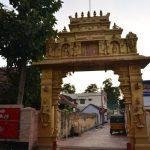
No, the Yogeeswarar Temple is unique because it lacks a Rajagopuram or Dwajasthambam. The deity is accessed through a simple structure surrounded by the high perimeter wall.
What are the contact details for urgent inquiries?
You can reach the temple administration at:
Phone: +91 4652 275 230
Mobile: +91 94871 01770
Are there accommodation facilities nearby?
Basic lodging is available in Nagercoil town, just 7 km away. Putheri village is primarily a residential area; pilgrims usually stay in Nagercoil or Kanyakumari.
Photo Gallery
How to Reach:
The Temple is located at about 7 Kms from Nagercoil, 5 Kms from Nagercoil Bus Stand, 5 Kms from Nagercoil Railway Station, 25 Kms from Kanyakumari and 77 Kms from Thiruvananthapuram. The Temple is located at a walkable distance from the Bus Stop. Nearest Railway Station is located at Nagercoil and Nearest Airport is located at Thiruvananthapuram.
Contact Details
Yogeeswarar Temple,Putheri, Nagercoil,Kanyakumari District
Phone: + 91 4652 275 230
Mobile: +91 94871 01770.
Recent Posts

Shri Kaamkoteeshwar Mandir, Varanasi – History & Significance
In the heart of Kashi, the eternal city of Lord Shiva, where the Ganges flows with celestial grace, stands the Shri Kaamkoteeshwar Mandir. This sacred Sannidhi is not merely a temple but a profound spiritual bridge between the Northern…

ओ सांवरे तूने ही मुझको संभाला – Lyrics & Meaning
ओ सांवरे तूने ही मुझको संभाला – A Prayer to Shyam Origin & Spiritual Essence Why This Bhajan Resonates Devotees chant this when overwhelmed by life’s storms—the refrain ‘तूने ही मुझको संभाला’ is the soul’s sigh of relief: “You…

कथा ये है महाराज मेरे की – Lyrics & Meaning
कथा ये है महाराज मेरे की छत्रपति संभाजी महाराज – A Prayer to Chhatrapati Sambhaji Maharaj Origin & Spiritual Essence Why This Bhajan Resonates Devotees chant this when their spirit feels tested—its powerful refrain “महाराज मेरे” is a soul’s…

Rigveda Samhita Yathartha Anuvada (ऋग्वेद संहिता यथार्थ अनुवाद) – Complete Set with Anvayartha & Hindi/English Translation
The Rigveda is the oldest surviving scripture of humanity and the foundational text of Sanātana Dharma. For serious students, scholars, UPSC aspirants studying ancient Indian history, Sanskrit learners, and spiritual seekers, a precise and grammatically structured translation is indispensable.…

आना भी अकेला है जाना भी अकेला है – Lyrics & Meaning | BharatTemples
आना भी अकेला है जाना भी अकेला है – A Prayer to the Divine Witness Origin & Spiritual Essence Why This Bhajan Resonates Devotees turn to this bhajan in moments of deep reflection—when life’s attachments begin to ache. The…

माता शेरावाली के द्वार जो भी जाता है – Lyrics & Meaning
माता शेरावाली के द्वार जो भी जाता है – A Prayer to Maa Sherawali Origin & Spiritual Essence Why This Bhajan Resonates Devotees turn to this bhajan in times of fear or uncertainty—its promise that no one leaves Maa’s…

मार लेना सपणी उबार लेणा भवरा – Lyrics & Meaning
मार लेना सपणी उबार लेणा भवरा – A Prayer to the Divine Beloved Origin & Spiritual Essence Why This Bhajan Resonates Devotees chant this in moments of deep vulnerability—its cry of “मार लेना सपणी, उबार लेणा भवरा” is the…

हमें श्याम सुंदर भरोसा तुम्हारा – Lyrics & Meaning
हमें श्याम सुंदर भरोसा तुम्हारा – A Prayer to Shyam Sundar Origin & Spiritual Essence Why This Bhajan Resonates Devotees chant this when feeling alone—its refrain ‘de do sahara’ is the soul’s cry for divine support. Lyrics in Hindi…

Mere Satguru Ne Di Thi Davai Lyrics in Hindi & Meaning
Mere Satguru Ne Di Thi Davai: Invoking the Guru’s Liberating Wisdom This soul-stirring bhajan venerates the Satguru (True Spiritual Master) as the divine physician who dispenses the only remedy for life’s deepest sufferings. Composed by Sant Karmaveer Tufani, it…

Janm Diyo Thari Maa Dukh Dekhiyo Lyrics in Hindi & Meaning
जन्म दियो थारी माँ दुख देखियो (Maa’s Grief Upon Birthing You) This soul-stirring Chetavani Bhajan (admonitory hymn) is addressed to the Divine Mother (Maa) – a call for repentance when children forget their filial duties in the dark age…