
Contents
- 1 Chandreshwar Temple Varanasi: A Pilgrim’s Definitive Guide
Chandreshwar Temple Varanasi: A Pilgrim’s Definitive Guide
Introduction & Spiritual Essence
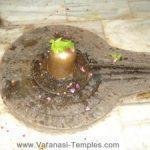
Nestled in the heart of the ancient city of Kashi, the Chandreshwar Temple stands as a celestial beacon for devotees of Lord Shiva. The primary deity here is the Chandreshwar Lingam, a self-manifested (Swayambhu) representation of Lord Shiva in his lunar aspect. As one of the sacred Navagraha Shiv Lings of Varanasi, this temple holds a unique position in the spiritual geography of the city, dedicated specifically to the planet Moon (Chandra).
According to sacred texts and centuries of oral tradition, the temple is a potent Shakti Peeth (seat of vital energy). Devotees flock here primarily for mental peace, clarity of thought, and astrological remedies. The Phalaśruti (spiritual benefits) of worshipping here is profound; specifically, those suffering from afflictions in their horoscope caused by an adverse placement of the Moon (Chandra) find immense relief and healing energy at this shrine.
Why Visit Chandreshwar Temple?
- Navagraha Shanti: To pacify the Moon planet in one’s astrological chart.
- Ancestral Liberation: Performing rites here, particularly on Somvati Amavasya, is believed to cleanse ancestral karma and grant Moksha (liberation) to forefathers.
- Mental Clarity: The temple is renowned for enhancing mental peace and decision-making capabilities.
Historical Origins & Scriptural Legend
The history of the Chandreshwar Temple is deeply rooted in the Kashi Khand of the Skanda Purana. While the exact century of the original construction is difficult to pinpoint due to the antiquity of Kashi, the temple’s legends are vividly preserved in ancient scriptures.
The Legend of Chandra and the Shakti Peeth
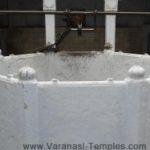
According to Kashi Khand, the Lingam was installed by Chandra (the Moon God) himself to worship Lord Shiva. It is said that Chandra dug a sacred well nearby, known today as the Chandra Koop, to facilitate his worship.
Tradition holds that Chandra performed rigorous, intense penance (Tapas) at this very spot to propitiate Lord Shiva. After several years of austerities, Lord Shiva appeared and blessed the Moon God, declaring the location a Shakti Peeth. It was here that Lord Shiva imparted specific instructions regarding the worship cycle:
- Triodasi (Two days before Amavasya): Begin the pooja.
- Chaturdasi (One day before Amavasya): Observe a strict fast.
- Somvati Amavasya (New Moon on a Monday): Take a holy dip in the Chandra Koop and perform Shraaddh (ancestral rites).
Lord Shiva decreed that anyone performing these rituals on Poornima (Full Moon) would attain the highest level of prosperity and happiness. Furthermore, the scriptures state that a staunch devotee of Chandreshwar who dies in Kashi is certain to reach heaven, regardless of their previous karmic debt.
Architectural Marvels
The Chandreshwar Temple reflects the intricate and vibrant architectural style prevalent in the holy city of Varanasi. While the core sanctum dates back to ancient times, the temple structure has undergone several renovations to preserve its sanctity and structural integrity.
Architectural Style & Design
The temple showcases a blend of traditional North Indian temple architecture with strong Dravidian influences in its pillared halls (Mandapas). The Shikhara (spire) is relatively modest compared to the towering structures of Nagara style, fitting seamlessly into the dense urban landscape of Chowk.
The Sacred Chandra Koop
The most significant architectural feature is the Chandra Koop (Chandra’s Well). Located within the temple complex, this ancient well is believed to be the source of divine lunar energy. The water here is considered sanctified and essential for the completion of Shraaddh rituals.
| Date built: | – |
|---|---|
| Deity: | Chandreshwar |
| Architectural style: | Dravidian architecture |
| Major festivals | – |
| Locale: | Varanasi |
| District:: | Varanasi |
| Address: | – |
| Phone | – |
Darshan & Ritual Logistics
Visiting Chandreshwar Temple requires adherence to specific ritual timings, especially during auspicious lunar cycles. Below is the general schedule for 2026.
Daily Timings
| Session | Timings | Details |
|---|---|---|
| Morning Darshan | 5:00 AM – 12:00 PM | Includes Mangala Aarti and Shringar Darshan. |
| Afternoon Closure | 12:00 PM – 3:00 PM | Rest period for the deity. |
| Evening Darshan | 3:00 PM – 10:00 PM | Includes Sandhya Aarti (approx 6:30 PM). |
| Special Note | Timings may extend on Full Moon (Poornima) and Somvati Amavasya. | |
Key Sevas and 2026 Festivals
While the temple functions primarily on a walk-in basis for standard Darshan, special Sevas are performed by the temple priests on specific lunar days.
- Abhishekam: Performed with Panchamrit and water from the Chandra Koop. Best done during the morning session.
- Navagraha Pooja: A specialized ritual for those seeking relief from Chandra (Moon) dosh in their horoscope.
- Annadan: Offering food to saints and devotees. As per the Kashi Khand, performing Annadan here after Shraaddh brings immense merit.
2026 Auspicious Dates
Plan your visit around these dates for maximum spiritual benefit:
- Somvati Amavasya 2026:
- January 27, 2026
- November 29, 2026
- December 28, 2026
- Poornima (Full Moon) with Chitra Nakshatra: March/April (Check local Panchang for exact alignment). This is the most potent time for Chandreshwar Pooja.
Note on Online Booking: Being a heritage site within the dense lanes of Varanasi, Chandreshwar Temple does not have a dedicated online portal for darshan tickets. Most rituals are coordinated directly with the resident priests on-site. For large group Yatras, it is recommended to contact a trusted local Kashi Pandit.
Practical Visitor Guidance
Located in the bustling Chowk area, visiting Chandreshwar Temple requires preparation.
Dress Code and Etiquette
- Traditional Indian attire (Kurta-Pajama or Dhoti for men, Saree/Churidar for women) is preferred.
- Strictly maintain silence inside the inner sanctum.
- Photography: Generally prohibited inside the inner shrine to respect the sanctity of the ancient Lingam. You may take photos in the outer courtyard.
Accessibility and Crowd Management
The temple is located in a narrow lane near Siddheshwari. It is not accessible by car or cycle-rickshaw directly to the gate.
- Best Time to Visit: Early morning (5:00 AM – 7:00 AM) to avoid the heavy crowds of the Chowk market area.
- Footwear: There are paid shoe-storing facilities available just outside the temple complex.
- Mobile Phones: Lockers are available for depositing phones, as usage is prohibited in the sanctum.
- Seasonal Advice: Varanasi summers (May-June) are extremely hot; carry a water bottle. The walk to the temple is short but crowded.
Pilgrimage Connectivity
How to Reach Chandreshwar Temple
Address: House No. Ck.7/124, Siddheshwari, Chowk, Varanasi, Uttar Pradesh.
- By Air: Lal Bahadur Shastri International Airport (LBS) is approximately 25 km away. Taxis are available to Dashashwamedh Ghat or Godaulia (approx. 1 hour 15 mins).
- By Rail: Varanasi Junction (BSB) is the main railway station. From there, take an auto-rickshaw to Chowk (approx. 20-30 mins depending on traffic).
- Local Transport:
- Boat Route: Hire a boat to Scindia Ghat. From the Ghat, climb the steps leading toward the main market and walk toward Siddheshwari.
- Land Route: Go to Chowk area via cycle rickshaw. From the main Chowk intersection, walk towards Siddheshwari Temple (a landmark). The Chandreshwar Temple is in the vicinity.
Nearby Sacred Sites (Pilgrimage Circuit)
When in the area, consider visiting these nearby spiritual landmarks to complete your Kashi Yatra:
- Siddheshwari Temple: Located extremely close to Chandreshwar. This is a major Shakti Peeth in Varanasi.
- Maa Durga Temple (Durga Kund): Famous for its vibrant red structure and association with the Navratri festival.
- Kashi Vishwanath Temple (New): The main Jyotirlinga site. While a bit further, it is the central anchor of any Kashi pilgrimage.
Photo Gallery
Frequently Asked Questions (FAQs)
1. Is there a VIP Darshan entry at Chandreshwar Temple?
Due to the temple’s modest size and location in the old city lanes, there is no formal VIP entry system like larger temples. However, visiting early in the morning allows for a faster and more peaceful Darshan without the crowds.
2. What is the significance of the Chandra Koop?
The Chandra Koop is a well dug by the Moon God (Chandra) according to the Kashi Khand. Bathing in this well on Somvati Amavasya or touching its water is believed to help with ancestral rites (Shraaddh) and purify the devotee’s mind.
Yes. This is the primary purpose of the temple. If your horoscope has a weak or malefic Moon (Chandra), performing Abhishekam and Archana here is considered a powerful remedy (Upaya).
4. Is photography allowed inside the temple?
Photography is generally discouraged or prohibited inside the inner sanctum where the Lingam is enshrined. It is best to ask the temple caretakers before taking pictures in the courtyard.
5. Are there food facilities nearby?
Yes. Being in Chowk, there are numerous options for vegetarian Prasad and meals. It is traditional to offer Annadan (food donation) to Saints (Sanyasis) after your Darshan, as mentioned in the scriptures.
Contact Details
Official Address:
Chandreshwar Temple, Ck.7/124, Siddheshwari, Chowk, Varanasi, Uttar Pradesh 221001.
Phone: While a direct number is not maintained by the trust, inquiries can be made through the Kashi Vishwanath Temple Trust office or local Pandits in Chowk.
Recent Posts

Shri Kaamkoteeshwar Mandir, Varanasi – History & Significance
In the heart of Kashi, the eternal city of Lord Shiva, where the Ganges flows with celestial grace, stands the Shri Kaamkoteeshwar Mandir. This sacred Sannidhi is not merely a temple but a profound spiritual bridge between the Northern…

ओ सांवरे तूने ही मुझको संभाला – Lyrics & Meaning
ओ सांवरे तूने ही मुझको संभाला – A Prayer to Shyam Origin & Spiritual Essence Why This Bhajan Resonates Devotees chant this when overwhelmed by life’s storms—the refrain ‘तूने ही मुझको संभाला’ is the soul’s sigh of relief: “You…

कथा ये है महाराज मेरे की – Lyrics & Meaning
कथा ये है महाराज मेरे की छत्रपति संभाजी महाराज – A Prayer to Chhatrapati Sambhaji Maharaj Origin & Spiritual Essence Why This Bhajan Resonates Devotees chant this when their spirit feels tested—its powerful refrain “महाराज मेरे” is a soul’s…

Rigveda Samhita Yathartha Anuvada (ऋग्वेद संहिता यथार्थ अनुवाद) – Complete Set with Anvayartha & Hindi/English Translation
The Rigveda is the oldest surviving scripture of humanity and the foundational text of Sanātana Dharma. For serious students, scholars, UPSC aspirants studying ancient Indian history, Sanskrit learners, and spiritual seekers, a precise and grammatically structured translation is indispensable.…

आना भी अकेला है जाना भी अकेला है – Lyrics & Meaning | BharatTemples
आना भी अकेला है जाना भी अकेला है – A Prayer to the Divine Witness Origin & Spiritual Essence Why This Bhajan Resonates Devotees turn to this bhajan in moments of deep reflection—when life’s attachments begin to ache. The…

माता शेरावाली के द्वार जो भी जाता है – Lyrics & Meaning
माता शेरावाली के द्वार जो भी जाता है – A Prayer to Maa Sherawali Origin & Spiritual Essence Why This Bhajan Resonates Devotees turn to this bhajan in times of fear or uncertainty—its promise that no one leaves Maa’s…

मार लेना सपणी उबार लेणा भवरा – Lyrics & Meaning
मार लेना सपणी उबार लेणा भवरा – A Prayer to the Divine Beloved Origin & Spiritual Essence Why This Bhajan Resonates Devotees chant this in moments of deep vulnerability—its cry of “मार लेना सपणी, उबार लेणा भवरा” is the…

हमें श्याम सुंदर भरोसा तुम्हारा – Lyrics & Meaning
हमें श्याम सुंदर भरोसा तुम्हारा – A Prayer to Shyam Sundar Origin & Spiritual Essence Why This Bhajan Resonates Devotees chant this when feeling alone—its refrain ‘de do sahara’ is the soul’s cry for divine support. Lyrics in Hindi…

Mere Satguru Ne Di Thi Davai Lyrics in Hindi & Meaning
Mere Satguru Ne Di Thi Davai: Invoking the Guru’s Liberating Wisdom This soul-stirring bhajan venerates the Satguru (True Spiritual Master) as the divine physician who dispenses the only remedy for life’s deepest sufferings. Composed by Sant Karmaveer Tufani, it…

Janm Diyo Thari Maa Dukh Dekhiyo Lyrics in Hindi & Meaning
जन्म दियो थारी माँ दुख देखियो (Maa’s Grief Upon Birthing You) This soul-stirring Chetavani Bhajan (admonitory hymn) is addressed to the Divine Mother (Maa) – a call for repentance when children forget their filial duties in the dark age…