
Contents
1. Introduction & Spiritual Essence
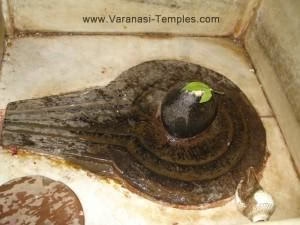
In the sacred labyrinth of Kashi (Varanasi), amidst the rhythmic chaos of devotion, lies the Gangeshwar Temple. Dedicated to Lord Shiva in the form of the Gangeshwar Ling, this temple represents the inseparable bond between Maa Ganga and Lord Shiva. Unlike the grand, towering structures that dominate the skyline, Gangeshwar Temple is a subtle, powerful presence—a “Swayambhu” (self-manifested) Ling that requires the seeker to look closer.
Phalaśruti: The Spiritual Benefits
According to the revered Kashi Khand (Chapter 91) of the Skanda Purana, the spiritual potency of this temple is unparalleled. The texts state:
“If a devotee reads or listens about Gangeshwar Ling, he will earn the punya (merit) equivalent to bathing in the Holy River Ganga. A person worshipping Gangeshwar will reach heaven after his death, and all his desires will be fulfilled.”
Specifically, on Dussehra (Vijay Dashami), performing a Pooja at this Ling washes away sins accumulated over several years. It is the ultimate sanctum for cleansing ancestral karma.
2. Historical Origins & Scriptural Legend
The history of Gangeshwar Temple is rooted deeply in celestial mythology rather than royal patronage. While specific dynastic construction records are scarce in local archives, the Sthala Purana offers a vivid narrative.
The Legend of Skanda and Agasthya
Tradition holds that Lord Skanda (Kartikeya) narrated the mysteries of Kashi to Sage Agasthya. During this discourse, the mighty River Ganga flowed into Kashi with divine force. Recognizing the sanctity of Kashi, Goddess Ganga desired to reside there eternally.
She learned of the divinity of installing a Shiv Ling in Kashi and subsequently installed the Gangeshwar Ling towards the east of the Visweshwar Ling (Kashi Vishwanath Temple). This act unified the waters of the Ganga with the consciousness of Shiva, making this spot a powerful vortex of energy.
3. Architectural Marvels
The Gangeshwar Temple is a modest yet profound example of traditional Nagara style temple architecture, adapted to the narrow bylanes of the old city.
Structure and Design
While the exterior may not boast monumental height, the inner sanctum (Garbhagriha) follows strict Vastu Shastra principles. The temple features a small Shikhara (spire) typical of North Indian temple architecture. The focal point is the Gangeshwar Ling, which is enshrined in a way that requires devotees to descend slightly to reach it, symbolizing the descent of the Ganga from the heavens to the earth.

The surrounding walls feature intricate carvings depicting stories from the Skanda Purana. Though not a UNESCO site, the temple maintains the ancient heritage of Varanasi’s Kashi Khand temples, where the architecture serves the devotee’s spiritual journey rather than mere aesthetics.
4. Darshan & Ritual Logistics
Visiting Gangeshwar Temple requires patience, as it is located in a dense residential area. Below are the standard timings for 2026. (Note: Timings may vary slightly during festivals.)
Daily Timings
| Period | Timing |
|---|---|
| Morning Darshan | 05:00 AM – 12:00 PM |
| Evening Darshan | 04:00 PM – 09:00 PM |
| Shayan Aarti | 09:00 PM (Approx) |
Key Sevas and Online Booking
While many small shrines in Varanasi do not have digital infrastructure, official online seva booking for the Kashi Vishwanath Corridor has integrated many smaller shrines for specific rituals.
- Abhishekam: Performed with milk, honey, and Ganga water.
- Rudra Abhishek: Highly recommended for clearing obstacles.
- Archana: Individual naming rituals.
How to Book: Visit the official Kashi Vishwanath Temple Trust website or use the “Kashi Vishwanath” mobile app. Select “Gangeshwar Temple” under the list of shrines for specific Seva slots.
2026 Festival Calendar
- January (Maha Shivaratri): Major celebrations with night-long chanting.
- April (Shivratri of Phalguna): Weekly Shivratri events.
- October 1-2 (Dussehra/Vijay Dashami): Most auspicious day for Gangeshwar Darshan.
- July (Sawan Month): Special early morning openings for Shavan Somwar prayers.
5. Practical Visitor Guidance
The temple is located in the narrow bylanes near Dashashwamedh Ghat. Accessibility can be challenging.
Rules and Regulations
- Dress Code: Traditional attire is preferred (Kurta-Pajama for men, Saree/Salwar for women). Avoid shorts/tank tops.
- Photography: Strictly prohibited inside the sanctum sanctorum. Mobile photography is allowed in the outer courtyard but silence is mandatory.
- Luggage: Large bags and leather items are not allowed. Use the designated cloakrooms at the Kashi Vishwanath Corridor entrance (Godaulia) before entering the lanes.
- Footwear: Remove shoes outside the temple. Shoe storage is available for a nominal fee (₹10-₹20).
Crowd Management & Best Time to Visit
Since the temple is nestled in a residential area, crowds are generally manageable compared to the main Vishwanath temple.
- Best Time: Early morning (5:30 AM) or late evening (7:30 PM).
- Seasonal Advice: Varanasi summers (May-June) are scorching. Carry a water bottle and a head covering. Winters (Nov-Feb) are pleasant but foggy.
6. Pilgrimage Connectivity
How to Reach
The Gangeshwar Temple is located at CK.13/78, near Pasupateshwar Temple.
- By Air: Lal Bahadur Shastri International Airport (LBS) is approx. 25 km away. Taxis/Auto-rickshaws are available to Dashashwamedh Ghat (approx. 45 mins).
- By Rail: Varanasi Junction (BSB) is approx. 6 km away. Autos and e-rickshaws can drop you at Godaulia or Dashashwamedh.
- Walking: From the Kashi Vishwanath Corridor, walk towards Dashashwamedh Ghat. Ask locals for the route to “Pasupateshwar” and take the right turn towards the house at Ck.13/68. The Ling is located in the corner house.
Nearby Sacred Sites (Pilgrimage Circuit)
- Kashi Vishwanath Temple (Jyotirlinga): The primary destination, just a 10-minute walk away.
- Pasupateshwar Temple: Located very close to Gangeshwar, dedicated to Lord Shiva as the Lord of Beings.
- Sankat Mochan Hanuman Temple: Located approx. 2 km away (near Assi Ghat). Famous for relieving devotees from troubles.
7. Frequently Asked Questions (FAQ)
Is there a VIP Darshan entry at Gangeshwar Temple?
Given the temple’s intimate size and location within residential quarters, there is no formal VIP entry system separate from the general queue. However, visiting during non-peak hours (early morning) ensures a swift and private darshan.
What is the exact location reference?
The temple is located at address CK.13/78. It is situated opposite house number Ck.13/68. It is advised to ask for “Pasupateshwar Mandir” to get the nearest landmark, as Gangeshwar is a smaller shrine in the corner.
Can I perform Abhishekam myself?
While you can offer milk or water, the actual Abhishekam and Rudra Abhishekam are typically performed by the resident priest to maintain the sanctity of the small space. You can participate by handing over the materials to the priest.
Is photography allowed inside the temple complex?
Photography is strictly forbidden inside the sanctum where the Gangeshwar Ling is enshrined. You may take photos of the exterior architecture and courtyard, provided you respect the privacy of the devotees.
Is the temple wheelchair accessible?
Unfortunately, due to the ancient layout of Varanasi’s bylanes and the stairs leading to the sanctum, the Gangeshwar Temple is not wheelchair accessible.
What is the best way to find the temple?
GPS often fails in the narrow lanes. The best approach is to hire a local guide at Dashashwamedh Ghat or follow the route towards Pasupateshwar and Sankata Devi Temple. “Getting a darshan is difficult,” says the Kashi Khand, so allow time to find it.
Recent Posts

Shri Kaamkoteeshwar Mandir, Varanasi – History & Significance
In the heart of Kashi, the eternal city of Lord Shiva, where the Ganges flows with celestial grace, stands the Shri Kaamkoteeshwar Mandir. This sacred Sannidhi is not merely a temple but a profound spiritual bridge between the Northern…

ओ सांवरे तूने ही मुझको संभाला – Lyrics & Meaning
ओ सांवरे तूने ही मुझको संभाला – A Prayer to Shyam Origin & Spiritual Essence Why This Bhajan Resonates Devotees chant this when overwhelmed by life’s storms—the refrain ‘तूने ही मुझको संभाला’ is the soul’s sigh of relief: “You…

कथा ये है महाराज मेरे की – Lyrics & Meaning
कथा ये है महाराज मेरे की छत्रपति संभाजी महाराज – A Prayer to Chhatrapati Sambhaji Maharaj Origin & Spiritual Essence Why This Bhajan Resonates Devotees chant this when their spirit feels tested—its powerful refrain “महाराज मेरे” is a soul’s…

Rigveda Samhita Yathartha Anuvada (ऋग्वेद संहिता यथार्थ अनुवाद) – Complete Set with Anvayartha & Hindi/English Translation
The Rigveda is the oldest surviving scripture of humanity and the foundational text of Sanātana Dharma. For serious students, scholars, UPSC aspirants studying ancient Indian history, Sanskrit learners, and spiritual seekers, a precise and grammatically structured translation is indispensable.…

आना भी अकेला है जाना भी अकेला है – Lyrics & Meaning | BharatTemples
आना भी अकेला है जाना भी अकेला है – A Prayer to the Divine Witness Origin & Spiritual Essence Why This Bhajan Resonates Devotees turn to this bhajan in moments of deep reflection—when life’s attachments begin to ache. The…

माता शेरावाली के द्वार जो भी जाता है – Lyrics & Meaning
माता शेरावाली के द्वार जो भी जाता है – A Prayer to Maa Sherawali Origin & Spiritual Essence Why This Bhajan Resonates Devotees turn to this bhajan in times of fear or uncertainty—its promise that no one leaves Maa’s…

मार लेना सपणी उबार लेणा भवरा – Lyrics & Meaning
मार लेना सपणी उबार लेणा भवरा – A Prayer to the Divine Beloved Origin & Spiritual Essence Why This Bhajan Resonates Devotees chant this in moments of deep vulnerability—its cry of “मार लेना सपणी, उबार लेणा भवरा” is the…

हमें श्याम सुंदर भरोसा तुम्हारा – Lyrics & Meaning
हमें श्याम सुंदर भरोसा तुम्हारा – A Prayer to Shyam Sundar Origin & Spiritual Essence Why This Bhajan Resonates Devotees chant this when feeling alone—its refrain ‘de do sahara’ is the soul’s cry for divine support. Lyrics in Hindi…

Mere Satguru Ne Di Thi Davai Lyrics in Hindi & Meaning
Mere Satguru Ne Di Thi Davai: Invoking the Guru’s Liberating Wisdom This soul-stirring bhajan venerates the Satguru (True Spiritual Master) as the divine physician who dispenses the only remedy for life’s deepest sufferings. Composed by Sant Karmaveer Tufani, it…

Janm Diyo Thari Maa Dukh Dekhiyo Lyrics in Hindi & Meaning
जन्म दियो थारी माँ दुख देखियो (Maa’s Grief Upon Birthing You) This soul-stirring Chetavani Bhajan (admonitory hymn) is addressed to the Divine Mother (Maa) – a call for repentance when children forget their filial duties in the dark age…