
Contents
- 1 Jyeshteshwar Temple, Varanasi: The Ancient Abode of the Eldest Lord
Jyeshteshwar Temple, Varanasi: The Ancient Abode of the Eldest Lord
As the Lead Heritage Architect and SEO Strategist for BharatTemples.com, I invite you to delve into the spiritual and architectural depths of the Jyeshteshwar Temple in Varanasi. Situated in the heart of the ancient city near Maidagin, this shrine is dedicated to Lord Shiva in his aspect as the eldest deity, holding immense significance in the scriptural geography of Kashi.
1. Introduction & Spiritual Essence
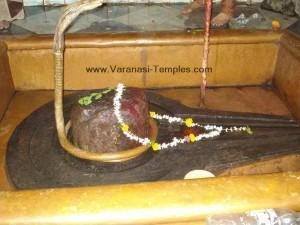
The Jyeshteshwar Temple is a revered site dedicated to Lord Shiva as Jyeshteshwar—the “Eldest Lord.” In the complex pantheon of Varanasi deities, Jyeshteshwar holds a unique position, often associated with progenitorial blessings and the removal of deep-seated karmic impediments.
Phalaśruti: The Benefits of Darshan
According to the sacred Kashi Khand of the Skanda Purana, the spiritual benefits of visiting this temple are profound:
- Removal of Sins: Just as darkness vanishes with the sunrise, the sins accumulated over several years are believed to disappear with the darshan of Jyeshteshwar Ling.
- Progenitorial Peace (Shraaddha): Performing Shraaddha ceremonies for ancestors using ghee (clarified butter) near the Jyeshteshwar Ling is considered a great service, granting liberation to the ancestors.
- Heavenly Abode: Devotees who have darshan of Jyeshteshwar Ling during the Jyeshtha month (May–June), specifically on Shukla Paksha Chaturdasi, attain all happiness in life and heaven after death.
2. Historical Origins & Scriptural Legend
The Kashi Khand Narrative
The primary scriptural reference for Jyeshteshwar is found in Kashi Khand, Chapter 63. In this dialogue, Lord Shiva explains to Parvati that the Jyeshteshwar Ling is the embodiment of the eldest form of the divine.
Tradition holds that the specific astronomical alignment amplifies the temple’s potency. If the auspicious Chaturdasi day falls on a Monday (Somvar) and coincides with the Anuradha (Anusham) star, the spiritual merit is multiplied exponentially.
Architectural Lineage
While specific dynastic records are sparse in the historical erosion of Varanasi, the temple’s structural integrity suggests a lineage of Medieval North Indian construction. The sanctum (Garbhagriha) is ancient, while the Mandapas (halls) have seen restorations by devout patrons over centuries. The temple is located in the Sapt Sagar Mohalla, a region historically designated as a locus of sacred water bodies (now filled) that mirrored the celestial ocean.
3. Architectural Marvels
The Jyeshteshwar Temple exemplifies the Nagara style of temple architecture, adapted to the dense urban fabric of Varanasi.
Vastu Shastra Elements
- Garbhagriha (Sanctum Sanctorum): The inner sanctum houses the Swayambhu (self-manifested) Lingam. The low ceiling creates an intimate, cave-like atmosphere conducive to meditation.
- Shikhara (Spire): The spire follows the Latina style—a curvilinear tower that rises in tiers, symbolizing the mountain Meru.
- Archaeological Significance: While not a UNESCO site, the temple is an integral part of the Varanasi Heritage Complex. The masonry work features traditional lime-mortar binding typical of the region.
4. Darshan & Ritual Logistics
To facilitate a smooth pilgrimage experience, please adhere to the following timings and ritual schedules. Note that timings may vary slightly during festivals.
Daily Timings
| Session | Timing | Activity |
|---|---|---|
| Morning | 05:00 AM – 12:00 PM | Mangala Aarti, Abhishekam, General Darshan |
| Afternoon | 12:00 PM – 04:00 PM | Temple Closed for Rest / Shayan Aarti |
| Evening | 04:00 PM – 11:00 PM | Sandhya Aarti, Shringar Darshan |
Key Sevas & Online Booking
Currently, local temples like Jyeshteshwar often operate through direct registration. However, for major festivals, the Kashi Vishwanath Temple Trust portal may coordinate services.
- Abhishekam: Performed daily in the morning.
- Archana: Can be performed by the resident priest.
- Online Booking: As of 2026, devotees can check availability via the Kashi Vishwanath Corridor app or consult the local temple administration at Maidagin.
2026 Festival Calendar (Major Dates)
- Maha Shivaratri: February 26, 2026
- Shravan Month: July 14 – August 12, 2026 (Peak Mondays)
- Jyeshtha Chaturdasi: June 10, 2026 (Specific auspicious day for Jyeshteshwar)
5. Practical Visitor Guidance
Code of Conduct & Rules
- Dress Code: Traditional Indian attire is mandatory. Men should wear dhotis or trousers and shirts; women should wear sarees or salwar kameez.
- Photography: Strictly prohibited inside the Garbhagriha.
- Mobile Phones: Please switch to silent mode. Lockers are available near the entrance for electronic devices.
Crowd Management & Best Hours
Varanasi sees heavy footfall. To experience the deity without rush:
- Best Time: Early morning (5:30 AM – 7:00 AM) or late evening (after 9:00 PM).
- Seasonal Advice: Summers (May–June) are extremely hot. Carry a water bottle (plastic bottles are restricted; use reusable metal/earthen pots).
- Monsoon: Roads in Maidagin can get waterlogged; wear non-slip footwear.
6. Pilgrimage Connectivity
How to Reach Jyeshteshwar Temple
The temple is located at K-62/144, Sapt Sagar Mohalla, Maidagin, Varanasi.
- Nearest Airport: Lal Bahadur Shastri International Airport (LBS) is approximately 25 km away. Taxis and e-rickshaws are available.
- Nearest Railway Station: Varanasi Junction (BSB) is about 6 km away.
- By Road: The temple is accessible via DLW Road leading to Maidagin. Auto-rickshaws and cycle rickshaws are the most convenient mode from the railway station. It is advisable to walk from Maidagin as the lanes are narrow.
Nearby Sacred Sites
- Kashi Vishwanath Temple (New): Located about 2 km away.
- Sankat Mochan Hanuman Temple: A 10-minute drive via the same sector.
- Manikarnika Ghat: Accessible from Maidagin for a holy dip in the Ganges.
7. Frequently Asked Questions
1. Is there a VIP darshan entry at Jyeshteshwar Temple?
While the temple is smaller than the main Kashi Vishwanath temple, priority passes are often available for elderly devotees and those with medical conditions. It is best to consult the Pujari at the gate.
2. What is the significance of the Jyeshtha month for this temple?
The temple is dedicated to Lord Jyeshteshwar. Devotion during the Jyeshtha month (May–June) yields the highest merit. Specifically, the Shukla Paksha Chaturdasi of this month is the most significant day for darshan.
3. Are there accommodation facilities nearby?
Yes, Maidagin is dotted with small guest houses and Dharamshalas. For more luxury stays, the Varanasi Cantonment area offers hotels.
4. Is the temple accessible for wheelchair users?
Given the old architecture and narrow lanes of Maidagin, wheelchair access is limited. Please contact the temple management in advance for assistance.
5. Is non-vegetarian food allowed near the temple?
Varanasi is a strictly vegetarian zone. No non-vegetarian food or alcohol is permitted in the vicinity of the temple.
Recent Posts

Shri Kaamkoteeshwar Mandir, Varanasi – History & Significance
In the heart of Kashi, the eternal city of Lord Shiva, where the Ganges flows with celestial grace, stands the Shri Kaamkoteeshwar Mandir. This sacred Sannidhi is not merely a temple but a profound spiritual bridge between the Northern…

ओ सांवरे तूने ही मुझको संभाला – Lyrics & Meaning
ओ सांवरे तूने ही मुझको संभाला – A Prayer to Shyam Origin & Spiritual Essence Why This Bhajan Resonates Devotees chant this when overwhelmed by life’s storms—the refrain ‘तूने ही मुझको संभाला’ is the soul’s sigh of relief: “You…

कथा ये है महाराज मेरे की – Lyrics & Meaning
कथा ये है महाराज मेरे की छत्रपति संभाजी महाराज – A Prayer to Chhatrapati Sambhaji Maharaj Origin & Spiritual Essence Why This Bhajan Resonates Devotees chant this when their spirit feels tested—its powerful refrain “महाराज मेरे” is a soul’s…

Rigveda Samhita Yathartha Anuvada (ऋग्वेद संहिता यथार्थ अनुवाद) – Complete Set with Anvayartha & Hindi/English Translation
The Rigveda is the oldest surviving scripture of humanity and the foundational text of Sanātana Dharma. For serious students, scholars, UPSC aspirants studying ancient Indian history, Sanskrit learners, and spiritual seekers, a precise and grammatically structured translation is indispensable.…

आना भी अकेला है जाना भी अकेला है – Lyrics & Meaning | BharatTemples
आना भी अकेला है जाना भी अकेला है – A Prayer to the Divine Witness Origin & Spiritual Essence Why This Bhajan Resonates Devotees turn to this bhajan in moments of deep reflection—when life’s attachments begin to ache. The…

माता शेरावाली के द्वार जो भी जाता है – Lyrics & Meaning
माता शेरावाली के द्वार जो भी जाता है – A Prayer to Maa Sherawali Origin & Spiritual Essence Why This Bhajan Resonates Devotees turn to this bhajan in times of fear or uncertainty—its promise that no one leaves Maa’s…

मार लेना सपणी उबार लेणा भवरा – Lyrics & Meaning
मार लेना सपणी उबार लेणा भवरा – A Prayer to the Divine Beloved Origin & Spiritual Essence Why This Bhajan Resonates Devotees chant this in moments of deep vulnerability—its cry of “मार लेना सपणी, उबार लेणा भवरा” is the…

हमें श्याम सुंदर भरोसा तुम्हारा – Lyrics & Meaning
हमें श्याम सुंदर भरोसा तुम्हारा – A Prayer to Shyam Sundar Origin & Spiritual Essence Why This Bhajan Resonates Devotees chant this when feeling alone—its refrain ‘de do sahara’ is the soul’s cry for divine support. Lyrics in Hindi…

Mere Satguru Ne Di Thi Davai Lyrics in Hindi & Meaning
Mere Satguru Ne Di Thi Davai: Invoking the Guru’s Liberating Wisdom This soul-stirring bhajan venerates the Satguru (True Spiritual Master) as the divine physician who dispenses the only remedy for life’s deepest sufferings. Composed by Sant Karmaveer Tufani, it…

Janm Diyo Thari Maa Dukh Dekhiyo Lyrics in Hindi & Meaning
जन्म दियो थारी माँ दुख देखियो (Maa’s Grief Upon Birthing You) This soul-stirring Chetavani Bhajan (admonitory hymn) is addressed to the Divine Mother (Maa) – a call for repentance when children forget their filial duties in the dark age…