
Contents
- 1 Introduction & Spiritual Essence: The Egg-Shaped Lingam of Kashi
- 2 Historical Origins & Scriptural Legend: The Divodas Dilemma
- 3 Architectural Marvels: The Sanctum at Durga Kund
- 4 Darshan & Ritual Logistics
- 5 Practical Visitor Guidance
- 6 Pilgrimage Connectivity
- 7 Frequently Asked Questions (FAQs)
- 8 Photo Gallery
Introduction & Spiritual Essence: The Egg-Shaped Lingam of Kashi
The Kukkuteshwar Temple in Varanasi stands as a profound testament to the magnetic pull of the Divine Mother (Kashi). Dedicated to Lord Shiva in the form of a unique Swayambhu (self-manifested) lingam, this shrine is deeply embedded in the spiritual fabric of Kashi. While the temple is revered for its specific energy and mythological significance, its history is woven into the broader tapestry of Kashi’s resilience against celestial turbulence.
Phalaśruti: The Fruit of Worship
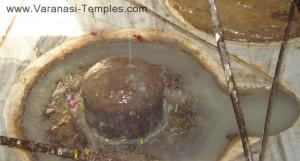
According to the Kashi Khand of the Skanda Purana, the Phalaśruti (scriptural benefits) of worshipping this specific form of Lord Shiva is immense. The lingam at Kukkuteshwar is described as being egg-shaped (Anda).
Devotees believe that offering sincere prayers here leads to:
- Moksha (Liberation): The scripture explicitly states that a devotee who worships this egg-shaped lingam attains all happiness and is freed from the cycle of rebirth—“there will be no rebirth.”
- Ancestral Cleansing: Rituals performed here are believed to help settle karmic debts of ancestors, offering them peace.
- Protection from Afflictions: As a warrior form of Shiva (Kukkut refers to a rooster, a symbol of vigilance), it protects devotees from unseen malefic energies.
Historical Origins & Scriptural Legend: The Divodas Dilemma
The spiritual significance of the Kukkuteshwar Temple is rooted in a celestial saga involving the King Divodas and Lord Shiva. According to temple records and oral traditions, Kashi was once ruled by the pious King Divodas, an administrator of exceptional capability. Through an agreement with Lord Brahma, King Divodas maintained Kashi as a realm of perfect prosperity where celestial beings (Devas) were to stay away to avoid disrupting the humans’ religious pursuits.
The Legend of the Missing Gods
Lord Shiva, distressed at being exiled from his favorite city, sought to test King Divodas’s resolve. He dispatched 64 Yoginis, followed by Lord Surya (the Sun God), and eventually Lord Brahma, to find fault in the King’s governance. However, each messenger was so captivated by the serenity and divinity of Kashi that they abandoned their mission and settled there.
In one of the subsequent batches sent by Lord Shiva, a celestial attendant (Shiv Gans) named Kukkut arrived. Overwhelmed by the divine atmosphere, Kukkut installed a lingam and began meditating. This lingam became known as Kukkuteshwar—the Lord of Kukkut. This narrative highlights the irresistible power of Kashi, where even the gods chose to stay rather than return to their celestial abodes.
Architectural Marvels: The Sanctum at Durga Kund
The Kukkuteshwar Temple is a classic example of the Nagara style of temple architecture, adapted to the compact urban landscape of Varanasi. While it is an ancient shrine, the current structure reflects layers of renovations typical of the 8th to 18th centuries in Kashi.
Key Architectural Features
- The Sanctum (Garbhagriha): The central chamber houses the egg-shaped lingam. Unlike a standard cylindrical lingam, this form is distinct and integral to the temple’s identity.
- Mandapa (Assembly Hall): The temple features a modest but functional mandapa supported by intricately carved stone pillars. The pillars depict celestial beings and floral motifs common in Kashi art.
- Vastu Shastra Orientation: Located near the Durga Kund, the temple aligns with the geomantic principles of Vastu, sitting on a highland to maintain sanctity amidst the water body.
- Surroundings: The temple is situated just outside the southern door of the famous Durga Devi Temple. The architectural vibrancy of the red-stoned Durga Kund complex serves as a visual preamble to the historic austerity of the Kukkuteshwar shrine.
Darshan & Ritual Logistics
For devotees planning a visit in 2026, the temple operates on a traditional schedule that aligns with the daily rhythm of Varanasi’s river rituals.
Daily Darshan Timings
| Session | Opening Time | Closing Time |
|---|---|---|
| Morning Darshan | 06:00 AM | 12:00 PM |
| Evening Darshan | 05:00 PM | 09:00 PM |
Key Sevas & 2026 Festival Dates
The following Sevas (ritual services) can be performed at the temple. While online booking is centralized through the Kashi Vishwanath Temple Trust portal, specific slots for local shrines like Kukkuteshwar are often managed by the resident priests (Pandas) on-site.
- Rudrabhishekam: The primary ritual involving the bathing of the lingam with milk, honey, and sacred water. Best performed on Mondays and during the month of Sravana (July-August).
- Archana (Shiva Puja): A short prayer ritual offering Bilva leaves, which can be booked at the temple counter.
- Maha Shivaratri 2026: February 26, 2026. This is the most auspicious time to visit Kukkuteshwar. Expect extended hours and special Abhishekam throughout the night.
- Pradosh Vrat: Occurring twice a month (Trayodashi), these evenings are highly potent for Shiva worship. Dates in 2026: January 15, January 30, February 13, etc.
Online Seva Booking: Visit the official Kashi Vishwanath Temple website or the UP Tourism portal for centralized booking. For Kukkuteshwar specifically, it is advisable to contact the temple office or your local Panda/Purohit who facilitates rituals in the Durga Kund area.
Practical Visitor Guidance
To ensure a spiritually fulfilling visit to Kukkuteshwar Temple, consider the following practical advice:
- Dress Code: Modest attire is mandatory. Men should wear Dhoti/Pyjama or full-length trousers with a shirt/shawl; women should wear saree, salwar kameez, or long skirts. Avoid shorts, leather items, and synthetic fabrics that may be deemed inappropriate.
- Photography & Mobiles: Photography is generally restricted inside the Garbhagriha (sanctum sanctorum). However, it is permitted in the courtyard. Please silence mobile phones to maintain the sanctity of the mandapa.
- Locker Facilities: Strict security checks are enforced at the Durga Kund entrance. Electronics (cameras, large bags) should be left at designated lockers or in your vehicle, as they are prohibited inside the shrine.
- Accessibility: The temple is accessible by foot. However, the lanes leading to Durga Kund can be narrow. Persons with mobility issues can approach as close as possible by cycle rickshaw.
Crowd Management & Seasonal Advice
- Best Hours to Visit: Early morning (6:00 AM – 8:00 AM) for a quiet darshan. Evening arati (around 6:00 PM) is spiritually charged but crowded.
- Seasonal Tips:
- May-June (Summer): Varanasi can be scorching. Carry a water bottle, but refill inside the complex. Wear light cotton clothing.
- Dec-Jan (Winter): Pleasant weather, but mornings are foggy. Layer up.
Pilgrimage Connectivity
How to Reach Kukkuteshwar Temple
The temple is a hidden gem located within the bustling Durga Kund area of Varanasi.
- Nearest Airport: Lal Bahadur Shastri International Airport (VNS), located approximately 25 km away. Taxis and cabs are readily available to Durga Kund.
- Nearest Railway Station: Varanasi Junction (BSB), about 7-8 km away. Auto-rickshaws are the most common mode of transport to Durga Kund.
- Road Access: Durga Kund is situated on the Varanasi-Allahabad Highway (NH-19). The temple is just a short walk from the main Durga Kund Pond. Cycle rickshaws are recommended for the last mile as the lanes are pedestrian-friendly.
Nearby Sacred Sites
Integrate your visit to Kukkuteshwar with these nearby shrines to complete a mini-pilgrimage circuit:
- Durga Kund Temple (New Kashi Vishwanath Temple): Located literally next door, this magnificent red temple dedicated to Goddess Durga is the landmark of the area.
- Sankat Mochan Hanuman Temple: Located about 2 km away (near the BHU campus), this is one of the most revered Hanuman temples in India.
- Bharat Mata Temple: Situated 3 km away, housing a giant relief map of undivided India carved in marble.
Frequently Asked Questions (FAQs)
1. What is the significance of the “egg-shaped” lingam at Kukkuteshwar?
The egg-shaped (Anda) lingam symbolizes the cosmic egg or the womb of creation (Brahmanda). According to the Kashi Khand, worshipping this specific form grants liberation from the cycle of rebirth and fulfills worldly desires.
2. Is there a VIP darshan entry available?
While VIP tickets are available for the main Kashi Vishwanath Corridor, Kukkuteshwar operates on a traditional free-darshan basis. However, specific timings during major festivals may require a queue management pass. It is best to inquire with local priests for expedited access if required.
3. What are the prohibited items inside the temple?
Leather goods (belts, wallets, shoes), electronic devices (cameras, tripods), and large bags are strictly prohibited. There are locker facilities available near the Durga Kund entrance.
4. Can I perform an Abhishekam on behalf of my family?
Yes, devotees can perform Rudrabhishekam or Rudri Puja on behalf of family members. This must be booked in advance through the temple priest (Purohit) assigned to the Durga Kund region.
5. What is the best way to find the exact location?
Search for “Durga Kund, Varanasi” on Google Maps. The Kukkuteshwar Temple is located just outside the southern entrance gate of the Durga Kund complex. Ask for the “Kukkut Mahadev” shrine to avoid confusion with other smaller shrines nearby.
Photo Gallery
| Date built: | Ancient (References in 8th Century Texts) |
|---|---|
| Deity: | Kukkuteshwar (Lord Shiva) |
| Architectural style: | Nagara (Kashi Style) |
| Major festivals | Maha Shivaratri, Pradosh Vrat, Kartik Purnima |
| Locale: | Varanasi |
| District: | Varanasi |
| Address: | Durga Kund, Varanasi, Uttar Pradesh 221005 |
| Phone: | +91 542 222 0441 (Kashi Vishwanath Trust Office) |
Recent Posts

Shri Kaamkoteeshwar Mandir, Varanasi – History & Significance
In the heart of Kashi, the eternal city of Lord Shiva, where the Ganges flows with celestial grace, stands the Shri Kaamkoteeshwar Mandir. This sacred Sannidhi is not merely a temple but a profound spiritual bridge between the Northern…

ओ सांवरे तूने ही मुझको संभाला – Lyrics & Meaning
ओ सांवरे तूने ही मुझको संभाला – A Prayer to Shyam Origin & Spiritual Essence Why This Bhajan Resonates Devotees chant this when overwhelmed by life’s storms—the refrain ‘तूने ही मुझको संभाला’ is the soul’s sigh of relief: “You…

कथा ये है महाराज मेरे की – Lyrics & Meaning
कथा ये है महाराज मेरे की छत्रपति संभाजी महाराज – A Prayer to Chhatrapati Sambhaji Maharaj Origin & Spiritual Essence Why This Bhajan Resonates Devotees chant this when their spirit feels tested—its powerful refrain “महाराज मेरे” is a soul’s…

Rigveda Samhita Yathartha Anuvada (ऋग्वेद संहिता यथार्थ अनुवाद) – Complete Set with Anvayartha & Hindi/English Translation
The Rigveda is the oldest surviving scripture of humanity and the foundational text of Sanātana Dharma. For serious students, scholars, UPSC aspirants studying ancient Indian history, Sanskrit learners, and spiritual seekers, a precise and grammatically structured translation is indispensable.…

आना भी अकेला है जाना भी अकेला है – Lyrics & Meaning | BharatTemples
आना भी अकेला है जाना भी अकेला है – A Prayer to the Divine Witness Origin & Spiritual Essence Why This Bhajan Resonates Devotees turn to this bhajan in moments of deep reflection—when life’s attachments begin to ache. The…

माता शेरावाली के द्वार जो भी जाता है – Lyrics & Meaning
माता शेरावाली के द्वार जो भी जाता है – A Prayer to Maa Sherawali Origin & Spiritual Essence Why This Bhajan Resonates Devotees turn to this bhajan in times of fear or uncertainty—its promise that no one leaves Maa’s…

मार लेना सपणी उबार लेणा भवरा – Lyrics & Meaning
मार लेना सपणी उबार लेणा भवरा – A Prayer to the Divine Beloved Origin & Spiritual Essence Why This Bhajan Resonates Devotees chant this in moments of deep vulnerability—its cry of “मार लेना सपणी, उबार लेणा भवरा” is the…

हमें श्याम सुंदर भरोसा तुम्हारा – Lyrics & Meaning
हमें श्याम सुंदर भरोसा तुम्हारा – A Prayer to Shyam Sundar Origin & Spiritual Essence Why This Bhajan Resonates Devotees chant this when feeling alone—its refrain ‘de do sahara’ is the soul’s cry for divine support. Lyrics in Hindi…

Mere Satguru Ne Di Thi Davai Lyrics in Hindi & Meaning
Mere Satguru Ne Di Thi Davai: Invoking the Guru’s Liberating Wisdom This soul-stirring bhajan venerates the Satguru (True Spiritual Master) as the divine physician who dispenses the only remedy for life’s deepest sufferings. Composed by Sant Karmaveer Tufani, it…

Janm Diyo Thari Maa Dukh Dekhiyo Lyrics in Hindi & Meaning
जन्म दियो थारी माँ दुख देखियो (Maa’s Grief Upon Birthing You) This soul-stirring Chetavani Bhajan (admonitory hymn) is addressed to the Divine Mother (Maa) – a call for repentance when children forget their filial duties in the dark age…