
Contents
- 1 Madalaseshwar Temple Varanasi: The Definitive Pilgrimage Guide 2026
Madalaseshwar Temple Varanasi: The Definitive Pilgrimage Guide 2026
As the Lead Heritage Architect of BharatTemples.com, I welcome you to a sacred exploration of Madalaseshwar Temple in Varanasi. This guide is crafted to serve as your spiritual roadmap for 2026, blending architectural insights with the profound devotion found in the Kashi Khand.
Introduction & Spiritual Essence: The Serpent Lord of Kashi
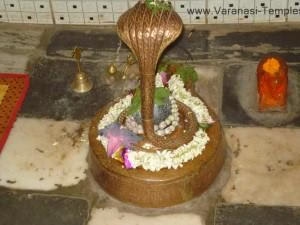
Deep within the winding lanes of Kashi (Varanasi) lies a Swayambhu (self-manifested) Jyotirlinga known as Madalaseshwar. In local parlance, the deity is also revered as Pancham Mandareshwar. This ancient shrine is dedicated to Lord Shiva, enshrined not as a standing figure, but as a formless Shivling believed to be guarded by the cosmic serpent, Shesha.
Phalaśruti: The Fruit of Devotion
According to the sacred Kashi Khand, Chapter 97, the benefits of worship here are immense. Goddess Parvati requested Lord Shiva to reveal the secrets of the Teerths (sacred ponds) and Shivlings of Kashi. It was in this divine dialogue that Madalaseshwar’s significance was unveiled.
Why devotees visit:
- Blessings of Lord Shiva: It is believed that a devotee who offers worship to Madalaseshwar Linga will forever remain under the benevolent gaze of Mahadev.
- Cleansing Ancestral Karma: Offering water and milk to the Shivling is considered a potent remedy for Pitru Dosha (ancestral imbalances), liberating the lineage from suffering.
Historical Origins & Scriptural Legend
The Kashi Khand Narrative
The existence of this temple is rooted deeply in the Kashi Khand of the Skanda Purana. The scripture describes the temple’s location as being “somewhat to the east of Shukreshwar Ling.” Tradition holds that this shrine survived the historical transformation of Kashi, maintaining its sanctity through centuries of change.
Local Legend: Pancham Mandareshwar
While the scriptural name is Madalaseshwar, locals refer to this deity as Pancham Mandareshwar. The term “Pancham” (Fifth) often references a grouping of specific deities or a lineage of Shaivite worship in this sector of Varanasi. The moniker has survived oral tradition, bridging the gap between Vedic text and the living culture of the galis (lanes).
Architectural Marvels
As a heritage architect, I analyze structures for their resilience and symbolism. The Madalaseshwar Temple is a classic example of the Nagara style adapted to the urban density of Varanasi.
- Vastu Shastra: The temple is oriented to face the East, capturing the first rays of Surya (the Sun), symbolizing enlightenment.
- Shikhara (Tower): The tower rises above the dense surrounding architecture, representing the vertical ascent of the soul toward liberation.
- The Sanctum (Garbhagriha): The inner chamber is compact, designed to focus the energy of the devotee entirely on the Shivling. The atmosphere here is cool and dark, evocative of the cosmic cave of consciousness.
Darshan & Ritual Logistics (2026 Guide)
To ensure a seamless spiritual experience, we have compiled the daily ritual schedule and key festival dates for the upcoming year.
Daily Timings
| Ritual / Darshan | Timing (Morning) | Timing (Evening) |
|---|---|---|
| Mangala Aarti | 05:00 AM – 06:00 AM | – |
| General Darshan | 06:00 AM – 12:00 PM | 04:00 PM – 09:00 PM |
| Shayan Aarti | – | 09:00 PM (Approx) |
| Abhishekam Slots | 07:00 AM – 08:30 AM | 05:30 PM – 06:30 PM |
*Note: Temple timings may vary slightly on Amavasya, Purnima, and major festivals.
Key Sevas & Online Booking
Devotees can perform specific Sevas to deepen their connection with the deity. Due to the temple’s intimate size, some rituals require prior coordination.
- Rudrabhishekam: The most potent ritual, performed with milk, honey, and Belpatra. Booking Link (Kashi Vishwanath Corridor Portal) (Note: Select “Other Temples” or “Local Shrines” if specific link unavailable; usually handled locally).
- Rudraksha Japa: Chanting 108 names of Shiva.
- Online Darshan: While direct live streaming is limited for smaller shrines, general darshan updates are provided via the Kashi Vishwanath Temple official app.
Festival Calendar 2026
| Festival | Date (2026) | Special Timing |
|---|---|---|
| Maha Shivaratri | February 16 | 24-Hour Darshan |
| Shravan Mondays | July 6, 13, 20, 27 | Extended hours (4 AM start) |
| Kartik Purnima | November 5 | Evening Aarti focus |
| Pradosh Vrat | Monthly (Check lunar calendar) | Twilight hours |
Practical Visitor Guidance
Dress Code & Etiquette
Visitors are expected to dress modestly. Traditional Indian attire (Dhoti, Kurta, Saree, or Salwar Kameez) is recommended. Western wear should be covered with a shawl or stole. Footwear must be left at the designated shoe stand outside the temple premises.
Photography & Mobiles
Photography of the inner sanctum is strictly prohibited. Mobile phones should be kept on silent mode. While the Kashi Vishwanath Corridor has introduced locker facilities for larger items, for this specific shrine, it is advisable to carry minimal baggage.
Crowd Management
The shrine is located in a narrow lane of Kalika Galli. The best time for a peaceful darshan is early morning (6:00 AM) or late evening (8:00 PM). During summer (May–June), carry a water bottle and a handkerchief, as the lanes can get humid.
Pilgrimage Connectivity
How to Reach Madalaseshwar Temple
The temple is situated in the heart of Varanasi (Kashi), near the famous Vishwanath Temple.
- Nearest Airport: Lal Bahadur Shastri International Airport (LBS) (Approx. 25 km).
- Nearest Railway Station: Varanasi Junction (5 km) or Kashi Vishwanath (Babatpur) (3 km).
- By Road: The temple is best accessed via NH-19. Since the core area is pedestrian-only (Vishwanath Corridor), visitors must walk from the Corridor entry points.
Specific Location (From Original Data):
- Proceed from Annapurna Temple towards Vishwanath Temple.
- Cross the Vishwanath Temple complex area.
- Walk approximately 50 yards to reach Saraswati Phatak (crossroad).
- Take a right turn (towards Kalika Galli).
- After a short distance, look to the left (opposite side of the road) to find Madalaseshwar Temple.
Nearby Sacred Sites (The Pilgrimage Circuit)
Enhance your pilgrimage by visiting these nearby sites:
- Kashi Vishwanath Temple: Just steps away, the primary Jyotirlinga.
- Shukreshwar Temple: Located in the vicinity, mentioned in the Kashi Khand as the neighbor of Madalaseshwar.
- Annapurna Mata Temple: Located near the starting point of the route, dedicated to the Goddess of Food.
Frequently Asked Questions (FAQ)
1. Is there a VIP Darshan entry available?
Given the compact size of the Madalaseshwar shrine, there is no separate VIP gate. However, Priest-assisted darshan can be arranged by offering a small donation (Dakshina) to the temple priest, allowing for a closer and more detailed darshan during non-peak hours.
2. What is the difference between Madalaseshwar and Pancham Mandareshwar?
These names refer to the same deity residing in this specific shrine. While Madalaseshwar is the name found in the Kashi Khand, Pancham Mandareshwar is the local vernacular name used by the residents of Varanasi.
3. Are there accommodation facilities nearby?
Yes. The area around Vishwanath Corridor offers numerous Dharamshalas and hotels. For a spiritual stay, consider the Kashi Vishwanath Bhavan or Dharamshalas in Lahurabir (5-10 mins by auto).
4. Is the temple accessible for senior citizens?
The temple is accessible via the Vishwanath Corridor pathways, but reaching the specific lane in Kalika Galli involves narrow steps. Wheelchairs can navigate the main Corridor but may struggle inside the final lane. We recommend assistance for elderly pilgrims.
5. Who manages the temple administration?
Like many ancient shrines in Kashi, the temple may be managed by a local trust or hereditary priests. For official contacts, it is best to refer to the Kashi Vishwanath Temple Trust administration for any grievance redressal.
Recent Posts

Shri Kaamkoteeshwar Mandir, Varanasi – History & Significance
In the heart of Kashi, the eternal city of Lord Shiva, where the Ganges flows with celestial grace, stands the Shri Kaamkoteeshwar Mandir. This sacred Sannidhi is not merely a temple but a profound spiritual bridge between the Northern…

ओ सांवरे तूने ही मुझको संभाला – Lyrics & Meaning
ओ सांवरे तूने ही मुझको संभाला – A Prayer to Shyam Origin & Spiritual Essence Why This Bhajan Resonates Devotees chant this when overwhelmed by life’s storms—the refrain ‘तूने ही मुझको संभाला’ is the soul’s sigh of relief: “You…

कथा ये है महाराज मेरे की – Lyrics & Meaning
कथा ये है महाराज मेरे की छत्रपति संभाजी महाराज – A Prayer to Chhatrapati Sambhaji Maharaj Origin & Spiritual Essence Why This Bhajan Resonates Devotees chant this when their spirit feels tested—its powerful refrain “महाराज मेरे” is a soul’s…

Rigveda Samhita Yathartha Anuvada (ऋग्वेद संहिता यथार्थ अनुवाद) – Complete Set with Anvayartha & Hindi/English Translation
The Rigveda is the oldest surviving scripture of humanity and the foundational text of Sanātana Dharma. For serious students, scholars, UPSC aspirants studying ancient Indian history, Sanskrit learners, and spiritual seekers, a precise and grammatically structured translation is indispensable.…

आना भी अकेला है जाना भी अकेला है – Lyrics & Meaning | BharatTemples
आना भी अकेला है जाना भी अकेला है – A Prayer to the Divine Witness Origin & Spiritual Essence Why This Bhajan Resonates Devotees turn to this bhajan in moments of deep reflection—when life’s attachments begin to ache. The…

माता शेरावाली के द्वार जो भी जाता है – Lyrics & Meaning
माता शेरावाली के द्वार जो भी जाता है – A Prayer to Maa Sherawali Origin & Spiritual Essence Why This Bhajan Resonates Devotees turn to this bhajan in times of fear or uncertainty—its promise that no one leaves Maa’s…

मार लेना सपणी उबार लेणा भवरा – Lyrics & Meaning
मार लेना सपणी उबार लेणा भवरा – A Prayer to the Divine Beloved Origin & Spiritual Essence Why This Bhajan Resonates Devotees chant this in moments of deep vulnerability—its cry of “मार लेना सपणी, उबार लेणा भवरा” is the…

हमें श्याम सुंदर भरोसा तुम्हारा – Lyrics & Meaning
हमें श्याम सुंदर भरोसा तुम्हारा – A Prayer to Shyam Sundar Origin & Spiritual Essence Why This Bhajan Resonates Devotees chant this when feeling alone—its refrain ‘de do sahara’ is the soul’s cry for divine support. Lyrics in Hindi…

Mere Satguru Ne Di Thi Davai Lyrics in Hindi & Meaning
Mere Satguru Ne Di Thi Davai: Invoking the Guru’s Liberating Wisdom This soul-stirring bhajan venerates the Satguru (True Spiritual Master) as the divine physician who dispenses the only remedy for life’s deepest sufferings. Composed by Sant Karmaveer Tufani, it…

Janm Diyo Thari Maa Dukh Dekhiyo Lyrics in Hindi & Meaning
जन्म दियो थारी माँ दुख देखियो (Maa’s Grief Upon Birthing You) This soul-stirring Chetavani Bhajan (admonitory hymn) is addressed to the Divine Mother (Maa) – a call for repentance when children forget their filial duties in the dark age…