
Contents
Introduction & Spiritual Essence of Rudreshwar Temple
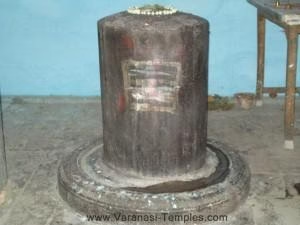
The Rudreshwar Temple in Varanasi is a sanctuary dedicated to Lord Shiva, worshipped here in the form of a Swayambhu (self-manifested) Ling. Known by the local populace as Rudreshwar Mahadev, this ancient shrine holds a unique place in the spiritual geography of Kashi. The primary deity represents the fierce yet benevolent form of Shiva, the Lord of Rudra.
Phalaśruti: The Spiritual Benefit
According to the sacred Kashi Khand of the Skanda Purana, the significance of worshipping Rudreshwar is immense. It is believed that devotees who offer prayers and perform rituals at this temple are assured of attaining Rudra Lok—the celestial abode of Lord Shiva. The scriptures state that a person who performs Pooja of the Rudreshwar Ling in Kashi is venerated as Lord Rudra himself in their next life. This makes the temple a vital stop for those seeking spiritual liberation and the cleansing of ancestral karma.
Historical Origins & Scriptural Legend
The history of Rudreshwar Temple is deeply intertwined with the mythological narratives of Varanasi. While the exact date of construction is difficult to pinpoint due to the antiquity of the site, the temple is referenced in texts dating back centuries.
The Legend of Gajasur and Rudra Vasam
According to Kashi Khand, Chapter 69, the area where Lord Shiva wore the skin of the demon Gajasur (after slaying him) was called Rudra Vasam. This area is historically linked to the nearby Krithi Vaseshwar temple. Tradition holds that Nandi, the divine bull, brought idols and Shiv Lings from various places to install them in Kashi, and Rudreshwar appeared here as a sacred Ling.
The Cosmic Connection
In Kashi Khand, Chapter 97, Goddess Parvati inquired about the various Shiv Lings in Kashi. Lord Shiva described a pond known as Rudravasam, where the Rudreshwar Ling resides. It is said that worshipping this Ling yields the spiritual merit of worshipping one crore Rudra Devas. Currently, the temple stands near Tripura Bhairavi, preserving the sanctity of these ancient legends.
Architectural Marvels
While many temples in Varanasi are constructed in the classic Nagara style of architecture, Rudreshwar Temple embodies the intimate, domestic spiritualism typical of the city’s hidden shrines. The architecture focuses on the sanctity of the Garbhagriha (sanctum sanctorum).
Features and Sculptures
The temple houses a massive, Swayambhu Shiv Ling that dominates the inner sanctum. Unlike grandiose monuments, the structure here is modest yet powerful, featuring traditional stone carvings that likely date back to the Maratha or late medieval periods. The Shikhara (tower) and Mandapa (hall) are designed to facilitate intimate darshan. The walls may bear remnants of intricate sculptures depicting deities, though the focus remains on the central Lingam.
Darshan & Ritual Logistics
Visitors are encouraged to check the timings for a peaceful darshan. The temple operates on a traditional schedule common to many Kashi shrines.
Daily Darshan Timings
| Session | Timing |
|---|---|
| Morning Darshan | 05:00 AM – 12:00 PM |
| Evening Darshan | 04:30 PM – 09:00 PM |
Key Sevas and 2026 Festivals
Devotees can perform various Sevas, including Abhishekam (ritual bathing of the Ling) and Archana (recitation of names). While online booking is standard for major Kashi temples like Kashi Vishwanath, smaller shrines like Rudreshwar often manage rituals on-site or through local priests.
- Online Seva Booking: Check the official Kashi Vishwanath or local Varanasi temple portals for integrated bookings.
- Major Festivals:
- Maha Shivaratri (Feb 2026): A grand celebration with night-long vigils.
- Sravana Masam (July-Aug 2026): Peak pilgrimage season for Rudrabhishekam.
- Kartik Purnima (Nov 2026): Special Ganga Aarti and temple decorations.
Practical Visitor Guidance
To ensure a respectful and smooth visit, adhere to the following guidelines.
Code of Conduct and Facilities
- Dress Code: Traditional attire is preferred (dhoti/kurta for men, sari/salwar for women). Avoid shorts and sleeveless tops.
- Photography: Photography is strictly prohibited inside the sanctum sanctorum. Please respect the privacy of the worshippers and the deity.
- Mobile & Lockers: Electronic devices should be kept silent. Lockers are available at nearby larger complexes, but since this is a house-temple, carry minimal luggage.
Crowd Management & Seasonal Advice
- Best Hours: Early morning (5:30 AM) or late evening (7:00 PM) offer the most serene experience.
- Seasonal Tips:
- May-June: Temperatures soar; carry water and cover your head.
- Monsoon (July-Sept): Varanasi roads can be slippery; wear waterproof footwear.
Pilgrimage Connectivity
How to Reach Rudreshwar Temple
The temple is located in the heart of the old city, specifically at D.5/21, near Tripura Bhairavi Temple.
- Nearest Airport: Lal Bahadur Shastri International Airport (LBS), Varanasi (approx. 25 km).
- Nearest Railway Station: Varanasi Junction (2 km) or Kashi Junction (1.5 km).
- By Road: The temple is not accessible by car due to narrow lanes. Take an auto-rickshaw to Dasaswamedh Vishwanath Gully. From there, it is a short walk (approx. 100 yards).
Nearby Sacred Sites (Pilgrimage Circuit)
- Tripura Bhairavi Temple: Located immediately adjacent to Rudreshwar. A powerful Shakti Peeth.
- Krithi Vaseshwar Temple: Linked to the Gajasur legend, just a short walk away.
- Kashi Vishwanath Temple: The focal point of Kashi, located about 15 minutes walking distance.
Frequently Asked Questions (FAQs)
1. Is there a VIP Darshan entry at Rudreshwar Temple?
Given the temple’s location within a residential house, there is no formal VIP entry system. Darshan is generally accessible to all devotees, though early mornings are less crowded.
2. What is the significance of the Rudra Kund mentioned in scriptures?
The scriptures mention a pond named Rudravasam. However, the physical Kund does not exist today. Devotees are advised to take a dip in the River Ganga (which flows nearby) before visiting the temple to enhance the spiritual merit.
3. Can non-Hindus visit the temple?
As a traditional Hindu place of worship dedicated to Lord Shiva, entry is generally restricted to those who follow Hinduism. However, visitors are welcome to admire the exterior architecture and the lane culture of Varanasi.
4. What is the specific timing of the Ardra combination?
The Ardra star conjoining with Chaturdashi Tithi is a highly auspicious event mentioned in the Kashi Khand. This occurs once a year. Devotees should consult the local Panchang for the exact date in 2026, as the dates change annually based on the lunar calendar.
5. Is there parking available?
No. Due to the narrow lanes of the old city, parking is not available near the temple. Visitors should park at designated lots near Dasaswamedh Ghat or Varanasi Junction and walk or take a rickshaw.
Recent Posts

Shri Kaamkoteeshwar Mandir, Varanasi – History & Significance
In the heart of Kashi, the eternal city of Lord Shiva, where the Ganges flows with celestial grace, stands the Shri Kaamkoteeshwar Mandir. This sacred Sannidhi is not merely a temple but a profound spiritual bridge between the Northern…

ओ सांवरे तूने ही मुझको संभाला – Lyrics & Meaning
ओ सांवरे तूने ही मुझको संभाला – A Prayer to Shyam Origin & Spiritual Essence Why This Bhajan Resonates Devotees chant this when overwhelmed by life’s storms—the refrain ‘तूने ही मुझको संभाला’ is the soul’s sigh of relief: “You…

कथा ये है महाराज मेरे की – Lyrics & Meaning
कथा ये है महाराज मेरे की छत्रपति संभाजी महाराज – A Prayer to Chhatrapati Sambhaji Maharaj Origin & Spiritual Essence Why This Bhajan Resonates Devotees chant this when their spirit feels tested—its powerful refrain “महाराज मेरे” is a soul’s…

Rigveda Samhita Yathartha Anuvada (ऋग्वेद संहिता यथार्थ अनुवाद) – Complete Set with Anvayartha & Hindi/English Translation
The Rigveda is the oldest surviving scripture of humanity and the foundational text of Sanātana Dharma. For serious students, scholars, UPSC aspirants studying ancient Indian history, Sanskrit learners, and spiritual seekers, a precise and grammatically structured translation is indispensable.…

आना भी अकेला है जाना भी अकेला है – Lyrics & Meaning | BharatTemples
आना भी अकेला है जाना भी अकेला है – A Prayer to the Divine Witness Origin & Spiritual Essence Why This Bhajan Resonates Devotees turn to this bhajan in moments of deep reflection—when life’s attachments begin to ache. The…

माता शेरावाली के द्वार जो भी जाता है – Lyrics & Meaning
माता शेरावाली के द्वार जो भी जाता है – A Prayer to Maa Sherawali Origin & Spiritual Essence Why This Bhajan Resonates Devotees turn to this bhajan in times of fear or uncertainty—its promise that no one leaves Maa’s…

मार लेना सपणी उबार लेणा भवरा – Lyrics & Meaning
मार लेना सपणी उबार लेणा भवरा – A Prayer to the Divine Beloved Origin & Spiritual Essence Why This Bhajan Resonates Devotees chant this in moments of deep vulnerability—its cry of “मार लेना सपणी, उबार लेणा भवरा” is the…

हमें श्याम सुंदर भरोसा तुम्हारा – Lyrics & Meaning
हमें श्याम सुंदर भरोसा तुम्हारा – A Prayer to Shyam Sundar Origin & Spiritual Essence Why This Bhajan Resonates Devotees chant this when feeling alone—its refrain ‘de do sahara’ is the soul’s cry for divine support. Lyrics in Hindi…

Mere Satguru Ne Di Thi Davai Lyrics in Hindi & Meaning
Mere Satguru Ne Di Thi Davai: Invoking the Guru’s Liberating Wisdom This soul-stirring bhajan venerates the Satguru (True Spiritual Master) as the divine physician who dispenses the only remedy for life’s deepest sufferings. Composed by Sant Karmaveer Tufani, it…

Janm Diyo Thari Maa Dukh Dekhiyo Lyrics in Hindi & Meaning
जन्म दियो थारी माँ दुख देखियो (Maa’s Grief Upon Birthing You) This soul-stirring Chetavani Bhajan (admonitory hymn) is addressed to the Divine Mother (Maa) – a call for repentance when children forget their filial duties in the dark age…