
Contents
- 1 Prayageshwar Temple: A Definitive Pilgrimage Guide to the Lord of Prayag
- 1.1 Introduction & Spiritual Essence
- 1.2 Historical Origins & Scriptural Legend
- 1.3 Architectural Marvels
- 1.4 Darshan & Ritual Logistics (2026 Season)
- 1.5 Practical Visitor Guidance
- 1.6 Pilgrimage Connectivity
- 1.7 Frequently Asked Questions (FAQ)
- 1.7.1 1. Is there a VIP darshan entry at Prayageshwar Temple?
- 1.7.2 2. What is the significance of worshiping Prayageshwar?
- 1.7.3 3. Can I perform Rudrabhishekam here?
- 1.7.4 4. Is there a specific ‘Maha Mrityunjaya Jaap’ for Prayageshwar?
- 1.7.5 5. Is the temple open during the monsoon season?
- 1.7.6 Architect’s Note (2026 Update)
Prayageshwar Temple: A Definitive Pilgrimage Guide to the Lord of Prayag
In the spiritual labyrinth of Varanasi (Kashi), every stone holds a story, and every temple is a doorway to liberation. Standing amidst the vibrant energy of Dasaswamedh Ghat is the ancient Prayageshwar Temple. Dedicated to Lord Shiva in the form of the Lord of Prayag, this shrine is not merely a structure but a spiritual anchor that connects the holy waters of the Ganges to the celestial confluence of the Prayag.
This comprehensive guide, curated by BharatTemples.com, is designed for the modern pilgrim. It bridges the gap between ancient scriptural wisdom and the logistical necessities of a 2026 journey, ensuring your visit is both spiritually fulfilling and practically seamless.
Introduction & Spiritual Essence
The Deity: Prayageshwar
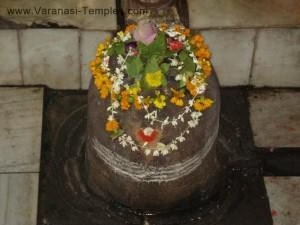
The presiding deity of the temple is Prayageshwar, a manifestation of Lord Shiva. Unlike the eternal formlessness of the Divine, here He is worshipped as the Ishta Devata of the Prayag (confluence). The term “Prayag” traditionally refers to the confluence of sacred rivers, most notably the Triveni (Ganges, Yamuna, and Saraswati) at Prayagraj (formerly Allahabad).
In the holy geography of Kashi, however, the Dasaswamedh Ghat is considered a spiritual replica of Prayag. By bathing in the waters of the Ganges here and worshipping Prayageshwar, devotees receive the same spiritual merit, or Phalaśruti, as if they had performed rites at the grand confluence of Prayagraj.
Phalaśruti: The Fruit of Pilgrimage
According to Kashi Khand, Chapter 61 of the Skanda Purana, Lord Vishnu Himself extolled the virtues of this sacred site. The scriptures declare specific benefits for the devotee who bathes in the Prayag Teerth of Dasaswamedh during the Magh Month (January-February) and offers worship to Prayageshwar:
- Material & Ancestral Prosperity: Devotees are blessed with wealth, abundant food grains, and the sustenance of the family lineage.
- Lineage and Happiness: The blessing of devoted children and harmonious family life.
- Spiritual Liberation: The ultimate goal of human life—Moksha (liberation from the cycle of birth and death)—is assured through sincere worship here.
The temple acts as a spiritual magnet, pulling the devotee toward higher consciousness while grounding them in the blessings of worldly stability.
Historical Origins & Scriptural Legend
Scriptural Foundations
The existence and sanctity of Prayageshwar Temple are deeply rooted in the Skanda Purana, specifically the Kashi Khand section. It is here that Lord Vishnu describes the various Teerths (sacred water bodies) and forms of the divine present in Kashi. The text explicitly mentions the Prayag Teerth located at Dasaswamedh, validating its status as a site of ancient pilgrimage.
Oral Legends and Sthala Purana
While specific dynastic records regarding the initial construction of the Prayageshwar shrine are sparse—as is common with many ancient Kashi temples that have undergone cycles of destruction and reconstruction—the Sthala Purana (local legend) maintains that this site has been a center of worship for millennia. Tradition holds that the sanctity of this spot was established to allow devotees unable to travel to distant Prayagraj to attain the same spiritual benefits within the confines of Kashi.
Over the centuries, despite the changing political landscapes—from the Gupta era to the Maratha resurgence—the flame of worship at Prayageshwar has remained unextinguished, sustained by the intense devotion of the local priests and pilgrims.
Architectural Marvels
Style and Structure
The Prayageshwar Temple is a quintessential example of the Nagara style of temple architecture, which is prevalent in North India. While the structure is relatively compact compared to the massive temples of the region, it exhibits the characteristic verticality and intricate carvings associated with this style.
Vastu Shastra and Design Elements
The temple follows the principles of Vastu Shastra, aligning the sacred geometry to channel cosmic energy. The Garbhagriha (sanctum sanctorum) is the focal point where the Shivalinga is installed. The inner sanctum is designed to accumulate spiritual energy, while the outer Mandapas (pillared halls) allow for the congregation of devotees.
Unlike the towering spires of massive Kathmandu valley temples, the Prayageshwar temple features a modest but elegant Shikhara (spire) that rises above the dense urban fabric of Varanasi. The walls, though weathered by the humid winds of the Ganges, bear the subtle traces of carvings that once depicted scenes from Hindu mythology. The proximity to the ghats allows the sound of the temple bells to merge with the rhythmic chants of the Aarti taking place on the riverbank.
Note on Preservation: While the temple is not listed as a standalone UNESCO World Heritage Site, it is an integral part of the “Living Heritage Complex” of Varanasi, which is protected under the Varanasi Heritage Zone guidelines.
Darshan & Ritual Logistics (2026 Season)
Daily Temple Timings
Prayageshwar Temple generally follows the traditional Panchakala timings common in Kashi. However, specific timings may vary slightly based on seasonal changes and festival schedules.
| Session | Timings | Ritual Focus |
|---|---|---|
| Morning Darshan | 05:30 AM – 12:00 PM | Mangala Aarti, Abhishekam |
| Afternoon Break | 12:00 PM – 03:00 PM | Sanctum Cleaning & Rest |
| Evening Darshan | 03:00 PM – 09:00 PM | Sandhya Aarti, Shayan Aarti |
Key Sevas and Online Booking
Devotees can participate in various rituals to deepen their connection with the divine. While the temple is intimate, standard Kashi rituals are observed.
- Abhishekam (Ritual Bathing): Performed with Panchamrit (milk, honey, yogurt, ghee, sugar) and holy water from the Ganges.
- Archana (Chanting of Names): A 108-name recitation dedicated to Prayageshwar.
- Deep Daan (Lamp Offering): Offering ghee lamps for ancestral peace.
Online Booking: Given the temple’s status within the Dasaswamedh area, it is part of the broader Varanasi temple ecosystem. Devotees are advised to book general offerings through the official Kashi Vishwanath Temple portal or local priest services, as a dedicated standalone portal for Prayageshwar may not exist.
Major Festivals 2026
Visiting during festivals amplifies the spiritual experience.
- Magh Purnima (Feb 12, 2026): The most auspicious day for Prayageshwar, commemorating the ritual described in the Kashi Khand. Holy bath in the Ganges followed by specific worship.
- Maha Shivaratri (Feb 26, 2026): Night-long vigil, chanting, and special decorations of the Shivalinga.
- Kartik Purnima (Nov 5, 2026): Dev Deepawali is celebrated with massive lamps on the ghats; the temple is illuminated beautifully.
Practical Visitor Guidance
Dress Code and Etiquette
Visitors are expected to dress modestly. Traditional Indian attire (dhoti, kurta for men; saree, salwar kameez for women) is preferred, though clean western clothes are acceptable. Shoes must be removed before entering the temple premises; a shoe keeping facility is usually available near the entrance for a nominal fee.
Photography and Mobile Phones
Photography inside the Garbhagriha is strictly prohibited. Mobile phones should be kept on silent mode. Given the narrow lanes leading to the temple, it is advisable to carry minimal luggage.
Crowd Management
Varanasi attracts millions of pilgrims. To ensure a peaceful Darshan:
- Best Time: Early morning (6:00 AM) or late evening (after 8:00 PM).
- Seasonal Advice: Summers (April-June) can be intensely hot (>40°C). Carry water, wear cotton clothes, and use sunglasses. Winters (November-February) are pleasant but nights can be chilly near the river.
Accessibility
The temple is located in a heritage zone with narrow lanes. It is not wheelchair accessible by standard means due to uneven stone steps and crowded alleys. Porters are available to assist with luggage.
Pilgrimage Connectivity
How to Reach Prayageshwar Temple
The temple is located at D.17/100, near Dasaswamedh Ghat, Varanasi.
- By Air: Lal Bahadur Shastri International Airport (LBS) is the nearest airport, approx 25-30 km away. Taxis and cabs are readily available to drop you at Dashashwamedh.
- By Rail: Varanasi Junction (BSB) is the main railway station, approx 6 km away. Auto-rickshaws are the most common way to reach the ghats (approx 20 mins ride).
- By Road: Varanasi is well-connected via NH-19 and NH-35. State-run buses and private vehicles can reach the Varanasi Cantonment bus stand.
Final Approach: Once at Dasaswamedh, look for the main ghat steps. Walk towards the Ganges; take a right turn into the narrow lane immediately before the ghat entrance. Ask local shopkeepers for “Bandi Devi Temple” premises, as Prayageshwar is located within this complex. The labyrinthine gullies can be confusing, so following a local guide is recommended.
Nearby Sacred Sites (Pilgrimage Circuit)
- Bandi Devi Temple: Located in the same premises, dedicated to Goddess Durga.
- Kashi Vishwanath Temple: Just 10-15 minutes walk away. The Jyotirlinga is the anchor of Kashi.
- Annapurna Temple: Situated nearby, dedicated to the Goddess of Food.
- Dasaswamedh Ghat: The site of the grand Ganga Aarti every evening.
Frequently Asked Questions (FAQ)
1. Is there a VIP darshan entry at Prayageshwar Temple?
Being a smaller, heritage shrine, Prayageshwar does not typically have a formal VIP ticketing system like the major Kashi Vishwanath Corridor. However, visiting early in the morning ensures the most crowd-free Darshan.
2. What is the significance of worshiping Prayageshwar?
Worshiping Prayageshwar is considered equivalent to worshiping the holy confluence of Prayag (Allahabad). It is believed to wash away sins and grant ancestral liberation (Moksha).
3. Can I perform Rudrabhishekam here?
Yes, Rudrabhishekam can be performed, but it requires prior arrangement with the local priest (Pandit) managing the temple. It is advisable to inquire on-site or book through a local religious organization.
4. Is there a specific ‘Maha Mrityunjaya Jaap’ for Prayageshwar?
Many devotees chant the Maha Mrityunjaya Mantra here for health and longevity, as Lord Shiva is the conqueror of death. The temple atmosphere is conducive to such private or organized chanting.
5. Is the temple open during the monsoon season?
Yes, the temple remains open year-round. However, during heavy rains (July-August), the water level of the Ganges rises, and steps leading to the ghats may be slippery. Caution is advised.
Architect’s Note (2026 Update)
As we navigate 2026, the preservation of heritage sites in Varanasi is paramount. When visiting Prayageshwar, please respect the ancient stones and the sanctity of the lane. Avoid plastic usage, and if you witness any structural degradation or heritage concerns, report them to the Archaeological Survey of India (ASI) local unit or the Varanasi Smart City Heritage cell.
Recent Posts

Shri Kaamkoteeshwar Mandir, Varanasi – History & Significance
In the heart of Kashi, the eternal city of Lord Shiva, where the Ganges flows with celestial grace, stands the Shri Kaamkoteeshwar Mandir. This sacred Sannidhi is not merely a temple but a profound spiritual bridge between the Northern…

ओ सांवरे तूने ही मुझको संभाला – Lyrics & Meaning
ओ सांवरे तूने ही मुझको संभाला – A Prayer to Shyam Origin & Spiritual Essence Why This Bhajan Resonates Devotees chant this when overwhelmed by life’s storms—the refrain ‘तूने ही मुझको संभाला’ is the soul’s sigh of relief: “You…

कथा ये है महाराज मेरे की – Lyrics & Meaning
कथा ये है महाराज मेरे की छत्रपति संभाजी महाराज – A Prayer to Chhatrapati Sambhaji Maharaj Origin & Spiritual Essence Why This Bhajan Resonates Devotees chant this when their spirit feels tested—its powerful refrain “महाराज मेरे” is a soul’s…

Rigveda Samhita Yathartha Anuvada (ऋग्वेद संहिता यथार्थ अनुवाद) – Complete Set with Anvayartha & Hindi/English Translation
The Rigveda is the oldest surviving scripture of humanity and the foundational text of Sanātana Dharma. For serious students, scholars, UPSC aspirants studying ancient Indian history, Sanskrit learners, and spiritual seekers, a precise and grammatically structured translation is indispensable.…

आना भी अकेला है जाना भी अकेला है – Lyrics & Meaning | BharatTemples
आना भी अकेला है जाना भी अकेला है – A Prayer to the Divine Witness Origin & Spiritual Essence Why This Bhajan Resonates Devotees turn to this bhajan in moments of deep reflection—when life’s attachments begin to ache. The…

माता शेरावाली के द्वार जो भी जाता है – Lyrics & Meaning
माता शेरावाली के द्वार जो भी जाता है – A Prayer to Maa Sherawali Origin & Spiritual Essence Why This Bhajan Resonates Devotees turn to this bhajan in times of fear or uncertainty—its promise that no one leaves Maa’s…

मार लेना सपणी उबार लेणा भवरा – Lyrics & Meaning
मार लेना सपणी उबार लेणा भवरा – A Prayer to the Divine Beloved Origin & Spiritual Essence Why This Bhajan Resonates Devotees chant this in moments of deep vulnerability—its cry of “मार लेना सपणी, उबार लेणा भवरा” is the…

हमें श्याम सुंदर भरोसा तुम्हारा – Lyrics & Meaning
हमें श्याम सुंदर भरोसा तुम्हारा – A Prayer to Shyam Sundar Origin & Spiritual Essence Why This Bhajan Resonates Devotees chant this when feeling alone—its refrain ‘de do sahara’ is the soul’s cry for divine support. Lyrics in Hindi…

Mere Satguru Ne Di Thi Davai Lyrics in Hindi & Meaning
Mere Satguru Ne Di Thi Davai: Invoking the Guru’s Liberating Wisdom This soul-stirring bhajan venerates the Satguru (True Spiritual Master) as the divine physician who dispenses the only remedy for life’s deepest sufferings. Composed by Sant Karmaveer Tufani, it…

Janm Diyo Thari Maa Dukh Dekhiyo Lyrics in Hindi & Meaning
जन्म दियो थारी माँ दुख देखियो (Maa’s Grief Upon Birthing You) This soul-stirring Chetavani Bhajan (admonitory hymn) is addressed to the Divine Mother (Maa) – a call for repentance when children forget their filial duties in the dark age…