
Contents
- 1 Definitive Pilgrimage Guide: Muchkundeshwar Temple, Varanasi
Definitive Pilgrimage Guide: Muchkundeshwar Temple, Varanasi
Introduction & Spiritual Essence
Nestled within the eternal labyrinth of Kashi (Varanasi), the Muchkundeshwar Temple stands as a testament to ancient devotion and the cosmic grace of Lord Shiva. Unlike the towering, ornate temples of later dynasties, Muchkundeshwar offers an intimate spiritual experience, rooted deeply in the Skanda Purana and the sacred geography of Kashi Khand.
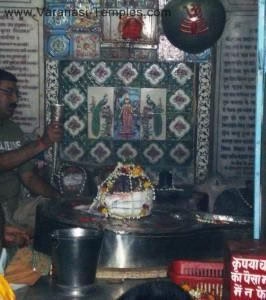
Primary Deity & Form: The temple enshrines a Swayambhu (self-manifested) Shiva Lingam. Unlike sculpted idols, this Lingam is believed to have emerged naturally from the earth, a formless representation of the infinite consciousness.
Phalaśruti: The Spiritual Benefits
According to sacred texts, specifically the Kashi Khand of the Skanda Purana, the benefits of darshan at Muchkundeshwar are profound:
- Moksha (Liberation): Devotees who worship here with a pure heart are said to break the cycle of rebirth and attain salvation.
- Ancestral Peace: It is believed that worshipping Muchkundeshwar helps cleanse ancestral karma, bringing peace to forefathers.
- Removal of Obstacles: The temple is associated with the great sage Muchkunda, and receiving blessings here is said to remove obstacles from one’s spiritual path.
Historical Origins & Scriptural Legend
The Legend of Sage Muchkunda
Local tradition holds that this temple is named after Sage Muchkunda, a revered figure in Hindu mythology. Legend states that during the cosmic timeline, Sage Muchkunda performed intense penance at this very spot to please Lord Shiva. Pleased by his devotion, Lord Shiva manifested here as a Lingam. The sage begged for a boon that anyone who worshipped this Lingam would attain Moksha. Thus, the deity became known as Muchkundeshwar.
Scriptural Reference
While the exact construction date is difficult to pinpoint due to the antiquity of Varanasi, the temple’s existence is validated in the Kashi Khand, Chapter 97. The text states: “Among various Lings, Kashi Khand mentions one important Shiv Ling named Muchkundeshwar.” This scriptural placement confirms its status as one of the energy centers of Kashi.
Architectural Marvels
The architecture of Muchkundeshwar Temple is a classic example of the Nagara style, adapted to the compact urban fabric of Varanasi. The structure is designed to draw the devotee’s focus inward toward the sanctum.
- The Shikhara: The temple features a typical North Indian shikhara (spire), consisting of a tiered arrangement of miniature spires (urushringa) that metaphorically represent the ascent of Mount Kailash.
- The Sanctum (Garbhagriha): The inner chamber is small and dimly lit, creating an atmosphere of mystery and introspection. The Swayambhu Lingam sits on a stone Yoni-Peedam.
- Vastu Shastra: The temple layout adheres to Vastu principles, ensuring the flow of energy is directed from the entrance toward the central deity.
The intricate carvings on the exterior walls depict various forms of Shiva and Parvati, though centuries of weathering have softened the details, adding to the antique charm.
Darshan & Ritual Logistics (2026 Update)
To facilitate a smooth darshan experience, we have compiled the daily schedule and key sevas. Note that timings may vary slightly during festivals.
Daily Darshan Timings
| Session | Timings | Activity |
|---|---|---|
| Morning | 05:00 AM – 12:00 PM | Mangala Aarti, Abhishekam |
| Afternoon | 12:00 PM – 4:00 PM | Temple cleaning & Rest (Inner Sanctum closed) |
| Evening | 4:00 PM – 9:00 PM | Shayan Aarti, Darshan |
Key Sevas & Online Booking
While smaller temples in Varanasi may not have an advanced online portal, the central Varanasi temple trust manages many rituals. For Muchkundeshwar:
- Abhishekam: Performed in the early morning (6:00 AM). Items required: Milk, Ganga Jal, Honey.
- Rudrabhishek: A powerful Vedic ritual. Best performed on Mondays.
- Online Seva: For wider access, devotees can book general seva or donate through the Bharat Temples Seva Portal or the official Varanasi district temple list.
2026 Festival Calendar
- Maha Shivaratri (March 6, 2026): Grand night-long vigil. Expect heavy crowds; pre-booking accommodation is advised.
- Shravan Month (July – August 2026): Mondays during Shravan are highly auspicious for Somvar Vrat.
- Kartik Purnima (November 5, 2026): Dev Deepawali celebrations begin, illuminating the ghats and temples.
Practical Visitor Guidance
- Dress Code: Traditional attire is recommended (Kurta-Pajama for men, Saree/Salwar Kameez for women). Avoid shorts or revealing clothing.
- Photography: Strictly prohibited inside the Garbhagriha (Sanctum Sanctorum). Photography in the outer courtyard is generally permitted, but please respect the sanctity of the rituals.
- Mobile Lockers: Due to the temple’s compact size, large bags are not allowed. It is advisable to leave valuables at your hotel or use paid cloakrooms available near the Godowlia gate.
- Crowd Management:
- Best Hours: Early morning (5:30 AM – 7:00 AM) or late evening (after 8:00 PM) for a peaceful darshan.
- Seasonal Advice: Varanasi summers (May-June) are intense. Carry a water bottle and a handheld fan. The temple floors can be hot.
Pilgrimage Connectivity
How to Reach Muchkundeshwar Temple
The temple is located in the heart of the old city, near the Godowlia area.
- Nearest Airport: Lal Bahadur Shastri International Airport (VNS) is approximately 25 km away. Taxis and auto-rickshaws are available directly to Godowlia.
- Railway Station: Varanasi Junction (BSB) is about 5-7 km away. From the station, take an e-rickshaw to Godowlia.
- Road Access: The temple is accessible via the Varanasi-Ranchi Highway (NH 22). However, vehicles cannot enter the narrow by-lanes. Drop off at Godowlia or Jaipuria Bhavan.
Nearby Sacred Sites (Pilgrimage Circuit)
Extend your spiritual journey by visiting these nearby shrines:
- Manikarnika Ghat: The holiest cremation ground in Varanasi, located a short walk away.
- Kashi Vishwanath Temple (New): The main Jyotirlinga site is roughly 1.5 km away.
- Annapurna Temple: Dedicated to the Goddess of Food, located near the Vishwanath Temple.
Frequently Asked Questions (FAQ)
1. Is there a VIP Darshan entry at Muchkundeshwar Temple?
Unlike the massive Kashi Vishwanath Corridor, Muchkundeshwar is a smaller, traditional temple. There is usually no formal VIP entry system. However, visiting during non-peak hours provides a swift and intimate darshan experience.
2. What is the significance of the name “Muchkundeshwar”?
The name is derived from the great sage Muchkunda, an ancestor of Lord Rama in the solar dynasty, who worshipped Shiva here. It signifies the power of ancient penance and divine grace.
3. Are non-Hindus allowed inside?
Similar to most ancient Shiva temples in Varanasi, entry is traditionally restricted to Hindus. The inner sanctum is reserved for worshippers to maintain the spiritual atmosphere.
4. Is photography allowed inside the temple?
No. Photography is strictly forbidden inside the sanctum. Mobile phones should be kept silent and put away during darshan.
5. What is the best way to manage luggage during the visit?
Given the narrow lanes of Varanasi, it is best to travel light. Carry only essentials like water, some cash, and a small bag. Do not carry large suitcases into the temple area.
| Date built: | – |
|---|---|
| Deity: | Muchkundeshwar |
| Architectural style: | Hindu Temple architecture |
| Major festivals | – |
| Locale: | Varanasi |
| District:: | Varanasi |
| Address: | – |
| Phone | – |
This Ling is supposed to have been installed by the great Sage Muchkunda.
Devotees who worship this Ling will derive all happiness and will attain Moksha.
Photo Gallery
How to Reach:
Muchkundeshwar is known by the name of Baradeo and is located near Jaipuria Bhavan (Godowlia area) on the left turning just before the Bhavan. This turning leads to Kodai Chowki. In fact, the locality is also known as Baradeo.
Contact Details
Official Address
Recent Posts

Shri Kaamkoteeshwar Mandir, Varanasi – History & Significance
In the heart of Kashi, the eternal city of Lord Shiva, where the Ganges flows with celestial grace, stands the Shri Kaamkoteeshwar Mandir. This sacred Sannidhi is not merely a temple but a profound spiritual bridge between the Northern…

ओ सांवरे तूने ही मुझको संभाला – Lyrics & Meaning
ओ सांवरे तूने ही मुझको संभाला – A Prayer to Shyam Origin & Spiritual Essence Why This Bhajan Resonates Devotees chant this when overwhelmed by life’s storms—the refrain ‘तूने ही मुझको संभाला’ is the soul’s sigh of relief: “You…

कथा ये है महाराज मेरे की – Lyrics & Meaning
कथा ये है महाराज मेरे की छत्रपति संभाजी महाराज – A Prayer to Chhatrapati Sambhaji Maharaj Origin & Spiritual Essence Why This Bhajan Resonates Devotees chant this when their spirit feels tested—its powerful refrain “महाराज मेरे” is a soul’s…

Rigveda Samhita Yathartha Anuvada (ऋग्वेद संहिता यथार्थ अनुवाद) – Complete Set with Anvayartha & Hindi/English Translation
The Rigveda is the oldest surviving scripture of humanity and the foundational text of Sanātana Dharma. For serious students, scholars, UPSC aspirants studying ancient Indian history, Sanskrit learners, and spiritual seekers, a precise and grammatically structured translation is indispensable.…

आना भी अकेला है जाना भी अकेला है – Lyrics & Meaning | BharatTemples
आना भी अकेला है जाना भी अकेला है – A Prayer to the Divine Witness Origin & Spiritual Essence Why This Bhajan Resonates Devotees turn to this bhajan in moments of deep reflection—when life’s attachments begin to ache. The…

माता शेरावाली के द्वार जो भी जाता है – Lyrics & Meaning
माता शेरावाली के द्वार जो भी जाता है – A Prayer to Maa Sherawali Origin & Spiritual Essence Why This Bhajan Resonates Devotees turn to this bhajan in times of fear or uncertainty—its promise that no one leaves Maa’s…

मार लेना सपणी उबार लेणा भवरा – Lyrics & Meaning
मार लेना सपणी उबार लेणा भवरा – A Prayer to the Divine Beloved Origin & Spiritual Essence Why This Bhajan Resonates Devotees chant this in moments of deep vulnerability—its cry of “मार लेना सपणी, उबार लेणा भवरा” is the…

हमें श्याम सुंदर भरोसा तुम्हारा – Lyrics & Meaning
हमें श्याम सुंदर भरोसा तुम्हारा – A Prayer to Shyam Sundar Origin & Spiritual Essence Why This Bhajan Resonates Devotees chant this when feeling alone—its refrain ‘de do sahara’ is the soul’s cry for divine support. Lyrics in Hindi…

Mere Satguru Ne Di Thi Davai Lyrics in Hindi & Meaning
Mere Satguru Ne Di Thi Davai: Invoking the Guru’s Liberating Wisdom This soul-stirring bhajan venerates the Satguru (True Spiritual Master) as the divine physician who dispenses the only remedy for life’s deepest sufferings. Composed by Sant Karmaveer Tufani, it…

Janm Diyo Thari Maa Dukh Dekhiyo Lyrics in Hindi & Meaning
जन्म दियो थारी माँ दुख देखियो (Maa’s Grief Upon Birthing You) This soul-stirring Chetavani Bhajan (admonitory hymn) is addressed to the Divine Mother (Maa) – a call for repentance when children forget their filial duties in the dark age…