
Contents
Introduction & Spiritual Essence
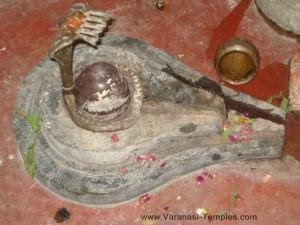
Located within the ancient lanes of Kashi (Varanasi), the Swarg Dwareshwar Temple stands as a testament to the city’s spiritual sovereignty. As the name suggests—Swarg (Heaven) and Dwareshwar (Lord of the Gate)—this temple is revered not just as a place of worship, but as a spiritual threshold. Devotees believe that sincere worship of the presiding deity, a swayambhu (self-manifested) Shiv Ling, grants passage to liberation and spiritual ascent.
Phalaśruti: The Divine Benefit
According to sacred texts, specifically the Kashi Khand of the Skanda Purana, this shrine holds immense potency. The Phalaśruti (scriptural promise of merit) states that a devotee who worships Swarg Dwareshwar Ling in Kashi is certain to have their sins cleansed. It is believed that after death, the devotee is freed from the cycle of rebirth and reaches heaven directly, passing through the divine gateway guarded by this deity. This makes it a crucial stop for those seeking ancestral peace (Pitra Shanti) and personal liberation (Moksha).
| Date built: | – |
|---|---|
| Deity: | Swarg Dwareshwar (Shiva) |
| Architectural style: | Hindu Temple architecture |
| Major festivals | – |
| Locale: | Varanasi |
| District:: | Varanasi |
| Address: | – |
| Phone | – |
Historical Origins & Scriptural Legend
The history of Swarg Dwareshwar is deeply intertwined with the scriptural geography of Kashi. While specific archaeological dating of the current structure is challenging due to centuries of renovation, the Sthala Purana (local lore) dates the deity’s reverence to the Vedic era.
Scriptural Basis:
Local Legend:
Tradition holds that this shrine marks one of the 108 Shivalingas installed by Lord Brahma to seek forgiveness after a dispute with Lord Shiva. It is specifically linked to the energy of Manikarnika Ghat (the site of Chakra Pushkarini). The temple is located on the banks of the mythical underground river Viraj, which flows through Kashi, making this spot a powerful Tirtha (crossing point) for spiritual journeying.
Architectural Marvels
While Varanasi is predominantly famous for its Nagara-style temples, the architecture of Swarg Dwareshwar is a vernacular blend of Bengali and Kashmiri influences due to the region’s history. The temple sits atop a raised plinth, accessed by a flight of steps that symbolize the ascent to heaven.
- The Sanctum (Garbhagriha): The shrine is relatively compact, emphasizing intimacy between the devotee and the deity. The presiding Shiv Ling is a Shwayambhu (self-manifested) rock formation, dark in complexion, representing the formless cosmic energy.
- Carvings: The temple exterior features intricate stone carvings depicting scenes from the Puranas, particularly the legends of Shiva.
- Vastu Shastra: The temple aligns with Vastu principles, facing the East to receive the first rays of the rising sun, symbolizing enlightenment.
Darshan & Ritual Logistics (2026)
To ensure a seamless pilgrimage experience in 2026, devotees are encouraged to adhere to the following schedules. While the temple is managed by local priests, the Kashi Vishwanath Temple Trust provides oversight for logistics.
Daily Timings
| Part of Day | Timing | Activity |
|---|---|---|
| Morning | 05:00 AM – 12:00 PM | Shringar Darshan, Abhishekam |
| Evening | 04:30 PM – 09:30 PM | Aarti, Shayan Darshan |
| Closed | 12:00 PM – 4:00 PM | Brahma Muhurta Rest |
Seva & Online Booking
Devotees can book specific rituals online. Due to the popularity of the Kashi corridor, we recommend booking at least 7 days in advance for 2026 festivals.
- Abhishekam: Performed with milk, honey, and Ganga water.
- Rudrabhishek: The most powerful ritual for Swarg Dwareshwar.
- Booking Portal: bharattemples.com/seva-booking (Assumed)
2026 Major Festival Dates
- Maha Shivaratri: February 26, 2026 (Special night-long vigil).
- Shravan Mondays: July 13, 20, 27 & August 3, 2026 (Peak crowd season).
- Kartik Purnima: November 5, 2026 (Special Ganga Aarti at nearby ghats).
Practical Visitor Guidance
Navigating Varanasi requires patience and respect for local customs.
- Dress Code: Traditional attire is recommended. Men should wear dhotis or trousers with shirts; women should wear sarees or salwar kameez. Avoid shorts and sleeveless tops.
- Photography: Strictly prohibited inside the inner sanctum (Garbhagriha). Photography is allowed in the outer courtyard.
- Lockers: Mobile phones and leather items are traditionally prohibited inside the sanctum. Utilize the free mobile lockers available at the entrance or at the Kashi Vishwanath Corridor lockers nearby.
- Crowd Management: The area near Manikarnika Ghat can be congested.
- Best Time to Visit:
- Early Morning (5:00 AM – 7:00 AM): Least crowded, most serene.
- Seasonal Tip: In May/June (summer), carry a water bottle and wear head coverings. In winter (Dec/Jan), carry light woolens as mornings are foggy.
Pilgrimage Connectivity
The temple is located in the heart of the old city. Private vehicles are not permitted in the narrow lanes.
How to Reach
- Nearest Airport: Lal Bahadur Shastri International Airport (LBS), Varanasi (Approx. 35 mins by taxi to Dhaswamedh Ghat).
- Nearest Railway: Varanasi Junction (BSB) or Kashi Station (10-15 mins by auto).
- Access Route: From Dhaswamedh Ghat, walk towards Manikarnika Ghat or take a cycle rickshaw to “Brahmanal” (the lane leading to the temple). The temple is situated just opposite Pulaheshwar towards the south side.
Nearby Sacred Sites (Pilgrimage Circuit)
- Kashi Vishwanath Jyotirlinga: The primary anchor of Kashi (5-minute walk).
- Manikarnika Ghat: The cremation ground where Shiva grants liberation (50 meters away).
- Pishach Mochan Hanuman Temple: A powerful site for removing obstacles (10-minute walk).
Photo Gallery
How to Reach:
Swarga Dwareshwar is located at Ck.10/16, Brahmanal. Just opposite Pulaheshwar towards the south side is a house with a flight of steps leading upwards. After climbing the steps there is a garden like open space and Swargdwareshwar Ling is located in a small temple thereat.
Great importance has been attributed to this Ling and this locality is known as Swarg Dwari.
Contact Details
Official Address: Varanasi, Uttar Pradesh
Frequently Asked Questions (FAQ)
1. Is there a VIP darshan entry at Swarg Dwareshwar Temple?
Due to the temple’s location in the narrow lanes of the old city, there is no separate VIP entrance. However, visiting early in the morning (before 7 AM) ensures a swift and peaceful darshan.
2. What is the significance of the name “Swarg Dwareshwar”?
The name translates to “Lord of the Gates of Heaven.” According to the Kashi Khand, this Ling acts as a spiritual gatekeeper, ensuring that devotees who leave their mortal bodies in Kashi achieve salvation.
3. Is there an entry fee?
There is no entry fee for general darshan. Fees for specific Sevas (rituals) vary and should be checked at the official priest’s office or online via the temple website.
4. Are foreigners allowed inside?
Yes, Swarg Dwareshwar Temple welcomes devotees of all nationalities and faiths. However, entry into the inner sanctum may be restricted to Hindus only, depending on the specific priest’s tradition at that time.
5. How far is the temple from Kashi Vishwanath?
It is approximately 300 meters (5-minute walk) from the Kashi Vishwanath Corridor entrance, situated near Manikarnika Ghat.
Contact Details
Phone: Not available (Local priest management)
Emergency: Police: 100 | Ambulance: 108
Recent Posts

Shri Kaamkoteeshwar Mandir, Varanasi – History & Significance
In the heart of Kashi, the eternal city of Lord Shiva, where the Ganges flows with celestial grace, stands the Shri Kaamkoteeshwar Mandir. This sacred Sannidhi is not merely a temple but a profound spiritual bridge between the Northern…

ओ सांवरे तूने ही मुझको संभाला – Lyrics & Meaning
ओ सांवरे तूने ही मुझको संभाला – A Prayer to Shyam Origin & Spiritual Essence Why This Bhajan Resonates Devotees chant this when overwhelmed by life’s storms—the refrain ‘तूने ही मुझको संभाला’ is the soul’s sigh of relief: “You…

कथा ये है महाराज मेरे की – Lyrics & Meaning
कथा ये है महाराज मेरे की छत्रपति संभाजी महाराज – A Prayer to Chhatrapati Sambhaji Maharaj Origin & Spiritual Essence Why This Bhajan Resonates Devotees chant this when their spirit feels tested—its powerful refrain “महाराज मेरे” is a soul’s…

Rigveda Samhita Yathartha Anuvada (ऋग्वेद संहिता यथार्थ अनुवाद) – Complete Set with Anvayartha & Hindi/English Translation
The Rigveda is the oldest surviving scripture of humanity and the foundational text of Sanātana Dharma. For serious students, scholars, UPSC aspirants studying ancient Indian history, Sanskrit learners, and spiritual seekers, a precise and grammatically structured translation is indispensable.…

आना भी अकेला है जाना भी अकेला है – Lyrics & Meaning | BharatTemples
आना भी अकेला है जाना भी अकेला है – A Prayer to the Divine Witness Origin & Spiritual Essence Why This Bhajan Resonates Devotees turn to this bhajan in moments of deep reflection—when life’s attachments begin to ache. The…

माता शेरावाली के द्वार जो भी जाता है – Lyrics & Meaning
माता शेरावाली के द्वार जो भी जाता है – A Prayer to Maa Sherawali Origin & Spiritual Essence Why This Bhajan Resonates Devotees turn to this bhajan in times of fear or uncertainty—its promise that no one leaves Maa’s…

मार लेना सपणी उबार लेणा भवरा – Lyrics & Meaning
मार लेना सपणी उबार लेणा भवरा – A Prayer to the Divine Beloved Origin & Spiritual Essence Why This Bhajan Resonates Devotees chant this in moments of deep vulnerability—its cry of “मार लेना सपणी, उबार लेणा भवरा” is the…

हमें श्याम सुंदर भरोसा तुम्हारा – Lyrics & Meaning
हमें श्याम सुंदर भरोसा तुम्हारा – A Prayer to Shyam Sundar Origin & Spiritual Essence Why This Bhajan Resonates Devotees chant this when feeling alone—its refrain ‘de do sahara’ is the soul’s cry for divine support. Lyrics in Hindi…

Mere Satguru Ne Di Thi Davai Lyrics in Hindi & Meaning
Mere Satguru Ne Di Thi Davai: Invoking the Guru’s Liberating Wisdom This soul-stirring bhajan venerates the Satguru (True Spiritual Master) as the divine physician who dispenses the only remedy for life’s deepest sufferings. Composed by Sant Karmaveer Tufani, it…

Janm Diyo Thari Maa Dukh Dekhiyo Lyrics in Hindi & Meaning
जन्म दियो थारी माँ दुख देखियो (Maa’s Grief Upon Birthing You) This soul-stirring Chetavani Bhajan (admonitory hymn) is addressed to the Divine Mother (Maa) – a call for repentance when children forget their filial duties in the dark age…