
Contents
Varuna Sangameshwar Temple: The Sacred Confluence of Ganga and Varuna
A definitive guide to one of Varanasi’s most spiritually potent lingams, located where the holy Varuna meets the Ganga.
Introduction & Spiritual Essence
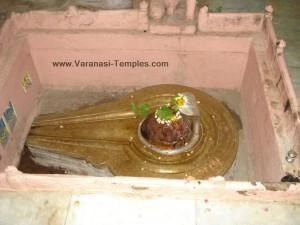
Nestled in the ancient folds of Varanasi, the Varuna Sangameshwar Temple stands as a testament to the sacred geography described in ancient scriptures. The presiding deity is Lord Shiva in the form of Sangameshwar Mahalingam.
Phalaśruti: The Benefits of Darshan
According to the Kashi Khand of the Skanda Purana, Lord Vishnu described the spiritual power of this site to Sage Bindu. The texts explicitly state that by merely worshipping the Sangameshwar Lingam, a devotee is cleansed of all sins and negative karmic impressions.
Furthermore, it is believed that performing Rudra Abhishek at this lingam carries the spiritual merit equivalent to performing a Godaan (the sacred donation of a cow to a Brahmin). As it is located at the confluence of the Varuna and Ganga rivers, the site is considered a powerhouse of purification, especially vital for ancestors seeking Moksha (liberation).
Historical Origins & Scriptural Legend
While the exact century of construction is obscured by the temple’s antiquity, the site is referenced in Chapters 61 and 97 of the Kashi Khand. Tradition holds that this is the spot where Lord Vishnu (in his form as Adi Keshav) installed the Sangameshwar Mahalingam.
Mythological Significance: In Hindu cosmology, the confluence of two rivers (Alaknanda) is considered spiritually elevated. The Varuna River, a tributary of the Ganga, merges near this temple, making the geography itself a living deity. The temple records suggest that the site has been a center of Shakti worship for millennia, surviving various invasions and restorations, preserving the original sanctity of the holy lingam.
Architectural Marvels
The temple architecture is a modest yet profound representation of the Nagara style, typical of the Kashi region. While it may not boast the towering spires of southern temples, its Vastu Shastra alignment is significant.
- The Sanctum (Garbhagriha): The lingam is positioned to catch the first rays of the sun reflecting off the river waters.
- The Mandapa: An open-air prayer hall allows for congregational worship, facing the confluence of the rivers.
- Sculptures: Though weathered by the river climate, remnants of carvings depicting divine figures and floral motifs are visible on the exterior walls.
Note on Protection: This temple is part of the larger Ganga riverfront heritage landscape of Varanasi. While specific ASI listing for this standalone shrine varies, it is protected under the local municipal heritage laws of Varanasi.
Darshan & Ritual Logistics
Based on general timings for Kashi temples, the following schedule applies. (Note: Timings may vary slightly during festivals).
| Day | Morning Darshan | Evening Darshan (Sandhya Aarti) |
|---|---|---|
| Monday – Sunday | 5:00 AM – 12:00 PM | 6:00 PM – 9:00 PM |
Key Sevas & Offerings
- Rudra Abhishek: The most potent ritual here, performed on Mondays.
- Abhishekam (Water Pouring): Available daily.
- Archana (Flower Offering): Can be performed at the inner sanctum.
Online Seva Booking
While local rituals are often conducted in person, bookings for larger Kashi area temples can be managed via the Kashi Vishwanath Temple app or official Varanasi tourism portals. For specific sevas at Varuna Sangameshwar, it is recommended to book through the local Purohit mandali at the temple gate.
2026 Festival Dates
Plan your visit around these major events when special Ayusha Homam and Rudra Yagnas are performed:
- Maha Shivaratri: February 26, 2026 (Grand celebration with night-long kirtans).
- Shravan Month (Mondays): July 14 – August 11, 2026 (Peak pilgrim season).
- Navratri (Chaitra): March 30 – April 7, 2026.
Practical Visitor Guidance
Dress Code: Traditional Indian attire is preferred (Dhoti/Kurta for men, Saree/Salwar Kameez for women). Avoid shorts or revealing clothing.
Photography: Strictly prohibited inside the Garbhagriha (Sanctum Sanctorum). Photography in the outer courtyard is permitted, but please respect devotees in prayer.
Crowd Management:
- Best Time: Early morning (5:00 AM – 7:00 AM) for a peaceful darshan.
- Seasonal Advice: In May/June, carry a water bottle and head covering as Varanasi temperatures can rise above 40°C.
Pilgrimage Connectivity
How to Reach
- Address: A-37/51, Rajghat Fort, Varanasi, Uttar Pradesh.
- Nearest Airport: Lal Bahadur Shastri International Airport (LBS), approx. 35 mins drive.
- Nearest Railway Station: Varanasi Junction (BCN), approx. 20 mins drive.
- Road Access: Accessible via the ring road or the main ghats. Autorickshaws and cycle rickshaws are the most convenient modes to reach the Rajghat area as direct car access may be restricted near the river.
Nearby Sacred Sites (Pilgrimage Circuit)
Expand your spiritual journey by visiting these nearby tirthas:
- Adi Keshav Temple: Located in the same complex, dedicated to Lord Vishnu.
- Kedar Ghat: Just a short walk away, known for its purity and frequenting pilgrims.
- Vishwanath Ghat & Kashi Vishwanath Corridor: A 10-minute drive for the ultimate Jyotirlinga darshan.
Frequently Asked Questions
Is there a VIP darshan entry available?
Yes, the temple management usually allows elderly citizens and physically challenged devotees to skip the main queue. However, unlike the major Kashi Vishwanath corridor, there is no paid VIP ticket system here; entry is based on need and darshan flow.
What is the best time of day to visit?
The best time to visit is during the morning Brahma Muhurta (approx. 5:00 AM to 7:00 AM). The atmosphere is serene, and the view of the sun rising over the confluence of the Varuna and Ganga is spiritually uplifting.
Is there a locker facility for mobiles and bags?
Small bags are allowed, but large luggage must be deposited at the cloaking facilities available near the main entrance to Rajghat Fort area. Mobile phones are discouraged inside the sanctum but may be carried in silent mode.
Can non-Hindus visit the temple?
While the temple is primarily for Hindu worship, visitors of all backgrounds are welcome to appreciate the architecture and serenity of the riverbank. However, entry into the inner sanctum for prayer is typically restricted to Hindus.
Is the temple open year-round?
Yes, unlike some Himalayan shrines that close in winter, the Varuna Sangameshwar Temple remains open year-round. The weather in Varanasi is most pleasant from November to February.
Recent Posts

Shri Kaamkoteeshwar Mandir, Varanasi – History & Significance
In the heart of Kashi, the eternal city of Lord Shiva, where the Ganges flows with celestial grace, stands the Shri Kaamkoteeshwar Mandir. This sacred Sannidhi is not merely a temple but a profound spiritual bridge between the Northern…

ओ सांवरे तूने ही मुझको संभाला – Lyrics & Meaning
ओ सांवरे तूने ही मुझको संभाला – A Prayer to Shyam Origin & Spiritual Essence Why This Bhajan Resonates Devotees chant this when overwhelmed by life’s storms—the refrain ‘तूने ही मुझको संभाला’ is the soul’s sigh of relief: “You…

कथा ये है महाराज मेरे की – Lyrics & Meaning
कथा ये है महाराज मेरे की छत्रपति संभाजी महाराज – A Prayer to Chhatrapati Sambhaji Maharaj Origin & Spiritual Essence Why This Bhajan Resonates Devotees chant this when their spirit feels tested—its powerful refrain “महाराज मेरे” is a soul’s…

Rigveda Samhita Yathartha Anuvada (ऋग्वेद संहिता यथार्थ अनुवाद) – Complete Set with Anvayartha & Hindi/English Translation
The Rigveda is the oldest surviving scripture of humanity and the foundational text of Sanātana Dharma. For serious students, scholars, UPSC aspirants studying ancient Indian history, Sanskrit learners, and spiritual seekers, a precise and grammatically structured translation is indispensable.…

आना भी अकेला है जाना भी अकेला है – Lyrics & Meaning | BharatTemples
आना भी अकेला है जाना भी अकेला है – A Prayer to the Divine Witness Origin & Spiritual Essence Why This Bhajan Resonates Devotees turn to this bhajan in moments of deep reflection—when life’s attachments begin to ache. The…

माता शेरावाली के द्वार जो भी जाता है – Lyrics & Meaning
माता शेरावाली के द्वार जो भी जाता है – A Prayer to Maa Sherawali Origin & Spiritual Essence Why This Bhajan Resonates Devotees turn to this bhajan in times of fear or uncertainty—its promise that no one leaves Maa’s…

मार लेना सपणी उबार लेणा भवरा – Lyrics & Meaning
मार लेना सपणी उबार लेणा भवरा – A Prayer to the Divine Beloved Origin & Spiritual Essence Why This Bhajan Resonates Devotees chant this in moments of deep vulnerability—its cry of “मार लेना सपणी, उबार लेणा भवरा” is the…

हमें श्याम सुंदर भरोसा तुम्हारा – Lyrics & Meaning
हमें श्याम सुंदर भरोसा तुम्हारा – A Prayer to Shyam Sundar Origin & Spiritual Essence Why This Bhajan Resonates Devotees chant this when feeling alone—its refrain ‘de do sahara’ is the soul’s cry for divine support. Lyrics in Hindi…

Mere Satguru Ne Di Thi Davai Lyrics in Hindi & Meaning
Mere Satguru Ne Di Thi Davai: Invoking the Guru’s Liberating Wisdom This soul-stirring bhajan venerates the Satguru (True Spiritual Master) as the divine physician who dispenses the only remedy for life’s deepest sufferings. Composed by Sant Karmaveer Tufani, it…

Janm Diyo Thari Maa Dukh Dekhiyo Lyrics in Hindi & Meaning
जन्म दियो थारी माँ दुख देखियो (Maa’s Grief Upon Birthing You) This soul-stirring Chetavani Bhajan (admonitory hymn) is addressed to the Divine Mother (Maa) – a call for repentance when children forget their filial duties in the dark age…