
Contents
- 1 Definitive Pilgrimage Guide: Mahadev Temple, Tambdi Surla
Definitive Pilgrimage Guide: Mahadev Temple, Tambdi Surla
| Date built: | 12th Century AD |
|---|---|
| Deity: | Lord Shiva (Mahadev) |
| Architectural style: | Kadamba-Yadava (Hemadpanthi) |
| Major festivals | Mahashivratri |
| Locale: | Tambdi Surla, Sanguem |
| District:: | Tambdi Surla |
| Address: | Near Bhagwan Mahaveer Wildlife Sanctury, Sanguem, Surla, Goa 403406 |
| Phone | – |
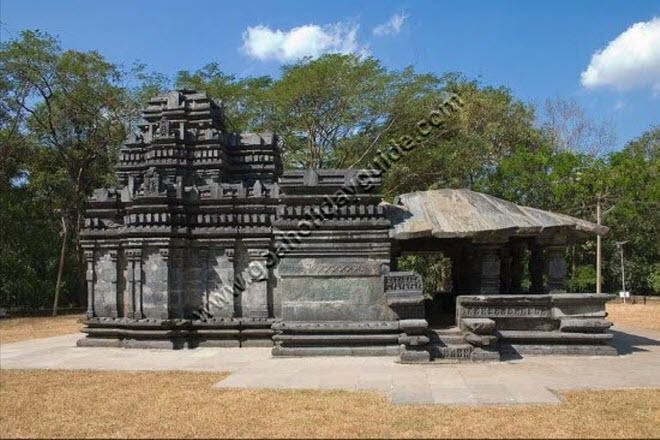
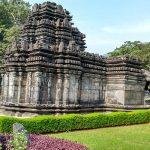
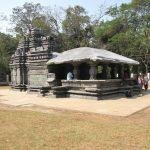
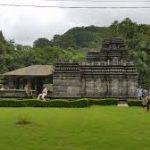
The Mahadev temple of Tambdi Surla is the oldest temple of Goa, that survived from the Portuguese as it was set next to a stream in the middle of the small clearing, hidden in the dense jungle. The Tambdi Surla temple dedicated to Lord Shiva has a pillared porch and three stepped entrances. The temple is built in the Hemadpanthi style from the finest weather-resistant grey-black basalt. It is considered to be the only specimen of Kadamba-Yadavaarchitecture in basalt stone preserved and available in Goa. The temple has been declared as a protected historical monument by the Archaeological Survey of India
There is a linga symbol of Lord Shiva mounted on a pedestal inside the inner sanctum and local legend has it that a huge King Cobra is in permanent residence in the dimly lit interior. In February/ March on the festival of Mahashivratri hundreds of devotees assemble here. The area around the temple has soft green grass that dries up in summer but is rejuvenated every monsoon.
The temple was built by Hemadri, the minister of the Yadava King Ramachandra. The Jain style construction has led to debates about the origins of the temple, since the Kadamba Dynasty ruled Goa between the tenth and fourteenth centuries. The temple is built in the Hemadpanthi style from basalt, carried across the mountains from the Deccan plateau and carved craftsmen. It is considered to be the only specimen of Kadamba-Yadava architecture in basalt stone preserved and available in Goa. The temple survived invasions and the Goa Inquisition due to its remote location in a clearing deep in the forest at the foot of the Western Ghats which surround the site.
Introduction & Spiritual Essence
Nestled in the heart of the Bhagwan Mahaveer Sanctuary and Mollem National Park, the Mahadev Temple at Tambdi Surla stands as a timeless testament to devotion in Goa. Dedicated to Lord Shiva, this temple is not merely a stone structure but a spiritual vortex where the divine energy of the Himalayas meets the tropical tranquility of the Western Ghats.
The primary deity here is the Swayambhu (self-manifested) Shiva Linga, enshrined within a modest yet profound sanctum. Unlike the towering temples of urban centers, Tambdi Surla offers an intimate darshan, allowing devotees to immerse themselves in silence and the sound of the perennial stream nearby.
Phalaśruti: The Benefits of Pilgrimage
According to ancient scriptures and local belief, a visit to this ancient sanctuary yields specific spiritual merits:
- Restoration of Dharma: It is believed that the temple’s energy helps realign the devotee’s life path, dissolving karmic obstacles.
- Pitru Dosha Nivarana: Offering abhishekam here is traditionally associated with pacifying ancestral spirits and resolving Pitru Dosha (ancestral karma).
- Protection from Serpentine Influences: The temple is associated with the Nagas (serpents). Devotees visit to overcome fears and planetary afflictions related to Rahu and Ketu.
Historical Origins & Scriptural Legend
Tradition holds that the temple was constructed in the 12th century AD by Hemadri, a minister serving the Yadava King Ramachandra. This lineage connects the temple directly to the great Deccan dynasties that flourished before the Portuguese arrival in Goa.
While the primary deity is Shaivite, the architectural influence suggests a syncretic history. The temple bears the hallmarks of Jain stylistic elements and the Kadamba-Yadava school of art. The Kadamba dynasty ruled Goa for centuries, and this temple remains their most enduring physical legacy in the region.
The Sthala Purana: The Invisibility Shield
Local folklore suggests that the temple’s survival during the Portuguese Inquisition was no accident. It is said that the dense canopy of the Mollem forests and the temple’s location at the foot of the Anmod Ghat concealed it from the eyes of invaders. The temple records mention that the priests continued their rituals in secrecy, protected by the local tribal communities and the unforgiving terrain.
Architectural Marvels
The Mahadev Temple is the only surviving specimen of Kadamba-Yadava architecture in Goa. It is built entirely of grey-black basalt, a stone chosen for its durability and resistance to the harsh tropical weather.
Style and Vastu Elements
Designed in the Hemadpanthi style (named after the minister Hemadri), the temple features intricate carvings that were chiseled directly into the stone, rather than assembled later. The Vastu layout is symmetrical, facing east to receive the first rays of the sun.
The Sanctum and Mandapas
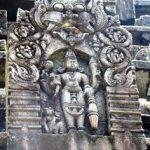
The inner sanctum (Garbhagriha) houses the Shiva Linga, which is perpetually damp due to the natural spring flowing beneath it. The mandapa (pillared hall) features pillared porches and three stepped entrances. The ceiling is supported by monolithic pillars, each carved with distinct motifs depicting nature and deities.
Unlike modern structures, the temple relies on gravity and friction for stability, with no mortar used in the construction.
Photo Gallery
Darshan & Ritual Logistics
As the temple is located within a Wildlife Sanctuary and is under the protection of the Archaeological Survey of India (ASI), operations are strictly regulated to preserve the heritage and the environment.
Daily Timings
| Session | Timing | Details |
|---|---|---|
| Morning Darshan | 09:00 AM – 01:00 PM | Open to all pilgrims. |
| Afternoon Break | 01:00 PM – 04:00 PM | Sanctum closed for maintenance and lunch break. |
| Evening Darshan | 04:00 PM – 06:00 PM | Timing varies slightly by season (winter/summer). |
Note: Since the temple is inside the Bhagwan Mahaveer Sanctuary, the gates usually close by 6:30 PM. Plan your exit accordingly.
Key Sevas and Online Booking
While the temple is rustic, official sevas are conducted by the temple trust. The most significant ritual is the Abhishekam performed on Mondays.
How to Book: While specific online portals for this ancient monument are limited, visitors can coordinate sevas through the Mahadev Temple Trust, Sanguem or inquire at the ASI ticket counter upon arrival. For major festivals like Mahashivratri, pre-booking is recommended via local tour operators in Panaji.
2026 Festival Calendar
- Maha Shivaratri: February 26, 2026 (Special night-long vigil and Rudrabhishekam).
- Shravan Mondays: July – August 2026 (Peak pilgrimage season).
- Deepavali: November 1, 2026 (Special lighting and cultural programs).
- Pradosh Vrat: 15th and 30th of every lunar month (Evening rituals).
Practical Visitor Guidance
Visiting Tambdi Surla requires a blend of spiritual preparation and practical readiness due to its location within a protected forest zone.
Dress Code and Etiquette
Modest attire is required. As with all Shiva temples, avoid wearing black on auspicious days. Remove footwear before entering the temple premises (shoe racks are available outside).
Photography and Mobile Phones
Strictly Prohibited: Photography is banned inside the sanctum and the temple interior to preserve the ancient carvings and maintain spiritual sanctity. Mobile phones should be silenced.
Crowd Management & Seasonal Advice
- Best Hours: 9:00 AM to 11:00 AM. The temple is serene, allowing for deep meditation.
- Summer (March–May): Carry ample water. The humidity in the forest can be high. Wear light, breathable cotton.
- Monsoon (June–September): The path becomes slippery. Wear shoes with good grip. Leeches are common in the surrounding forest trails.
- Accessibility: The main sanctum has a few steps. The surrounding complex is flat but not fully wheelchair accessible due to uneven forest paths.
Pilgrimage Connectivity
How to Reach
The temple is located at the base of the Anmod Ghat, connecting Goa to Karnataka.
- By Air: The nearest airport is Dabolim Airport (GOI), roughly 80 km away (approx. 2.5 hours drive).
- By Rail: The nearest railway station is Kulem (KLM) (approx. 12 km), which is the closest halt for the Vasco Express. Alternatively, Castro (CST) is nearby.
- By Road: From Panaji, take NH 748 towards Ponda, then follow the scenic route through the Western Ghats. The drive is approximately 65 km.
How to Reach:
The temple is at 15°26′20″N 74°15′8″E near a small village called Tambdi Surla located 13 kilometres (8.1 mi) east of Bolcornem village, in the north east region of the Bhagwan Mahaveer Sanctuary and Mollem National Park.
Mahadev Temple is approximately 65 kilometres (40 mi) from the capital city of Panaji. It is accessible from the north via minor roads 22 kilometres (14 mi) south from the main town of Valpoi in Sattari Taluka. The temple is at the foot of the Anmod Ghat, which connects Goa to the state of Karnataka.
Nearby Sacred Sites (Pilgrimage Circuit)
Extend your spiritual journey with these nearby destinations:
- Valpoi Ganesh Temple: Located 22 km north, this is a major center for Ganesh devotion in the Sattari region.
- Usgalimal Petroglyphs: Located near the Sal River, these are prehistoric rock carvings dating back 10,000 years, offering a unique historical contrast.
- Radha Krishna Temple, Chandor: If traveling south towards Margao, visit this temple for its unique fusion of Christian and Hindu architecture.
Contact Details
Official Address: Mahadev Temple, Tambdi Surla, Sanguem, Goa 403406
Frequently Asked Questions (FAQ)
1. Is there a VIP darshan entry at Tambdi Surla Temple?
No, due to the ancient and protected nature of the site, there is no formal VIP entry or special bypass queue. All devotees wait their turn in the single queue line, ensuring equal access to the deity.
2. Can we carry food inside the temple?
Outside food is generally discouraged inside the sanctum. However, because the temple is in a forest, eating snacks in the outer courtyard (away from the main shrine) is permitted. Please maintain cleanliness and use dustbins.
3. What is the best time to visit Tambdi Surla Waterfall?
The nearby Tambdi Surla Waterfall (Gajantimal) is distinct from the temple but popular for a combined visit. The best time is immediately after the monsoon (July to September). During peak summer (May), the water flow is minimal.
4. Is there a dress code for non-Hindus?
While the temple is a place of Hindu worship, non-Hindus are welcome to view the architecture and exterior complex. However, entry into the inner sanctum (Garbhagriha) is traditionally restricted to Hindus. Appropriate modest dress is required for all visitors regardless of faith.
5. Is mobile network connectivity available?
Network coverage is patchy inside the sanctuary due to the dense forest cover. Airtel and Jio have sporadic signals near the entrance, but it is advisable to download offline maps before leaving Sanguem or Valpoi.
Recent Posts

Shri Kaamkoteeshwar Mandir, Varanasi – History & Significance
In the heart of Kashi, the eternal city of Lord Shiva, where the Ganges flows with celestial grace, stands the Shri Kaamkoteeshwar Mandir. This sacred Sannidhi is not merely a temple but a profound spiritual bridge between the Northern…

ओ सांवरे तूने ही मुझको संभाला – Lyrics & Meaning
ओ सांवरे तूने ही मुझको संभाला – A Prayer to Shyam Origin & Spiritual Essence Why This Bhajan Resonates Devotees chant this when overwhelmed by life’s storms—the refrain ‘तूने ही मुझको संभाला’ is the soul’s sigh of relief: “You…

कथा ये है महाराज मेरे की – Lyrics & Meaning
कथा ये है महाराज मेरे की छत्रपति संभाजी महाराज – A Prayer to Chhatrapati Sambhaji Maharaj Origin & Spiritual Essence Why This Bhajan Resonates Devotees chant this when their spirit feels tested—its powerful refrain “महाराज मेरे” is a soul’s…

Rigveda Samhita Yathartha Anuvada (ऋग्वेद संहिता यथार्थ अनुवाद) – Complete Set with Anvayartha & Hindi/English Translation
The Rigveda is the oldest surviving scripture of humanity and the foundational text of Sanātana Dharma. For serious students, scholars, UPSC aspirants studying ancient Indian history, Sanskrit learners, and spiritual seekers, a precise and grammatically structured translation is indispensable.…

आना भी अकेला है जाना भी अकेला है – Lyrics & Meaning | BharatTemples
आना भी अकेला है जाना भी अकेला है – A Prayer to the Divine Witness Origin & Spiritual Essence Why This Bhajan Resonates Devotees turn to this bhajan in moments of deep reflection—when life’s attachments begin to ache. The…

माता शेरावाली के द्वार जो भी जाता है – Lyrics & Meaning
माता शेरावाली के द्वार जो भी जाता है – A Prayer to Maa Sherawali Origin & Spiritual Essence Why This Bhajan Resonates Devotees turn to this bhajan in times of fear or uncertainty—its promise that no one leaves Maa’s…

मार लेना सपणी उबार लेणा भवरा – Lyrics & Meaning
मार लेना सपणी उबार लेणा भवरा – A Prayer to the Divine Beloved Origin & Spiritual Essence Why This Bhajan Resonates Devotees chant this in moments of deep vulnerability—its cry of “मार लेना सपणी, उबार लेणा भवरा” is the…

हमें श्याम सुंदर भरोसा तुम्हारा – Lyrics & Meaning
हमें श्याम सुंदर भरोसा तुम्हारा – A Prayer to Shyam Sundar Origin & Spiritual Essence Why This Bhajan Resonates Devotees chant this when feeling alone—its refrain ‘de do sahara’ is the soul’s cry for divine support. Lyrics in Hindi…

Mere Satguru Ne Di Thi Davai Lyrics in Hindi & Meaning
Mere Satguru Ne Di Thi Davai: Invoking the Guru’s Liberating Wisdom This soul-stirring bhajan venerates the Satguru (True Spiritual Master) as the divine physician who dispenses the only remedy for life’s deepest sufferings. Composed by Sant Karmaveer Tufani, it…

Janm Diyo Thari Maa Dukh Dekhiyo Lyrics in Hindi & Meaning
जन्म दियो थारी माँ दुख देखियो (Maa’s Grief Upon Birthing You) This soul-stirring Chetavani Bhajan (admonitory hymn) is addressed to the Divine Mother (Maa) – a call for repentance when children forget their filial duties in the dark age…