

Contents
Introduction & Spiritual Essence
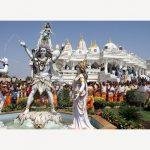
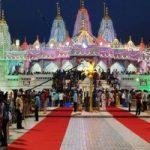
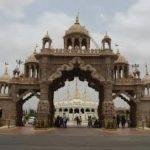
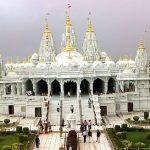
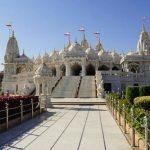
Nestled in the heart of Bhuj, the Shri Swaminarayan Mandir (managed by the Nar Narayan Dev Gadi) stands as a luminous testament to devotion and resilience. Completed in May 2010, this magnificent temple complex was built to replace the original structure destroyed by the devastating earthquake of 2001. Constructed entirely of pristine marble and gold, the temple offers a serene spiritual atmosphere for devotees seeking peace and divine blessings.
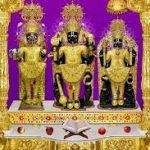
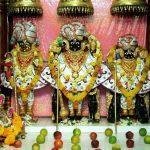
The primary deities worshipped here are Nar Narayan and Swaminarayan (in the form of Hari Krishna). Other sanctified idols include Radha Krishna, Swaminarayan as Ghanshyam, and the holy Sukh Shaiya.
Architectural Marvel
Phalaśruti: The Benefits of Visiting
Devotees visit the Shri Swaminarayan Mandir in Bhuj for various spiritual and material benefits. It is widely believed that:
- Cleansing Ancestral Karma: Offering prayers here helps alleviate the suffering of ancestors and removes obstacles caused by past karmas.
- Protection & Healing: Given the temple’s history of rising from the ashes of the 2001 earthquake, it is a powerful center for seeking protection against natural calamities and personal turmoil.
- Attainment of Peace: The sanctum housing the idols of Nar Narayan and Swaminarayan is believed to grant inner peace and mental clarity to the devotee.
Historical Origins & Scriptural Legend
The spiritual lineage of this temple is deep-rooted in the Swaminarayan Sampraday. The journey of this holy site is divided into two significant chapters:
The Original Mandir (1824)
Tradition holds that the original temple was built by Swaminarayan himself in 1824 during his visit to Saurashtra and Kutch. This wooden structure was a focal point of devotion for nearly two centuries, hosting the sacred deities (Murtis) of Nar Narayan and Swaminarayan.
The New Mandir (2010)
On January 26, 2001 According to temple records, the inauguration ceremony of the new temple was a grand 9-day affair held from 15th to 23rd May 2010. The project was estimated to cost 1 billion Indian rupees (100 crore) and spanned 5 acres of land. The original central deities were carefully preserved and moved to this new, earthquake-resistant marble edifice. The Shri Swaminarayan Mandir Bhuj is a masterpiece of modern temple architecture, blending traditional Hindu styles with contemporary engineering. Unlike many ancient temples, this mandir is constructed entirely of white marble and gold. The pillars and ceilings feature intricate carvings (Jali work) that allow natural light to filter in, creating a divine aura. The throne for the idol of Swaminarayan, the temple domes, and the main doors are made of pure gold. The architecture follows the principles outlined in the Shilpa Shastra and Vastu Shastra. The layout is designed to align with the cardinal directions, ensuring the sanctum receives the first rays of the sun. To ensure a smooth darshan experience for all visitors, the temple has strict timings and a variety of seva (service) offerings. Below are the operational details for 2026. Devotees can participate in various rituals. It is highly recommended to book these in advance via the official Swaminarayan Sampraday website or the Bhuj temple administration portal. Plan your visit around these major festivals for a vibrant darshan experience: To respect the sanctity of the mandir and ensure your safety, please adhere to the following guidelines. Modest clothing is mandatory. Men should wear shirts and full-length trousers; women should wear sarees, salwar kameez, or long skirts. Bhuj can get extremely hot between April and June. Carry water and wear head coverings if visiting during these months. To avoid long queues, visit on weekdays (Tuesday–Thursday) between 10:00 AM and 11:30 AM. The Shri Swaminarayan Mandir is centrally located in Bhuj, making it easily accessible. Enhance your pilgrimage by visiting these nearby spiritual centers: While there is no specific “VIP” ticket sold at the counter, senior citizens and persons with disabilities are assisted by temple volunteers for priority entry. It is best to contact the temple office at 07490025013 24 hours prior if special assistance is required. For hygiene and security reasons, only pre-packed items or homemade sweets that have been inspected by the temple kitchen authorities are allowed. It is recommended to purchase Prasad from the designated counters inside the complex. Abhishekam can be booked online through the Nar Narayan Dev Gadi website or in-person at the information counter upon arrival. You can perform the ritual yourself or have the priests do it on your behalf while you chant the mantras. Gold in Vedic architecture represents purity and the divine light of knowledge. In the context of Swaminarayan philosophy, the gold used in the doors and domes symbolizes the eternal and unchanging nature of the soul (Atma). Yes, the temple remains open 365 days a year, including public holidays, subject to minor adjustments during major festival days. The original central deities of Nar Narayan and Swaminarayan (as Hari Krishna) were miraculously preserved during the 2001 earthquake. These ancient idols were consecrated in the new temple structure during the 2010 inauguration. In the heart of Kashi, the eternal city of Lord Shiva, where the Ganges flows with celestial grace, stands the Shri Kaamkoteeshwar Mandir. This sacred Sannidhi is not merely a temple but a profound spiritual bridge between the Northern… ओ सांवरे तूने ही मुझको संभाला – A Prayer to Shyam Origin & Spiritual Essence Why This Bhajan Resonates Devotees chant this when overwhelmed by life’s storms—the refrain ‘तूने ही मुझको संभाला’ is the soul’s sigh of relief: “You… कथा ये है महाराज मेरे की छत्रपति संभाजी महाराज – A Prayer to Chhatrapati Sambhaji Maharaj Origin & Spiritual Essence Why This Bhajan Resonates Devotees chant this when their spirit feels tested—its powerful refrain “महाराज मेरे” is a soul’s… The Rigveda is the oldest surviving scripture of humanity and the foundational text of Sanātana Dharma. For serious students, scholars, UPSC aspirants studying ancient Indian history, Sanskrit learners, and spiritual seekers, a precise and grammatically structured translation is indispensable.… आना भी अकेला है जाना भी अकेला है – A Prayer to the Divine Witness Origin & Spiritual Essence Why This Bhajan Resonates Devotees turn to this bhajan in moments of deep reflection—when life’s attachments begin to ache. The… माता शेरावाली के द्वार जो भी जाता है – A Prayer to Maa Sherawali Origin & Spiritual Essence Why This Bhajan Resonates Devotees turn to this bhajan in times of fear or uncertainty—its promise that no one leaves Maa’s… मार लेना सपणी उबार लेणा भवरा – A Prayer to the Divine Beloved Origin & Spiritual Essence Why This Bhajan Resonates Devotees chant this in moments of deep vulnerability—its cry of “मार लेना सपणी, उबार लेणा भवरा” is the… हमें श्याम सुंदर भरोसा तुम्हारा – A Prayer to Shyam Sundar Origin & Spiritual Essence Why This Bhajan Resonates Devotees chant this when feeling alone—its refrain ‘de do sahara’ is the soul’s cry for divine support. Lyrics in Hindi… Mere Satguru Ne Di Thi Davai: Invoking the Guru’s Liberating Wisdom This soul-stirring bhajan venerates the Satguru (True Spiritual Master) as the divine physician who dispenses the only remedy for life’s deepest sufferings. Composed by Sant Karmaveer Tufani, it… जन्म दियो थारी माँ दुख देखियो (Maa’s Grief Upon Birthing You) This soul-stirring Chetavani Bhajan (admonitory hymn) is addressed to the Divine Mother (Maa) – a call for repentance when children forget their filial duties in the dark age…Architectural Marvels
Material & Design
Scriptural Context

Darshan & Ritual Logistics (2026 Guide)
Daily Darshan Timings
Session Timing Morning Darshan 6:00 AM – 12:00 PM Afternoon Break 12:00 PM – 4:00 PM Evening Darshan 4:00 PM – 8:30 PM Key Sevas & Online Booking
2026 Festival Dates
Practical Visitor Guidance
Etiquette & Dress Code
Crowd Management
Facilities
Pilgrimage Connectivity
How to Reach
Nearby Sacred Sites
Frequently Asked Questions (FAQ)
1. Is there a VIP darshan entry available?
2. Can I offer my own Prasad?
3. How do I perform the Abhishekam for the deities?
4. What is the significance of the gold elements in the temple?
5. Is the temple open all year round?
6. What happened to the idols from the old temple?
Recent Posts
Shri Kaamkoteeshwar Mandir, Varanasi – History & Significance
ओ सांवरे तूने ही मुझको संभाला – Lyrics & Meaning
कथा ये है महाराज मेरे की – Lyrics & Meaning
Rigveda Samhita Yathartha Anuvada (ऋग्वेद संहिता यथार्थ अनुवाद) – Complete Set with Anvayartha & Hindi/English Translation
आना भी अकेला है जाना भी अकेला है – Lyrics & Meaning | BharatTemples
माता शेरावाली के द्वार जो भी जाता है – Lyrics & Meaning
मार लेना सपणी उबार लेणा भवरा – Lyrics & Meaning
हमें श्याम सुंदर भरोसा तुम्हारा – Lyrics & Meaning
Mere Satguru Ne Di Thi Davai Lyrics in Hindi & Meaning
Janm Diyo Thari Maa Dukh Dekhiyo Lyrics in Hindi & Meaning









