

Contents
Introduction & Spiritual Essence
The Bhringesvara Siva Temple, located in the serene village of Khatuapada on the southeastern outskirts of Bhubaneswar, stands as a silent sentinel of history on the foothills of Dhauli. The temple faces west towards the sacred river Daya, a stream steeped in the annals of Kalinga’s past. Unlike many colossal shrines, this temple invites devotees into an intimate spiritual space dedicated to Lord Shiva in his aniconic form.
The presiding deity (Archa Linga) is unique—a circular yoni pitha with a hole at the centre. In the Hindu theological tradition, the Yoni represents the creative energy of the universe, and the hole (Bindu) signifies the void from which all existence emerges. Devotees worship this form to attain inner purity and liberation (Moksha). The temple is constructed from light grey sandstone, harmonizing perfectly with the geological features of the Dhauli landscape.
Phalaśruti (Spiritual Benefits): According to traditional beliefs, worshipping at this ancient shrine, particularly during the Pradosha (twilight) period, helps cleanse ancestral karma. The proximity to the Daya river adds to the purificatory power of the site, making it a potent location for rituals like Tarpana (offerings to ancestors).
Historical Origins & Scriptural Legend
Historical Chronology: Based on stylistic analysis and archaeological surveys, the Bhringesvara Siva Temple is traced back to the 8th Century A.D. It belongs to the early phase of the Keshari (Somavamsi) dynasty, a period that laid the foundation for the magnificent temple architecture of Odisha. The temple was later renovated, with great care taken to preserve and utilize the original materials, maintaining the structural integrity of the ancient edifice.
Scriptural & Local Legends:
While specific verses in the Puranas may not explicitly name this shrine, the Stala Purana (local oral legend) ties the temple to the region of Kalinga. The presence of the circular yoni pitha suggests a strong connection to Shakti (goddess energy) worship, common in Odisha traditions.
Tradition holds that the temple was established by a local chieftain under the patronage of the Somavamsi kings. The site is located near Dhauli, where the great Kalinga war took place in the 3rd century B.C. While the temple itself post-dates the war, the spiritual atmosphere is heavily influenced by the region’s transformation from a battlefield to a hub of Buddhist and Hindu peace.
Architectural Marvels
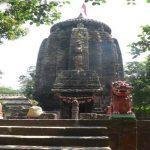
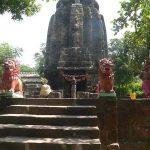
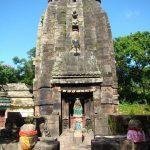
The Bhringesvara Siva Temple is a textbook example of Kalinga Architecture, specifically the Rekha Deula style, though it retains the simpler proportions of the early medieval period.
- Material: The temple is built entirely of light grey sandstone, a hallmark of Odishan temple construction, sourced locally.
- Vastu Shastra: The sanctum (Garbhagriha) is situated below ground level, a distinct feature of early Odisha temples, symbolizing the descent into the earth (the womb). The Mandapa (porch) is open, allowing devotees to sit in the open air.
- The Deity: The central deity is not a carved murti but a natural geological formation shaped into a circular Yoni Pitha with a central hole.
- State Protection: The temple is currently under the protection of the Orissa State Archaeology, ensuring its preservation for future generations.
Darshan & Ritual Logistics
Visitors are encouraged to engage in the daily rituals offered to Lord Shiva. The atmosphere is generally quiet, allowing for Dhyana (meditation).
Daily Darshan Timings
Timings are subject to change based on seasonal Panchang calculations. Note: The temple is situated in an open area; visiting during daylight hours is recommended.
| Session | Timing | Activity |
|---|---|---|
| Morning | 06:00 AM – 12:00 PM | Mangala Arati & Abhishekam |
| Afternoon | 12:00 PM – 04:00 PM | Temple Closed (Sanctum Rest) |
| Evening | 04:00 PM – 07:30 PM | Evening Arati & Darshan |
Key Sevas & Online Booking
While the Bhringesvara Temple is a protected archaeological site and may not have a dedicated large-scale online booking portal like major state temples, devotees can offer Sevas directly. For specific Abhishekam or Archana requirements, it is best to coordinate with the local Temple Priest (Pujari) or the Orissa State Archaeology office managing the site.
2026 Major Festivals:
- Maha Shivaratri: February 26, 2026 (Special night-long vigil).
- Nabanna (Harvest Festival): Mid-January 2026 (Community offerings).
- Pausha Purnima: January 13, 2026 (Sacred bath in the nearby Daya river).
Practical Visitor Guidance
Given the temple’s location near the historic Dhauli hills and Daya river, preparation ensures a peaceful visit.
Rules & Etiquette
- Dress Code: Traditional attire is preferred. Men should wear Dhoti or trousers with a shirt; women should wear Saree or Salwar Kameez. Modest clothing is essential.
- Photography: Photography is generally allowed in the temple premises but is prohibited inside the sanctum sanctorum. Respect the sanctity of the site.
- Mobile Lockers: As this is a protected archaeological site, large bags and electronic items may need to be left at the entrance. There are no digital locker facilities; please travel light.
- Accessibility: The temple is approached via a stone pathway. It is accessible for those with moderate mobility, though uneven terrain exists near the riverbank.
Crowd Management & Seasonal Advice
The temple sees a moderate influx of visitors during Shivaratri and local festivals. For a meditative experience:
- Best Hours: Early morning (6:00 AM – 8:00 AM) or late evening (4:30 PM – 6:00 PM).
- Seasonal Tips:
- Summer (March – May): Odisha experiences high heat. Carry a water bottle and an umbrella.
- Monsoon (June – September): The Daya river swells. While scenic, caution is advised near the banks.
Pilgrimage Connectivity
How to Reach Bhringesvara Siva Temple
The temple is located in Khatuapada, approximately 15-20 kilometers from central Bhubaneswar.
- By Air: The nearest airport is Biju Patnaik International Airport (BBI), Bhubaneswar (approx. 20 km).
- By Rail: The nearest major railway station is Bhubaneswar Railway Station (BBS) (approx. 15 km).
- By Road: The temple is accessible via NH-16. From Bhubaneswar, take the highway towards Puri and divert towards Khatuapada/Dhauli. Local auto-rickshaws and ride-sharing services are available.
Nearby Sacred Sites
Enhance your pilgrimage by visiting these nearby sites:
- Dhauli Shanti Stupa (Peace Pagoda): Located on the Dhauli hills, this white dome symbolizes the end of the Kalinga war and the beginning of Ashoka’s devotion to Buddhism.
- Daya River Banks: A sacred river mentioned in ancient texts; ideal for ritual purification (Snan).
- Lingaraj Temple (Central Bhubaneswar): The paramount Kalinga architecture masterpiece, approximately 25 minutes drive away.
Frequently Asked Questions (FAQ)
1. What is the architectural style of Bhringesvara Temple?
The temple follows the early Kalinga style of architecture. It features a Rekha Deula (curvilinear tower) and a Mandapa. It is constructed from light grey sandstone and is a protected monument under Orissa State Archaeology.
2. Is there a VIP darshan entry available?
As an archaeological site rather than a major state-managed shrine, there is no formal VIP darshan system. However, the crowd is generally manageable, allowing for easy access to the sanctum during non-peak hours.
3. Can I perform Rudrabhishekam at the temple?
Yes, Rudrabhishekam can be performed, but it typically requires prior arrangement with the local priest. Devotees should bring their own materials (milk, honey, bilva leaves) or purchase them from local vendors near the temple premises.
4. What is the significance of the hole in the Yoni Pitha?
The hole represents the Pindala or the cosmic void. It is the point where the Linga (phallic symbol representing Shiva) would typically be placed. It signifies the source of creation and the union of Purusha (consciousness) and Prakriti (nature).
5. Is the temple open year-round?
Yes, the temple is open year-round. However, access to the riverbank might be restricted during heavy monsoons due to flooding of the Daya river.
Photo Gallery
Contact Details
Official Address:
Bhringesvara Siva Temple,
Khatuapada, Near Dhauli,
Bhubaneswar, Odisha – 751002
Recent Posts

Shri Kaamkoteeshwar Mandir, Varanasi – History & Significance
In the heart of Kashi, the eternal city of Lord Shiva, where the Ganges flows with celestial grace, stands the Shri Kaamkoteeshwar Mandir. This sacred Sannidhi is not merely a temple but a profound spiritual bridge between the Northern…

ओ सांवरे तूने ही मुझको संभाला – Lyrics & Meaning
ओ सांवरे तूने ही मुझको संभाला – A Prayer to Shyam Origin & Spiritual Essence Why This Bhajan Resonates Devotees chant this when overwhelmed by life’s storms—the refrain ‘तूने ही मुझको संभाला’ is the soul’s sigh of relief: “You…

कथा ये है महाराज मेरे की – Lyrics & Meaning
कथा ये है महाराज मेरे की छत्रपति संभाजी महाराज – A Prayer to Chhatrapati Sambhaji Maharaj Origin & Spiritual Essence Why This Bhajan Resonates Devotees chant this when their spirit feels tested—its powerful refrain “महाराज मेरे” is a soul’s…

Rigveda Samhita Yathartha Anuvada (ऋग्वेद संहिता यथार्थ अनुवाद) – Complete Set with Anvayartha & Hindi/English Translation
The Rigveda is the oldest surviving scripture of humanity and the foundational text of Sanātana Dharma. For serious students, scholars, UPSC aspirants studying ancient Indian history, Sanskrit learners, and spiritual seekers, a precise and grammatically structured translation is indispensable.…

आना भी अकेला है जाना भी अकेला है – Lyrics & Meaning | BharatTemples
आना भी अकेला है जाना भी अकेला है – A Prayer to the Divine Witness Origin & Spiritual Essence Why This Bhajan Resonates Devotees turn to this bhajan in moments of deep reflection—when life’s attachments begin to ache. The…

माता शेरावाली के द्वार जो भी जाता है – Lyrics & Meaning
माता शेरावाली के द्वार जो भी जाता है – A Prayer to Maa Sherawali Origin & Spiritual Essence Why This Bhajan Resonates Devotees turn to this bhajan in times of fear or uncertainty—its promise that no one leaves Maa’s…

मार लेना सपणी उबार लेणा भवरा – Lyrics & Meaning
मार लेना सपणी उबार लेणा भवरा – A Prayer to the Divine Beloved Origin & Spiritual Essence Why This Bhajan Resonates Devotees chant this in moments of deep vulnerability—its cry of “मार लेना सपणी, उबार लेणा भवरा” is the…

हमें श्याम सुंदर भरोसा तुम्हारा – Lyrics & Meaning
हमें श्याम सुंदर भरोसा तुम्हारा – A Prayer to Shyam Sundar Origin & Spiritual Essence Why This Bhajan Resonates Devotees chant this when feeling alone—its refrain ‘de do sahara’ is the soul’s cry for divine support. Lyrics in Hindi…

Mere Satguru Ne Di Thi Davai Lyrics in Hindi & Meaning
Mere Satguru Ne Di Thi Davai: Invoking the Guru’s Liberating Wisdom This soul-stirring bhajan venerates the Satguru (True Spiritual Master) as the divine physician who dispenses the only remedy for life’s deepest sufferings. Composed by Sant Karmaveer Tufani, it…

Janm Diyo Thari Maa Dukh Dekhiyo Lyrics in Hindi & Meaning
जन्म दियो थारी माँ दुख देखियो (Maa’s Grief Upon Birthing You) This soul-stirring Chetavani Bhajan (admonitory hymn) is addressed to the Divine Mother (Maa) – a call for repentance when children forget their filial duties in the dark age…