
Contents
Introduction & Spiritual Essence
The Bhagabati Temple in Banapur, Odisha, stands as a monumental testament to Shakti worship in eastern India. Dedicated to Bhagabati, a fierce and benevolent manifestation of Goddess Durga, this temple is regarded as one of the Ashta Dasha Shakthi Peethas (18 primary seats of power) mentioned in ancient scriptures. The presiding deity is revered locally as Ma Bhagabati, the divine mother who bestows prosperity and protects her devotees from malevolent forces.
Phalaśruti: The Spiritual Benefits
According to the Sthala Purana, a visit to the Bhagabati Temple offers profound spiritual merit. Devotees believe that offering prayers here helps in:
- Cleansing Ancestral Karma: Performing Shraddha and Tarpan rituals here is believed to liberate ancestors from the cycle of rebirth.
- Removal of Obstacles: Goddess Bhagabati, in her form as Mahisamardini (Slayer of the Buffalo Demon), destroys ignorance and obstacles in the devotee’s path.
- Granting of Boons: Childless couples visit the sanctum to seek the blessings of the Mother for progeny and family stability.
Historical Origins & Scriptural Legend
Historical Roots: Banapur was historically significant as the capital of the Sailodhvaba dynasty, the architects of the early temple groups in Bhubaneswar. Historical records suggest that the current structure was significantly renovated and patronized by the Gajapati Maharajas of Puri. The temple complex bears witness to the region’s deep connection with Buddhism, evidenced by the numerous Buddhist images discovered in the vicinity, linking the site to the Vajrayana cult.
Scriptural Legend: The temple finds mention in the Sarala Das Mahabharata, a seminal Odia text, identifying it as a powerful Shakthi Peetha. Local tradition holds that the temple was established where the Umbilical cord (Nabhi) of Sati fell, endowing the site with immense cosmic energy. The idol of Ma Bhagabati is a Swayambhu (self-manifested) stone deity, depicted with eight arms holding various weapons, symbolizing her omnipotence.
Architectural Marvels
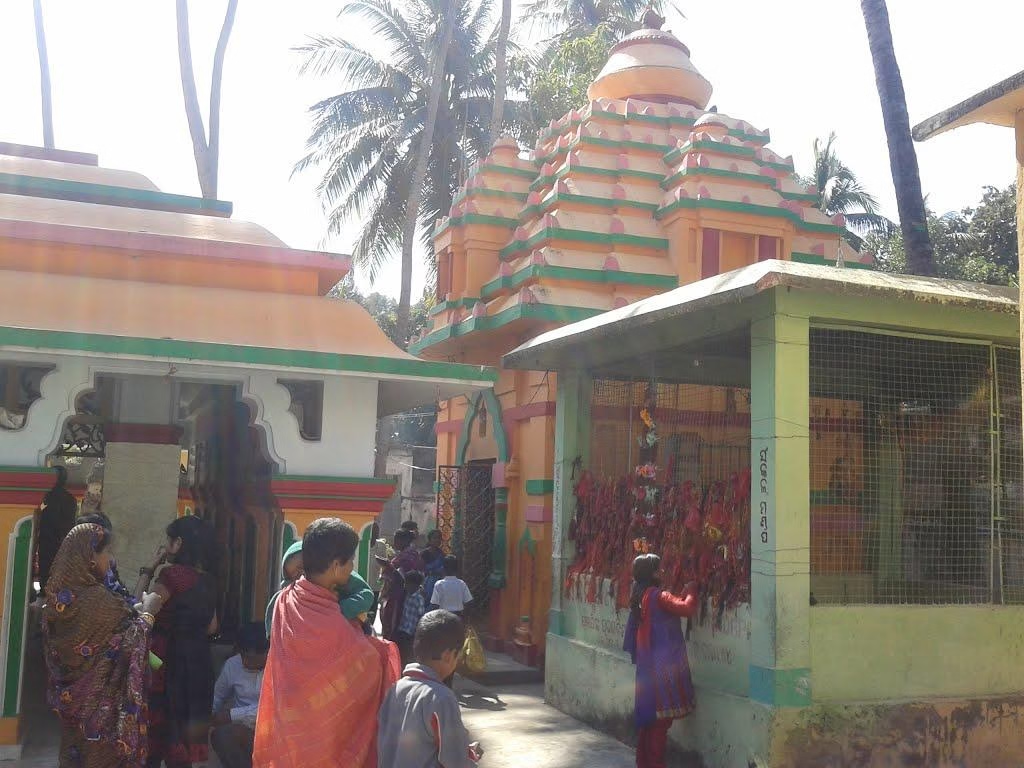
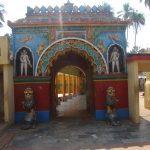
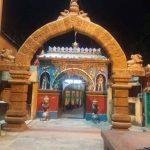
The Bhagabati Temple is a fine example of Kalinga Architecture, specifically the Pidha Deul style prevalent in the region.
Structural Layout
- Sanctum (Garbhagriha): Houses the primary idol of Goddess Bhagabati (Mahisamardini Durga).
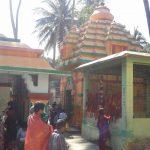
- Jagamohana: The assembly hall, built in the Rekha Deul style, features intricate carvings and a pyramidal roof.
- Mandapa: A recently constructed pillared hall has been added to the front of the Jagamohana to accommodate the growing number of devotees.
The temple stands on the edge of a deep sacred pool (Pokhari), surrounded by a high compound wall. The inner walls of the enclosure are adorned with loose sculptures depicting Ganesha, Kartikeya, Parvati, and Chamunda. While the temple is a protected monument under the State Archaeology, it is not currently designated as a UNESCO World Heritage site, though it shares architectural DNA with the Bhubaneswar temple complex.
Darshan & Ritual Logistics
Planning your visit requires attention to the daily rituals and annual festivals. The priests (Pandas) perform traditional AgniHotra and daily offerings.
Daily Darshan Timings (2026 Schedule)
| Session | Timings | Rituals |
|---|---|---|
| Morning | 5:00 AM – 12:00 PM | Mangala Alati, Abhishekam |
| Afternoon | 12:00 PM – 4:00 PM | Sanctum Closed |
| Evening | 4:00 PM – 9:00 PM | Sandhya Alati, Bada Shringar |
Key Sevas & Online Booking
Devotees can book specific Sevas through the official Temple Trust website or at the counter near the entrance.
- Abhishekam: Ritual bathing of the deity with milk, honey, and water. Best performed on Tuesdays and Fridays.
- Archana: Personalized chanting of Goddess mantras.
- Chandi Homa: A grand fire ritual performed during festivals.
Note: Online booking is recommended for special dates to avoid delays.
2026 Major Festival Dates
- Chaitra Parba (Navaratri): April 22 – April 30, 2026
- Sharadiya Navaratri: October 2 – October 10, 2026
- Durga Puja: October 9 – October 10, 2026 (Grand procession and Yajna)
- Kartik Purnima: November 14, 2026 (Special illumination and boat festival near the temple tank).
Practical Visitor Guidance
To ensure a seamless pilgrimage experience, please adhere to the following guidelines:
Code of Conduct
- Dress Code: Traditional attire is preferred. Men should wear dhotis or full-length trousers/shirts; women should wear sarees or salwar kameez. Avoid shorts and sleeveless tops.
- Photography: Strictly prohibited inside the Garbhagriha (Sanctum Sanctorum). Photography is allowed in the outer courtyard but requires permission for commercial use.
- Mobile Phones: Please switch phones to silent mode. Lockers are available near the ticket counter for electronic devices.
- Accessibility: The temple complex has stone steps. Wheelchair access is available via a side ramp (prior notice recommended).
Crowd Management
During festivals, footfall can exceed 50,000.
- Best Hours: Weekday mornings (7 AM – 9 AM) offer the most serene Darshan.
- Seasonal Advice: Summer (May) in Odisha is hot; carry a water bottle and umbrella. The monsoon (July-Sept) brings lush greenery but may disrupt road access occasionally.
Pilgrimage Connectivity
How to Reach
- By Air: The nearest airport is Biju Patnaik International Airport (BBI) in Bhubaneswar, approximately 100 km away. Taxis and buses are available from the airport.
- By Rail: The nearest railway station is Balugaon (BALU) (25 km) on the Khurda Road-Purulia line. Alternatively, Bhubaneswar Railway Station is a major hub.
- By Road: Banapur is well-connected via NH 16. Regular bus services operate from Bhubaneswar and Puri. The drive from Bhubaneswar takes approximately 2 hours.
Nearby Sacred Sites
Extend your spiritual journey by visiting these nearby destinations:
- Chilika Lake (Nalabana Sanctuary): Located just 5 km from the temple, this is Asia’s largest brackish water lagoon. A boat ride offers a view of the migratory birds and the Kalijai Temple situated on an island.
- Balugaon Gopal Temple: An ancient temple dedicated to Lord Krishna, known for its vibrant Janmashtami celebrations.
- Tangiri Papu Mutt (Banapur Museum): Located near the Bhagabati Temple, it houses rare stone sculptures and artifacts from the Sailodhvaba dynasty.
Photo Gallery
Frequently Asked Questions (FAQ)
1. Is there a VIP Darshan entry available?
Yes, the temple trust offers a Special Entry ticket for ₹50, which allows devotees to bypass the general queue during peak hours. VIP passes are issued only on official approval from the Temple Administrator.
2. Are leather items allowed inside the temple?
Leather belts, wallets, and shoes are allowed in the outer premises but must be removed before entering the Jagamohana. Lockers are provided for safekeeping.
3. What is the significance of the Buddhist images found here?
Banapur was a significant Buddhist site during the Sailodhvaba dynasty. The discovery of Buddhist stupas and images near the temple complex highlights the historical syncretism of Shaivism and Buddhism in Odisha.
4. Is accommodation available near the temple?
Basic guest houses are available in Banapur town. For better amenities, Bhubaneswar (100 km) and Puri (70 km) offer a wide range of hotels. The OTDC Panthanivas at Balugaon is a reliable option.
5. Can non-Hindus visit the temple?
The Bhagabati Temple is a traditional place of worship. Generally, entry is restricted to Hindus; however, non-Hindus may seek special permission from the temple authorities for cultural or architectural study.
Contact Details
Bhagabati Temple Trust
Banapur, Odisha 752031
Phone: 09951482106
Recent Posts

Shri Kaamkoteeshwar Mandir, Varanasi – History & Significance
In the heart of Kashi, the eternal city of Lord Shiva, where the Ganges flows with celestial grace, stands the Shri Kaamkoteeshwar Mandir. This sacred Sannidhi is not merely a temple but a profound spiritual bridge between the Northern…

ओ सांवरे तूने ही मुझको संभाला – Lyrics & Meaning
ओ सांवरे तूने ही मुझको संभाला – A Prayer to Shyam Origin & Spiritual Essence Why This Bhajan Resonates Devotees chant this when overwhelmed by life’s storms—the refrain ‘तूने ही मुझको संभाला’ is the soul’s sigh of relief: “You…

कथा ये है महाराज मेरे की – Lyrics & Meaning
कथा ये है महाराज मेरे की छत्रपति संभाजी महाराज – A Prayer to Chhatrapati Sambhaji Maharaj Origin & Spiritual Essence Why This Bhajan Resonates Devotees chant this when their spirit feels tested—its powerful refrain “महाराज मेरे” is a soul’s…

Rigveda Samhita Yathartha Anuvada (ऋग्वेद संहिता यथार्थ अनुवाद) – Complete Set with Anvayartha & Hindi/English Translation
The Rigveda is the oldest surviving scripture of humanity and the foundational text of Sanātana Dharma. For serious students, scholars, UPSC aspirants studying ancient Indian history, Sanskrit learners, and spiritual seekers, a precise and grammatically structured translation is indispensable.…

आना भी अकेला है जाना भी अकेला है – Lyrics & Meaning | BharatTemples
आना भी अकेला है जाना भी अकेला है – A Prayer to the Divine Witness Origin & Spiritual Essence Why This Bhajan Resonates Devotees turn to this bhajan in moments of deep reflection—when life’s attachments begin to ache. The…

माता शेरावाली के द्वार जो भी जाता है – Lyrics & Meaning
माता शेरावाली के द्वार जो भी जाता है – A Prayer to Maa Sherawali Origin & Spiritual Essence Why This Bhajan Resonates Devotees turn to this bhajan in times of fear or uncertainty—its promise that no one leaves Maa’s…

मार लेना सपणी उबार लेणा भवरा – Lyrics & Meaning
मार लेना सपणी उबार लेणा भवरा – A Prayer to the Divine Beloved Origin & Spiritual Essence Why This Bhajan Resonates Devotees chant this in moments of deep vulnerability—its cry of “मार लेना सपणी, उबार लेणा भवरा” is the…

हमें श्याम सुंदर भरोसा तुम्हारा – Lyrics & Meaning
हमें श्याम सुंदर भरोसा तुम्हारा – A Prayer to Shyam Sundar Origin & Spiritual Essence Why This Bhajan Resonates Devotees chant this when feeling alone—its refrain ‘de do sahara’ is the soul’s cry for divine support. Lyrics in Hindi…

Mere Satguru Ne Di Thi Davai Lyrics in Hindi & Meaning
Mere Satguru Ne Di Thi Davai: Invoking the Guru’s Liberating Wisdom This soul-stirring bhajan venerates the Satguru (True Spiritual Master) as the divine physician who dispenses the only remedy for life’s deepest sufferings. Composed by Sant Karmaveer Tufani, it…

Janm Diyo Thari Maa Dukh Dekhiyo Lyrics in Hindi & Meaning
जन्म दियो थारी माँ दुख देखियो (Maa’s Grief Upon Birthing You) This soul-stirring Chetavani Bhajan (admonitory hymn) is addressed to the Divine Mother (Maa) – a call for repentance when children forget their filial duties in the dark age…