

Contents
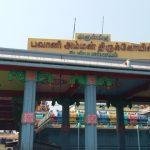
Bhavani Amman Temple, Periyapalayam, Thiruvallur
A definitive guide to the Temple of the Avatar of Devaki, featuring architectural insights, ritual timings, and the legendary Sthala Purana.
1. Introduction & Spiritual Essence
Located in the serene village of Periyapalayam in the Thiruvallur district, the Bhavani Amman Temple stands as a testament to unwavering faith and healing. The presiding deity, Bhavani Amman, is a powerful manifestation of the Divine Mother (Shakti). She is widely revered as Periyapalayathamman, the guardian deity of the region.
The Deity: Swayambhu and Divine Form
The murti (idol) is believed to be Swayambhu (self-manifested). In her hands, she holds the Sangu (conch) and Chakram (discus) in her upper hands, symbolizing order and preservation. In her lower hands, she holds a sword and the Amirtha Kalasam (pot of nectar), signifying the destruction of evil and the bestowal of immortality.
Phalaśruti: Why Devotees Visit
According to temple records and devotee traditions, visiting Bhavani Amman offers profound spiritual benefits:
- Cleansing of Ancestral Karma: Performing rituals here is believed to pacify Pitru Dosha and bring peace to ancestors.
- Healing and Health: The Theertham (holy water) and Kumkumam offered as Prasadham are renowned for curing ailments.
- Protection: As the sister of Lord Krishna, she offers protection from evil forces and removes obstacles in the devotee’s path.
2. Historical Origins & Scriptural Legend
While the exact date of the temple’s construction is not inscribed, architectural analysis suggests origins in the late medieval period, possibly renovated extensively by local chieftains under the Vijayanagara influence. However, the spiritual history is far more ancient.
The Legend of the Avatar
Tradition holds that Bhavani Amman is the sister of Lord Krishna. She is the same Divine Goddess who appeared to Kamsa as the eighth child of Devaki (Mayadevi), warning the tyrant of his impending doom. After protecting Lord Krishna in his infancy, she traveled to this region to reside among mortals, blessing them with her protective gaze.
The Sthala Purana: The Miracle of the Cow
Local folklore narrates a miraculous event that revealed the deity’s presence. Once, in a nearby forest, a cowherd noticed that one of his cows would stop at a specific spot to drink water and then spray milk onto a large rock. Suspicious that the cow was not yielding milk for him, the cowherd struck the rock with an axe. Instantly, he began bleeding from his mouth and nose.
From the cracked rock emerged a radiant woman dressed in yellow and red. She instructed him to build a shrine at that spot, promising his recovery and the prosperity of the village. Thus, the Bhavani Amman Temple was established on this sacred soil.
3. Architectural Marvels
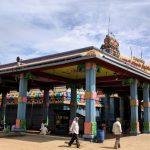
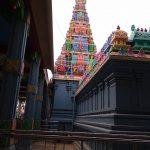
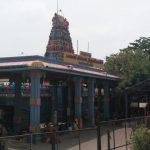
The temple showcases the distinctive Tamil Temple Architecture, designed to facilitate grand rituals and large congregations.
Structure and Layout
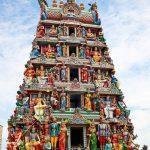
Unlike the towering Shikharas of Nagara style, this temple emphasizes the Prakaram (enclosed courtyard) and the Mandapa (hall) where devotees gather. The Sthupa Vimanam over the sanctum is adorned with typical Tamil motifs.
Notable Shrines
Besides the primary sanctum of Bhavani Amman, the temple complex houses several subsidiary shrines:
- Arputha Sakthi Vinayagar: A powerful Ganesha shrine at the entrance.
- Sarva Sakthi Mathangi Amman: Located near the main deity.
- Subramaniyar (Murugan): With a dedicated Vel (spear).
- Srinivasa Perumal: Accompanied by Mahalakshmi.
- Anjaneyar & Parasurama: Incarnations of Vishnu worshipped here.
- Naga Sannidhi: A sacred space for serpent deities.
4. Darshan & Ritual Logistics
The temple is managed efficiently to handle the high volume of devotees, particularly on weekends and festival days. Below is the schedule for 2026.
Daily Timings
| Session | Activity | Timing |
|---|---|---|
| Morning | Angapradakshinam | 05:00 AM – 09:00 AM |
| Morning/Noon | Vaepanjalai (General Darshan) | 05:00 AM – 12:00 PM |
| Afternoon | Temple Closure | 12:00 PM – 04:00 PM |
| Evening | Vaepanjalai (General Darshan) | 04:00 PM – 06:00 PM |
| Evening | Karagam & Special Pujas | 05:00 AM – 12:00 PM (Specific Days) |
Key Sevas & Online Booking
Devotees can perform specific rituals to invoke blessings:
- Abhishekam: Ritual bathing of the deity with milk, honey, and sandalwood paste.
- Archana: Recitation of hymns (e.g., Sahasra Nama Archanai).
- Angapradakshina: Circling the temple prostrating (rolling around the temple boundary).
Online Booking: While traditional bookings are made at the counter, the temple has digitized some services. Devotees are advised to check the official Tamil Nadu Temple portal or call the administration at +91 94444 87487 for the latest online portal updates regarding 2026 availability.
Major Festivals in 2026
The temple is most vibrant during the Tamil months of Aadi (July–August) and Avani (August–September).
- Aadi Perukku (First Friday): The most auspicious day of the year. Special Oonjal Sevai (swing ritual) is performed.
- Chithira Pournami: Full moon celebrations with grand abhishekam.
- Vinayagar Chathurthi: Celebrated with Kavadi offerings.
- Tamil New Year & Pongal: Community feasts and special alankaram.
- Navaratri: Nine nights of Thiruvilakku (lamp) worship and cultural programs.
5. Practical Visitor Guidance
To ensure a smooth darshan experience, please adhere to the following guidelines:
Etiquette and Rules
- Dress Code: Traditional attire is mandatory. Men should wear Veshti (dhoti) or pants with a shirt; Women should wear saree or salwar kameez.
- Photography: Strictly prohibited inside the sanctum sanctorum. Photography in the courtyard may be allowed without flash; seek permission from the office.
- Mobile Lockers: Shoe racks and mobile storage facilities are available near the entrance for a nominal fee. It is advised to leave valuables in the locker.
- Accessibility: The temple is ground level. However, the inner prakaram involves walking on uneven stones. Wheelchair access is limited to the outer mandapa.
Crowd Management
- Best Hours: For a peaceful darshan, visit between 10:00 AM and 11:30 AM on weekdays. Avoid weekends (Saturday/Sunday) if possible, as crowds are immense.
- Seasonal Advice: Summers (April–June) are hot; carry water and an umbrella. Monsoons (Oct–Dec) see heavy rains; wear waterproof footwear.
- Queue System: Separate queues exist for general darshan, senior citizens, and special paid darshan (if open). Please follow the volunteers’ instructions.
6. Pilgrimage Connectivity
The temple is strategically located on the bustling Chennai–Kolkata highway, making it accessible from Chennai, Tiruvallur, and surrounding districts.
How to Reach
- By Air: Chennai International Airport (MAA) is approximately 53 km away. A taxi or cab takes about 1 hour 15 minutes via NH16.
- By Train: The nearest major railway station is Chennai Central (MAS), approx 40 km. The nearest suburban station is Kavaraippettai (17 km) and Redhills (25 km). Auto-rickshaws are readily available from these stations.
- By Road: The temple is located off NH16 (Chennai–Kolkata Highway). It is well-connected by bus services.
Nearby Sacred Sites (Pilgrimage Circuit)
- Kailasakona Falls: A sacred waterfall near Puttur (approx 40 km), ideal for a spiritual dip.
- Kadavaram Temple: Located near Thiruvallur, known for its unique architecture and tank.
- Sri Vedanthangal Bird Sanctuary: While not a temple, it is a sacred grove of nature located en route for devotees traveling to Tiruvallur.
7. Frequently Asked Questions (FAQ)
Is there a VIP darshan entry available?
Yes, the temple administration offers a paid darshan facility during peak hours and festivals to help devotees avoid long queues. Tickets can be purchased at the temple counter upon arrival.
Can I carry my own food and water?
While water bottles are generally allowed, outside food is discouraged inside the temple complex. However, the temple offers free Annadhanam (meal) to devotees during noon hours on special festival days.
What is the significance of the Kumkumam prasadam?
The Kumkumam offered here is mixed with herbal ingredients. Devotees apply it on their forehead (third eye) to receive the Goddess’s direct blessings for wisdom and protection.
Is the temple open on all days?
Generally, yes. However, the temple remains closed between 12:00 PM and 4:00 PM daily. During critical festivals, timings may extend.
Where can I park my vehicle?
There is a designated parking area near the Bhavani Amman Temple Bus Stop and Periyapalayam Bus Stand, approximately 250–700 meters from the temple. During festivals, additional temporary parking lots are designated on the highway.

Contact Details
Bhavani Amman TemplePeriyapalayam – 601 102
Thiruvallur District, Tamil Nadu
Phone: +91 94444 87487
Recent Posts

Shri Kaamkoteeshwar Mandir, Varanasi – History & Significance
In the heart of Kashi, the eternal city of Lord Shiva, where the Ganges flows with celestial grace, stands the Shri Kaamkoteeshwar Mandir. This sacred Sannidhi is not merely a temple but a profound spiritual bridge between the Northern…

ओ सांवरे तूने ही मुझको संभाला – Lyrics & Meaning
ओ सांवरे तूने ही मुझको संभाला – A Prayer to Shyam Origin & Spiritual Essence Why This Bhajan Resonates Devotees chant this when overwhelmed by life’s storms—the refrain ‘तूने ही मुझको संभाला’ is the soul’s sigh of relief: “You…

कथा ये है महाराज मेरे की – Lyrics & Meaning
कथा ये है महाराज मेरे की छत्रपति संभाजी महाराज – A Prayer to Chhatrapati Sambhaji Maharaj Origin & Spiritual Essence Why This Bhajan Resonates Devotees chant this when their spirit feels tested—its powerful refrain “महाराज मेरे” is a soul’s…

Rigveda Samhita Yathartha Anuvada (ऋग्वेद संहिता यथार्थ अनुवाद) – Complete Set with Anvayartha & Hindi/English Translation
The Rigveda is the oldest surviving scripture of humanity and the foundational text of Sanātana Dharma. For serious students, scholars, UPSC aspirants studying ancient Indian history, Sanskrit learners, and spiritual seekers, a precise and grammatically structured translation is indispensable.…

आना भी अकेला है जाना भी अकेला है – Lyrics & Meaning | BharatTemples
आना भी अकेला है जाना भी अकेला है – A Prayer to the Divine Witness Origin & Spiritual Essence Why This Bhajan Resonates Devotees turn to this bhajan in moments of deep reflection—when life’s attachments begin to ache. The…

माता शेरावाली के द्वार जो भी जाता है – Lyrics & Meaning
माता शेरावाली के द्वार जो भी जाता है – A Prayer to Maa Sherawali Origin & Spiritual Essence Why This Bhajan Resonates Devotees turn to this bhajan in times of fear or uncertainty—its promise that no one leaves Maa’s…

मार लेना सपणी उबार लेणा भवरा – Lyrics & Meaning
मार लेना सपणी उबार लेणा भवरा – A Prayer to the Divine Beloved Origin & Spiritual Essence Why This Bhajan Resonates Devotees chant this in moments of deep vulnerability—its cry of “मार लेना सपणी, उबार लेणा भवरा” is the…

हमें श्याम सुंदर भरोसा तुम्हारा – Lyrics & Meaning
हमें श्याम सुंदर भरोसा तुम्हारा – A Prayer to Shyam Sundar Origin & Spiritual Essence Why This Bhajan Resonates Devotees chant this when feeling alone—its refrain ‘de do sahara’ is the soul’s cry for divine support. Lyrics in Hindi…

Mere Satguru Ne Di Thi Davai Lyrics in Hindi & Meaning
Mere Satguru Ne Di Thi Davai: Invoking the Guru’s Liberating Wisdom This soul-stirring bhajan venerates the Satguru (True Spiritual Master) as the divine physician who dispenses the only remedy for life’s deepest sufferings. Composed by Sant Karmaveer Tufani, it…

Janm Diyo Thari Maa Dukh Dekhiyo Lyrics in Hindi & Meaning
जन्म दियो थारी माँ दुख देखियो (Maa’s Grief Upon Birthing You) This soul-stirring Chetavani Bhajan (admonitory hymn) is addressed to the Divine Mother (Maa) – a call for repentance when children forget their filial duties in the dark age…