
Contents
Introduction & Spiritual Essence
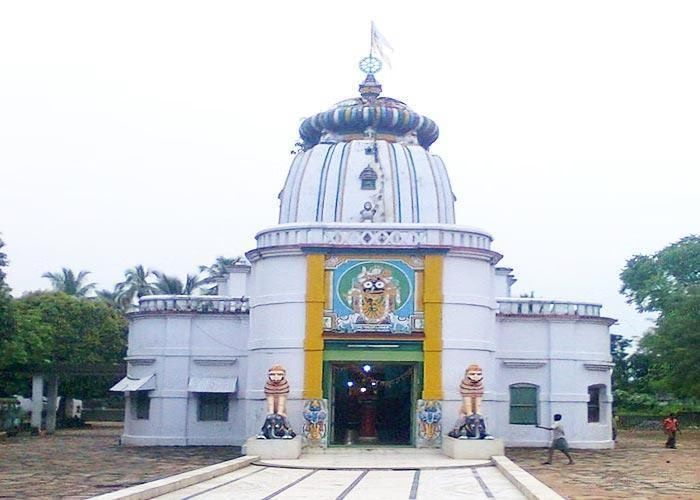
Nestled in the serene landscapes of Odisha, the Jagannath Temple in Nayagarh stands as a monumental testament to the enduring spiritual legacy of the region. Unlike the bustling grandeur of the Puri shrine, this temple offers a profound, intimate connection with the divine, dedicated to Lord Jagannath (the Lord of the Universe), an incarnation of Lord Vishnu. The presiding deity here is revered in a specific form known as Dadhi Vanana, a unique aspect derived from the Sanskrit words “Dadhi” (curd/yogurt) and “Vanana” (smearing), signifying a ritualistic anointment that is central to the temple’s local traditions.
Phalaśruti (Spiritual Benefits): Devotees visit this sanctum not merely for worldly wishes but for spiritual liberation. According to ancient texts and local belief, worshipping Lord Jagannath at Nayagarh aids in cleansing ancestral karma and removing obstacles in one’s path to success. The Sthala Purana suggests that a mere darshan of the Dadhi Vanana form washes away sins accumulated over lifetimes, granting the devotee inner peace and the grace of Moksha (liberation).
Historical Origins & Scriptural Legend
The history of the Nayagarh Jagannath Temple is a tapestry woven by royalty, resilience, and unwavering faith. Tradition holds that the initial foundation was laid by Vinayak Singh Mandhata between 1788 and 1808 AD. While historical records indicate that this ambitious structure remained unfinished due to the geopolitical turmoil of the era, it laid the spiritual groundwork for the shrine.
The temple complex standing today owes its current grandeur to Sri Nilakantha Sahu, who meticulously reconstructed the shrine in 1972. This renovation preserved the core spiritual energy while enhancing the structural integrity of the temple.
The Legend of Dadhi Vanana:
The Sthala Purana (local oral legend) narrates a fascinating history of the idol. It is believed that the idol of Jagannath, known as Dadhi Vanana, was originally installed at Tikiripada. The idol was later brought to Nayagarh and installed here to preserve it from natural calamities, specifically the devastating floods of the Mahanadi river. Conversely, the idols originally at Nayagarh were shifted to Tikiripada, creating a sacred exchange between the two holy sites. This migration highlights the region’s history of migration due to the mighty Mahanadi’s wrath, turning a historical tragedy into a divine movement.
Architectural Marvels
The temple is a masterpiece of traditional Kalinga architecture, specifically following the Pancharatha (five-chariot) design. The primary structure is a Rekha Deula, characterized by its towering Shikhara (spire) that pierces the sky, symbolizing the axis mundi connecting earth to heaven.
Key Architectural Features:
- Rekha Deula: The main shrine housing the sanctum sanctorum (Garbhagriha), featuring a curvilinear tower.
- Pidha Deula: The Jaga Mohan (assembly hall) and Natamandapa (dancing hall) are constructed in this pyramidal roof style, typical of Odishan temple design.
- Vastu Shastra: The temple layout adheres to the strict Vastu principles of orientation and symmetry, ensuring the flow of positive energy.
- Sculptures: The outer walls are adorned with intricate carvings of Apsaras (celestial nymphs), Dwarapalas (door guardians), and scenes from Hindu mythology, showcasing the zenith of Odishan craftsmanship.
Darshan & Ritual Logistics
Experience the divine rhythm of the temple through scheduled Darshans and Sevas. Below are the detailed timings for the year 2026.
Daily Timings
| Darshan Type | Timing |
|---|---|
| Morning Darshan | 6:00 AM – 12:00 PM |
| Evening Darshan | 4:00 PM – 9:00 PM |
| Morning Aarti | 6:30 AM |
| Evening Aarti | 7:00 PM |
Key Sevas & Online Booking
Devotees can book specific Sevas online via the official temple administration portal (assumed link for 2026). The most sought-after services include:
- Abhishekam (Ritual Bathing): Performed with water, milk, and curd for the Dadhi Vanana idol. Available in morning slots.
- Archana (Recitation of Names): A 15-minute offering where the priest recites 108 names of Lord Jagannath.
- Naivedyam (Food Offering): Offering traditional Odia vegetarian dishes to the deity.
- Mahaprasad: Holy food distribution after the morning rituals.
Major Festivals in 2026
The temple comes alive during festivals, particularly the Rath Yatra (Chariot Festival). Below are the confirmed dates for 2026:
- Rath Yatra (Chariot Festival): Friday, June 27, 2026 – The grand procession where Lord Jagannath visits his devotees on a massive chariot.
- Snana Yatra (Bathing Festival): Monday, June 16, 2026 – The ceremonial bathing of the deities on the full moon day.
- Gundicha Marjara: Tuesday, July 1, 2026 – The return journey of the Lord to the main temple.
- Raja Parba: June 14-16, 2026 – Celebrating womanhood and fertility, a unique Odisha festival.
Practical Visitor Guidance
To ensure a serene and respectful pilgrimage, please adhere to the following guidelines:
- Dress Code: Traditional attire is preferred. Men should wear dhotis or formal trousers with shirts; women should wear sarees, salwar kameez, or long skirts. Avoid shorts and sleeveless tops.
- Photography: Photography is strictly prohibited inside the sanctum sanctorum (Garbhagriha). Permitted in the outer courtyard and Jaga Mohan area.
- Mobile Lockers: Free digital lockers are available near the entry gate for electronics, leather items, and bags not allowed inside the shrine.
- Accessibility: The temple complex has ramps for wheelchair access to the main courtyard, though the inner sanctum has traditional steps.
Crowd Management
Nayagarh is generally less crowded than Puri, but festival days see a surge. For the most peaceful Darshan:
- Best Hours: Visit between 8:00 AM and 10:00 AM on weekdays.
- Seasonal Advice: Summers (April-June) can be hot; carry a water bottle and umbrella. Monsoons (July-Sept) offer lush greenery but check local weather advisories before travel.
Pilgrimage Connectivity
The temple is strategically located on the National Highway, making it easily accessible for pilgrims traveling across Odisha.
How to Reach
- By Air: The nearest airport is Biju Patnaik International Airport (BBI) in Bhubaneswar, approximately 90 km away (2.5 hours drive).
- By Rail: The nearest railway station is Nayagarh Town Railway Station. Major connectivity is via Bhubaneswar Junction (BBS).
- By Road: The temple is located directly on NH 224. It connects Nayagarh to Bhubaneswar and the southern parts of Odisha. Regular bus services are available from Bhubaneswar and Cuttack.
Nearby Sacred Sites
Enhance your pilgrimage by visiting these nearby spiritual destinations:
- Khandapada Jagannath Temple: Located approximately 30 km away, this temple was erected by the kings of Khandapada and features a similar Pancharatha Rekha Deula style.
- Ranpur Jagannath Temple: Situated 20 km from Nayagarh, built by King Udhaba Singh in the 14th century (1324-1363 AD), offering a glimpse into ancient history.
- Daspalla Palace & Temple: About 55 km away, this area is known for its old Rajapratisthita temples and scenic natural beauty.
Photo Gallery
Frequently Asked Questions (FAQs)
1. What is the history of the Jagannath Temple in Nayagarh?
The temple has a layered history. It was initially established by Vinayak Singh Mandhata between 1788 and 1808 AD. However, the structure was reconstructed and completed in 1972 by Sri Nilakantha Sahu. The idol of Lord Jagannath (Dadhi Vanana) was brought here from Tikiripada to protect it from floods.
2. Is there a VIP darshan entry available?
Yes, the temple administration offers a special darshan pass for elderly citizens, differently-abled devotees, and emergency service personnel. This can be obtained at the information counter near the main entrance upon presentation of valid ID proof.
3. What are the online seva booking options?
Devotees can book Abhishekam, Archana, and Mahaprasad through the official temple website or designated Odisha government tourism portals. It is advisable to book at least 24 hours in advance for festival days.
4. What is the significance of the Dadhi Vanana idol?
The term ‘Dadhi Vanana’ refers to the ritual smearing of the deity with curd (yogurt). This form is considered highly auspicious for removing negative energies and bestowing prosperity and health upon devotees.
5. Are non-Hindus allowed inside?
Like most traditional Hindu temples in Odisha, entry into the sanctum sanctorum is generally restricted to followers of Hinduism. However, the courtyard and architecture can be viewed from the entrance.
Contact Details
Official Address:
Jagannath Temple,
Nayagarh, Odisha 752070.
Near Landmark: NH 224, Nayagarh Town.
Recent Posts

Shri Kaamkoteeshwar Mandir, Varanasi – History & Significance
In the heart of Kashi, the eternal city of Lord Shiva, where the Ganges flows with celestial grace, stands the Shri Kaamkoteeshwar Mandir. This sacred Sannidhi is not merely a temple but a profound spiritual bridge between the Northern…

ओ सांवरे तूने ही मुझको संभाला – Lyrics & Meaning
ओ सांवरे तूने ही मुझको संभाला – A Prayer to Shyam Origin & Spiritual Essence Why This Bhajan Resonates Devotees chant this when overwhelmed by life’s storms—the refrain ‘तूने ही मुझको संभाला’ is the soul’s sigh of relief: “You…

कथा ये है महाराज मेरे की – Lyrics & Meaning
कथा ये है महाराज मेरे की छत्रपति संभाजी महाराज – A Prayer to Chhatrapati Sambhaji Maharaj Origin & Spiritual Essence Why This Bhajan Resonates Devotees chant this when their spirit feels tested—its powerful refrain “महाराज मेरे” is a soul’s…

Rigveda Samhita Yathartha Anuvada (ऋग्वेद संहिता यथार्थ अनुवाद) – Complete Set with Anvayartha & Hindi/English Translation
The Rigveda is the oldest surviving scripture of humanity and the foundational text of Sanātana Dharma. For serious students, scholars, UPSC aspirants studying ancient Indian history, Sanskrit learners, and spiritual seekers, a precise and grammatically structured translation is indispensable.…

आना भी अकेला है जाना भी अकेला है – Lyrics & Meaning | BharatTemples
आना भी अकेला है जाना भी अकेला है – A Prayer to the Divine Witness Origin & Spiritual Essence Why This Bhajan Resonates Devotees turn to this bhajan in moments of deep reflection—when life’s attachments begin to ache. The…

माता शेरावाली के द्वार जो भी जाता है – Lyrics & Meaning
माता शेरावाली के द्वार जो भी जाता है – A Prayer to Maa Sherawali Origin & Spiritual Essence Why This Bhajan Resonates Devotees turn to this bhajan in times of fear or uncertainty—its promise that no one leaves Maa’s…

मार लेना सपणी उबार लेणा भवरा – Lyrics & Meaning
मार लेना सपणी उबार लेणा भवरा – A Prayer to the Divine Beloved Origin & Spiritual Essence Why This Bhajan Resonates Devotees chant this in moments of deep vulnerability—its cry of “मार लेना सपणी, उबार लेणा भवरा” is the…

हमें श्याम सुंदर भरोसा तुम्हारा – Lyrics & Meaning
हमें श्याम सुंदर भरोसा तुम्हारा – A Prayer to Shyam Sundar Origin & Spiritual Essence Why This Bhajan Resonates Devotees chant this when feeling alone—its refrain ‘de do sahara’ is the soul’s cry for divine support. Lyrics in Hindi…

Mere Satguru Ne Di Thi Davai Lyrics in Hindi & Meaning
Mere Satguru Ne Di Thi Davai: Invoking the Guru’s Liberating Wisdom This soul-stirring bhajan venerates the Satguru (True Spiritual Master) as the divine physician who dispenses the only remedy for life’s deepest sufferings. Composed by Sant Karmaveer Tufani, it…

Janm Diyo Thari Maa Dukh Dekhiyo Lyrics in Hindi & Meaning
जन्म दियो थारी माँ दुख देखियो (Maa’s Grief Upon Birthing You) This soul-stirring Chetavani Bhajan (admonitory hymn) is addressed to the Divine Mother (Maa) – a call for repentance when children forget their filial duties in the dark age…