
Contents
- 1 Introduction & Spiritual Essence
- 2 Historical Origins & Scriptural Legend
- 3 Architectural Marvels
- 4 Darshan & Ritual Logistics
- 5 Practical Visitor Guidance
- 6 Pilgrimage Connectivity
- 7 Frequently Asked Questions (FAQ)
- 7.1 1. Is there a VIP Darshan entry at Mausimaa Temple?
- 7.2 2. Can I carry my own Prasad (food offering) inside? Yes, you can carry fruit and sweets. However, to maintain sanctity, solid food items are generally not allowed in the inner sanctum. The temple has its own Bhoga distribution system. 3. What is the significance of Poda Pitha here?
- 7.3 4. Are there accommodation facilities near the temple?
- 7.4 5. What is the contact number for the temple?
- 8 Photo Gallery
- 9 Contact Details
Introduction & Spiritual Essence
Nestled in the heart of Ganjam district, Odisha, the Mausimaa Temple stands as a testament to divine familial bonds and ancient reverence. The presiding deity is revered locally as Mausimaa (literally meaning “Mother’s Sister” or Aunt) and is functionally identified as Ardhasini. She is considered the protective maternal figure for Lord Jagannath of Puri.
Form of the Deity: The deity is a powerful manifestation of the Divine Mother (Shakti), worshipped in the form of Ardhasini—the one who drank half of the seawater to save the sacred land of Puri from inundation.
Phalaśruti: Why Devotees Visit
- Protection from Calamities: Devotees believe that offering prayers here protects against natural disasters and floods, a legacy from the deity’s original legend.
- Ancestral Blessings: As a maternal aunt figure, she is worshipped for the well-being of one’s maternal lineage (Matrilineal Kula Devata/Sapinda).
- Relief from Debt: Local folklore suggests that Ardhasini frees devotees from the spiritual burdens and debts (Rina) of their past actions.
Historical Origins & Scriptural Legend
Architectural Era: While the exact inscriptional evidence of the founding dynasty is partially obscured by time, the temple structure follows the ancient Kalinga style of architecture, prevalent during the Ganga Dynasty period (circa 10th-12th century CE). The temple has undergone necessary renovations to preserve its sanctity while maintaining its original structural integrity.
The Legend of Ardhasini
According to the Sthala Purana (local oral tradition), a terrible flood once threatened to submerge the town of Puri. The presiding deity of the region, in a fierce form, drank half (Ardha) of the seawater to save the town, earning the name Ardhasini.
Tradition holds that Lord Jagannath’s Aunt serves as a guardian alongside Kapalmochna Shiva. She is the watcher at the gate, ensuring the safety of the Lord and his devotees.
Architectural Marvels
Kalinga Style & Vastu
The temple exemplifies the Rekha Deula style, characteristic of Odishan temple architecture. It consists of the Garbhagriha (sanctum sanctorum) and the Madha (assembly hall). The Shikhara (tower) rises gracefully above the sanctum, pointing towards the heavens. The temple faces South (Dakshina Mukhi), which is significant in Vastu Shastra for deities associated with protection and fierce energy.
Sculptural Details
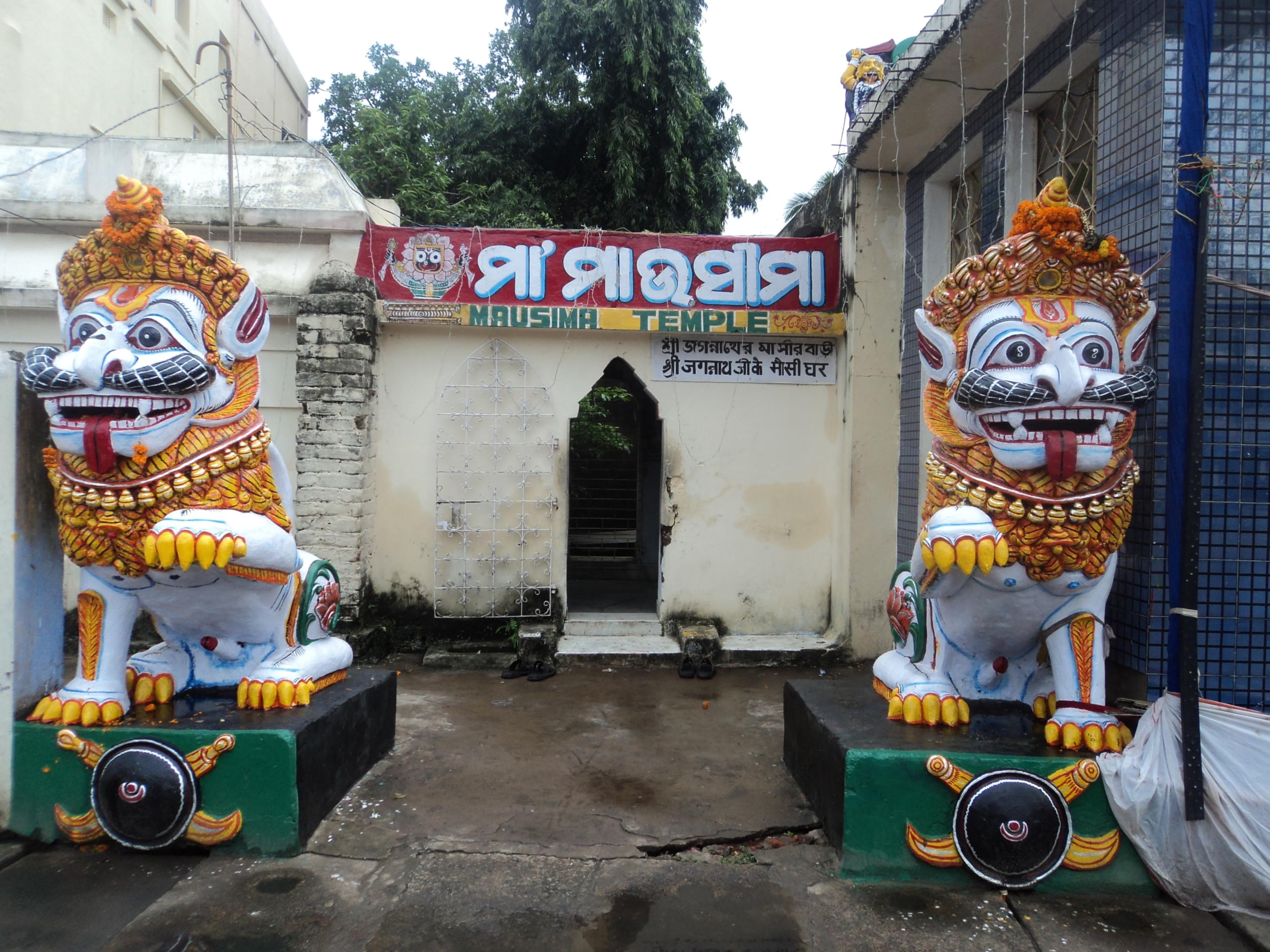
Unlike the towering grandeur of the Puri Jagannath temple, Mausimaa Temple is relatively intimate, fostering a connection between the devotee and the deity. The outer walls feature carvings of Dvarapalas (guardian deities) and floral motifs typical of the Odishan school.
Darshan & Ritual Logistics
Assuming the current year is 2026, the temple follows traditional Odishan timings. Note that timings may extend during festival days.
| Session | Timings | Rituals |
|---|---|---|
| Morning | 06:00 AM – 12:00 PM | Mangala Alati, Abhishekam |
| Evening | 04:00 PM – 08:00 PM | Sandhya Alati, Pakaala Bhoga |
Key Sevas & Online Booking
- Abhishekam: Ritual bathing of the deity (usually performed on Ekadashi or full moon days).
- Archana: Personalized chanting of names (Namaskara Mantra).
- Online Seva Booking: As of 2026, devotees can book general offerings and specific sevas through the Odisha Temple Endowment Portal (OSWAS) or the Shree Jagannath Temple Administration (SJTA) app, under the “Subordinate Temples” section.
2026 Major Festival Dates
- Snana Purnima: June 10, 2026
- Ratha Yatra (Car Festival): June 27, 2026 (Mausimaa is the focal point during the Bahuda Jatra return journey).
- Boita Bandana (Kartik Purnima): November 4, 2026
Practical Visitor Guidance
Dress Code & Etiquette
Visitors must dress modestly. Traditional Indian attire (Dhoti/Saree/Shalwar Kameez) is preferred. Western clothing like shorts and sleeveless tops is discouraged. Footwear must be removed at the designated stands outside the temple premises.
Photography & Mobiles
Photography inside the sanctum sanctorum is strictly prohibited. Visitors are advised to use the free mobile lockers provided at the entry gate before proceeding for darshan.
Accessibility
The temple is located at ground level with a single flight of steps. There are ramps available for senior citizens and differently-abled devotees at the main entrance.
Crowd Management
The temple sees a surge during the Ratha Yatra period.
- Best Time to Visit: 7:00 AM – 9:00 AM on weekdays.
- Seasonal Advice: Odisha summers (April-June) are extremely hot. Carry a water bottle and an umbrella. Monsoons (July-Sept) bring humidity; light cotton clothing is recommended.
Pilgrimage Connectivity
How to Reach
- By Air: The nearest airport is Biju Patnaik International Airport, Bhubaneswar (approx. 140 km).
- By Rail: The nearest major railway junction is Berhampur (Ganjam) (approx. 88 km). From there, taxis and buses are available to Bhanja Nagar/Kullada.
- By Road: The temple is located in Kullada village, 8 km from Bhanja Nagar. It is accessible via National Highway 59 (connecting to Berhampur) and State Highway 29.
Nearby Sacred Sites
Enhance your pilgrimage by visiting these nearby shrines:
- Upper Bagh Devi Temple: A serene shrine dedicated to Goddess Bagh Devi, located nearby.
- Ratneswar Mahadev Temple: An ancient Shiva temple complex nearby.
- Chilika Lake (Nalabana/Satapada): While not a temple, the lake is considered a sacred wetland ecosystem and is ideal for a spiritual retreat.
Frequently Asked Questions (FAQ)
1. Is there a VIP Darshan entry at Mausimaa Temple?
No, the temple maintains a general darshan queue. However, devotees can book special Seva slots which may offer priority access during non-peak hours.
2. Can I carry my own Prasad (food offering) inside?Yes, you can carry fruit and sweets. However, to maintain sanctity, solid food items are generally not allowed in the inner sanctum. The temple has its own Bhoga distribution system.
3. What is the significance of Poda Pitha here?
Mausimaa is believed to offer Poda Pitha (a burnt-finished rice cake) to Lord Jagannath during the Ratha Yatra return journey (Bahuda Yatra). It is the Lord’s favorite offering.
4. Are there accommodation facilities near the temple?
Basic guest houses are available in Bhanja Nagar (8 km). For more luxurious stays, Berhampur (88 km) offers a wide range of hotels.
5. What is the contact number for the temple?
For the most current information, visitors should contact the Department of Tourism, Government of Odisha or the local tehsil office in Bhotaka.
| Date built: | – |
|---|---|
| Deity: | – |
| Architectural style: | – |
| Major festivals | – |
| Locale: | – |
| District:: | Ganjam |
| Address: | Bhotaka, Odisha 755009 |
| Phone | – |
Photo Gallery
Contact Details
Official Address:
Mausimaa Temple, Bhotaka, Kullada,
Ganjam District, Odisha, 755009
Website: https://www.bharattemples.com/mausimaa-temple
Recent Posts

Shri Kaamkoteeshwar Mandir, Varanasi – History & Significance
In the heart of Kashi, the eternal city of Lord Shiva, where the Ganges flows with celestial grace, stands the Shri Kaamkoteeshwar Mandir. This sacred Sannidhi is not merely a temple but a profound spiritual bridge between the Northern…

ओ सांवरे तूने ही मुझको संभाला – Lyrics & Meaning
ओ सांवरे तूने ही मुझको संभाला – A Prayer to Shyam Origin & Spiritual Essence Why This Bhajan Resonates Devotees chant this when overwhelmed by life’s storms—the refrain ‘तूने ही मुझको संभाला’ is the soul’s sigh of relief: “You…

कथा ये है महाराज मेरे की – Lyrics & Meaning
कथा ये है महाराज मेरे की छत्रपति संभाजी महाराज – A Prayer to Chhatrapati Sambhaji Maharaj Origin & Spiritual Essence Why This Bhajan Resonates Devotees chant this when their spirit feels tested—its powerful refrain “महाराज मेरे” is a soul’s…

Rigveda Samhita Yathartha Anuvada (ऋग्वेद संहिता यथार्थ अनुवाद) – Complete Set with Anvayartha & Hindi/English Translation
The Rigveda is the oldest surviving scripture of humanity and the foundational text of Sanātana Dharma. For serious students, scholars, UPSC aspirants studying ancient Indian history, Sanskrit learners, and spiritual seekers, a precise and grammatically structured translation is indispensable.…

आना भी अकेला है जाना भी अकेला है – Lyrics & Meaning | BharatTemples
आना भी अकेला है जाना भी अकेला है – A Prayer to the Divine Witness Origin & Spiritual Essence Why This Bhajan Resonates Devotees turn to this bhajan in moments of deep reflection—when life’s attachments begin to ache. The…

माता शेरावाली के द्वार जो भी जाता है – Lyrics & Meaning
माता शेरावाली के द्वार जो भी जाता है – A Prayer to Maa Sherawali Origin & Spiritual Essence Why This Bhajan Resonates Devotees turn to this bhajan in times of fear or uncertainty—its promise that no one leaves Maa’s…

मार लेना सपणी उबार लेणा भवरा – Lyrics & Meaning
मार लेना सपणी उबार लेणा भवरा – A Prayer to the Divine Beloved Origin & Spiritual Essence Why This Bhajan Resonates Devotees chant this in moments of deep vulnerability—its cry of “मार लेना सपणी, उबार लेणा भवरा” is the…

हमें श्याम सुंदर भरोसा तुम्हारा – Lyrics & Meaning
हमें श्याम सुंदर भरोसा तुम्हारा – A Prayer to Shyam Sundar Origin & Spiritual Essence Why This Bhajan Resonates Devotees chant this when feeling alone—its refrain ‘de do sahara’ is the soul’s cry for divine support. Lyrics in Hindi…

Mere Satguru Ne Di Thi Davai Lyrics in Hindi & Meaning
Mere Satguru Ne Di Thi Davai: Invoking the Guru’s Liberating Wisdom This soul-stirring bhajan venerates the Satguru (True Spiritual Master) as the divine physician who dispenses the only remedy for life’s deepest sufferings. Composed by Sant Karmaveer Tufani, it…

Janm Diyo Thari Maa Dukh Dekhiyo Lyrics in Hindi & Meaning
जन्म दियो थारी माँ दुख देखियो (Maa’s Grief Upon Birthing You) This soul-stirring Chetavani Bhajan (admonitory hymn) is addressed to the Divine Mother (Maa) – a call for repentance when children forget their filial duties in the dark age…