
Contents
Introduction & Spiritual Essence
The Talesvara Siva Temple, nestled in the ancient heart of Bhubaneswar, Odisha, stands as a profound testament to the region’s deep-rooted Shaivism. Dedicated to Lord Shiva, the temple houses a revered Swayambhu (self-manifested) Siva Lingam. Unlike many ancient structures that have faded into obscurity, this is a living temple, actively used for worship, radiating a spiritual aura that draws devotees seeking liberation from the cycle of birth and death.
Phalaśruti: The Divine Boon
Why do pilgrims traverse the cobblestone lanes of Old Town to visit Talesvara? According to oral traditions and local devotion, worshipping the presiding deity here offers specific spiritual benefits:
- Cleansing of Ancestral Karma: It is believed that offering prayers here helps alleviate Pitru Dosha (ancestral curses), bringing peace to departed souls.
- Removal of Planetary Obstacles: The temple is particularly potent for pacifying malefic planetary alignments, offering devotees mental clarity and stability.
- Path to Moksha: As a shrine embodying the cosmic void and eternity, regular darshan aids in the seeker’s journey toward spiritual liberation.
Historical Origins & Scriptural Legend
The Talesvara Siva Temple is a jewel of the Keshari (Somavanshi) dynasty, estimated to have been constructed between the 8th and 9th centuries AD. Its architectural stylistics align closely with the early phase of Kalingan temple construction, serving as a bridge between the structural experiments of the earlier Gupta period and the flourishing artistry of the subsequent Somavanshi era.
The Legend of Talesvara
While specific scriptural references in the Puranas regarding this specific shrine are subtle, the Sthala Purana (local legend) weaves a narrative of miraculous preservation. The temple fell into ruin over the centuries, reclaimed by nature until a significant renovation restored its sanctity.
According to temple records and the oral history passed down by the caretaking family of Sri Sudarsana Panda, the name “Talesvara” may be linked to the local vernacular for “leaf” or a protective deity, signifying how the Lingam was protected by the dense foliage of the ancient peepal trees that once dominated the landscape. The surviving structural elements—specifically the graha architrave carved with eight planets (grahas)—point to the astrological and Tantric significance of the temple in its formative years.
Architectural Marvels
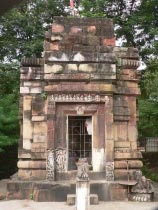
The temple is a masterclass in the Kalingan Style of temple architecture, characterized by its curvilinear tower (Rekha Deul) and elaborate stone carvings.
Vastu Shastra and Orientation
Strictly adhering to Vastu principles, the temple faces East, welcoming the rising sun and the first rays of Ushas (Dawn). It stands on a low square platform (Pitha), elevating the sanctum sanctorum.
The Vimana and Shikhara
The Vimana (tower over the sanctum) is Triratha in plan, featuring a central raha and a pair of kanika pagas on all four sides. Though the original mastaka (finial) is absent due to time, the reconstructed Bada (vertical wall section) stands 5.20 meters high. It is divided into three distinct horizontal bands: Pabhaga (base), Jangha (shaft), and Baranda (crown moulding).
Notable Sculptures & The Aja-Ekapada Bhairava
The most striking artistic feature is the subsidiary niche on the northern wall, housing a rare four-armed Aja-ekapada Bhairava (48 cm in height). This fierce form of Shiva is depicted holding:
- A Trishul (trident) in the upper left arm.
- An arrow in the lower left arm.
- A Rosary (Akshamala) in the upper right.
- Varada Mudra (boon-giving gesture) in the lower right.
The deity is crowned with Jatamukuta (matted hair) and flanked by miniature figures. The doorjamb features Saivite Dvarapalas (door guardians) and river goddesses Ganga and Yamuna, with Gaja-Lakshmi adorning the Latabimba (lintel).
Darshan & Ritual Logistics
Devotees can participate in the daily rituals to honor Lord Talesvara. Below are the standard timings for 2026. Note: Timings may vary slightly during festivals.
| Session | Timing | Activity |
|---|---|---|
| Morning Darshan | 6:00 AM – 12:00 PM | Opening, Mangala Aarti, Abhishekam |
| Afternoon Break | 12:00 PM – 4:00 PM | Sanctum cleaning and Recess |
| Evening Darshan | 4:00 PM – 9:00 PM | Sandhya Aarti, Panchamrita Abhishekam |
Key Sevas and Online Booking
While the temple is managed by a private family (the Panda family), basic offerings can be made at the temple premises. For broader temple services in Bhubaneswar, the Shree Lingaraj Temple Administration (SLTA) portal often manages central services for cluster temples.
- Abhishekam: Ritual bathing of the Lingam with water, milk, honey, and bilva leaves.
- Archana: Recitation of names accompanied by flower offerings.
- Online Booking: For major festivals, devotees should visit the official Odisha Government e-Mandap portal or the SLTA website.
2026 Festival Calendar (Key Dates)
- Maha Shivaratri: February 26, 2026 (Night-long vigil and special Abhishekam).
- Nitika Amavasya: Specific to Lingaraj Temple cluster (Check local lunar calendar).
- Kartik Purnima: November 4, 2026 (Deep lighting and Yajna).
Practical Visitor Guidance
To ensure a respectful and smooth visit to this heritage site, please adhere to the following guidelines:
Dress Code and Etiquette
Traditional attire is highly recommended. Men should wear dhotis or formal trousers with shirts; women should wear sarees, salwar kameez, or covered western attire. Avoid shorts and sleeveless tops as a sign of respect.
Photography and Electronic Devices
Photography is generally restricted inside the sanctum sanctorum. Flash photography near the ancient carvings is prohibited to prevent damage to the soft laterite stone. Mobile lockers are not available on-site; visitors are advised to carry only essentials.
Crowd Management and Accessibility
As a living shrine in the dense Old Town area, the temple can get crowded during Monday evenings and festivals.
- Best Time to Visit: Early morning (6:00 AM – 8:00 AM) offers the most serene darshan.
- Summer Advice (May-June): Bhubaneswar temperatures can soar. Carry a water bottle and a handkerchief; the stone floors can get very hot.
- Accessibility: The temple has a few steps at the entrance. While the courtyard is flat, wheelchair access is limited due to the heritage nature of the site.
Pilgrimage Connectivity
The Talesvara Temple is located in the Old Town area, the cradle of Bhubaneswar’s temple architecture.
How to Reach
- By Air: The nearest airport is Biju Patnaik International Airport (BBI), approximately 6 km away (15-20 minutes by taxi).
- By Rail: Bhubaneswar Railway Station (BBS) is the main junction, about 5 km from the temple.
- By Road: The temple lies on Kedar Gouri Road, accessible via National Highway 16 (NH 16). Auto-rickshaws and city buses ply frequently to Old Town.
Nearby Sacred Sites
Construct a pilgrimage circuit by visiting these proximity shrines:
- Parasuramesvara Temple: Located just a few meters away, it is one of the oldest surviving temples in Odisha (7th Century AD).
- Kedargouri Temple: A beautiful 11th-century temple dedicated to Lord Shiva, 90 meters east of Talesvara.
- Vaital Deul (Talesvari Temple): A unique Tantric temple with a rear entrance facing east, located nearby.
Frequently Asked Questions (FAQs)
1. Is there a VIP Darshan entry available at Talesvara Temple?
As a private heritage shrine, the temple does not have a formal VIP ticketing system like larger state-managed temples. Darshan is available to all devotees on a first-come, first-served basis. However, visiting during off-peak hours (early morning) ensures a quick and intimate darshan.
2. What is the historical significance of the Aja-ekapada Bhairava idol?
The Aja-ekapada Bhairava is a rare iconographic form representing the infinite (Aja) and the single foot (Ekapada). It symbolizes the supreme consciousness standing on one leg, encompassing the universe. Its presence confirms the temple’s adherence to ancient Tantric traditions prevalent in Odisha during the 8th century.
3. Can non-Hindus visit the temple?
While there are no strict legal barriers for non-Hindus entering the courtyard, entry into the sanctum sanctorum is traditionally reserved for practicing Hindus who follow the rituals. It is respectful to observe from the courtyard and admire the architecture.
4. Is there an entry fee for the temple?
No, there is no entry fee for general darshan. However, offerings like flowers, milk, or bilva leaves can be purchased from vendors outside the temple premises.
5. Where can I park my vehicle?
Parking in Old Town can be challenging due to narrow lanes. Designated parking areas are available near the Lingaraj Temple or the Mukteswar Temple complex. From there, it is a pleasant 10-minute walk through the heritage precinct.
Recent Posts

Shri Kaamkoteeshwar Mandir, Varanasi – History & Significance
In the heart of Kashi, the eternal city of Lord Shiva, where the Ganges flows with celestial grace, stands the Shri Kaamkoteeshwar Mandir. This sacred Sannidhi is not merely a temple but a profound spiritual bridge between the Northern…

ओ सांवरे तूने ही मुझको संभाला – Lyrics & Meaning
ओ सांवरे तूने ही मुझको संभाला – A Prayer to Shyam Origin & Spiritual Essence Why This Bhajan Resonates Devotees chant this when overwhelmed by life’s storms—the refrain ‘तूने ही मुझको संभाला’ is the soul’s sigh of relief: “You…

कथा ये है महाराज मेरे की – Lyrics & Meaning
कथा ये है महाराज मेरे की छत्रपति संभाजी महाराज – A Prayer to Chhatrapati Sambhaji Maharaj Origin & Spiritual Essence Why This Bhajan Resonates Devotees chant this when their spirit feels tested—its powerful refrain “महाराज मेरे” is a soul’s…

Rigveda Samhita Yathartha Anuvada (ऋग्वेद संहिता यथार्थ अनुवाद) – Complete Set with Anvayartha & Hindi/English Translation
The Rigveda is the oldest surviving scripture of humanity and the foundational text of Sanātana Dharma. For serious students, scholars, UPSC aspirants studying ancient Indian history, Sanskrit learners, and spiritual seekers, a precise and grammatically structured translation is indispensable.…

आना भी अकेला है जाना भी अकेला है – Lyrics & Meaning | BharatTemples
आना भी अकेला है जाना भी अकेला है – A Prayer to the Divine Witness Origin & Spiritual Essence Why This Bhajan Resonates Devotees turn to this bhajan in moments of deep reflection—when life’s attachments begin to ache. The…

माता शेरावाली के द्वार जो भी जाता है – Lyrics & Meaning
माता शेरावाली के द्वार जो भी जाता है – A Prayer to Maa Sherawali Origin & Spiritual Essence Why This Bhajan Resonates Devotees turn to this bhajan in times of fear or uncertainty—its promise that no one leaves Maa’s…

मार लेना सपणी उबार लेणा भवरा – Lyrics & Meaning
मार लेना सपणी उबार लेणा भवरा – A Prayer to the Divine Beloved Origin & Spiritual Essence Why This Bhajan Resonates Devotees chant this in moments of deep vulnerability—its cry of “मार लेना सपणी, उबार लेणा भवरा” is the…

हमें श्याम सुंदर भरोसा तुम्हारा – Lyrics & Meaning
हमें श्याम सुंदर भरोसा तुम्हारा – A Prayer to Shyam Sundar Origin & Spiritual Essence Why This Bhajan Resonates Devotees chant this when feeling alone—its refrain ‘de do sahara’ is the soul’s cry for divine support. Lyrics in Hindi…

Mere Satguru Ne Di Thi Davai Lyrics in Hindi & Meaning
Mere Satguru Ne Di Thi Davai: Invoking the Guru’s Liberating Wisdom This soul-stirring bhajan venerates the Satguru (True Spiritual Master) as the divine physician who dispenses the only remedy for life’s deepest sufferings. Composed by Sant Karmaveer Tufani, it…

Janm Diyo Thari Maa Dukh Dekhiyo Lyrics in Hindi & Meaning
जन्म दियो थारी माँ दुख देखियो (Maa’s Grief Upon Birthing You) This soul-stirring Chetavani Bhajan (admonitory hymn) is addressed to the Divine Mother (Maa) – a call for repentance when children forget their filial duties in the dark age…