
Contents
Introduction & Spiritual Essence: The Ancient Tirthesvara
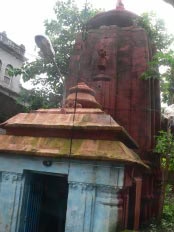
Nestled within the historic Old Town of Bhubaneswar, the Tirthesvara Siva Temple stands as a testament to Odisha’s spiritual depth and architectural mastery. Dedicated to Lord Shiva, this Swayambhu (self-manifested) shrine is an integral part of the Ekamra Kshetra (the city of Bhubaneswar). Unlike the grandeur of the nearby Lingaraja Temple, Tirthesvara offers an intimate, deeply contemplative atmosphere for devotees.
Deity and Form:
The primary deity is a Shiva Lingam enshrined within the sanctum sanctorum (Garbhagriha). It rests on a circular Yonipitha (base) located 0.94 meters below the door level, a feature signifying the ancient roots of the structure. The Lingam is bathed in the constant dripping of water from the well-head, maintaining the sanctity associated with natural water sources.
Phalaśruti: The Spiritual Benefits
Devotees visit the Tirthesvara Temple to seek blessings for spiritual purification and liberation from the cycle of rebirth. According to local oral traditions and scriptural interpretations:
- Cleansing Ancestral Karma: Performing rituals here is believed to cleanse the Pitra Dosha (ancestral defects), bringing peace to departed souls.
- Removal of Afflictions: Lord Shiva, in his form as Tirthesvara, is worshipped to remove physical ailments and mental afflictions.
- Marital Harmony: Couples visit to seek longevity for their spouses and harmony in married life.
Historical Origins & Scriptural Legend
The history of Tirthesvara is woven into the tapestry of the Ganga dynasty’s rule over Odisha.
Dating the Temple
Archaeological evidence and stylistic analysis date the temple to the 14th Century A.D. This period coincides with the later Ganga period, a time when Bhubaneswar was at its zenith as a center of Saivism.
Oral Legends (Sthala Purana)
While specific Vedic verses dedicated solely to Tirthesvara are scarce, the Sthala Purana (local legend) suggests that the temple was established by a local chieftain under the Ganga patronage. The name “Tirthesvara” translates to “Lord of the Sacred Ford (Tirtha),” referencing the holy water sources of the Old Town, particularly the Bindu Sagar tank located nearby. Tradition holds that the temple was built to serve the spiritual needs of the Brahmin settlers living in the vicinity of the Tala Bazaar road.
Architectural Marvels: The Kalinga Style
The Tirthesvara Temple is a masterpiece of Kalinga Architecture, specifically the Ganga style. It serves as a textbook example of the transition between early and medieval temple design in Odisha.
Vastu Shastra & Plan
The temple complex follows the traditional Vastu principles of orientation. The temple faces West (Prathama Dik), which is unique as many Bhubaneswar temples face East. The complex includes the vimana (sanctum) and the jagamohana (porch).
Structural Components
- Vimana (Sanctum): The vimana features a Panchanga Bada (five-fold divisions in the vertical elevation). It is surmounted by a Mastaka (cupola) measuring 2.00 meters. The walls are plain, finished with lime plaster and a red wash, masking intricate carvings that may lie underneath.
- Jagamohana (Porch): A later addition, this pyramidal roof structure is built in a Trianga Bada style. It features decorative niches and a distinct Khakhara Mundi (cylindrical crown) design.
- Sculptural Details:
- Guardians (Dvarapalas): The doorjamb of the vimana houses niches for two Saiva Dvarapalas (gatekeepers). These figures stand in flexed positions, holding a trident in the left hand and a sword in the right.
- Raha Niches: The central projections (Raha) on the sanctum walls feature niches surmounted by Khakhara Mundis. While these niches are currently empty, they likely once held idols of Parsva Devatas (attendant deities).
Unlike many other temples in the complex, Tirthesvara is not under the protection of the ASI (Archaeological Survey of India), but is maintained by a local committee, preserving its living heritage status.
Darshan & Ritual Logistics
The temple remains a living center of worship. Below are the standard timings. Note that timings may vary slightly during festivals.
Daily Darshan Timings
| Session | Timing | Activity |
|---|---|---|
| Morning | 6:00 AM – 12:00 PM | Mangala Alati, Abhishekam |
| Evening | 4:00 PM – 8:00 PM | Dhupa Alati, Sayanakala Seva |
Key Sevas (Rituals)
- Abhishekam: Ritual bathing of the Shiva Lingam with water, milk, honey, and bilva leaves. Best performed on Mondays and during Pradoshakalam.
- Archana: Offering of flowers and recitation of Ashtottara Shatanamavali (108 names of Shiva).
- Rudrabhishekam: A powerful Vedic ritual for planetary afflictions.
Online Seva Booking
While Tirthesvara is maintained locally, it is part of the wider Lingaraja Temple Trust ecosystem. Devotees can book general darshan or specific sevas through the Government of Odisha’s official EServices Portal or the Odisha Tourism app.
Link: eservices.odisha.gov.in
2026 Major Festivals
- Shivaratri: March 1, 2026. (Special night-long vigil and lighting of lamps).
- Chandrashekara Bada Ekadashi: July 2026 (Dates vary by lunar calendar).
- Kartika Purnima: November 15, 2026 (Deepa Daanam – offering of lamps).
Practical Visitor Guidance
Visiting the Old Town of Bhubaneswar requires preparation to ensure a spiritually fulfilling experience.
- Dress Code: Modest attire is mandatory. Traditional Indian wear (Dhoti/Kurta for men, Saree/Salwar Kameez for women) is recommended. Western attire like shorts or sleeveless tops may be restricted at the inner sanctum.
- Photography: Photography is generally prohibited inside the inner sanctum. Please respect the sanctity of the temple by avoiding flash photography in the jagamohana.
- Mobiles & Lockers: Electronic items should be kept silent. While the temple is small, large bags are discouraged. There are no official locker facilities at Tirthesvara, so travel light.
- Crowd Management:
- Best Hours: 7:00 AM – 9:00 AM offers the quietest darshan. Evenings can get crowded due to local residents visiting after work.
- Seasonal Advice: April to June sees peak heat in Bhubaneswar (temperatures crossing 40°C). Carry a water bottle and an umbrella. Monsoon (July-September) brings humidity but also lush greenery around the Bindu Sagar lake.
- Accessibility: The temple has stone steps leading to the porch. It may be challenging for wheelchairs due to the narrow lanes of the Old Town and the lack of ramps.
Pilgrimage Connectivity
How to Reach
The Tirthesvara Temple is located in Gouri Nagar, Old Town, approximately 5 km from the city center.
- Nearest Airport: Biju Patnaik International Airport (BBI) is about 10-12 km away (25-30 mins by taxi).
- Nearest Railway Station: Bhubaneswar Railway Station (BBS) is roughly 7 km away.
- By Road: The temple is located on the road leading from Bindu Sagar to Lingaraja Temple. It is easily accessible via NH 16 (formerly NH 5). Auto-rickshaws and app-based cabs (Ola/Uber) are the best ways to navigate the narrow bylanes of Old Town.
Nearby Sacred Sites
A visit to Tirthesvara is best combined with the surrounding heritage circuit:
- Lingaraja Temple (1 km): The most famous landmark of Odisha, dedicated to Lord Harihara. A must-visit for its towering spire (180 ft).
- Bindu Sagar Lake (0.5 km): A holy water tank believed to contain a drop of water from all the sacred rivers of India. It separates the Lingaraja Temple from the Tirthesvara complex.
- Mukteshwar Temple (1.5 km): Known as the “Gem of Odisha architecture,” this 10th-century temple features a unique arched gateway.
Frequently Asked Questions (FAQs)
1. What is the significance of the deity being below ground level?
The Shiva Lingam in Tirthesvara is situated 0.94 meters below the door level. In Vastu Shastra and temple lore, this signifies the Lingam’s connection to the primordial energies of the earth (Prithvi Tattva). It often indicates that the structure predates later renovations and represents a “womb” like sanctity.
2. Is there a VIP Darshan entry available?
As Tirthesvara is a local community-managed temple within the Old Town, there is no formal VIP entry system like in larger shrines. Darshan is generally egalitarian. However, during festivals, priority is given to devotees purchasing specific seva tickets through the temple committee.
3. What is the best time of year to visit Bhubaneswar for temple hopping?
The ideal time is from October to February. The weather is pleasant (15°C – 25°C), making it comfortable to walk between the cluster of temples in the Old Town area. Avoid the peak summer months (April-June) unless you are visiting early morning.
4. Are foreign tourists allowed inside Tirthesvara?
Yes, foreign tourists are allowed. While non-Hindus are generally not permitted inside the inner sanctum of major temples like Lingaraja, smaller temples like Tirthesvara often allow viewing from the porch (Jagamohana). However, it is respectful to observe local customs and consult the temple priest if unsure.
5. Is there parking available near the temple?
Parking is limited in the narrow lanes of Old Town. Visitors are advised to park near the designated parking areas near Bindu Sagar Lake or the main Lingaraja Temple parking lot and walk the short distance to Tirthesvara.
Recent Posts

Shri Kaamkoteeshwar Mandir, Varanasi – History & Significance
In the heart of Kashi, the eternal city of Lord Shiva, where the Ganges flows with celestial grace, stands the Shri Kaamkoteeshwar Mandir. This sacred Sannidhi is not merely a temple but a profound spiritual bridge between the Northern…

ओ सांवरे तूने ही मुझको संभाला – Lyrics & Meaning
ओ सांवरे तूने ही मुझको संभाला – A Prayer to Shyam Origin & Spiritual Essence Why This Bhajan Resonates Devotees chant this when overwhelmed by life’s storms—the refrain ‘तूने ही मुझको संभाला’ is the soul’s sigh of relief: “You…

कथा ये है महाराज मेरे की – Lyrics & Meaning
कथा ये है महाराज मेरे की छत्रपति संभाजी महाराज – A Prayer to Chhatrapati Sambhaji Maharaj Origin & Spiritual Essence Why This Bhajan Resonates Devotees chant this when their spirit feels tested—its powerful refrain “महाराज मेरे” is a soul’s…

Rigveda Samhita Yathartha Anuvada (ऋग्वेद संहिता यथार्थ अनुवाद) – Complete Set with Anvayartha & Hindi/English Translation
The Rigveda is the oldest surviving scripture of humanity and the foundational text of Sanātana Dharma. For serious students, scholars, UPSC aspirants studying ancient Indian history, Sanskrit learners, and spiritual seekers, a precise and grammatically structured translation is indispensable.…

आना भी अकेला है जाना भी अकेला है – Lyrics & Meaning | BharatTemples
आना भी अकेला है जाना भी अकेला है – A Prayer to the Divine Witness Origin & Spiritual Essence Why This Bhajan Resonates Devotees turn to this bhajan in moments of deep reflection—when life’s attachments begin to ache. The…

माता शेरावाली के द्वार जो भी जाता है – Lyrics & Meaning
माता शेरावाली के द्वार जो भी जाता है – A Prayer to Maa Sherawali Origin & Spiritual Essence Why This Bhajan Resonates Devotees turn to this bhajan in times of fear or uncertainty—its promise that no one leaves Maa’s…

मार लेना सपणी उबार लेणा भवरा – Lyrics & Meaning
मार लेना सपणी उबार लेणा भवरा – A Prayer to the Divine Beloved Origin & Spiritual Essence Why This Bhajan Resonates Devotees chant this in moments of deep vulnerability—its cry of “मार लेना सपणी, उबार लेणा भवरा” is the…

हमें श्याम सुंदर भरोसा तुम्हारा – Lyrics & Meaning
हमें श्याम सुंदर भरोसा तुम्हारा – A Prayer to Shyam Sundar Origin & Spiritual Essence Why This Bhajan Resonates Devotees chant this when feeling alone—its refrain ‘de do sahara’ is the soul’s cry for divine support. Lyrics in Hindi…

Mere Satguru Ne Di Thi Davai Lyrics in Hindi & Meaning
Mere Satguru Ne Di Thi Davai: Invoking the Guru’s Liberating Wisdom This soul-stirring bhajan venerates the Satguru (True Spiritual Master) as the divine physician who dispenses the only remedy for life’s deepest sufferings. Composed by Sant Karmaveer Tufani, it…

Janm Diyo Thari Maa Dukh Dekhiyo Lyrics in Hindi & Meaning
जन्म दियो थारी माँ दुख देखियो (Maa’s Grief Upon Birthing You) This soul-stirring Chetavani Bhajan (admonitory hymn) is addressed to the Divine Mother (Maa) – a call for repentance when children forget their filial duties in the dark age…